
Yes, low coolant causes engine overheating. When coolant levels drop below the recommended range, your engine loses its ability to regulate heat effectively. Coolant absorbs intense heat from the combustion process and carries it to the radiator for dissipation. Without enough fluid, this heat transfer breaks down, leading to dangerous temperature spikes within minutes, especially under load. The result is a running hot engine, warning lights on your dashboard, and potentially catastrophic damage to internal components.
This guide explains exactly how low coolant triggers overheating, the warning signs to watch for, and what you need to do to prevent expensive engine damage. You’ll learn the science behind heat transfer, the components at risk, and the step-by-step actions to take when your engine starts running hot.
How Low Coolant Triggers Engine Overheating
Heat Transfer Breakdown
Coolant circulates through engine water jackets, absorbing heat from combustion zones. When levels are low, there is not enough fluid to carry away thermal energy. This creates localized hot spots around cylinder heads and exhaust valves, where temperatures exceed safe limits. Air pockets form in the system, reducing circulation and creating vapor lock, which further blocks coolant flow. The result is a rapid temperature rise and imminent overheating event.
Reduced System Pressure
The cooling system operates under pressure between 13 and 18 psi. This raises the coolant boiling point to about 121°C (250°F). A low coolant level prevents proper pressurization, allowing coolant to boil prematurely. This creates steam and pressure surges that force fluid out through the overflow hose. Once boiling starts, the cycle accelerates. Less coolant means more heat, and more heat means more boiling, leading to a complete overheating event.
Cooling System Components at Risk
Water Pump Damage
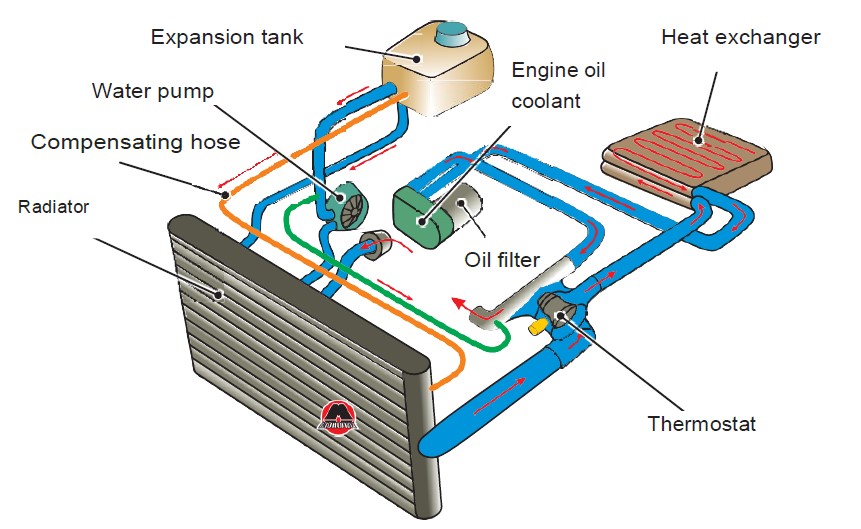
The water pump relies on coolant for lubrication and cooling. Running with low fluid causes the pump seals and bearings to overheat and fail. A seized impeller stops circulation entirely, turning a minor coolant loss into total system failure. Even brief operation without adequate coolant can destroy the pump, especially in modern vehicles with plastic impellers.
Thermostat Malfunction
Low coolant can expose the thermostat to air instead of fluid, causing erratic temperature readings. The thermostat may stay closed due to false signals, blocking flow to the radiator. This mimics a stuck-closed thermostat and worsens overheating, even when the component itself is functioning properly.
Radiator Inefficiency
With less coolant flowing through its core, the radiator cannot reject heat effectively. Reduced thermal mass means hot fluid spends less time in the radiator, limiting cooling. The fan may run at full speed, but without sufficient coolant volume, it cannot compensate for lost heat capacity.
Warning Signs of Low Coolant and Overheating
Dashboard Indicators
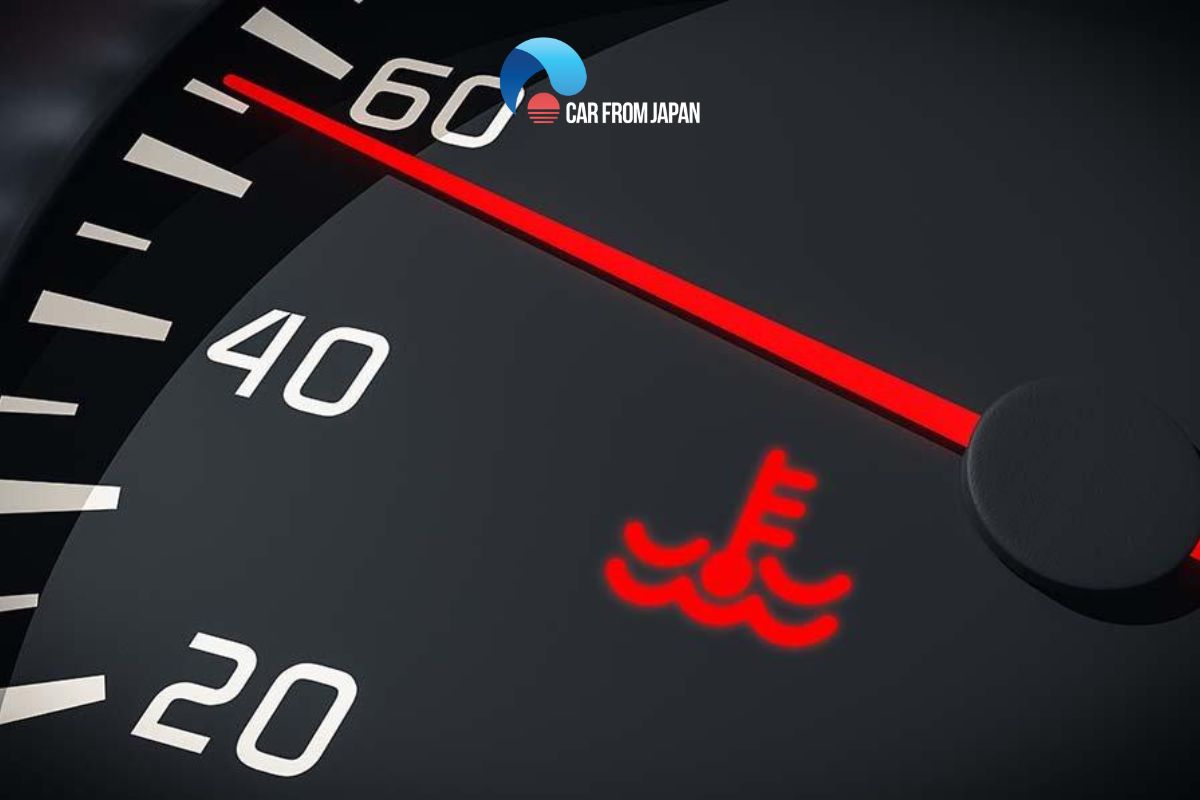
The temperature gauge moving toward the red zone is the most reliable indicator. The needle moves toward “H” and stays elevated. The coolant warning light illuminates when the reservoir sensor detects low fluid. The check engine light may also trigger codes like P0128 (coolant thermostat rationality) or P0116 (coolant temperature circuit issue). These warnings are your first alert to act immediately.
Visible and Sensory Clues
Steam from under the hood indicates boiling coolant escaping the system. A sweet, syrupy smell means ethylene glycol is leaking or burning in the engine bay or cabin. Cold cabin heater air is another sign, since the heater core requires hot coolant to produce heat. Reduced A/C performance may also occur, as some vehicles disable air conditioning during overheating to reduce engine load.
Operational Changes
Engine misfires or power loss can occur when excessive heat causes pre-ignition (detonation), disrupting combustion. In some vehicles, transmission limp mode activates to protect the drivetrain. Modern ECUs may disable the engine entirely to prevent catastrophic damage when temperatures get too high.
Common Causes of Coolant Loss
External Leaks
External leaks are the most common cause and are often visible. Look for green, orange, pink, or blue puddles under your car. Check for cracked radiator hoses or loose clamps. Inspect the water pump weep hole for leaks. Look for damaged radiator tanks or reservoir cracks. The thermostat housing and heater core lines are also common failure points, particularly in Ford and Volkswagen models.
Internal Leaks
Internal leaks are harder to detect but more dangerous. White smoke from the exhaust indicates burning coolant entering combustion chambers. Milky oil residue on the dipstick suggests coolant mixing with oil via a blown head gasket or cracked block. Bubbling in the coolant reservoir indicates combustion gases entering the cooling system. A block test (combustion leak tester) can confirm internal failure.
Faulty Radiator Cap and Other Issues
A failed radiator cap cannot maintain pressure, lowering the boiling point and allowing coolant to escape. Test the cap seal and spring tension, and replace with OEM-specified psi rating (usually 13 to 18 psi). A stuck-closed thermostat mimics low coolant symptoms. A failing water pump may not circulate fluid properly even with full coolant levels.
Damage from Running Low on Coolant
Blown Head Gasket
Overheating causes aluminum cylinder heads to warp, breaking the head gasket seal. This allows combustion gases into the coolant and coolant into the oil. Repair costs range from $1,500 to $6,000, but this is completely preventable with proper coolant maintenance.
Warped Cylinder Head
Aluminum heads expand rapidly when overheated. Even brief overheating can warp the surface beyond 0.05 mm (0.002 inches) flatness tolerance. Machining or replacement is required, otherwise the gasket will fail again.
Seized Engine Components
Pistons expand with heat. Without coolant, they can seize in the cylinder bore, locking the engine completely. This often requires a full engine rebuild or replacement. The damage is irreversible and extremely expensive.
Transmission Overheating
Many automatic transmissions use a radiator-integrated cooler. Low coolant means transmission fluid is not cooled properly, leading to slipping gears, limp mode activation, and permanent transmission damage. In some vehicles, the computer may interpret high coolant temperature as a transmission issue, limiting your speed to 35 mph.
Preventing Coolant-Related Overheating
Monthly Coolant Checks
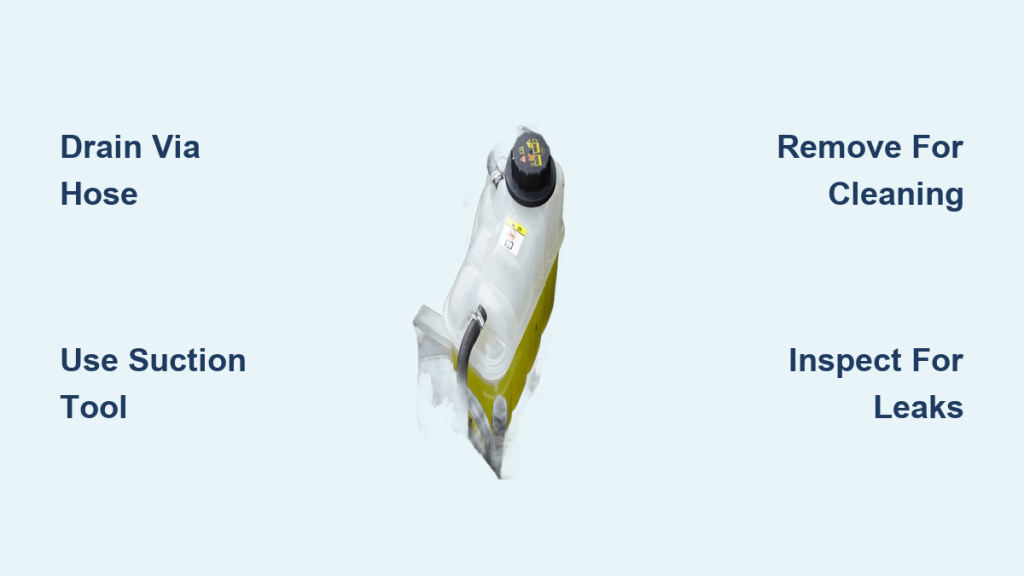
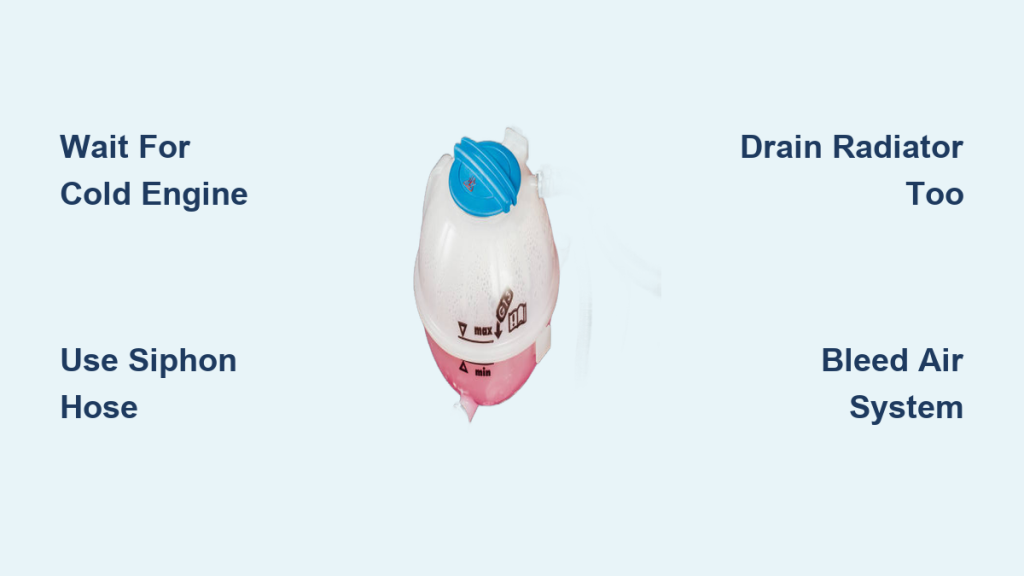
Check coolant when the engine is cold for accurate readings. Look at the translucent reservoir. The level should be between the “MIN” and “MAX” lines. Top off with 50/50 premixed coolant matching your vehicle specifications (such as G48, OAT, or HOAT). Never use plain water as a long-term solution, since it lacks corrosion inhibitors and lowers the boiling point.
Proper Refill Procedure
Wait until the engine is cool before opening anything. Open the reservoir cap slowly to release pressure. Add coolant to the “MAX” line. Start the engine and let it warm up with the heater on high to purge air from the system. Recheck the level after the engine cools down. Air pockets are a major cause of false overheating.
Scheduled Coolant Flushes
Standard IAT coolant requires replacement every 2 years or 24,000 miles. OAT and HOAT long-life coolants last 5 years or 100,000 to 150,000 miles. Flushing removes sludge, rust, and depleted inhibitors that reduce cooling efficiency over time.
What to Do When Overheating Occurs
Immediate Action Steps
Pull over and turn off the engine immediately when you see warning signs. Do not continue driving. Wait 15 to 30 minutes for the system to cool. Do not open the radiator cap while the system is hot, due to the risk of severe burns from pressurized steam.
Safe Refill Process
Check the reservoir level after waiting. Add 50/50 premixed coolant to the “MAX” line. If premixed coolant is unavailable, use distilled water only as a temporary fix. Avoid tap water, since minerals cause scaling in the cooling system.
When to Tow the Vehicle
Do not drive if you see steam or smoke from the hood. Do not drive if the oil looks milky on the dipstick. Do not drive if there is white exhaust smoke. Do not drive if coolant disappears rapidly after refill. These indicate internal damage. Tow to a mechanic instead.
Professional Diagnosis Requirements
Seek professional help for persistent low coolant without visible leaks. Professional help is needed for repeated overheating after refill. Professional help is required for suspected head gasket or block cracks. Tests include cooling system pressure testing (15 to 18 psi), block testing for combustion gases, OBD2 scanning for diagnostic trouble codes, and infrared temperature checking of radiator flow.
Key Takeaways for Preventing Overheating

Low coolant is not a minor fluid top-up issue. It is a direct path to engine destruction. Overheating can occur within minutes, leading to warped cylinder heads, blown head gaskets, and seized engines. Check your coolant monthly, use the correct type for your vehicle, and never ignore warning lights. If your engine runs hot, stop driving immediately and address the problem. The cooling system must be full, clean, and properly sealed to function. Protect your engine, because once damage occurs, no amount of coolant can reverse it.
Frequently Asked Questions About Low Coolant and Overheating
Can low coolant cause permanent engine damage?
Yes, low coolant can cause permanent engine damage. Running with low coolant creates localized hot spots that warp cylinder heads, blow head gaskets, and seize pistons. Damage can occur within minutes under high load conditions. Once components warp or seize, repairs cost thousands of dollars and may require engine replacement.
How long can I drive with low coolant before overheating?
You may only have minutes before overheating occurs, especially under load like highway driving or climbing hills. The exact time depends on outside temperature, engine load, and how low the coolant level is. Some drivers report complete engine failure within 5 to 10 minutes of running hot. Never risk driving when the temperature gauge is rising.
Does the heater using less coolant help the engine cool better?
No, using the heater does not compensate for low coolant. The heater simply redirects some coolant through the cabin heater core. It cannot make up for insufficient coolant volume in the main cooling system. In fact, running the heater with low coolant can worsen the situation by diverting what little coolant remains away from critical engine components.
Why does my car overheat even when the coolant reservoir is full?
Several issues can cause this. A stuck-closed thermostat blocks coolant flow to the radiator. A failing water pump may not circulate fluid properly. Air pockets in the system can create hot spots and block circulation. A faulty radiator cap may fail to maintain proper pressure. A cracked head gasket allows combustion gases into the cooling system. Professional diagnosis is needed to identify the cause.
Can I use water instead of coolant in an emergency?
You can use distilled water as a temporary emergency measure only. Plain water lacks corrosion inhibitors and has a low boiling point. It promotes rust and scale buildup in the cooling system. Water freezes in cold weather and can crack engine components. Replace water with proper coolant as soon as possible, and flush the system if water was used for an extended period.
How often should I check my coolant level?
Check coolant level at least once a month. Check more frequently before long trips, before towing heavy loads, or during extreme weather conditions. Always check when the engine is cold for an accurate reading. Regular checks catch small leaks before they become major problems.