Your engine runs hot. Without proper cooling, temperatures soar past 200°F, warping metal components and destroying seals. Coolant absorbs that heat and transfers it to the radiator where it dissipates. But coolant does not last forever. Over time, its protective additives deplete, it becomes acidic, and contaminants accumulate. Knowing when coolant needs to be changed prevents expensive engine repairs and roadside breakdowns.
This guide provides clear timelines based on your vehicle type, identifies warning signs that demand immediate attention, and explains exactly how to test and service your cooling system. You will learn when to act, what to look for, and how to protect your engine for the long haul.
Follow Manufacturer Service Intervals
Your vehicle manufacturer tests cooling systems under real conditions to determine optimal service intervals. These specifications take priority over generic advice.
Check Your Vehicle’s Recommended Mileage
Different automakers specify vastly different change intervals. Chrysler and Ford typically recommend coolant replacement every 30,000 to 50,000 miles. General Motors uses extended-life formulas like Dex-Cool, rated for up to 150,000 miles or 10 years. European and Asian brands often specify intervals between 60,000 and 100,000 miles. Always verify your specific model in the owner manual.
Ignoring manufacturer guidelines, especially while under warranty, could void coverage. Keep your owner’s manual handy and follow its recommendations.
Do Not Ignore the Time Factor
Coolant breaks down even when the vehicle sits idle. Moisture absorption, oxidation, and chemical degradation occur over time. Most manufacturers suggest a maximum of 5 years between changes, regardless of mileage. For vehicles that see infrequent use, time triggers service more reliably than miles.
Pro Tip: For used cars with unknown service history, assume the worst. Change coolant at 5 years or 50,000 miles, whichever comes first.
Know Your Coolant Type and Lifespan
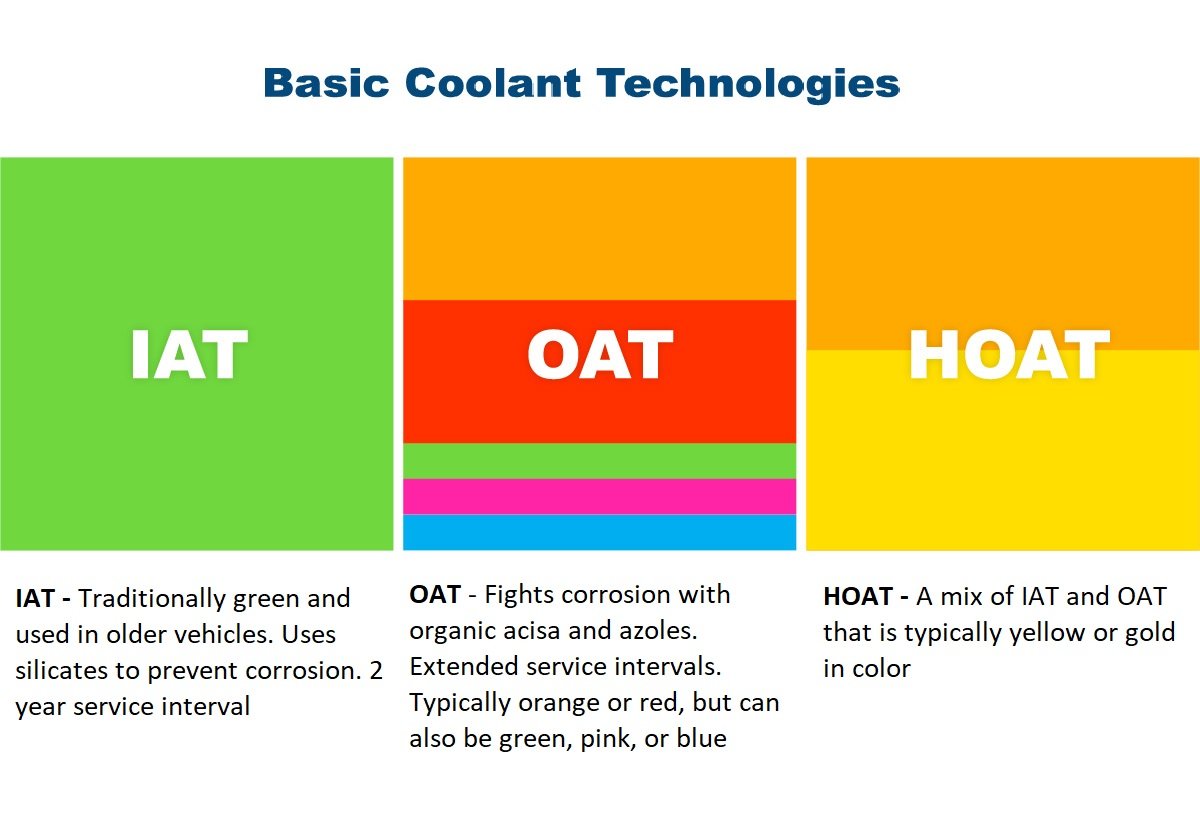
Coolant chemistry determines how long it remains effective. Using the wrong type or ignoring replacement windows risks serious engine damage.
Conventional IAT (Green) Coolant
This bright green formula contains silicates that protect aluminum components. It requires replacement every 30,000 miles or 2 years. Silicate additives deplete quickly, leaving older vehicles vulnerable to corrosion. Mixing IAT with newer coolant types causes gel formation and system blockages.
OAT (Orange or Red) Coolant
Extended-life OAT coolants like GM Dex-Cool last up to 5 years or 100,000 miles. These silicate-free formulas protect aluminum without additive depletion. However, they can attack certain seals if used in incompatible systems. Orange or red color does not guarantee OAT formulation.
HOAT (Yellow or Blue) Coolant
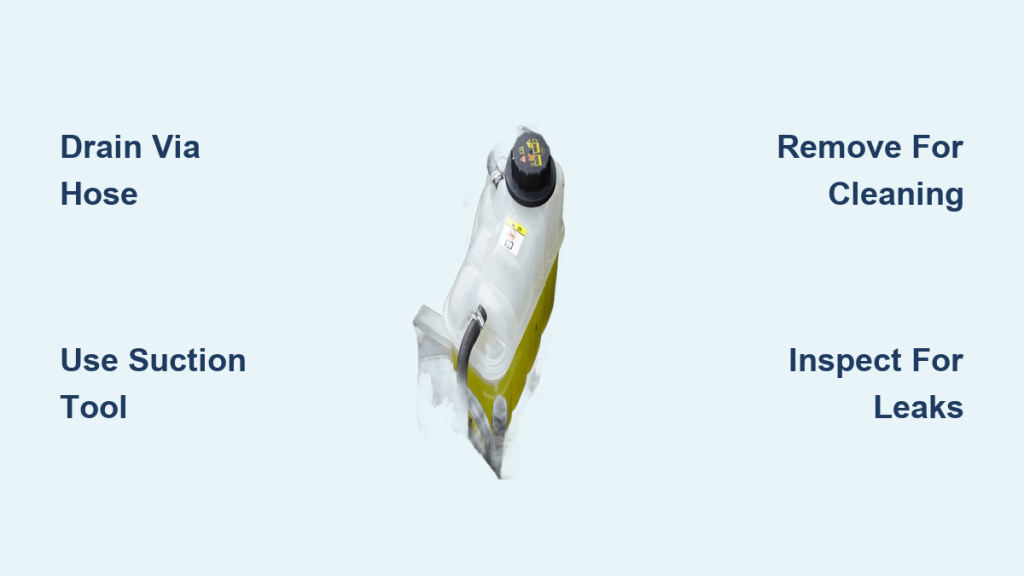
Hybrid Organic Acid Technology combines silicates with organic acids for broad compatibility. Used by Ford, Chrysler, BMW, and Mercedes, HOAT lasts 5 years or 50,000 to 100,000 miles depending on the specification. Yellow, turquoise, or blue colors indicate this type.
NOAT (Phosphated HOAT) Coolant
Modern vehicles often use phosphate-based formulas designed for aluminum radiators and sensitive electronics. Blue or violet colors are common, though specifications vary by OEM. Some last 100,000 miles or more.
Critical Rule: Never mix coolant types. Incompatibility creates sludge, clogs passages, and destroys water pumps.
Spot Warning Signs Early
Even within recommended intervals, certain symptoms demand immediate attention. Watch for these red flags between services.
Coolant Looks Dirty or Rusty
Fresh coolant appears bright, clear, and fluorescent, similar to sports drinks. If it turns cloudy, murky, brown, black, or dark green, degradation has begun. Floating particles or sludge indicate oxidation and corrosion byproducts. This contaminated fluid reduces heat transfer and can clog the radiator or heater core.
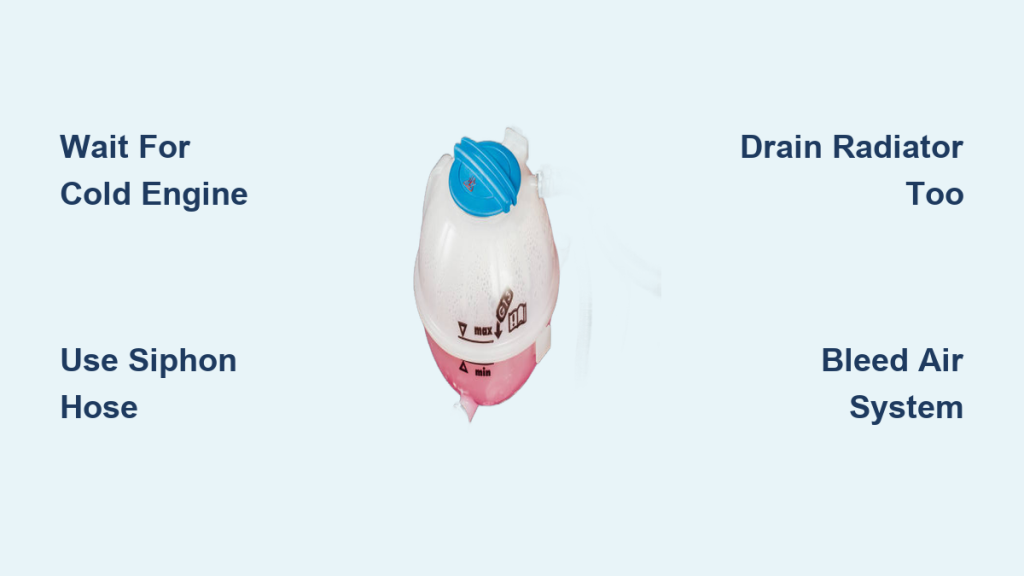
Check the overflow tank with a flashlight when the engine is cool. Clear fluid means the system is healthy.
Engine Overheats Frequently
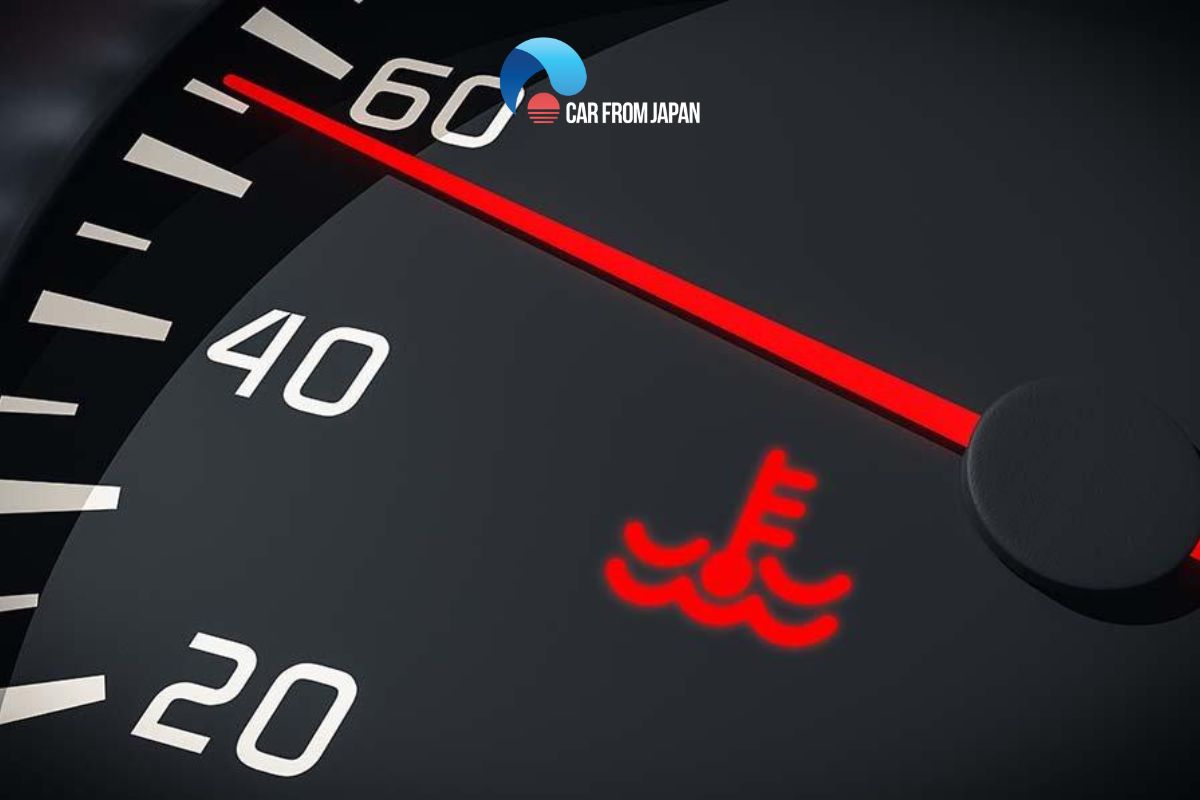
A rising temperature gauge or warning light signals cooling failure. Causes include low coolant, blocked passages from sludge, or a failing thermostat. Even a single overheating episode can warp cylinder heads. Repeated episodes blow head gaskets and crack engine blocks.
Sweet Smell Inside or Outside the Car
Ethylene glycol carries a distinctive syrupy, sweet odor. Under-hood smells indicate external leaks from the radiator, hoses, or water pump. Inside the cabin with fogged windows means a heater core leak. Both require prompt attention. Heater core leaks deplete coolant and create dangerous fumes.
Coolant Puddles Under the Car
Green, orange, pink, or blue fluid pooling after parking indicates a leak. Common sources include cracked radiators, brittle hoses, water pump seepage, or loose clamps. Low fluid means low pressure, which means poor cooling performance.
Gurgling Noises from the Dashboard
Bubbling or hissing sounds when activating the heat indicate air in the cooling system. This comes from low coolant, improper refill, or leaks letting air in. Air pockets create hot spots and reduce circulation. Some vehicles require a specific bleeding procedure to remove trapped air.
Dashboard Warning Lights Activate
The low coolant light indicates fluid below minimum. The temperature warning light means overheating in progress. The check engine light can trigger from temperature sensor faults. Do not ignore these warnings. They are your final defense before damage occurs.
Weak or No Cabin Heat
Cold air from the heater in winter suggests air in the system, a clogged heater core from sludge, or low coolant volume. A properly functioning cooling system circulates hot coolant through the heater core to warm the cabin. Poor heater output means a compromised cooling system.
Test Coolant Condition Accurately
Visual inspection helps, but testing provides hard data about fluid condition. These methods give objective measurements.
Use a Refractometer for Freeze Protection
A refractometer measures the glycol-to-water ratio to verify freeze protection. A 50/50 mix protects down to -34°F. Too much water risks freezing. Too much glycol harms heat transfer. This tool is more accurate than test strips and essential for winter preparation.
Check pH to Detect Acidic Coolant
Coolant should remain alkaline, ideally pH 8 to 10. Below pH 7 indicates acidity, which eats away at metal components. Test strips or digital meters reveal pH levels. Acidic coolant causes pitting, leaks, and premature water pump failure.
Dip Strips Reveal Hidden Issues
Specialized test strips check freeze point, reserve alkalinity, and contaminants like chlorides or sulfates. Test annually on vehicles over 5 years old to catch problems before they cause damage.
Choose the Right Service: Flush vs. Drain
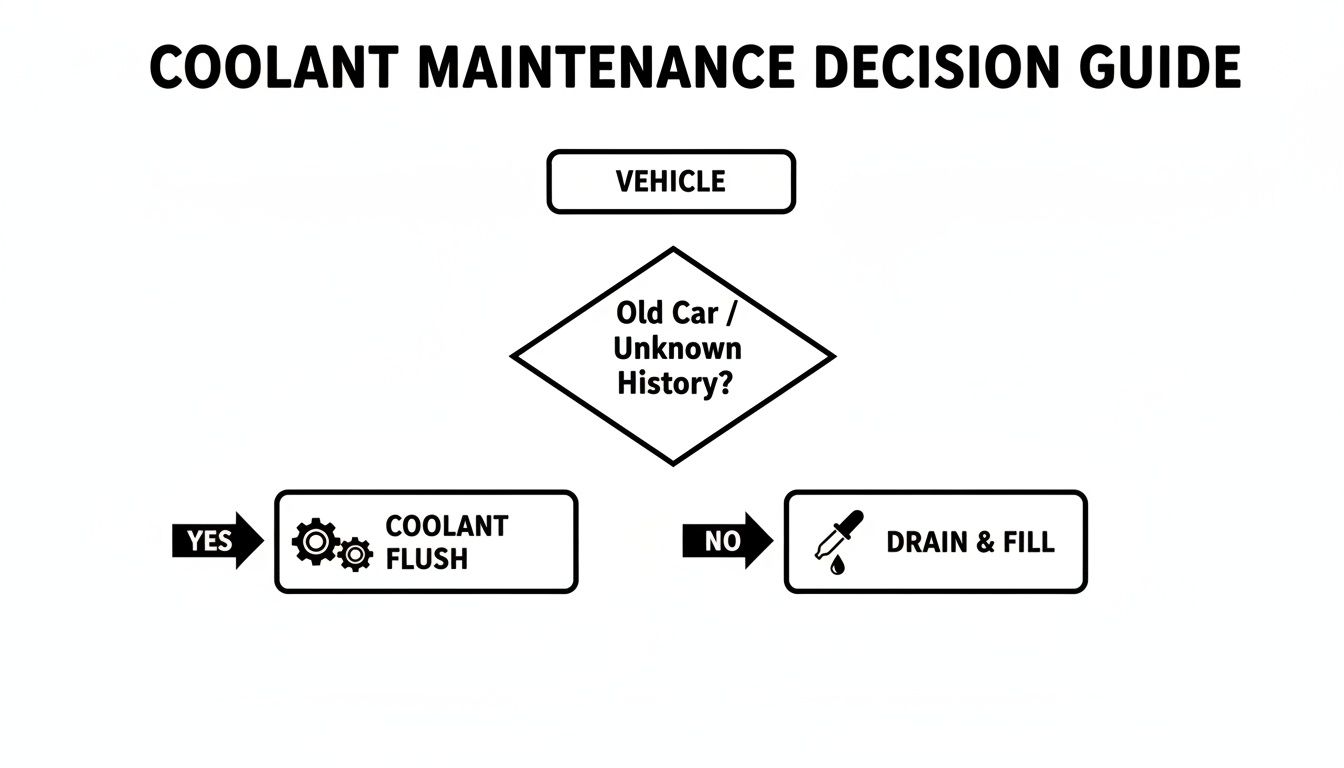
Not all coolant services provide equal protection. Understanding the difference ensures proper maintenance.
Drain and Refill Leaves Residue
Draining only the radiator removes about 60 to 70 percent of old coolant. The remainder stays in the engine block and heater core. This method risks mixing incompatible types and leaves contaminated fluid behind. It works only for recent services or minor top-offs.
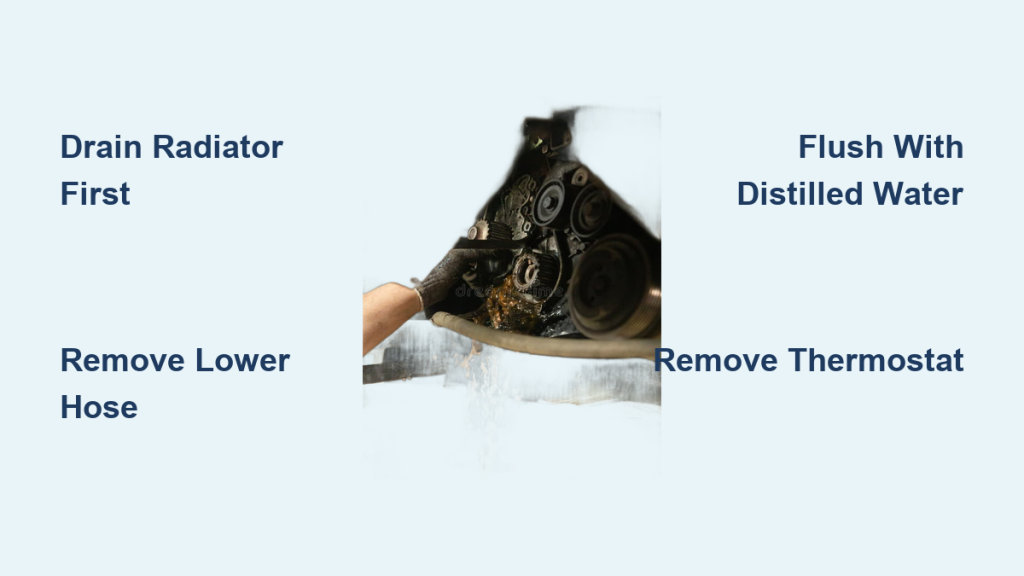
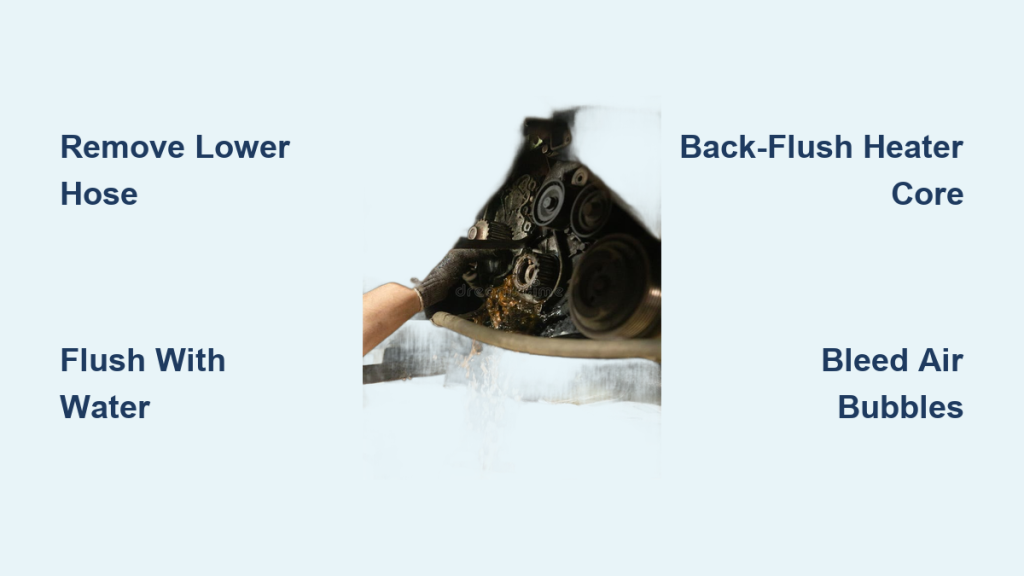
Full Coolant Flush Cleans the Whole System
A flush uses pressurized equipment to push out all old fluid, including sludge, rust, and contaminants from the engine block, radiator, and heater core. Recommended steps include flushing until water runs clear, replacing the thermostat and cap, vacuum-filling to prevent air pockets, and pressure testing for leaks.
Expert Advice: Always choose a full flush at service intervals. It costs more but protects your engine from hidden damage.
Avoid Costly Engine Damage
Neglecting coolant leads to cascading failures that cost thousands to repair. Understanding the consequences motivates timely service.
Corrosion Clogs the System
As inhibitors deplete, metal surfaces corrode. Rust flakes form scale and sludge that block radiator tubes and heater cores. The result is overheating despite full coolant levels.
Water Pump Fails Without Lubrication
Coolant lubricates water pump seals and bearings. Old or contaminated fluid increases friction and wear. A failed pump stops circulation, causing rapid overheating within minutes.
Radiator Gets Blocked
Narrow cooling fins clog with debris and rust. Reduced airflow means poor heat dissipation. Radiator replacement is expensive and labor-intensive.
Head Gasket Blows from Overheating
Repeated heat cycles warp cylinder heads. The head gasket fails, allowing coolant into the combustion chamber or oil passages. Symptoms include white exhaust smoke, milky oil, and bubbles in the overflow tank. Repairs often cost thousands.
Engine Block Cracks in Worst Cases
Extreme overheating can crack the engine block or cylinder head. At that point, you face a complete rebuild or engine replacement.
Debunking Coolant Myths
Several misconceptions lead to neglect and damage. Knowing the truth protects your engine.
Coolant Does Not Last a Lifetime
No coolant lasts forever. Lifetime claims assume perfect conditions that rarely exist in real-world driving. Additives deplete, pH shifts, and contamination accumulates. Inspect and test even long-life formulas.
Water Is Never a Substitute
Plain water boils at 212°F, well below engine operating temperatures. It freezes at 32°F, risking block cracking. Water lacks corrosion inhibitors, promoting rust and scale. Never run an engine on water.
All Orange Coolant Is Not the Same
Color is not a reliable identifier. GM Dex-Cool and Toyota Super Long Life Coolant use similar colors but different chemistries. Always verify specifications in your owner manual.
Change Coolant Before Problems Appear
By the time you see symptoms, damage has already occurred. Coolant degradation is silent at first. Preventive service costs far less than repairs.
Pick the Right Coolant
Using the correct coolant type matters as much as timing. Follow these guidelines for optimal protection.
Match OEM Specifications Exactly
Your owner manual lists specific coolant requirements. Look for exact specifications like GM 6277M, Ford WSS-M97B44-D, MB 325.0, or VW G13. Aftermarket universal coolants may not meet all requirements.
Pre-Mixed vs. Concentrate
Pre-mixed 50/50 coolant is ready to use, ideal for topping off. Concentrate requires mixing with distilled water only. Never use tap water, which contains minerals that cause scaling and corrosion.
Use Distilled Water Only
Tap water contains calcium, magnesium, and chlorine that form scale, accelerate corrosion, and react with additives. Always use distilled or deionized water when mixing concentrate.
When to Change Coolant: Final Decision Guide
Use this framework to determine when service is needed.
Change Immediately If
Coolant appears rusty, murky, or sludgy. The engine overheats repeatedly. A sweet smell appears inside or outside the car. Visible leaks or low levels exist. Dashboard warnings will not clear. Gurgling noises or poor heater output occur.
Schedule Service If
Mileage hits 30,000 to 50,000 miles for conventional coolant. Mileage hits 100,000 miles for extended-life formulas. It has been over 5 years since the last change. Severe driving conditions apply. The vehicle has unknown service history.
Best Practices for Longevity
Inspect coolant every 6 months during oil changes. Test pH and freeze point annually. Use only manufacturer-specified coolant. Insist on a full flush, not just a drain. Keep service records for resale value.
Frequently Asked Questions About Coolant Changes
How often should I change my coolant?
Most vehicles need coolant service every 30,000 to 150,000 miles depending on the type used and manufacturer specifications. Check your owner manual for exact intervals, and change at 5 years maximum regardless of mileage.
Can I change coolant myself, or do I need a mechanic?
You can change coolant yourself with basic tools. However, a proper flush requires equipment to remove all old fluid and prevent air pockets. Professional service ensures complete system cleaning and correct filling.
What happens if I never change my coolant?
Neglected coolant becomes acidic and loses corrosion protection. This causes internal rust, sludge buildup, heater core clogging, water pump failure, and eventually overheating that warps heads or blows head gaskets. Repairs cost thousands.
How do I know if my coolant is still good?
Check color and clarity through the overflow tank. Fresh coolant looks bright and clear. Test freeze point with a refractometer and pH with test strips. Any discoloration, particles, or acidic pH indicates replacement is needed.
Does coolant type really matter?
Yes. Different chemistries are designed for specific metals and seal materials. Using the wrong type causes gel formation, seal damage, and accelerated corrosion. Always match the specification in your owner manual.
Key Takeaways for Maintaining Your Cooling System
Coolant is one of the cheapest fluids in your car, but ignoring it can cost thousands in engine repairs. Change coolant based on manufacturer intervals, typically 30,000 to 150,000 miles depending on the type. Regardless of mileage, replace coolant every 5 years maximum to prevent chemical degradation.
Watch for warning signs like discoloration, overheating, sweet smells, or dashboard warnings. These indicate immediate service is needed. Always use the exact coolant specification for your vehicle, and insist on a full system flush rather than a simple drain. Regular inspection and testing catch problems before they cause damage.
Protect your engine by treating coolant service as essential maintenance, not an optional extra. The small cost of timely changes prevents catastrophic failures and keeps your vehicle running reliably for years.