Water softener brine tank overflow creates messy puddles, wastes expensive salt, and signals a broken regeneration cycle. If your unit is spilling water or the level never drops, your system is failing to draw brine correctly. This specific water softener brine tank overflow issue often stems from a clogged injector or incorrect timer settings rather than a catastrophic failure. Ignoring the problem can lead to floor damage and inefficient water softening in your home.
This guide provides a clear path to diagnose the root cause and fix the leak yourself. You will learn how to verify normal water levels, adjust critical timer settings, and clean clogged injectors. We also cover how to test suction and inspect float valves to stop the spill. Most repairs take under an hour and require only basic tools. Follow these steps to restore your system and prevent future overflows.
Confirm Normal Water Levels First
You must distinguish between normal operation and a true malfunction before attempting repairs. A healthy brine tank holds water at about one-third of its total capacity. This water sits inside a vertical brine well where a float valve regulates the level.
The system intentionally keeps water here to dissolve salt for the next regeneration cycle. An overflow happens only when the water exceeds the tank height or fails to drop after a cycle.
Signs of True Overflow
- Water pooling on the floor around the unit base
- Brine tank appearing completely full or spilling from the top
- Water level remaining static after a scheduled regeneration
- Salt levels staying high despite regular cycling
If the water level stays high and salt does not dissolve, the system is not drawing brine. This indicates a failure in the suction or refill process that requires immediate attention.
Check Brine Refill Time Setting

Incorrect timer settings are the leading cause of overflow in many modern systems. Specifically, the 5900 BT 32k model frequently overfills due to a misconfigured brine refill duration.
Why 6 Minutes Is Critical
The brine refill cycle must run for exactly 6 minutes on a standard 32k system. Water enters the tank at a controlled rate of 0.5 gallons per minute (GPM). This timing ensures exactly 3 gallons enter the tank.
Setting the timer longer than 6 minutes forces extra water into the tank. This excess volume exceeds the design capacity and triggers an overflow condition.
How to Verify and Fix the Setting
- Access the control panel by removing the dust cover.
- Enter the menu by holding both front buttons or using the mobile app.
- Navigate to Step 4 labeled as the Brine Refill Cycle.
- Correct the time if it displays anything other than 6 minutes.
- Press “Set/Change” and scroll to 6, then hit “Enter” to save.
This adjustment resolves more than half of all overflow cases. It is especially common in newly installed units or those recently reset.
Warning: Setting the salt level to zero will not stop water entry. It only disables brine draw, which allows water to accumulate faster and worsen the overflow.
Test for Proper Brine Draw
If your timer settings are correct, the system likely fails to create suction during regeneration. Without suction, refill water stacks up cycle after cycle until it spills over.
No Brine Draw Means Water Builds Up
The injector, or venturi, creates the vacuum needed to pull brine from the tank. If this component fails, water enters during refill but never leaves during the draw cycle. You must test for this suction to confirm the diagnosis.
Vacuum Test: Diagnose Suction Failure
- Open the brine tank and remove the cap from the brine well.
- Disconnect the brine tube from the float assembly carefully.
- Manually advance the system to the Brine Draw cycle (Cycle 2).
- Place your finger over the open tube end or submerge it in a cup.
- Pass: You feel strong suction pulling your finger or drawing water in.
- Fail: Water spits out, or you feel no suction at all.
A failed test indicates a clogged injector or internal valve issue. You must clean the injector to restore function.
Pro Tip: Always confirm the refill time is correct before testing suction. A timer set too long can mimic a suction failure by overwhelming the tank.
Clean or Replace the Injector

A clogged injector is the second most common cause of water softener brine tank overflow. Homes with high iron content face higher risks of rapid clogging.
Why Injectors Fail
The injector contains a tiny central hole that debris easily blocks. Common culprits include iron sediment, sand, mineral scale, and salt pellet dust. Even a partial blockage destroys the suction needed for brine draw.
How to Clean the Injector
- Put the system in bypass mode to stop water flow.
- Shut off the water supply and open a faucet to relieve pressure.
- Locate the injector cover, a small triangle plate on the control valve.
- Remove two screws using a 5/16-inch socket.
- Lift off the cover and remove the O-ring and injector screen.
- Pull out the injector (usually blue) gently with a screwdriver.
- Inspect and clean the central hole with hot water and a small wire.
- Scrub the screen with a toothbrush to remove grit.
- Reassemble the parts in reverse order tightly.
When to Replace
Replace the injector if the hole remains blocked after cleaning. You should also replace it if the body is cracked or deformed. Regular cleaning every 6 to 12 months prevents clogs in iron-heavy water.
Inspect the Float Valve and Brine Line
Mechanical failures in the float assembly often cause continuous water flow. The float valve must rise with the water level to shut off the inflow.
Common Float Failures
The float mechanism fails when the brine line disconnects from the float assembly. It also fails if the float cap loosens and drops into the tank. Debris can cause the valve to stick in the open position.
How to Check and Fix
- Remove the brine tank lid to access the brine well.
- Inspect the brine well for loose connections or dropped caps.
- Ensure the brine tube is securely attached to the float.
- Check for salt bridges forming hard crusts over the water.
- Break up any crusts with a broom handle or long rod.
- Verify the drain line is not kinked or clogged.
Replace if Stuck or Damaged
Float valves rarely return to working order once they stick internally. If the float does not rise freely or the cap is damaged, replace the entire assembly. Ignore small leaks at connections at your own risk, as air leaks disrupt vacuum pressure.
Verify Refill Volume and Flow Rate
Even with correct timer settings, a damaged flow restrictor can allow too much water into the tank. This component limits the refill rate to 0.5 GPM.
Target: 0.5 GPM for 6 Minutes Equals 3 Gallons
The system should deliver exactly 3 gallons during the refill cycle. A damaged or missing restrictor allows water to flow faster, exceeding the tank capacity within the 6-minute window.
How to Test Refill Volume
- Disconnect the brine tube from the brine well.
- Place a 4-gallon bucket under the tube outlet.
- Manually advance to the Brine Refill cycle (Cycle 4).
- Let it run for the full cycle duration.
- Measure the water collected in the bucket.
- Correct: Approximately 3 gallons.
- Too much: More than 3.5 gallons indicates a restrictor or timer issue.
- Too fast: Rapid filling suggests a damaged flow restrictor.
Fix the Flow Restrictor
Locate the restrictor in the brine line or control valve. Remove it and inspect for cracks or debris. Replace the part if it shows any signs of damage. Some systems integrate the restrictor into the injector assembly, requiring a full unit replacement.
Check for Internal Valve Failures
External checks may reveal no issues, pointing to an internal control valve failure. This scenario involves complex components like seals, spacers, and pistons.
Symptoms of Internal Failure
Water flowing across the valve during service mode indicates internal leakage. The system may also fail to advance through cycles properly. You might experience no brine draw despite a clean injector and correct settings.
Likely Culprits
- Torn seals or spacers in the valve stack
- Plugged or damaged piston components
- Worn O-rings causing pressure leaks
Repair or Replace
Internal repairs require precise disassembly and reassembly. Do not attempt a DIY fix unless you have specific experience with softener valves. Call a water treatment specialist to replace seals, pistons, or the entire valve. General plumbers often lack the specific parts needed for these units.
Pro Tip: Keep a spare seal kit on hand if you perform regular maintenance. These kits often cost less than a professional service call.
Emergency Steps to Stop Overflow Now
Active flooding requires immediate action to prevent property damage. Follow these steps to halt the overflow instantly.
Immediate Actions
- Engage bypass mode by pushing the bypass handle. This stops water flow into the softener.
- Pump out excess water using a submersible or sump pump. Discharge water away from your foundation.
- Contain leaks by placing a bucket under the overflow tube and towels around the base.
- Keep the unit plugged in to preserve timer settings unless an electrical hazard exists.
- Do not lift the tank while full, as it can weigh over 100 pounds.
Quick Fix: After pumping, you can temporarily set the salt level to zero to stop brine draw. Only do this after addressing the root cause of the overflow.
Prevent Future Overflows
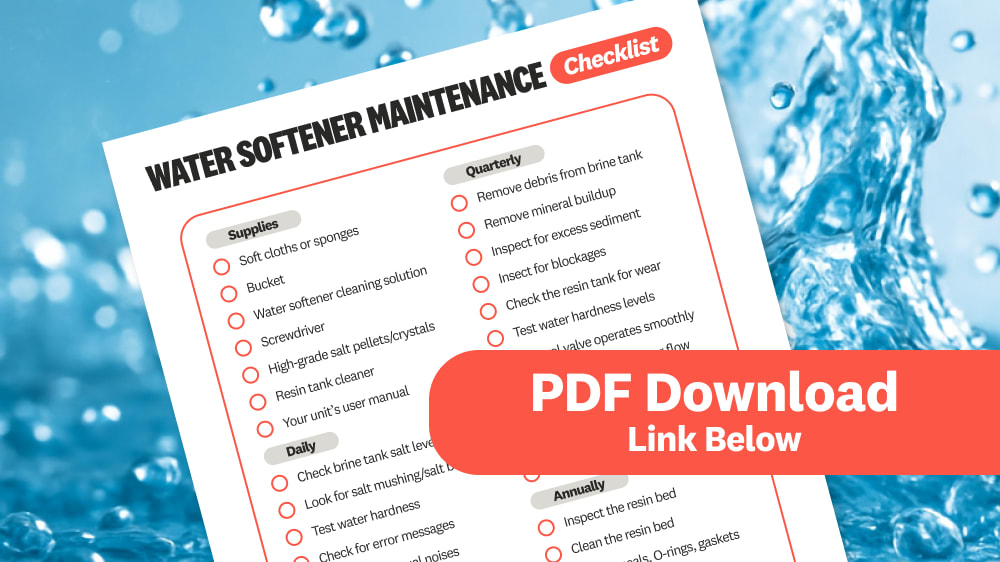
Regular maintenance prevents recurrence of water softener brine tank overflow. Simple checks keep your system running efficiently for years.
Monthly Checks
- Inspect the water level in the brine tank
- Ensure salt is being used regularly
- Look for salt bridges or crust formations
- Verify the float moves freely up and down
Every 6 to 12 Months
- Clean the injector and brine line thoroughly
- Flush the drain line to remove sediment
- Check flow restrictor condition for cracks
- Verify the refill time setting remains at 6 minutes
For High Iron Water
Install a pre-filter if iron exceeds 0.3 ppm. Clean the injector every 3 to 6 months to prevent buildup. Use iron-specific salt pellets to reduce accumulation inside the valve.
Best Practice: Set regeneration to occur at 2:00 AM. This timing minimizes disruption and reduces the chance of overflow during peak household water usage.
Summary: Brine Tank Overflow Fix Checklist
Use this quick-reference guide to diagnose and repair your system efficiently.
| Step | Action | Expected Outcome |
|---|---|---|
| 1 | Check refill time | Set to 6 minutes for 32k systems |
| 2 | Test brine draw suction | Strong vacuum felt at brine tube |
| 3 | Clean injector | Clear central hole with no debris |
| 4 | Inspect float and line | Secure connection with no salt bridges |
| 5 | Measure refill volume | Exactly 3 gallons collected |
| 6 | Check flow restrictor | Intact part with no cracks |
| 7 | Inspect drain line | No kinks or clogs present |
| 8 | Call specialist | If internal valve failure is suspected |
Frequently Asked Questions About Water Softener Brine Tank Overflow
How much water should be in my brine tank normally?
A normal brine tank holds water between one-quarter and one-half full. This usually equals about one-third of the total tank capacity. The water level should drop significantly after each regeneration cycle.
Why is my brine tank full of water and not using salt?
This indicates the system is not drawing brine during regeneration. Common causes include a clogged injector, incorrect refill time settings, or a stuck float valve. The water enters but never leaves the tank.
How do I stop my water softener from overflowing immediately?
Engage the bypass valve on your unit to stop water flow. Then use a pump to remove excess water from the brine tank. Check the refill time setting and ensure it is set to 6 minutes for 32k systems.
Can a clogged injector cause the brine tank to overflow?
Yes, a clogged injector prevents the system from creating suction. Without suction, the brine draw cycle fails, causing water to accumulate in the tank until it overflows. Cleaning the injector usually solves this.
What happens if the brine refill time is set too long?
Setting the refill time longer than the recommended 6 minutes adds excess water to the tank. This extra volume exceeds the tank capacity and causes an overflow. Correcting the timer setting stops the issue.
Key Takeaways for Fixing Water Softener Brine Tank Overflow
Stopping a water softener brine tank overflow requires checking your timer settings and cleaning key components. Most cases resolve by setting the brine refill time to 6 minutes or clearing a clogged injector. Regular inspection of the float valve and flow restrictor prevents future spills and ensures efficient operation.
Take action now by verifying your current settings and testing for suction. If simple fixes do not work, consider professional help for internal valve issues. Maintaining your system protects your home from water damage and keeps your water soft.