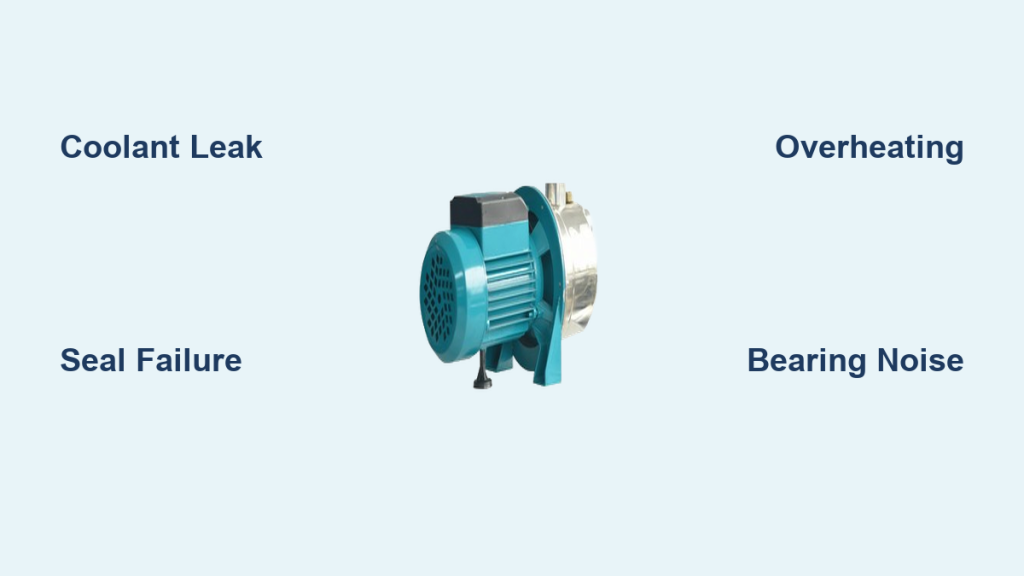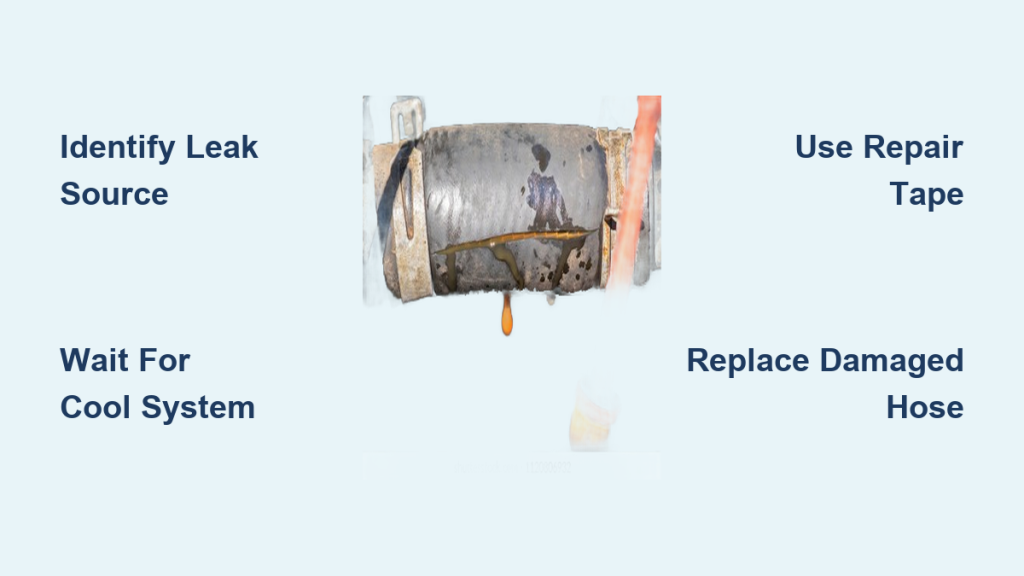
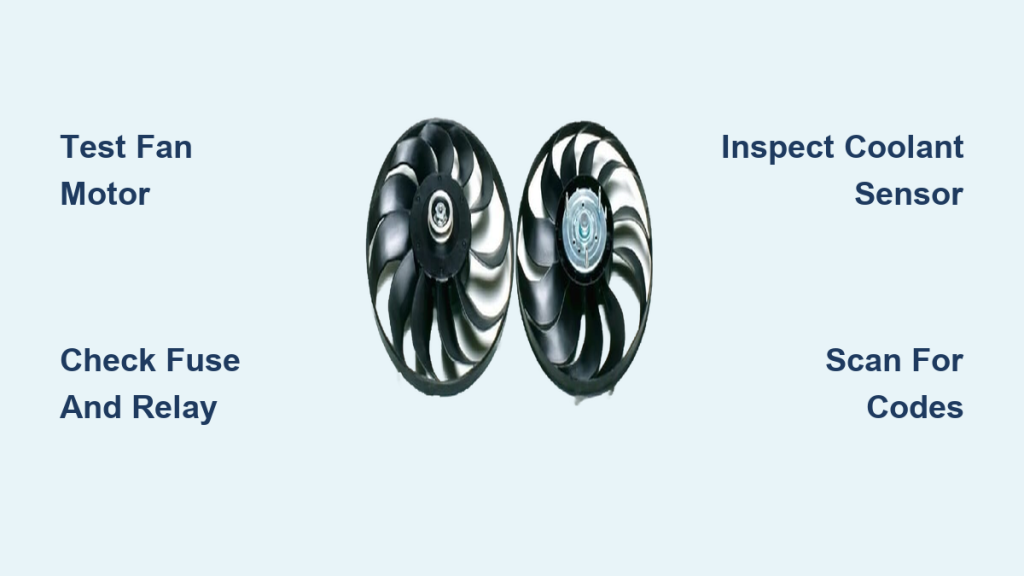
A Volkswagen radiator fan not working puts your engine at serious risk. Without proper airflow through the radiator, even short drives can trigger overheating, coolant boiling over, and permanent damage like warped heads or blown gaskets. This issue shows up frequently in Jetta, Passat, and Golf models and usually traces back to a failed fan motor, a blown fuse or bad relay, or a faulty temperature sensor.
Ignoring the warning signs can cost thousands in engine repairs. The good news is that most causes are easy to diagnose and fix at home with basic tools. In this guide, you will learn how to identify why your VW cooling fan is not running, test each component step by step, and apply the right fix before damage occurs. You will also learn how to decode strange fan behaviors, find hidden electrical issues, and avoid replacing the wrong part.
Why Volkswagen Radiator Fans Stop Working
Failed Fan Motor or Clutch Assembly
The fan motor itself fails more often than any other part. When it dies, the blades will not spin even when the engine is hot. In older or performance models, a mechanical fan clutch may fail to engage as temperatures rise, leaving the radiator without airflow.
Signs of a bad motor include no sound from the fan at operating temperature, no fan activation when the AC is switched on, and no movement during a direct power test. Electric fans have a limited lifespan, and high-mileage vehicles are especially prone to motor burnout from heat exposure and worn bearings. If applying 12V directly to the motor leads produces no spin, the motor is dead and must be replaced.
Pro Tip: Inspect the fan blades for cracks or warping during testing. A damaged blade can imbalance the motor and cause early failure on the replacement unit.
Blown Fuse or Faulty Relay
Power delivery problems rank as the second most common cause. A blown fuse cuts power completely, while a stuck or corroded relay prevents the activation signal from reaching the fan even when all sensors are working correctly.
Where to look first:
– Check fuse #7, #12, or #33 (varies by model and year) in the underhood fuse box
– Swap the fan relay with a known-good relay such as the horn relay
Relays degrade over time because they contain moving contacts that wear out, especially in humid climates. If the fan runs when you jump the relay terminals but not under normal operation, the relay is the culprit.
Warning: If fuses keep blowing after replacement, a short circuit exists. Do not keep replacing fuses. Trace the wiring first.
Bad Coolant Sensor or Control Module
Even with a working fan and power supply, the system will not activate without correct input. The engine coolant temperature (ECT) sensor tells the ECU when to turn on the fan. If it sends false readings such as “cool” when the engine is hot, the fan stays off.
The fan control module may also fail to send the activation signal. This is common in dual-speed fan setups where only one speed works.
Symptoms include:
– Check engine light with codes P0115 through P0119
– Fan activates only at dangerously high temperatures
– Inconsistent fan behavior across driving conditions
Use an OBD2 scanner to confirm sensor data matches actual engine heat.
Quick Diagnostic Checklist Before Testing Parts
Before tearing into components, run through this 10-minute inspection:
- Check coolant level because low fluid triggers false readings and overheating.
- Inspect the radiator for clogs from bugs, leaves, or debris.
- Look for steam or leaks that signal advanced overheating.
- Listen for fan noise after engine-off (normal post-run should last 16 minutes or less).
- Scan for trouble codes using a $20 OBD2 reader for instant clues.
If coolant is full and no visible damage exists, move to electrical testing.
How to Test the Volkswagen Radiator Fan Motor
Apply Direct Power to the Motor
This test bypasses all controls to verify if the motor works on its own.
You will need jumper wires with alligator clips and a 12V source such as the vehicle battery.
Steps:
1. Disconnect the fan electrical connector.
2. Connect the positive wire to terminal 1 (check your wiring diagram).
3. Ground the negative lead to the chassis.
4. Observe whether the fan spins.
If there is no movement, the motor is dead and the assembly must be replaced. If the fan spins, the issue is upstream in the relay, fuse, sensor, or wiring.
Safety First: Never hold wires by hand. Use insulated tools and keep clear of spinning blades during the test.
Diagnose Relay and Fuse Issues Step by Step
Locate the Correct Fan Relay
In most Volkswagen models from 2005 to 2015, the radiator fan relay sits in the black fuse box near the battery. Common positions include Relay 268 for low-speed operation and Relay 269 for high-speed operation. Dual-function relays may be labeled “Kühlventilator.”
Refer to your owner’s manual or the underside of the fuse box cover for the exact layout.
Perform a Relay Swap Test
- Turn off the ignition.
- Remove the suspected fan relay.
- Install a working relay from a non-critical system such as the horn or ABS.
- Start the engine and let it warm up.
- Observe whether the fan now runs.
If the fan runs, replace the original relay. Do not drive long-term with the swapped relay.
Check Fuse Continuity With a Multimeter
- Remove the fuse from the box.
- Set the meter to continuity mode.
- Touch probes to both metal ends.
A beep means the fuse is good. Silence means it is blown. Replace with the same amperage rating only, typically 30A or 40A.
Hidden Risk: Some Volkswagens have secondary fuses in the interior fuse panel. Check both locations before assuming the circuit is clean.
Test the Coolant Temperature Sensor
Access the Sensor Location
The sensor is usually found on the engine block or thermostat housing and has a two-wire connector.
Measure Resistance Across the Terminals
Coolant sensors are thermistors, meaning resistance changes with temperature.
Testing procedure:
1. Drain coolant below the sensor level.
2. Unplug the connector.
3. Set the multimeter to ohms mode.
4. Measure resistance across the terminals.
| Engine Temp | Expected Resistance |
|---|---|
| Cold (20°C / 68°F) | ~2.5 kΩ |
| Warm (80°C / 176°F) | ~0.3 kΩ |
Significant deviation means the sensor needs replacement.
Shortcut: Monitor live data via an OBD2 app. Compare IAT and ECT readings. If ECT shows -40°C, the sensor is open-circuited.
Decode Fan Control Module Problems
Identify Dual-Speed Circuit Failure
Many VW fans have low and high speeds controlled separately. A common symptom is a low-speed fan that never turns on while the high-speed fan runs constantly. This points to a failed control module or wiring fault rather than a dead motor.
Inspect the Fan Control Unit
The unit sits near or integrated into the fan shroud and is often called the fan resistor or power stage.
Failure signs include:
– Burn marks on the circuit board
– Corrosion from road moisture
– One fan speed completely dead
Test by swapping with a known-good unit or using a bench power supply.
Expert Note: On 2015 and newer Jettas, software updates can resolve erratic fan behavior. Visit a dealer for a TSB check.
Investigate Wiring and Harness Faults
Look for Damaged Wires
VW fan harnesses run near hot exhaust manifolds. Over time, insulation melts and causes shorts.
Inspect these areas:
– Along the firewall passage
– Near the turbocharger on TSI models
– Where the harness bends around the radiator support
Repair damaged sections with heat-shrink butt connectors rather than electrical tape.
Check the Ground Connection
A poor ground kills fan operation. Find the grounding point, usually on the fender or frame.
Test procedure:
1. Set the multimeter to voltage.
2. Probe between battery negative and the ground screw.
3. Crank the engine.
Any reading above 0.1V indicates a bad ground. Clean and reattach the connection.
Address Post-Shutdown Fan Running Issues
When Post-Shutdown Fan Operation Is Normal
The fan running up to 16 minutes after turning off the engine is normal during:
– Diesel particulate filter regeneration
– Brake cooling after highway descent
– High-load towing scenarios
When Post-Shutdown Fan Operation Signals a Fault
The fan running when the engine is cold, for hours at a time, or until it drains the battery indicates a real problem.
Most often caused by:
– A relay stuck closed
– Shorted wiring
– A faulty freon pressure sensor
Diagnostic steps:
1. Pull the fan relay. If the fan stops, replace the relay.
2. If the fan still runs, disconnect the fan connector.
3. If it keeps running, trace for a parasitic power feed (rare but possible ECU fault).
Also check the AC pressure sensor because on many VWs a failed sensor disables or mis-triggers the fan logic.
Solve Persistent Electrical Mysteries
Case: Fan Still Dead After Full Replacement
You have replaced the fan assembly, control module, sensors, and wiring harness, yet the fuse stays powered even when removed. This points to parasitic voltage, which is a dangerous condition.
Common causes include:
– Backfeed from another circuit
– A short inside the ECU
– An aftermarket accessory tapping into the fan circuit
Solution steps:
1. Disconnect the battery.
2. Test for continuity between the fan power line and unrelated systems.
3. Use a wiring diagram to isolate cross-connected circuits.
4. Consult dealer-level diagnostics for ECU integrity.
Critical: Driving with uncontrolled power feeds risks fire. Do not ignore this symptom.
Prevent Future Volkswagen Radiator Fan Failures
Routine Maintenance Tips
- Clean the radiator monthly using compressed air to blow out debris.
- Replace coolant every 3 years to prevent corrosion and sensor fouling.
- Inspect the fan at oil changes and listen for grinding or wobble.
- Carry a spare relay and fuse as cheap insurance on long trips.
Proactive Upgrades Worth Considering
- Install a manual override switch for emergency fan activation.
- Upgrade to a dual-relay kit for improved high-speed reliability.
- Use OEM-spec relays because aftermarket units fail faster.
Long-Term Strategy: On vehicles over 100,000 miles, consider preemptive fan assembly replacement. It costs far less than engine repair.
When to See a Professional for Your Volkswagen Radiator Fan
DIY fixes work for most cases. Visit a trusted VW specialist if you notice:
– Repeated fuse failures
– No power at multiple modules
– Check engine light with communication errors (U-codes)
– Smoke or burning smell from the fuse box
These signs suggest deeper electrical system faults requiring advanced diagnostic tools.
Frequently Asked Questions About Volkswagen Radiator Fan Problems
Why is my Volkswagen radiator fan not working but the fuse is good?
A good fuse with a non-working fan usually points to a failed fan motor, a faulty relay, or a bad coolant temperature sensor. Test the motor with direct 12V power first. If it spins, move to the relay swap test, then check the ECT sensor with a multimeter or OBD2 scanner.
How long should the radiator fan run after turning off a VW engine?
Post-shutdown fan operation up to 16 minutes is normal. This happens during diesel particulate filter regeneration, brake cooling after steep descents, or high-load towing. If the fan runs when the engine is cold or for hours at a time, the relay, sensor, or freon pressure switch likely needs replacement.
Can a Volkswagen radiator fan stop working because of a bad AC pressure sensor?
Yes. On many VW models, the radiator fan doubles as the condenser fan for the AC system. A failed AC pressure sensor can disrupt the fan logic and prevent activation even when coolant temperatures demand it. Scan for AC-related codes and test the pressure sensor before assuming the fan motor is bad.
What causes the low-speed fan to fail while the high-speed fan runs constantly?
This dual-speed discrepancy usually points to a failed fan control module or a wiring fault in the low-speed circuit. The motor itself is often still functional. Swapping the control module or tracing the low-speed wiring can resolve the issue without replacing the entire fan assembly.
Is it safe to drive a Volkswagen with a non-working radiator fan?
Driving with a Volkswagen radiator fan not working is risky and should be avoided. Even short trips can push the engine past safe temperatures, causing warped cylinder heads, blown head gaskets, or complete engine seizure. Address the issue immediately or arrange towing to a repair shop.
How much does it cost to fix a Volkswagen radiator fan that is not working?
Costs vary by cause. A fuse or relay replacement runs $10 to $50. A coolant temperature sensor costs $20 to $80. A full fan assembly replacement ranges from $200 to $500 for parts plus labor. Diagnosing the exact cause first prevents spending money on the wrong component.
Key Takeaways for Fixing a Volkswagen Radiator Fan Not Working
A Volkswagen radiator fan not working is one of the most urgent cooling system issues you can face. The three most common causes are a failed fan motor (34%), a blown fuse or bad relay (28%), and a faulty coolant sensor or control module (23%). Starting with the simplest checks (coolant level, fuse continuity, and relay swap) saves time and money before moving to component-level testing.
Always test before replacing. A direct 12V power test on the fan motor confirms whether the motor itself is dead. A relay swap test isolates electrical supply issues in minutes. An OBD2 scan reveals sensor and module faults without guesswork. Decoding fan behavior, including post-shutdown operation and dual-speed discrepancies, helps pinpoint the exact component at fault.
Your next step is to run the 10-minute diagnostic checklist, then perform the direct power test on the fan motor. If the motor spins, move to the relay and fuse tests. If those pass, scan for codes and inspect the coolant temperature sensor. With this systematic approach, you can resolve the issue before engine damage occurs.