Choosing the wrong types of radiator can leave rooms cold, inflate energy bills, or waste valuable wall space. With so many options on the market, from traditional cast iron columns to slim vertical designs, finding the right fit for your home requires more than picking the first model you see. Each type delivers heat differently, fits different spaces, and suits different budgets.
This guide walks you through every major type of radiator, explaining how each one works, where it performs best, and what to weigh before buying. By the end, you’ll know which radiator suits your room size, property style, and heating setup, so you can make a confident, cost-effective choice.
Power Source: How Radiators Generate Heat
The first way to sort through types of radiators is by how they produce warmth. Your power source shapes installation, running costs, and day-to-day control.
Central Heating (Plumbed Water-Based) Radiators
These are the most common choice in homes with a gas or oil boiler. Hot water travels from the boiler through pipes into each radiator, releasing heat into the room.
- Combines radiation and convection for steady, even warmth
- Managed through a central thermostat for whole-house control
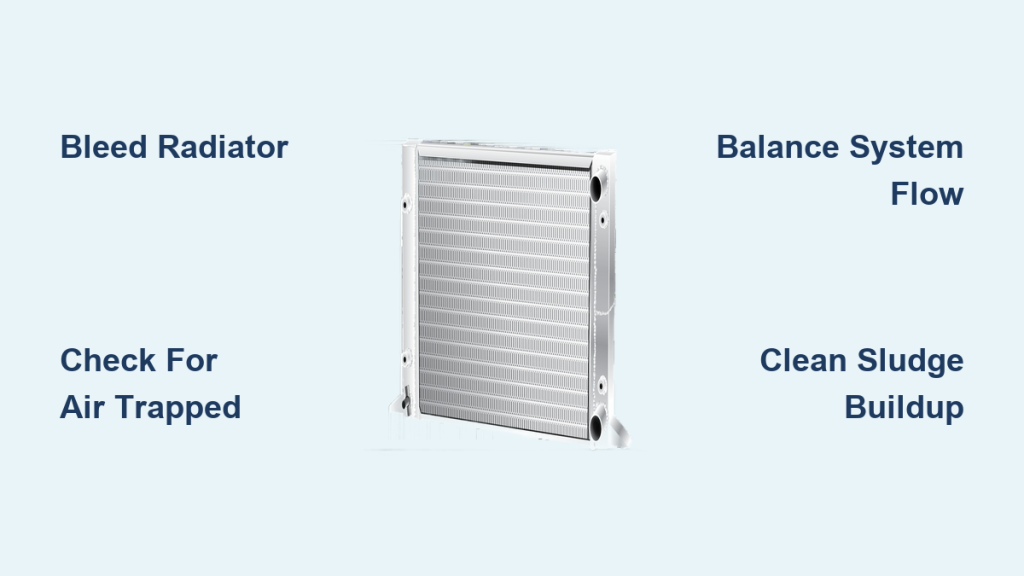
- Needs annual bleeding to release trapped air
- Best for consistent heating across multiple rooms
Two main system variants exist within central heating:
- Hot Water Systems: Use a circulating pump to push liquid water through pipes. Offer better temperature control and quieter operation than steam setups.
- Steam Systems: Found in older and historic properties. Steam travels through pipes, cools, and condenses back to water. Durable but noisier and less efficient.
Quick Check: If your boiler has a sight glass, you likely have a steam system. A circulating pump signals a hot water system.
Electric Radiators
Electric models plug into the mains or a standard outlet, converting electricity directly into heat. No boiler or pipework required.
- Heats metal panels or sealed thermal oil internally
- Often includes built-in thermostats, timers, and smart app controls
- Ideal for off-grid homes, extensions, conservatories, or hard-to-reach rooms
- More expensive per unit of heat than gas, so best as supplementary heating
Expert Warning: “Avoid using space heaters for primary heat because they can be dangerous and are inefficient.” — Yashar Mosaferi, President of Klondike AC.
Dual-Fuel Radiators
Dual-fuel models combine central heating with electric power, giving you year-round flexibility.
- Winter mode runs on your central heating system like a standard radiator
- Summer mode switches to electric for single-room warmth without firing the boiler
- Perfect for bathrooms needing towel drying and heat in warmer months
- Requires both plumbing and electrical wiring, so hire a qualified electrician
Oil-Filled Radiators
A subtype of electric radiator, these contain sealed thermal oil heated by an internal element.
- Delivers slow, steady warmth with excellent heat retention
- Completely silent since there are no fans or moving parts
- Often freestanding with wheels for easy room-to-room movement
- Continues radiating heat after being switched off, saving energy
Panel and Convector Types: The Modern Standard
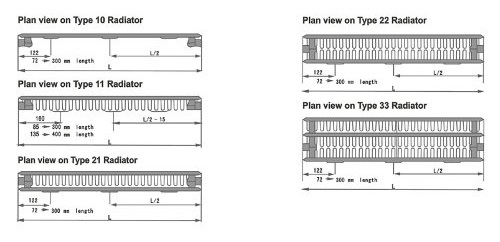
Most modern homes rely on steel panel radiators, classified by a numbering system based on panels and convector fins.
Type 10: Single Panel (No Fins)
- One flat steel panel with no convector fins
- Slimmest profile available, ideal for tight spaces
- Lower heat output than fin-equipped models
- Works well in narrow hallways or beneath low windowsills
- Budget-friendly but less efficient overall
Type 11: Single Panel Convector
- One panel paired with a single layer of fins on the back
- Delivers good heat for small rooms relative to its slim size
- Great for bathrooms, small bedrooms, and utility rooms
- Affordable and space-saving
Type 21: Double Panel Plus
- Two panels with one fin layer sandwiched between them
- Higher output than Type 11 thanks to extra surface area
- Moves less air than Type 22, warming rooms more slowly
- Suited to medium rooms needing balanced output and slim depth
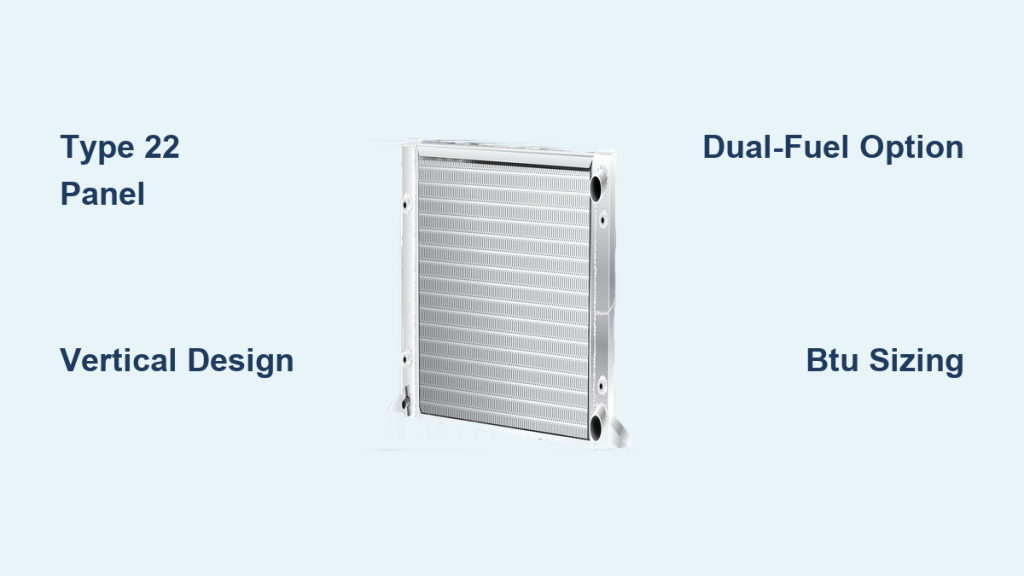
Type 22: Double Panel Convector
- Two panels with two fin layers for maximum surface contact
- Highest output among standard radiators
- Ideal for living rooms and large bedrooms
- Faster room warm-up thanks to enhanced fin efficiency
- Thicker profile, so less suitable for narrow walls
Pro Tip: Type 21 and Type 22 are the most efficient panel radiators, delivering fast, cost-effective heating.
K3 Radiators
- Three panels with high-density fins
- Superior heat output in a compact footprint
- Excellent for attic rooms or spaces with high heat needs and limited wall area
- Doubles as a modern design feature
Material Matters: Steel, Aluminum, and Cast Iron
The material you choose affects heat-up speed, weight, and overall style.
Cast Iron Radiators
- Classic, ornate look perfect for Victorian or Edwardian homes
- Slow to heat but retains warmth for hours
- Extremely heavy and requires strong wall supports
- Can last over a century with proper care
- Modern steel column radiators offer a similar look at lower weight
Aluminum Radiators
- Heat up fastest since aluminum is a superconductor
- Lightweight and easy to install
- High output with low water volume, ideal for modern systems
- Available in sleek finishes like anthracite, matte black, or chrome
Steel Radiators
- Standard choice for most panel and designer models
- Balanced heat output, durability, and price
- Comes in white gloss, bronze, mirrored, and textured finishes
- Prone to corrosion if system water is untreated
Design and Specialized Radiators

For style or tricky spaces, specialized types of radiators combine function with visual appeal.
Vertical Radiators
- Tall and narrow, fitting where horizontal space is limited
- Heat rises fast and circulates efficiently, with no efficiency loss compared to horizontal models
- Work well between windows, in hallways, or modern kitchens
- May require moving pipework during installation
- Often available as dual-fuel for bathroom use
Horizontal Designer Radiators
- Modern shapes, bold colors, and sculptural forms
- High heat output suitable for large rooms
- Easier to retrofit than vertical models since pipework often aligns
- Premium pricing reflects aesthetics and craftsmanship
Column Radiators
- Vertical tubes in 2, 3, or 4 column configurations
- Elegant, traditional look ideal for period homes
- Available as wall-mounted or floor-standing units
- Surface gets very hot, so consider Low Surface Temperature (LST) models around children
- Floor-standing versions take up floor space
Curved Radiators
- Bent to fit corners or curved walls
- Made from steel or aluminum
- Saves space and integrates into unique architecture
- Perfect for bay windows, alcoves, or circular rooms
Towel Radiators vs. Towel Rails
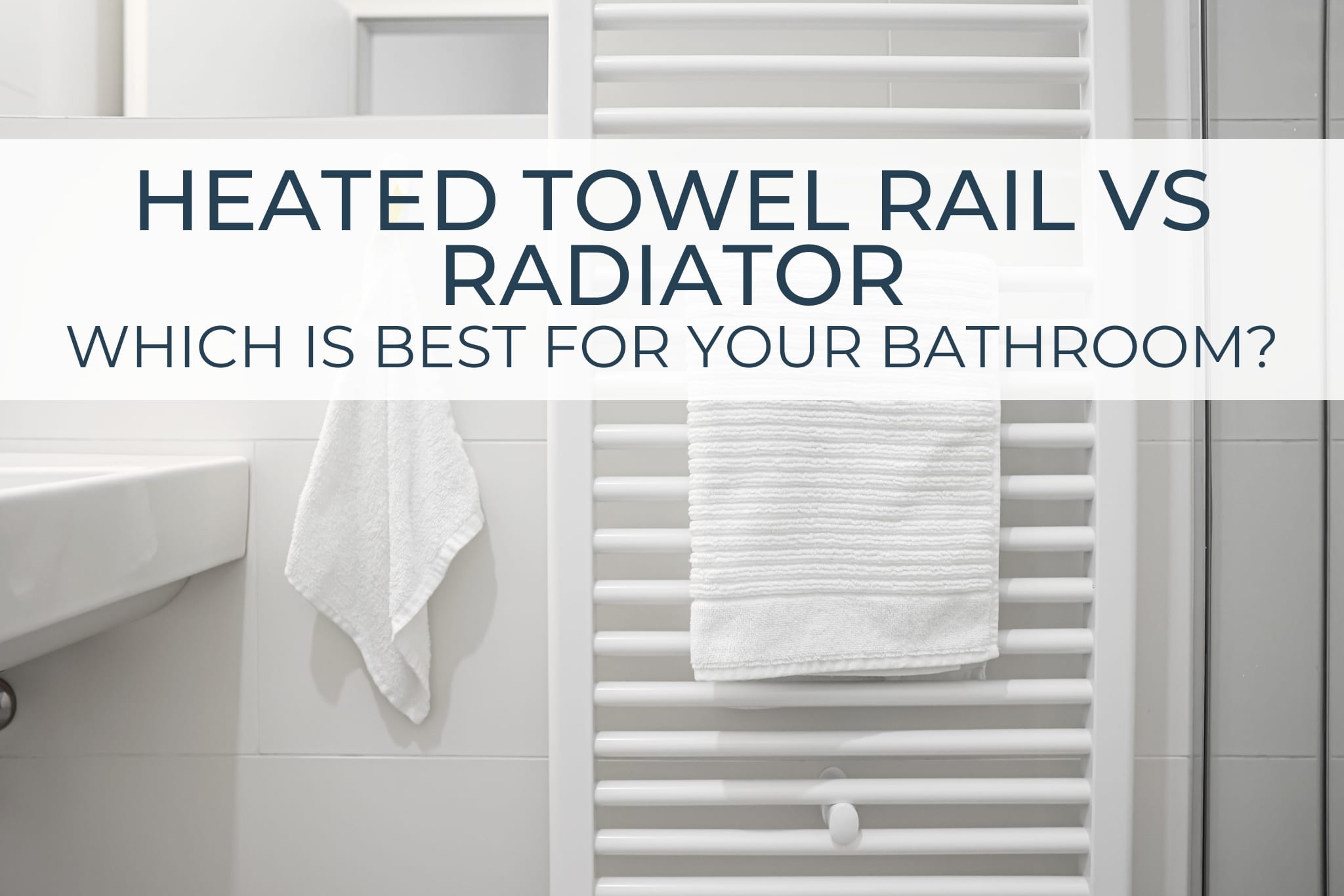
Bathrooms need specific fixtures, but towel rails and towel radiators serve different purposes.
Towel Rails
- Smaller with horizontal bars
- Low heat output, best for drying one or two towels
- Ideal for compact bathrooms or as secondary heat sources
Towel Radiators
- Larger and more powerful
- Heat the bathroom while drying towels
- Available in flat ladder, curved, or column styles
- Finishes include chrome, brushed nickel, and matte black
- Electric versions allow summer use without the boiler
Safety Tip: Choose LST models in homes with young children to prevent burns.
Performance Comparison: Which Radiator Wins?
Balancing speed, cost, and comfort helps you pick the right type of radiator for each room.
Fastest Heat-Up
- Aluminum radiators warm within minutes
- Convector types (11, 21, 22) heat faster than basic panels thanks to fin-assisted airflow
Highest Heat Output
- Type 22 radiators deliver maximum output per wall space
- K3 models offer even higher output in compact sizes
- Column radiators produce high output from large surface areas
Best Heat Retention
- Cast iron stays warm for hours after heating stops
- Oil-filled radiators retain heat after power-off, saving energy
Most Efficient
- Type 21 and Type 22 convectors maximize heat transfer with less energy
- Aluminum radiators need less water volume for high conductivity
Quietest Operation
- Oil-filled and electric models run silently with no fans or water movement
- Properly bled hot water systems are also silent
- Steam radiators can clank and hiss, so avoid them if noise matters
Best for Small Spaces
- Type 10 and Type 11 panels offer slim depth
- Vertical radiators fit tall, narrow walls
- Curved models work in awkward layouts
Sizing and Installation: Get It Right

Correct sizing and placement make a major difference in comfort and efficiency.
How to Size a Radiator
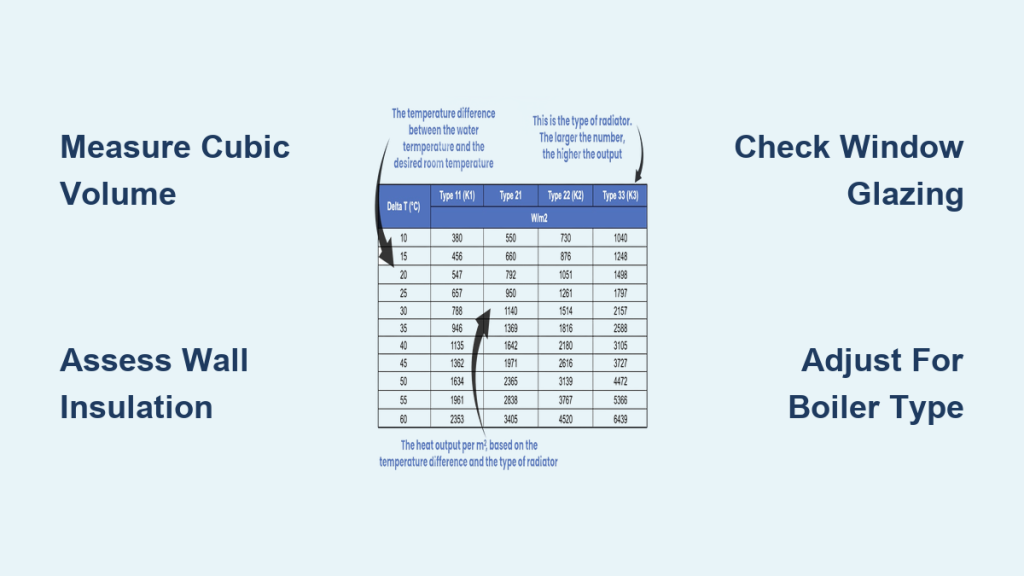
BTU (British Thermal Unit) calculations match radiator output to room needs. Key factors include:
- Room dimensions (length × width × height)
- Number and type of windows
- Insulation quality
- Number of external walls
- Desired room temperature
Use an online BTU calculator or consult a heating engineer for accurate sizing.
Placement Tips
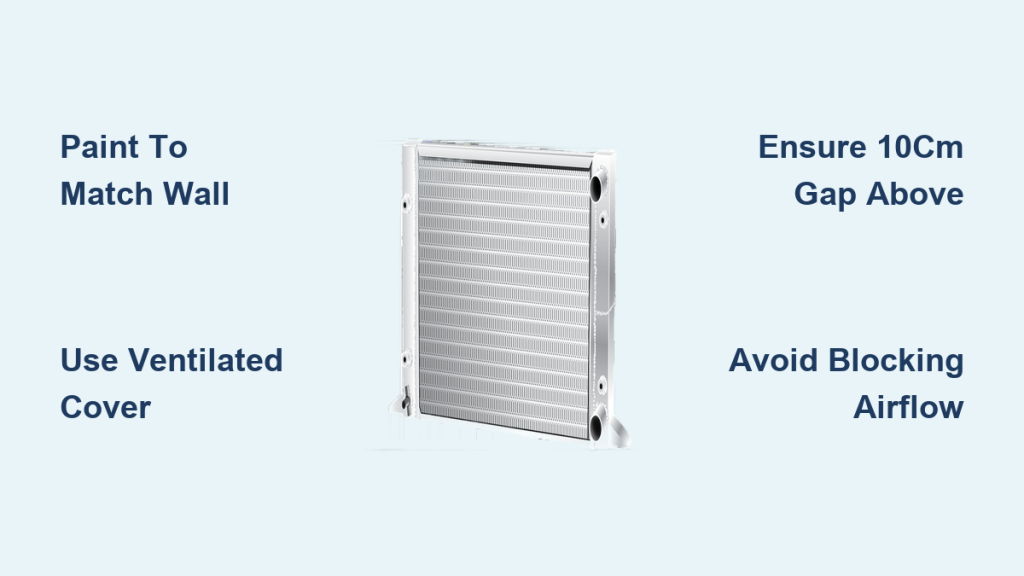
- Position under windows on external walls to block cold drafts
- Keep 10 to 15 cm clearance above and in front
- Avoid blocking with furniture or heavy curtains
- Match valve alignment (side-entry vs. bottom-entry) to existing pipework
Installation Notes
- Switching from horizontal to vertical may require pipe adjustments
- Dual-fuel installations need both plumbing and electrical work, so hire a professional
- Seal joints tightly to prevent leaks, especially in older systems
Cost, Trends, and Who Should Choose What
Price Guide (Approximate)
| Type | Price Range |
|---|---|
| Standard Panel (Type 11/22) | £50 – £150 |
| Designer Radiators | £300 – £800+ |
| Cast Iron | High (custom pricing) |
| Electric/Dual-Fuel | £100 – £400 + installation |
Who Should Choose Which?
- Historic Homes: Cast iron or column radiators for authentic style
- Budget Projects: Type 22 double panels for the best value and performance
- Small Flats: Type 11 or vertical radiators to save space and deliver heat
- Bathrooms: Dual-fuel towel radiators for year-round warmth and drying
- Off-Grid or Extensions: Electric or oil-filled models where pipework is impractical
Design Trends
- Colors: Anthracite grey, matte black, bronze, mirrored steel
- Forms: Sculptural, curved, or integrated into furniture
- Mindset: Radiators as design features, not just utilities
Warranty and Longevity
- Cast iron can last centuries and rarely fails
- Steel panels come with 5 to 10 year warranties
- Electric models often include 5+ year guarantees on heating elements and safety features
Frequently Asked Questions About Types of Radiators
What is the most efficient type of radiator?
Type 21 and Type 22 double panel convectors are the most efficient standard options. Their internal fins maximize surface area, warming rooms faster while using less energy. Aluminum radiators also rank highly due to their superconductor properties.
Are vertical radiators less efficient than horizontal ones?
No. Vertical radiators are not less efficient. Although heat rises toward the ceiling, the higher temperature and velocity of the air allow it to circulate quickly around the room, delivering warmth comparable to horizontal models.
What is the difference between a towel rail and a towel radiator?
Towel rails are smaller, less powerful units designed mainly for drying towels. Towel radiators are larger, more powerful fixtures that heat the bathroom while also drying towels, making them suitable as primary heat sources in smaller bathrooms.
Can I switch from a horizontal to a vertical radiator without redoing all the pipework?
Often no. Switching from horizontal to vertical usually requires moving pipework. However, switching between horizontal models with matching valve alignment (side-entry or bottom-entry) is usually straightforward with minor adaptor adjustments.
Are electric radiators expensive to run?
Yes, electric radiators cost more per unit of heat than gas central heating. They work best as supplementary heating for single rooms, off-grid properties, or spaces where extending pipework is impractical, rather than as a primary whole-home heat source.
How do I know what size radiator my room needs?
Calculate the room’s BTU requirement based on dimensions, window size, insulation quality, and external walls. Online BTU calculators offer quick estimates, but a heating engineer can provide precise sizing for complex layouts.
Key Takeaways for Choosing the Right Radiator Type

The best type of radiator balances efficiency, cost, space, and style. For whole-home heating, Type 22 panel radiators on a gas central system deliver the strongest mix of performance and economy. For design flair or tricky layouts, vertical, curved, or designer models offer both heat and visual impact.
Before buying, size each radiator correctly using BTU calculations, plan placement under windows on external walls, and consider dual-fuel options for bathrooms needing year-round warmth. With the right choice, your radiators will heat your home efficiently while enhancing its overall look.