You’re driving on a freezing morning, your engine feels fine, but when you pop the hood, something seems off. The upper radiator hose is hot to the touch, yet the lower radiator hose is cold. Your first instinct might be to suspect a stuck thermostat or blocked coolant flow. Before you rush to replace parts, take a breath. A cold lower radiator hose is not always a sign of failure. In fact, it can be a hallmark of a well-functioning cooling system under the right conditions.
The key lies in understanding what is normal versus what signals real trouble. While online forums often blame a stuck thermostat, real-world data shows that efficient heat exchange, especially in cold weather, can make the lower hose feel cold even when everything works perfectly. The true diagnostic focus should be on engine temperature stability, not just hose warmth. In this guide, you will learn when a cold lower radiator hose is normal, when it is a red flag, and how to tell the difference using simple tools and observations.
Normal Cooling System Operation

A properly functioning cooling system relies on a temperature differential between the upper and lower radiator hoses. Hot coolant exits the engine through the upper hose, enters the radiator, and releases heat to the outside air. By the time coolant reaches the bottom of the radiator, it should be significantly cooler. This temperature drop is the entire point of the system.
Heat Transfer Creates Temperature Differences
When ambient temperatures drop below 40°F, the radiator becomes extremely effective at shedding heat. As a result, the lower radiator hose can feel cold to the touch even while the engine runs at a stable 195°F to 200°F. This is not a malfunction. It is efficient cooling in action.
Thermostat Modulation in Cold Weather
Modern thermostats do not just snap open when the engine warms up. They modulate. In cold conditions, the thermostat may only crack open slightly, allowing just enough hot coolant into the radiator to maintain engine temperature. This restricted flow increases dwell time in the radiator, maximizing heat loss and resulting in a very cold lower hose.
As long as the engine maintains its target temperature, this behavior is normal and desirable. Overreacting by replacing the thermostat based solely on hose temperature leads to unnecessary expense with no real improvement.
Field Data Confirms Normal Cold Hose Behavior
A documented field test provides clear benchmarks:
- Ambient temperature: 35°F
- Engine coolant temp: 196°F (stable)
- Upper hose surface temp: 165°F
- Lower hose surface temp: 58°F
Despite the lower hose feeling cold, the system functioned perfectly. The 107°F temperature drop across the radiator confirmed excellent heat rejection. The takeaway is simple. Diagnose with data, not with your hands.
Diagnose Engine Temperature Stability First
The dashboard temperature gauge is often misleading. It shows a “normal” range without precision. To truly assess your cooling system, you need real-time data from the engine control module.
Use an OBDII Scanner for Accurate Readings
A Bluetooth OBDII scanner paired with a compatible app like Torque or Carista lets you monitor real-time coolant temperature. Look for these indicators:
- Engine reaches and holds 195°F to 220°F (varies by vehicle)
- Minimal fluctuation of plus or minus 2 to 3°F
- No sudden spikes during acceleration
If coolant temperature is stable and within spec, a cold lower radiator hose is not a problem. It is a sign your radiator is working well.
Why Touch-Based Diagnosis Can Mislead You
Many drivers panic when they feel a cold lower hose, assuming no coolant is flowing. But touch is subjective and unreliable. A hose at 60°F feels cold to a hand at 98.6°F, even if that temperature is perfectly normal. Without data, you risk misdiagnosing the system and replacing parts like thermostats or radiators when nothing is wrong.
Pro Tip: Always verify with an OBDII scanner before any repair. It is cheap, easy, and prevents costly mistakes.
Cold Engine vs. Warm Engine Hose Checks
- Cold Engine: Both hoses should be at ambient temperature.
- Warm-Up Phase: Upper hose heats up first. Lower hose stays cool until the thermostat opens.
- Fully Warm Engine: Upper hose hot, lower hose cooler. Engine temperature must remain stable.
If the engine overheats or runs cool, then a cold lower radiator hose becomes a symptom worth investigating.
Identify True Circulation Failure
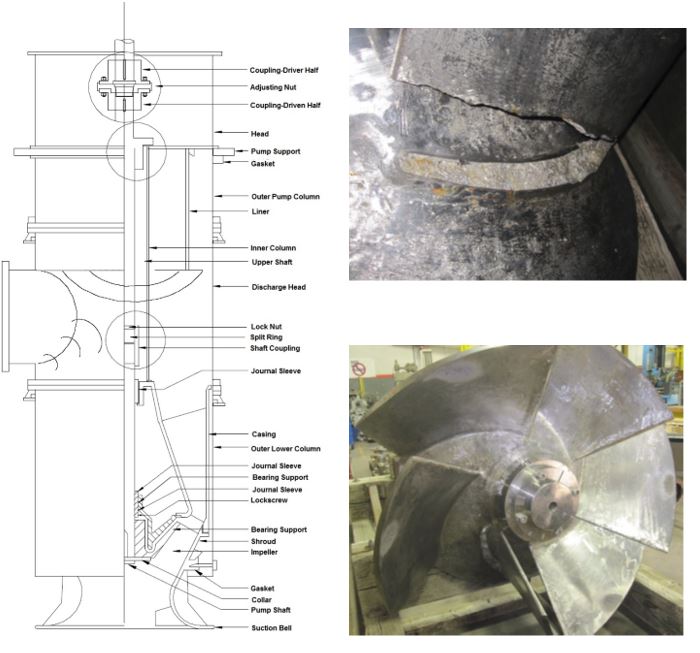
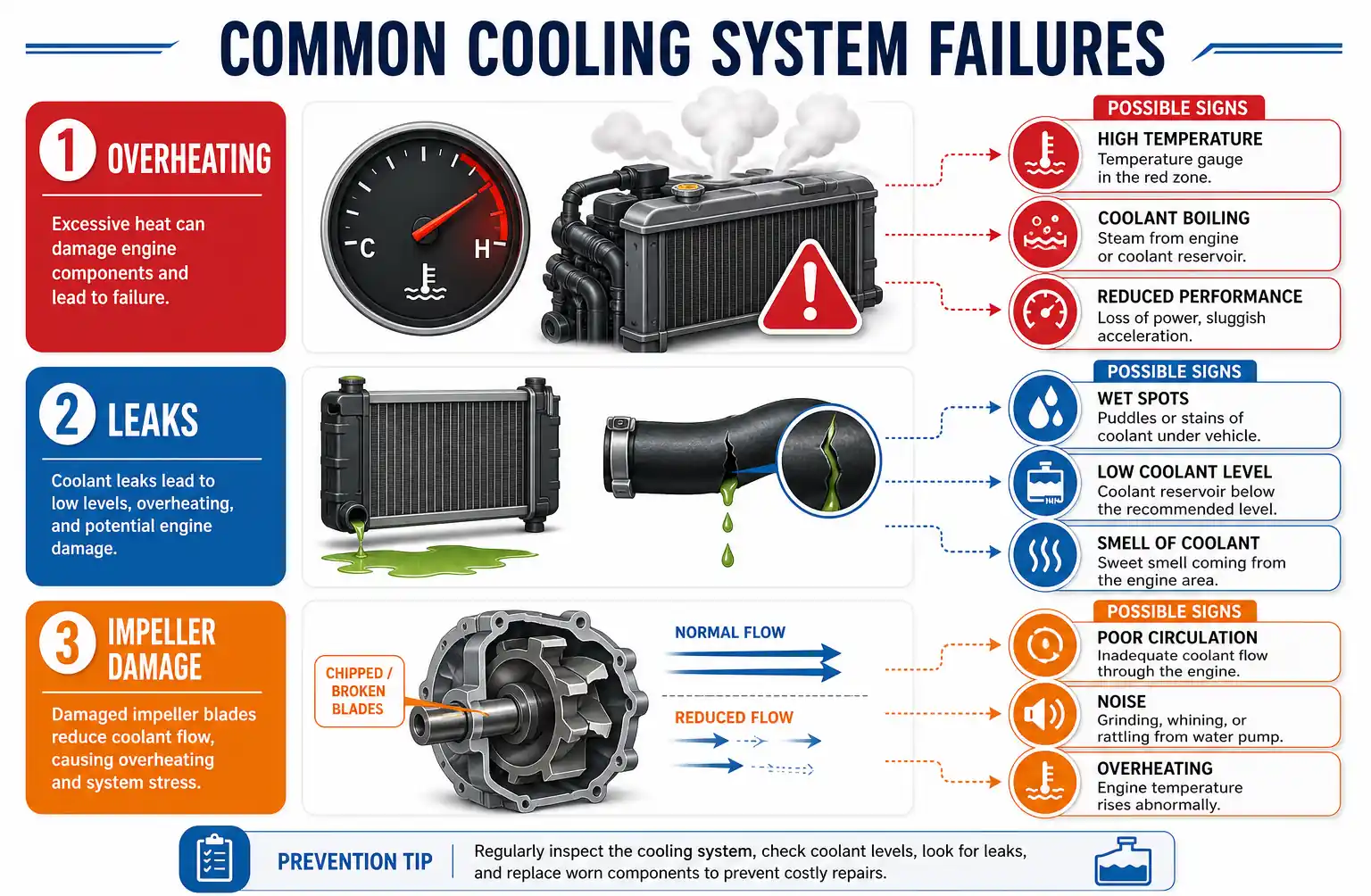
Some failures mimic normal hose temperatures while actually compromising coolant flow. Knowing these warning signs helps you catch dangerous problems early.
Water Pump Impeller Failure Warning Signs
One of the most deceptive failures is water pump impeller slip. Many modern pumps use plastic impellers bonded to metal shafts. Over time, the bond can fail, causing the impeller to spin freely while the shaft turns. Watch for these key signs:
- Upper hose scalding hot, near boiling
- Lower hose cold or at ambient temperature
- Engine temperature spikes under load, such as uphill driving or hard acceleration
- Temperature drops when coasting
- No heat inside the cabin despite a hot engine
This failure is common in high-mileage diesel engines and some aluminum-block gasoline engines. Unlike normal cold-weather operation, engine temperature becomes unstable.
How to Test for Impeller Slip
- Warm the engine fully.
- Monitor coolant temperature via OBDII while driving.
- Perform a pulse test by accelerating hard for 10 to 15 seconds.
– Normal: Temperature rises slightly, then stabilizes.
– Failed Impeller: Temperature jumps rapidly from 200°F to 230°F or higher, then drops when you let off.
This erratic behavior confirms poor circulation. The pump moves little coolant, so heat builds quickly in the engine but never reaches the radiator.
Thermostat Stuck Closed: When Cold Hose Signals Danger
A genuinely stuck-closed thermostat prevents hot coolant from entering the radiator. This causes:
- Rapid engine overheating
- Upper hose extremely hot or swelling
- Lower hose cold
- No heat from the vents
- Coolant boiling in the reservoir
Unlike the normal cold-weather scenario, the engine cannot maintain temperature. It keeps climbing.
Important: If the engine is overheating and the lower radiator hose is cold, suspect a stuck thermostat or complete blockage.
Check for Hidden Coolant Leaks
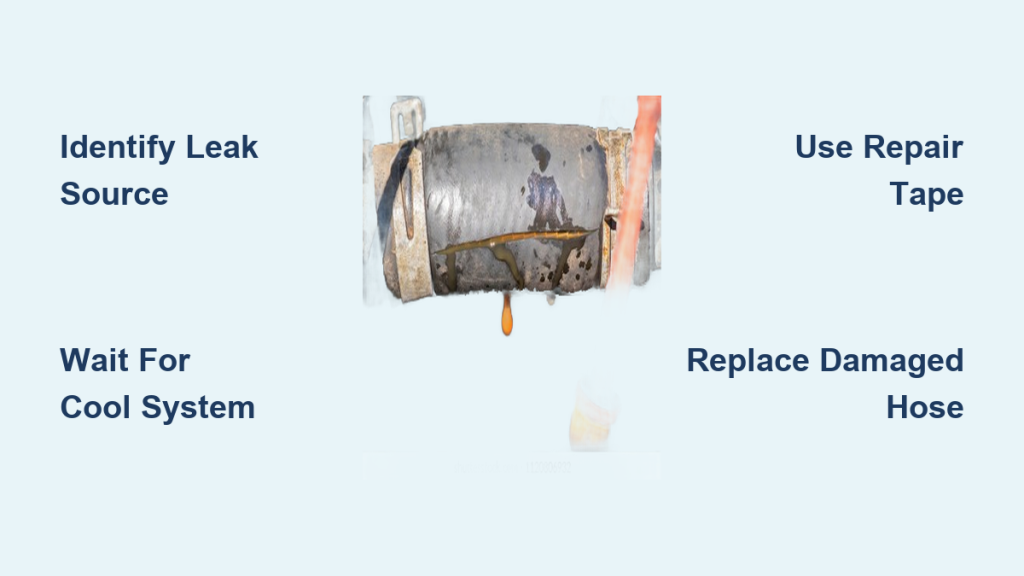
A cold lower hose might draw your attention to a leak you did not know existed. Many radiators develop pinhole leaks in the upper corners, especially behind the fan shroud.
Fan-Dispersed Leaks Leave White Residue
When the engine is hot, pressurized coolant sprays out as a fine mist. The cooling fan then blows this mist across the engine bay. Look for these signs:
- White, chalky deposits on hoses, shroud, or frame
- Dried coolant trails near the radiator top
- Intermittent low coolant warnings
These deposits are dried coolant salts, a telltale sign of a mist leak.
Best Time to Inspect During Cool-Down
Because the leak only occurs under pressure when the engine is hot, it may stop once pressure drops. The best inspection method is:
- Drive until fully warmed up.
- Park and turn off the engine.
- Wait 5 to 10 minutes as pressure drops.
- Use a flashlight to inspect the upper radiator corners and hose connections.
You may see a damp spot or dripping as residual pressure escapes.
Temporary Fix: Adjust Hose Clamps
If you find a small leak at the lower hose connection, try this field fix:
- Loosen the clamp.
- Slide it to the very edge of the hose toward the end.
- Re-tighten.
This can sometimes reseal a minor leak by shifting the hose contact point. However, this is a temporary fix. Replace the hose or radiator as soon as possible.
Compare Normal vs. Failure Scenarios
| Condition | Engine Temp | Upper Hose | Lower Hose | Verdict |
|---|---|---|---|---|
| Normal (Cold Ambient) | Stable around 196°F | Hot around 165°F | Cool around 60°F | Good cooling |
| Thermostat Stuck Closed | Rising fast | Scalding | Cold | Replace thermostat |
| Impeller Failure | Spikes under load | Boiling | Cold | Replace water pump |
| Fan Over-Cooling | Slightly low | Warm | Very cold | Check fan clutch |
The critical differentiator is engine temperature behavior. If it is stable, the system is working even if the lower radiator hose feels cold.
Fan Clutch Issues That Mimic Problems
In older vehicles with mechanical fan clutches, a locked-up clutch forces the fan to spin constantly. At highway speeds in cold weather, this can over-cool the engine. The result is a very cold lower hose and an engine that struggles to reach temperature.
While not dangerous, it reduces fuel efficiency and heater performance. Test by spinning the fan by hand when cold. It should turn freely. If it feels stiff, the clutch may be failing.
Perform Key Diagnostic Tests
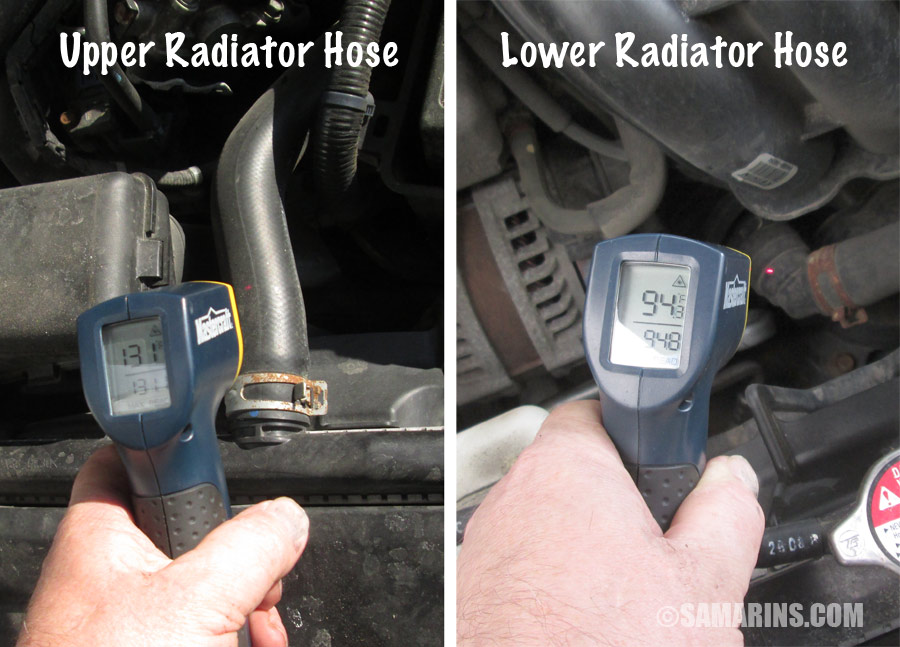
Simple tools give you clarity when diagnosing cooling system behavior.
Infrared Thermometer Temperature Test
An affordable IR thermometer costs around $20 to $30 and gives instant readings. Follow these steps:
- Drive for at least 30 to 45 minutes to reach full operating temperature.
- Park and immediately measure:
– Upper hose near the radiator
– Lower hose near the radiator
– Ambient air - Record all three values.
For interpretation, a normal reading shows the upper hose above 150°F and the lower hose below 100°F with stable engine temperature. A failure pattern shows a cold lower hose with rising or erratic engine temperature. A 70°F or greater difference is normal in winter.
Pressure Testing the Cooling System
To check for leaks or a weak radiator cap:
- Use a coolant pressure tester.
- Attach it to the radiator or reservoir cap port.
- Pump to the specified pressure, usually 13 to 18 psi.
- Hold for 10 to 15 minutes.
If pressure drops, you have a leak. It could be internal (head gasket) or external (radiator, hose, water pump).
Know When to Replace Parts

Replacing parts based on assumptions wastes money. Always confirm the failure first.
Don’t Replace the Thermostat Without Proof
Replacing a thermostat “just in case” is common but often wasteful. Only replace it if:
- Engine will not reach operating temperature (stuck open)
- Engine overheats quickly with a cold lower hose (stuck closed)
- OBDII data confirms abnormal behavior
If the engine runs at 195°F or higher and the heater works, the thermostat is likely fine.
Replace Water Pump at First Sign of Failure
If you suspect impeller slip, replace the water pump immediately. Consider replacing the thermostat and timing belt (if applicable) at the same time. Labor costs are the bulk of the job, so bundling saves money.
Delaying replacement can lead to catastrophic overheating and engine damage.
Radiator Replacement for Pinhole Leaks
Small leaks in plastic radiator tanks or aluminum cores cannot be reliably repaired. Once a pinhole leak appears:
- Replace the radiator.
- Flush the entire system to remove debris.
- Use the correct coolant type and mix (50/50 water and coolant).
Prevent Future Cooling Issues
Routine maintenance extends cooling system life and prevents unexpected failures.
Flush Coolant Every 30,000 to 50,000 Miles
Old, contaminated coolant causes serious problems:
- Corrodes water pump impellers
- Clogs radiator passages
- Degrades hoses and seals
A simple coolant flush every few years preserves system integrity and prevents premature failures.
Inspect Hoses and Clamps Regularly
During oil changes or winter checks:
- Squeeze upper and lower hoses. They should feel firm, not soft or swollen.
- Check clamps for rust or looseness.
- Look for cracks, bulges, or coolant stains.
A failing hose can burst without warning.
Monitor Heater Performance as a Flow Indicator
The cabin heater is a real-time flow indicator:
- Strong heat means good coolant circulation.
- Weak or cold air suggests an air pocket, low coolant, or pump issue.
If heat fades during driving, suspect air in the system or a failing pump.
Frequently Asked Questions About a Cold Lower Radiator Hose
Is a cold lower radiator hose always a sign of a bad thermostat?
No. A cold lower radiator hose is often normal in cold weather when the radiator efficiently cools the coolant. A bad thermostat is only likely if the engine overheats or fails to reach operating temperature.
What is the normal temperature difference between upper and lower radiator hoses?
In cold weather, a 70°F to 100°F+ difference is normal. The upper hose carries hot coolant from the engine, while the lower hose carries coolant that has released heat through the radiator. A large difference confirms good heat rejection.
Can a cold lower radiator hose mean no coolant is flowing?
Yes, but only if the engine is also overheating. Water pump impeller failure can stop circulation while leaving the lower hose cold. Verify with OBDII temperature data before assuming a failure.
How do I know if my water pump impeller is failing?
Look for these signs: erratic temperature spikes under acceleration, scalding upper hose, cold lower hose, and weak cabin heat. A pulse test (hard acceleration for 10 to 15 seconds) reveals rapid temperature swings.
Should I replace my thermostat just because the lower hose is cold?
No. Replace the thermostat only if engine temperature data confirms a problem. If the engine runs at 195°F or higher and the heater works normally, the thermostat is likely functioning correctly.
How often should I flush my cooling system?
Flush coolant every 30,000 to 50,000 miles. Regular flushing prevents corrosion, clogs, and premature wear on water pump impellers and thermostat housings.
Key Takeaways for Diagnosing a Cold Lower Radiator Hose
A cold lower radiator hose is most often a sign of efficient cooling, not mechanical failure. The real diagnostic key is engine temperature stability, confirmed with an OBDII scanner rather than your hand. In cold weather, a large temperature drop across the radiator is normal and desirable. Only when combined with overheating, erratic temperatures, or poor heater output should you suspect a stuck thermostat or failing water pump.
Use data, not assumptions, to guide repairs. This approach prevents unnecessary part replacements and saves money. Regular maintenance, including coolant flushes and visual inspections, keeps your cooling system reliable for years. If your engine temperature is stable and your heater works well, you can stop worrying about that cold lower radiator hose.