Coolant stains can turn your pristine garage floor or driveway into a colorful eyesore. These bright green, orange, or pink stains come from antifreeze leaks, and they pose real dangers beyond looks. Coolant is highly toxic to pets and children if ingested, and once it seeps into porous concrete or asphalt, it becomes increasingly difficult to remove. This guide walks you through proven methods to clean fresh spills and set-in stains, from simple household solutions to industrial-grade treatments.
Act Fast: Immediate Spill Response
Speed matters more than anything else when dealing with coolant spills. Fresh coolant sits on the surface and hasn’t bonded with concrete pores yet, making removal straightforward.
Soak Up Excess Coolant
Grab absorbent materials immediately. Paper towels, old rags, kitty litter, or baking soda all work well for this task. Press down gently to soak up the liquid rather than spreading it across a wider area. Once saturated, scoop up the used absorbents and dispose of them properly as hazardous waste. Repeat this step with fresh absorbent material until no more fluid transfers to clean paper.
For large spills, cover the area with a thick layer of kitty litter and let it sit for two to three hours before sweeping. This draws out significantly more coolant than immediate wiping alone.
Quick Wipe with Heavy-Duty Cleaner Wipes
Tub O’ Towels and similar heavy-duty wipes feature bond-breaking technology designed specifically for automotive fluids. Squeeze the wipe directly over the stain and scrub in circular motions. This method requires no waiting and no rinsing, making it ideal for fresh spills caught within the first few hours.
Deep Clean with Strong Detergents
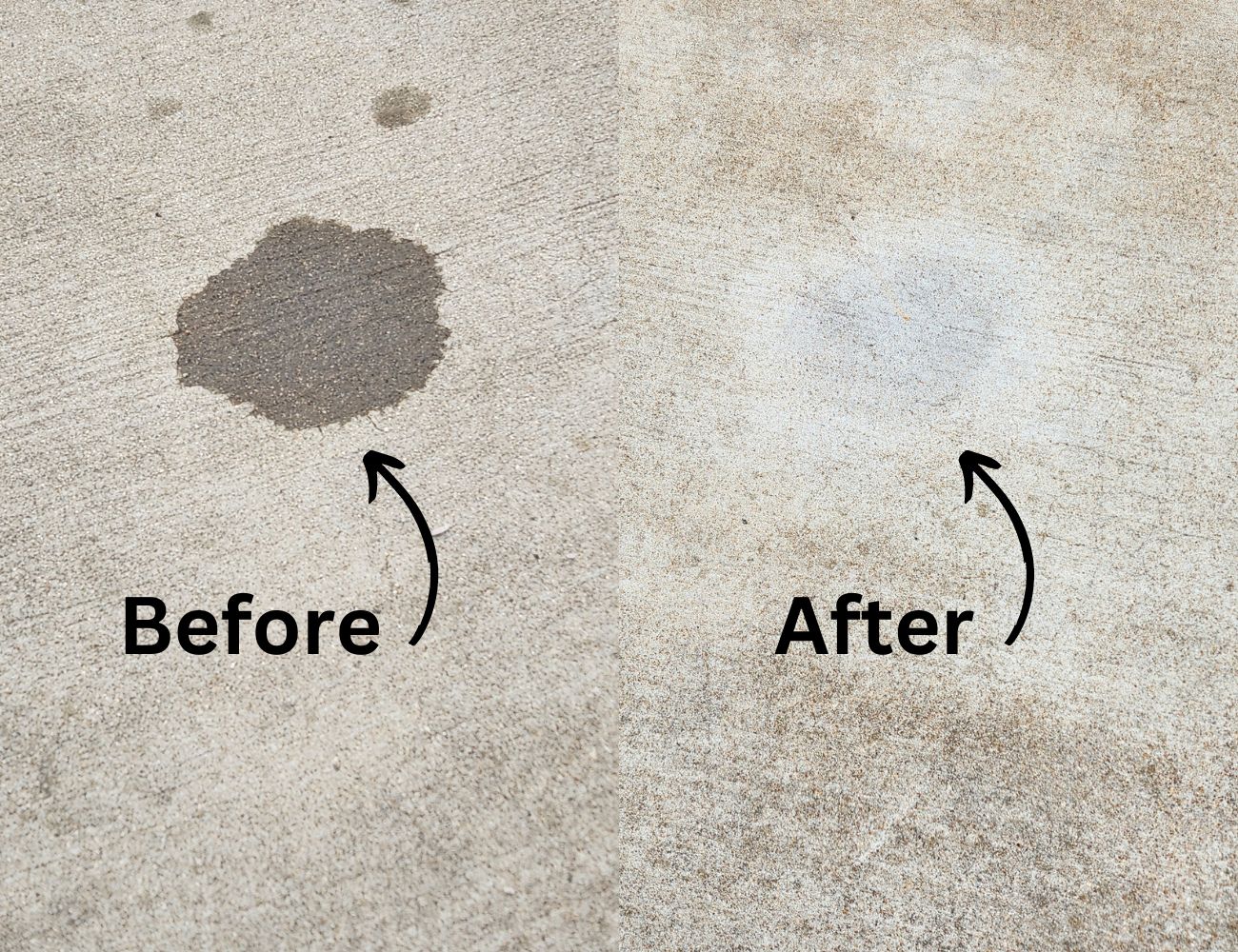
When coolant has dried or soaked into the surface, household detergents can still deliver results with some extra elbow grease.
Apply Dish or Laundry Detergent
Pour liquid dish soap such as Dawn directly onto the stain. Add hot water to create a small soaking pool over the area. Cover with wet newspaper or paper towels to lock in moisture, and let this sit for two to three hours. The heat and detergent work together to penetrate concrete pores and loosen the bonded residue.
Scrub and Rinse Thoroughly
Use a stiff nylon brush or push broom to scrub the area in circular motions. Apply firm pressure to lift the stain from deep within the pores. Rinse with a hose or bucket until the water runs completely clear. Expect to repeat this process two or three times over several days for older stains.
Break Down Stubborn Stains with TSP

Trisodium phosphate, also known as TSP, is a powerful degreaser that handles tough coolant and oil mixtures effectively.
Mix and Apply TSP Solution
Combine one cup of TSP substitute with one gallon of hot water. Pour this solution over the stained area and let it soak for fifteen to thirty minutes. Scrub aggressively with a stiff brush to work the solution into the concrete.
Wear gloves and eye protection during application. Phosphates can harm aquatic life, so avoid letting this solution run into storm drains or nearby plant beds.
Rinse and Repeat if Needed
Flush the area with clean water thoroughly. Inspect the stain closely. If discoloration remains, reapply the solution and extend the soak time. This method works exceptionally well on greasy coolant blends common in older engines.
Use Commercial Degreasers Like Zep Purple
Professional-grade cleaners consistently outperform home remedies for reliable, fast results.
Apply Zep Purple or Purple Power
Apply the cleaner full strength directly to the stain. Wait ten to fifteen minutes without letting it dry completely. Scrub with a push broom or deck brush, then rinse thoroughly with water. These cleaners contain surfactants that dissolve glycol-based fluids and lift them from concrete effectively.
Combine with Pressure Washing
Add a pressure washer with detergent injection to dramatically increase cleaning power. Spray the cleaner, let it sit, then blast away the loosened grime. This approach can be up to seventy percent more effective than hand scrubbing alone.
Dissolve Old Stains with Solvents
For aged, embedded coolant especially when mixed with oil, solvents dissolve the residue for easier removal.
Try Kerosene or Mineral Spirits
Pour enough solvent to wet the stain completely. Let it soak for six to eight hours, preferably overnight. Cover with kitty litter to absorb the dissolved fluids, then sweep up and dispose of safely. Repeat this process every twenty-four hours until the stain fades significantly.
Use Naphtha or Lacquer Thinner for Stubborn Cases
Naphtha requires application, scrubbing with a push broom, covering with floor dry, and waiting several hours. Lacquer thinner works similarly but requires outdoor use due to flammability. Both methods need multiple applications for complete removal.
Work in well-ventilated areas away from sparks or open flames. Keep these solvents stored safely away from heat sources.
Apply Caustic Cleaners for Deep Penetration
Sodium hydroxide, commonly called lye, ranks among the most effective options for deeply embedded stains despite the dangers involved.
Prepare a Hot Lye Solution
Mix lye with very hot water following product instructions exactly. Wear heavy gloves, goggles, and long sleeves during all handling. Apply the solution directly to the stain without delay.
Scrub and Rinse Repeatedly
Use a stiff brush to work the solution into the surface thoroughly. Rinse multiple times with water to neutralize all traces. For remaining alkalinity, apply a white vinegar rinse followed by another water flush.
Warning: Lye can etch concrete surfaces and corrode nearby metal including tools, rebar, and vehicle components. Avoid using this method near vehicles or structural steel.
Avoid Acid Treatments Near Metal
Hydrochloric or muriatic acid can lift stains quickly but creates serious risks in typical garage environments.
When Acid Might Be Considered
Only use acid in empty, isolated areas with no metal within thirty feet. Apply directly and watch for the bubbling chemical reaction. Let it sit for three to five minutes, then rinse thoroughly with soapy water.
The Dangers Outweigh the Benefits
Acid causes rapid rusting on steel, rebar, tools, and roof trusses. It can also discolor or weaken concrete if overused. The rust damage often creates more visible problems than the original stain. Safer alternatives exist that achieve similar results without the corrosion risk.
Clean Safely with Brake Parts Cleaner
Brake parts cleaner offers a non-corrosive solution safe for use near vehicles and tools.
Apply and Wipe Clean
Spray brake cleaner directly onto the stain. Use a rag to scrub and lift the residue. No rinsing is required since this product evaporates quickly. Combine with oil dry to absorb any loosened contaminants.
This approach won’t damage concrete or cause rust on nearby metal, making it perfect for quick garage cleanups when more aggressive methods aren’t necessary.
Hide Stains with Portland Cement Poultice
When removal proves impossible, a cosmetic fix can restore your surface appearance.
Apply Cement Powder Layer
Dampen the stained area lightly. Dust plain Portland cement heavily over the entire spot. Moisten again and scrub in with a broom. Let dry completely, preferably overnight.
Result Appears Like New Concrete
The cement forms a thin layer that masks discoloration effectively. This works especially well on coarse-finished concrete surfaces. Remember, this method covers the stain rather than removing it, so it’s best for renters or those preparing to sell.
Protect Surfaces from Future Stains
Once your concrete is clean, take steps to prevent future damage.
Apply Concrete Sealer
Wait two to three days after cleaning for complete dry-out. Use a penetrating or film-forming sealer such as epoxy or acrylic. Apply with a roller or sprayer following product instructions precisely. Reapply every one to three years depending on traffic levels.
Sealing prevents coolant, oil, and grease from soaking into porous concrete. This simple step saves hours of cleaning work down the road.
Resurface for Severe Damage
For driveways with multiple stains or pitting damage, consider a decorative concrete overlay. This resurfaces the entire slab and can camouflage stubborn stains permanently while giving your surface a fresh, updated look.
Choose the Right Method for Your Situation
Matching your approach to your specific circumstances produces the best results with minimal effort.
Homeowners: Simple and Safe
Use dish soap with scrubbing or Tub O’ Towels wipes for low-risk, easy cleanup using supplies you already have.
Mechanics: Fast and Powerful
Naphtha combined with floor dry or Zep Purple with pressure washing handles daily spills efficiently in busy workshops.
Eco-Conscious: Reduce Environmental Impact
Avoid TSP and chlorinated solvents. Choose biodegradable degreasers or vinegar-based cleaners instead.
Toxicity Concerned: Minimize Exposure
Clean immediately with pre-moistened wipes and keep pets and children away from the area during and after cleaning until fully dry.
Safety and Disposal Guidelines
Proper safety practices protect you and your family during stain removal.
Protect Yourself
Wear gloves, goggles, and long sleeves when working with lye, acid, or solvents. Use a respirator when handling fumes from lacquer thinner or similar products. Always work in well-ventilated areas.
Dispose of Contaminated Materials Properly
Soaked kitty litter, rags, and paper towels constitute hazardous waste. Take these materials to your local recycling center or auto shop for proper disposal. Never dump them down drains or onto soil.
Keep Pets and Kids Away
Coolant tastes sweet but is lethal if ingested. Block off the cleaning area completely until all surfaces are fully dry and all materials are properly disposed of.
Frequently Asked Questions About Removing Coolant Stains
Does coolant stain concrete permanently?
Coolant can permanently stain concrete if left untreated for months or years. The glycol compounds bond with porous surfaces, but prompt action with the right cleaning methods typically removes or significantly reduces even older stains.
What is the fastest way to remove fresh coolant spills?
Heavy-duty cleaner wipes like Tub O’ Towels offer the fastest results for fresh spills. They require no rinsing, no waiting, and no additional supplies. Simply wipe the stain and rinse with water.
Can I use bleach to remove coolant stains from concrete?
Bleach is not recommended for coolant removal. It lacks the degreasing properties needed to break down glycol-based fluids and may cause discoloration without effectively cleaning the stain.
Are coolant stains harmful to pets?
Yes, coolant is highly toxic to pets and can be fatal if ingested. Clean spills immediately and keep animals away from the area until all residue is completely removed and surfaces are dry.
How do I remove coolant stains from my driveway?
The same methods used on garage floors work for driveways. For large outdoor areas, commercial degreasers combined with pressure washing deliver the most efficient results. Consider sealing the driveway after cleaning to prevent future staining.
Key Takeaways for Removing Coolant Stains
Acting quickly dramatically increases your chances of complete stain removal. Fresh spills cleaned within hours rarely require more than simple detergent and scrubbing, while set-in stains may need multiple treatments with stronger solutions like TSP, solvents, or lye.
Match your cleaning method to your specific situation. Homeowners can succeed with household products, while mechanics benefit from industrial-grade degreasers and pressure equipment. Always prioritize safety by wearing protective gear and disposing of contaminated materials properly.
After removing stains, apply a concrete sealer to protect your surface from future damage. This one step prevents coolant, oil, and grease from penetrating pores, saving you significant cleaning effort whenever spills occur. With persistence and the right approach, you can restore your garage floor or driveway to its original condition.