If you’re working on an engine repair and drained the coolant, you might be wondering how to filter coolant so you can reuse it safely. The answer isn’t always straightforward. Coolant can carry sand, rust, sludge, or metal particles that damage radiators, water pumps, and heater cores. But if the fluid was clean when drained, filtering lets you save money, reduce waste, and maintain proper freeze protection without buying new antifreeze.
Filtering isn’t about reviving old, degraded coolant. It’s for cleaning slightly used fluid or removing particulates from rebuilt engines. Done right, it preserves coolant chemistry and prevents costly blockages. Done wrong, it risks overheating or internal damage. This guide breaks down proven methods so you know exactly when and how to filter coolant safely.
When to Filter Coolant
Signs Coolant Can Be Filtered
Filtering makes sense only when coolant is mechanically contaminated but chemically sound. If it was drained during a hose swap or thermostat job and stored cleanly, it’s likely reusable.
Safe to filter if the coolant was drained into a clean container with no exposure to dirt, oil, or debris. The fluid should appear bright and clear, whether green, orange, or pink depending on type. It should smell slightly sweet, not sour or burnt.
Even minor contamination like fine sediment or casting sand can be filtered out, especially in older or rebuilt engines.
Pro Tip: The cost of fresh coolant is minimal compared to a clogged radiator or failed water pump. But if your fluid meets the criteria above, filtering is a smart, eco-friendly choice.
Signs You Should Replace, Not Filter
Some coolant conditions mean no amount of filtering will make it safe to reuse.
Do not filter if the fluid looks milky or oily, which indicates head gasket failure. Color that is muddy, brown, or black means additives have broken down. Visible rust, sludge, or flaking particles are red flags. A rotten or burnt smell indicates microbial growth or thermal degradation. Drained into a dirty pan creates high risk of grit entry.
Golden Rule: When in doubt, use fresh coolant. Engine protection beats cost savings every time.
Gravity Filtration: Reuse Clean Drained Coolant
How to Strain Coolant Through Cloth
This method works best when you’ve drained coolant during a repair and want to reuse it. It’s simple, visual, and effective for capturing settled debris.
What You Need:
– Funnel with long rubber hose
– Clean white shop rag or cotton cloth
– Clean collection container
Step-by-Step Process:
- Fold a clean cloth into two to three layers and place it inside the funnel.
- Attach a rubber hose to the funnel’s stem and insert it into the radiator drain spout.
- Slowly pour the used coolant into the funnel. Let gravity pull it through the cloth.
- Watch as particles collect in the fabric. Stop before the last inch of fluid where sludge settles.
- Inspect filtered coolant under light. It should look clear and uniform.
- Store in a sealed jug labeled with date and type.
User Result: After filtering, one DIYer tested freeze protection at minus seven degrees Fahrenheit, down from original minus twenty degrees Fahrenheit. Still usable in mild climates.
Pros and Cons
| Advantages | Limitations |
|---|---|
| Low-cost, no special tools | Does not remove dissolved contaminants |
| Full visibility of debris | Not for heavily contaminated fluid |
| Preserves coolant chemistry | Manual and slow |
Best For: Quick jobs like radiator hose replacement where coolant stayed clean.
Inline Fuel Filter Hack: Diagnose Coolant Cleanliness
Use a Gasoline Filter to Trap Particles
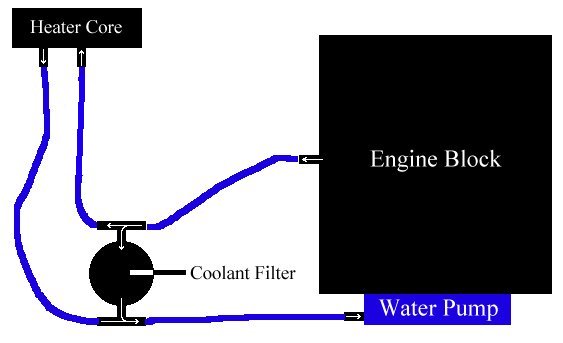
Want to check your coolant’s condition without draining the system? Install a temporary gasoline fuel filter inline to catch loose debris over time.
Parts Required:
– In-line gasoline filter (metal or plastic housing)
– Hose adapters if needed
– Hose clamps
– Coolant-compatible tubing
Installation Steps:
- Disconnect a coolant hose, such as the upper radiator hose.
- Cut the line and insert the fuel filter using adapters.
- Ensure the arrow on the filter points toward the radiator. This is engine to radiator flow.
- Secure all connections with clamps.
- Refill and bleed the system if necessary.
Run and Inspect:
– Operate the engine for two to three days.
– Shut down, remove the filter, and cut it open.
– Check for trapped particles. None means your coolant is clean.
Real Test: One user found the filter full of coolant but no debris, proving the system was already clean.
Safety Notes
Gasoline filters use paper or synthetic media not designed for long-term glycol exposure. There is risk of media shedding or housing failure over time. Use only as a short-term diagnostic tool, not permanent installation.
Warning: Never rely on this method for engines with known contamination.
In-System Sand Filtration: Stop Casting Debris
Why Sand Clogs Radiators
Rebuilt or vintage engines often retain casting sand in coolant passages. Flushing helps, but tiny particles escape and slowly plug radiators, causing overheating.
“No matter how vigorously you flush, radiator-plugging sand remains.” Dennis G
Filtering over time removes these particles before they cause damage.
Nylon Stocking Filter: Cheap and Effective
A surprisingly reliable way to catch fine debris is using a nylon stocking as a filter in the radiator inlet.
How to Install:
- Remove the upper radiator hose.
- Cut a piece of mid-sheer pantyhose, not ultra-thin.
- Stretch it over the radiator neck.
- Reattach the hose, clamping securely over the fabric.
Thermal Fact: Nylon melts at approximately four hundred degrees Fahrenheit, well above normal coolant temperatures of one hundred ninety-five to two hundred twenty degrees Fahrenheit.
Maintenance:
– Check every five hundred to one thousand miles.
– Replace if torn or clogged.
– Remove once no new debris appears, usually after two thousand to three thousand miles.
“I do the stocking thing. It’s working just fine. Filters out muck really well.” Torana68
Cost: Approximately three dollars for multiple filters.
Stainless Steel Sediment Filter: Durable Option
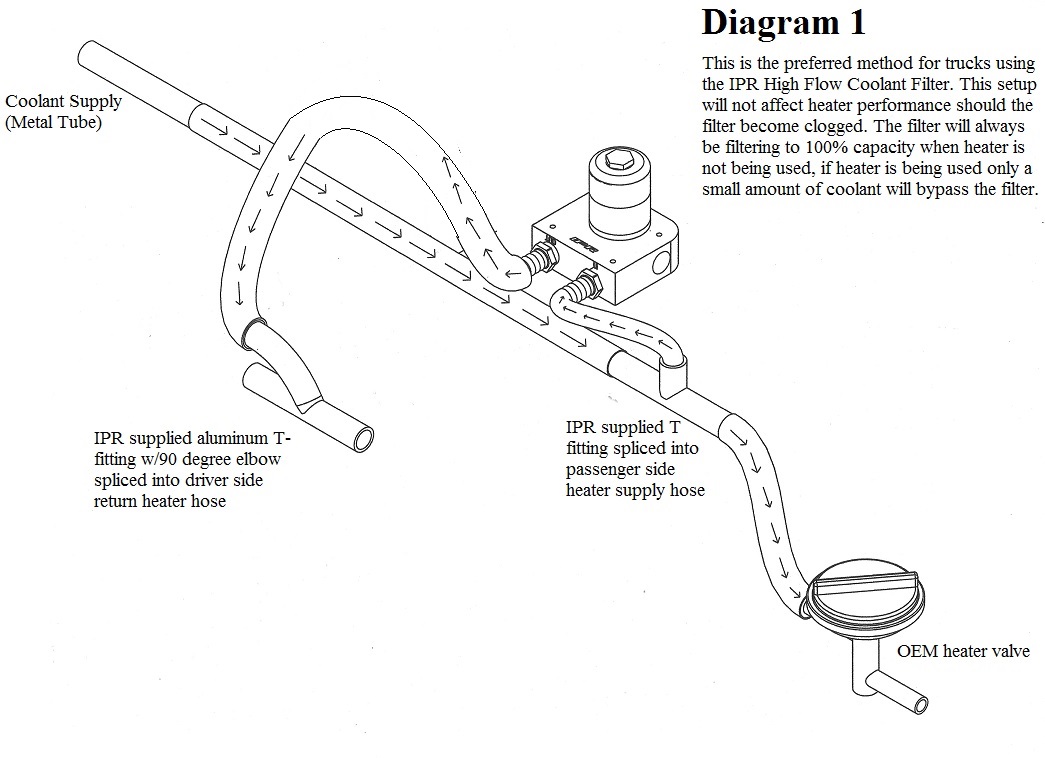
For long-term or professional use, build a reusable stainless steel filter with fine mesh.
Build Components:
– Disposable propane bottle (two-thirds size)
– Stainless steel screen filter (approximately fifteen dollars)
– Pipe couplings, flanges, ninety-degree outlet
– Brazing tools for assembly
Assembly Steps:
- Braze a pipe coupling to the side for inlet.
- Attach a flange to the open end for sealing.
- Add a second flange and ninety-degree outlet on top.
- Install in the upper radiator hose (full-flow) or heater line (bypass).
Vent Tip: “It was necessary to vent the upper tube to fill the system.” Dennis G
Mounting Options:
| Type | Flow Path | Safety | Speed |
|---|---|---|---|
| Full-flow | Main radiator hose | Risk of blockage | Fast |
| Bypass | Heater circuit | Safer, no flow risk | Slower |
Expert Advice: “Wouldn’t run a rebuilt engine without one in the top hose.” Torana68
Filter Material Guide: What Works with Coolant
Compatibility by Filter Medium
| Medium | Coolant Safe | Temp Rating | Best Use |
|---|---|---|---|
| Cotton cloth | Yes (short-term) | Up to 200°F | One-time gravity filtering |
| Nylon stocking | Yes | Up to 400°F | Temporary in-line debris trap |
| Stainless steel mesh | Yes | Unlimited | Permanent or long-term filter |
| Paper fuel filter | Limited | Varies | Diagnostic only, do not leave in |
Avoid: Foam, paper, or rubber-based filters not rated for glycol exposure.
Flow and Safety: Prevent Overheating Risks
Avoid Flow Restriction
Any inline filter must allow full coolant circulation. A clogged or undersized filter can starve the radiator and cause overheating.
Key Tips:
– Use bypass filters (heater line) for safer long-term use.
– Monitor engine temperature closely after installation.
– Never install a filter without a way to inspect or replace it.
Critical Rule: A filter that blocks flow is worse than no filter at all.
Venting Custom Filters
Trapped air in a sealed filter housing creates air locks, reducing flow and cooling efficiency.
Drill a small bleed hole or use a vented cap. Open the bleed valve during system refill. Close once coolant flows steadily.
Design Insight: Venting is essential for proper system priming.
Coolant Reuse: Performance After Filtering
Does Filtration Affect Protection
Properly filtered coolant retains most of its original properties.
Freeze point may drop slightly (for example, from minus twenty degrees Fahrenheit to minus seven degrees Fahrenheit) due to minor additive loss. Boil-over resistance remains effective in standard conditions. Corrosion inhibitors are not restored, so reuse only short-term.
Best Practice: Use filtered coolant only in the same vehicle and within six months.
Disposal: Handle Contaminated Coolant Responsibly
Never Dump Coolant
Ethylene glycol is toxic to humans and animals. Even small spills can be deadly.
Safe Disposal Steps:
- Collect used or dirty coolant in sealed containers.
- Label clearly: “Used Antifreeze. Do Not Reuse.”
- Take to auto parts stores with recycling programs, hazardous waste collection sites, or certified repair shops.
Legal Note: Pouring coolant on the ground or into drains is illegal in most areas.
Who Should Filter Coolant
Use Case Summary
| User | Scenario | Recommended Method |
|---|---|---|
| DIY Mechanic | Replacing hoses | Gravity filtration with cloth |
| Classic Car Restorer | Rebuilt engine block | Nylon stocking or steel inline filter |
| Heavy Equipment Tech | Loader or excavator service | Gravity or bypass filtration |
| Preventive Maintenance Pro | Routine service | Replace, not reuse |
Industry Standard: “Changing coolant every couple of years and reverse-flushing the rad and block is always good science.” PackardV8
Final Decision: Filter or Replace
Use this quick checklist to decide.
| Question | Filter | Replace |
|---|---|---|
| Stored in clean, sealed container | Yes | No |
| Clear, bright color | Yes | No |
| No floating particles | Yes | No |
| No oil sheen or milky tint | Yes | No |
| Neutral or sweet smell | Yes | No |
| Drained into dirty pan | No | Yes |
Bottom Line: If any red flags appear, replace the coolant. Engine reliability is worth more than reusing a few quarts.
Frequently Asked Questions About Filtering Coolant
Can I reuse coolant after filtering it through a cloth?
Yes, if the coolant was originally clean and stored properly. Gravity filtration through cotton cloth removes visible particles and sediment but does not restore chemical properties. The fluid should still appear clear and smell slightly sweet. If it looks cloudy, oily, or smells burnt, discard it instead.
How long can filtered coolant be stored before reuse?
Filtered coolant should be used within six months of storage. Keep it in a sealed, labeled container away from contaminants. Even when filtered, coolant gradually breaks down chemically and loses freeze protection and corrosion inhibitors over time.
Does filtering coolant restore its freeze protection?
Filtering removes particles but does not restore additives. Freeze protection may decrease slightly after filtering (for example, from minus twenty degrees Fahrenheit to minus seven degrees Fahrenheit). Test the freeze point before reusing filtered coolant, especially if operating in cold climates.
What is the safest way to filter coolant in a rebuilt engine?
The nylon stocking method is safest for rebuilt engines. Install it in the upper radiator hose or heater line as a bypass filter. Check every five hundred to one thousand miles and remove once debris stops collecting. This catches casting sand and particles without restricting main cooling flow.
Can I use a gasoline fuel filter permanently for coolant filtration?
No. Gasoline fuel filters use paper or synthetic media not rated for long-term glycol exposure. They may deteriorate, shed fibers, or fail. Use a gasoline filter only as a temporary diagnostic tool for two to three days to check contamination levels, then remove it.
Key Takeaways for Filtering Coolant
Filter only clean, recently drained coolant, not old or degraded fluid. Use gravity filtration with cloth for simple reuse jobs. Install nylon stocking or steel mesh filters to catch sand in rebuilt engines. Choose bypass (heater hose) installation for safer long-term filtering. Monitor temperature and flow after any filter installation.
Never reuse milky, rusty, or smelly coolant. It indicates serious issues. Avoid permanent gasoline filter installations. They are not coolant-rated. Always dispose of bad coolant responsibly.
Final Advice: Filtering coolant is a smart, economical move when done right. But when in doubt, fresh is best. Your engine depends on it.