
You’ve seen the warning light, smelled the sweet steam, or maybe just noticed your car running hotter than usual. The culprit is often the coolant — the unsung hero keeping your engine from melting down. But how coolant works isn’t just about pouring colored liquid into a reservoir. It’s a precision-engineered system of heat transfer, chemical protection, and pressure control that keeps modern engines running safely between 180–200°F (82–93°C) — far below the 2,000–4,500°F combustion temperatures they endure.
Coolant doesn’t just cool. It prevents freezing, fights corrosion, lubricates moving parts, and even helps heat your cabin. Whether you drive a daily commuter or maintain industrial machinery, understanding how coolant works is essential to preventing costly failures. In this guide, you’ll learn exactly how coolant absorbs heat, circulates through your engine, rejects excess energy in the radiator, and protects critical components.
Heat Absorption Inside the Engine
Coolant’s first job begins the moment combustion fires up inside the cylinders. Metal components soak up extreme heat, and without intervention, aluminum parts could warp near their 1,225°F (663°C) melting point. Coolant prevents this by absorbing thermal energy directly from the engine block and cylinder head.
Cooling Jackets Channel Fluid Flow
Engine blocks contain internal passages called cooling jackets — hollow channels surrounding cylinders and combustion chambers. Coolant is pumped through these jackets, drawing heat away from hot metal surfaces. The fluid’s high specific heat capacity (especially when mixed with water) allows it to absorb large amounts of heat with minimal temperature rise.
Water alone is excellent at this — 4.18 J/g·K — but it freezes and boils too easily. That’s why coolant uses a 50/50 mix of water and ethylene glycol, balancing thermal efficiency with freeze and boil protection.
Why Operating Temperature Matters
Maintaining 180–200°F (82–93°C) isn’t arbitrary. This range ensures complete fuel vaporization for cleaner burns, lower oil viscosity for better lubrication, and reduced emissions and mechanical wear. Too cold? The engine runs inefficiently. Too hot? You risk warping, gasket failure, or seized pistons. Coolant keeps everything in balance.
The Coolant Circulation Path
Coolant doesn’t sit still. It moves in a continuous, pressurized loop designed for maximum thermal efficiency from the moment it leaves the water pump until it returns cooled and ready to absorb more heat.
Step-by-Step Flow Sequence
- Pump pushes coolant into engine block — driven by belt or electric motor, forcing fluid into cooling jackets
- Coolant absorbs heat from combustion areas — flows through block and cylinder head, temperature rises as metal transfers heat
- Reaches thermostat at engine outlet — if cold, valve stays closed for recirculation via bypass; if hot (~195–200°F), valve opens to radiator
- Enters radiator through upper hose — hot fluid moves through aluminum tubes where heat transfers to fins and then to outside air
- Returns cooled fluid via lower hose — back to water pump, cycle repeats continuously
This closed-loop system ensures consistent cooling whether idling in traffic or cruising on the highway.
How Radiators Reject Heat
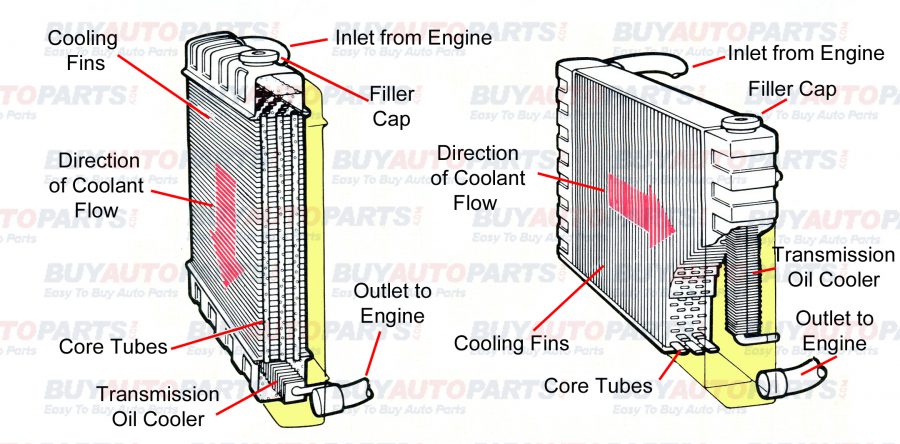
The radiator is where coolant dumps the heat it absorbed — turning scorching fluid back into something ready to cool again. Understanding how this heat exchange works is fundamental to understanding how coolant works overall.
Fluid-to-Air Heat Exchange Process
Radiators are fluid-to-air heat exchangers made of aluminum for high thermal conductivity and light weight. They consist of flattened tubes for coolant flow, thin fins attached to tubes to increase surface area, and turbulators inside tubes that disrupt laminar flow and boost heat transfer. As hot coolant flows down from the upper tank, heat moves through the tube walls to the fins. Outside air (either from vehicle motion or fan pull) carries that heat away.
Single, Dual, and Triple-Pass Designs
Some radiators use internal baffles to make coolant pass through multiple times. A single-pass design routes coolant one trip from top to bottom. Dual or triple-pass designs create a longer path, giving coolant more cooling time. These designs improve efficiency, especially in heavy-duty or high-performance engines.
Thermostat Regulation Explained
The thermostat acts as a temperature-controlled gatekeeper, ensuring coolant only flows to the radiator when needed. This simple device plays a huge role in engine efficiency and longevity.
Wax Pellet Valve Operation
Inside the thermostat is a wax pellet that expands when heated. This expansion pushes a rod, opening the valve. Three key phases control the flow. When the engine is cold (below 180°F), the valve stays closed and coolant bypasses the radiator for faster warm-up. When the engine reaches operating temperature (~200°F), the wax melts and the valve opens fully. During cooling, as temperature drops, the wax contracts and the valve closes.
Electronically Controlled Thermostats
Modern vehicles use ECU-managed thermostats that adjust based on engine load, ambient temperature, and hybrid system demands. These allow finer control, helping meet emissions standards and improve thermal efficiency across varying driving conditions.
Pressure’s Role in Boiling Point

Coolant systems are sealed and pressurized — not just to prevent leaks, but to stop the fluid from boiling prematurely. This is one of the most critical aspects of how coolant works under extreme conditions.
How Pressure Raises Boiling Point
A standard 15 psi radiator cap increases the boiling point of a 50/50 coolant mix from 223°F (atmospheric) to over 265°F (129°C). That’s critical because boiling creates vapor pockets that block flow, cause cavitation and hot spots, and can lead to pump damage or complete overheating. Pressurization keeps coolant liquid even under extreme loads.
Radiator Cap Safety Mechanism
The cap has two valves. The pressure relief valve opens at 15 psi to release excess pressure into the overflow tank. The vacuum valve opens during cooldown, pulling coolant back from the reservoir. This closed recovery system prevents air from entering and maintains full flow for optimal cooling.
⚠️ Never remove the cap when hot — pressurized coolant can erupt at 275°F, causing severe burns.
Coolant Reservoir Function
The expansion tank (or overflow tank) is more than just a level indicator. It’s a key part of pressure and volume management in the cooling system.
Managing Thermal Expansion
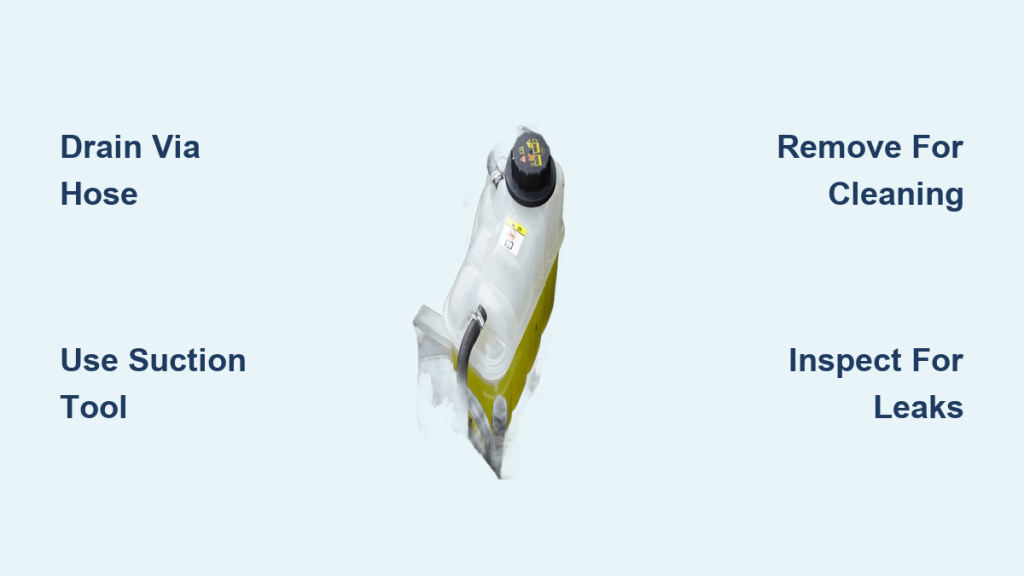
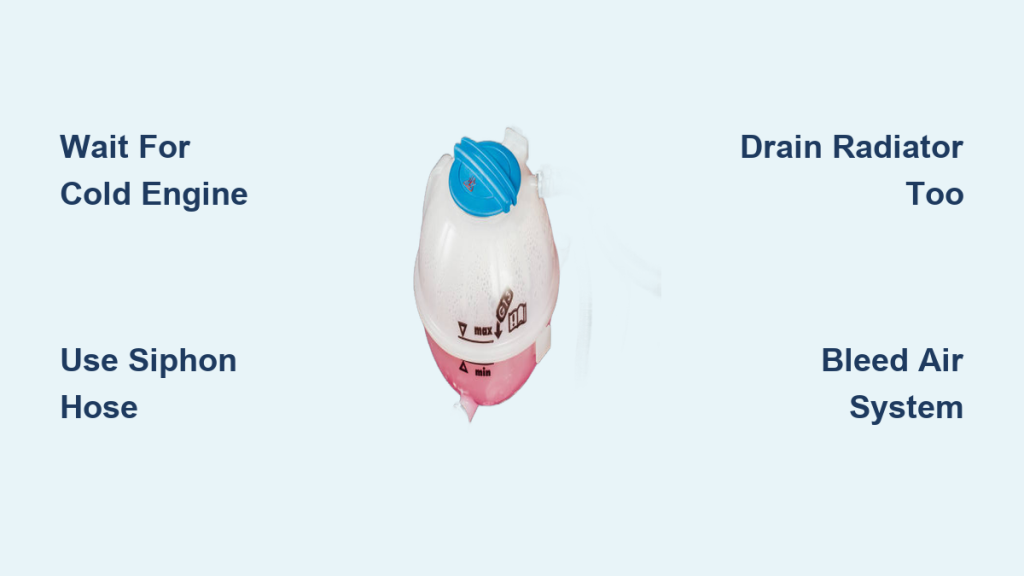
As coolant heats up, it expands. The reservoir catches excess fluid pushed out by pressure, allows recovery when engine cools and vacuum forms, and prevents air pockets that disrupt flow. It’s connected to the radiator via an overflow hose and should be checked when the engine is cold.
Level Check Guidelines
When the engine is cold, fluid should be between MIN and MAX marks on the reservoir. If the level is low, top off with the correct coolant type — never water alone. Frequent top-offs indicate a leak or internal failure like a failed head gasket. A translucent tank makes monitoring easy and safe.
Coolant Types and Chemistry
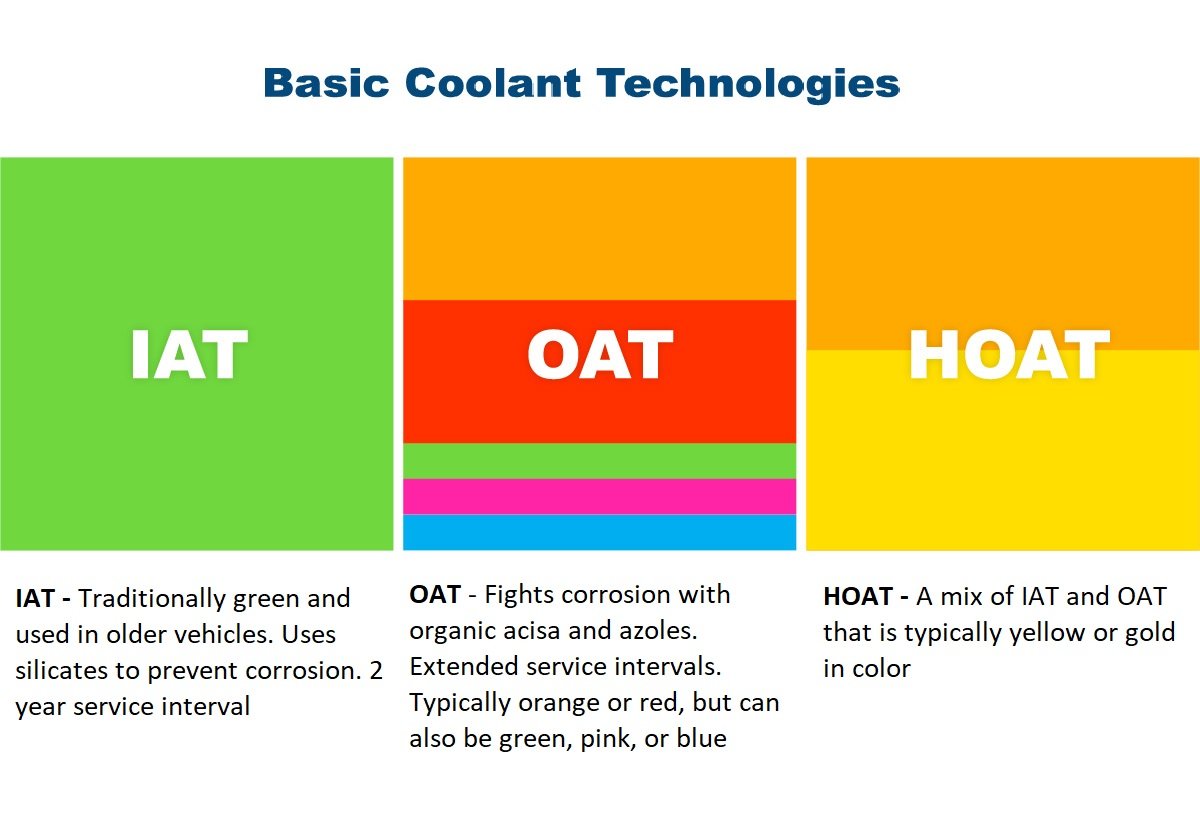
Not all coolants are the same. Using the wrong type can cause gel formation, corrosion, or system blockages. Understanding the differences is essential to maintaining how coolant works properly.
Three Main Coolant Technologies
IAT (Green/Yellow) is used in older systems. It contains Inorganic Additive Technology with silicates and phosphates for rapid protection. Service life is 2–3 years, best for pre-1996 vehicles with cast iron blocks.
OAT (Orange/Red/Pink) uses Organic Acid Technology with organic acids like sebacate. Service life extends up to 150,000 miles, commonly found in GM models (Dex-Cool), European, and Asian vehicles.
HOAT (Yellow/Turquoise) combines OAT with small silicate doses for Hybrid Organic Acid Technology. It offers fast-acting and long-lasting protection for 100,000–150,000 miles, common in Ford, Chrysler, and European engines.
Can You Mix Coolants?
Never mix incompatible types, especially IAT and OAT. Mixing can deplete inhibitors, form sludge, and cause corrosion in aluminum components. Always follow your owner’s manual for the recommended type.
Advanced Coolant Technologies
Beyond traditional glycol mixes, new formulations offer better performance in extreme conditions. These innovations show how coolant works in specialized applications.
Waterless Coolants
Waterless coolants have a boiling point up to 370°F (188°C). Since they eliminate water, there’s no boil-over and less corrosion. They require full system flush and compatible materials, making them popular in racing and high-load applications.
Nanofluids and Emerging Technologies
Experimental nanofluids use suspensions of nanoparticles like silver or alumina that can increase thermal conductivity by up to 98%. However, cost and flow complexity currently limit these to aerospace and research applications. Betaine-based coolants made from sugar beets offer a biodegradable, non-toxic alternative for environmentally sensitive uses.
Heater Core: Dual Purpose for Cabin Heat
Coolant doesn’t just cool the engine. It also heats your cabin by diverting hot coolant through a separate circuit in the dashboard.
How the Heater Core Works
Hot coolant is diverted from the engine to a dashboard-mounted heater core. A blower fan forces air over the hot fins, warming the air before it enters the passenger compartment. The cooled fluid then returns to the water pump. This system works independently of the thermostat, so heat is available even during cold engine warm-up.
Emergency Overheat Trick
If your engine starts overheating, turn the heater to full blast. It acts as a secondary radiator, pulling excess heat from the coolant and helping cool the engine temporarily.
Maintenance and Failure Signs
Even the best coolant degrades over time. Regular maintenance prevents costly repairs and keeps the system working as intended.
When to Flush Coolant
Flush IAT coolants every 30,000–50,000 miles. Flush OAT and HOAT coolants every 100,000–150,000 miles, or as specified in your owner’s manual. Use a coolant hydrometer or refractometer to test freeze protection and pH levels regularly.
Signs of Bad Coolant
Rusty or brown color indicates corrosion. Sludge or particles mean contamination. A sweet smell when running suggests leaking or burning ethylene glycol. Frequent overheating points to low level, air pockets, or failed circulation. Never use tap water — minerals cause scaling and deposit buildup. Always use distilled or de-ionized water when mixing concentrate.
Diagnosing Coolant System Failures
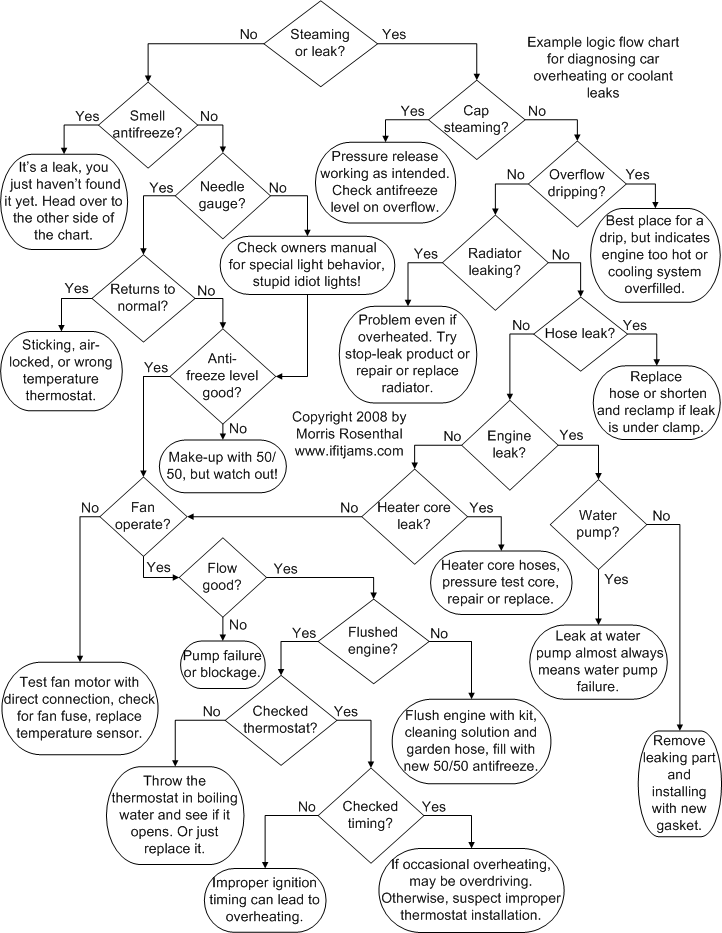
Ignoring coolant issues leads to catastrophic engine damage. Knowing the warning signs helps you address problems before they become expensive repairs.
Common Failure Modes
Overheating causes include low coolant, failed thermostat, clogged radiator, or water pump failure. Risks include warped heads, blown head gasket, and seized engine. Freezing causes include weak antifreeze mix, leading to cracked block or radiator. Corrosion stems from old coolant, wrong type, or tap water, causing clogged passages, pump failure, and leaks. Cavitation results from air pockets or low flow, causing pitting on water pump impeller and cylinder liners.
Diagnostic Clues
Steam from the hood indicates overheating or a leak. Milky oil means coolant is mixing with oil through a failed head gasket. A fluctuating temperature gauge suggests an air pocket or failing thermostat. A sweet smell under the hood means leaking or burning coolant. Low reservoir level indicates a leak or internal consumption.
Frequently Asked Questions About How Coolant Works
What is the primary function of coolant in an engine?
Coolant’s primary function is heat transfer. It absorbs thermal energy from engine components and transports it to the radiator for dissipation, maintaining optimal operating temperatures between 180–200°F (82–93°C) to prevent overheating and engine damage.
How does coolant prevent both freezing and boiling?
Coolant uses a 50/50 mix of water and ethylene glycol. Water provides excellent heat absorption, while ethylene glycol lowers the freezing point to about -34°F (-37°C) and raises the boiling point. The pressurized system (typically 15 psi) further elevates the boiling point to over 265°F (129°C).
Why do different coolants have different colors?
Colors indicate chemical formulation type, not coolant performance. Green/yellow typically means IAT, orange/red/pink indicates OAT, and yellow/turquoise suggests HOAT. Always use the type specified in your vehicle’s owner’s manual.
How often should coolant be flushed?
Flush intervals depend on coolant type. IAT requires flushing every 30,000–50,000 miles. OAT and HOAT last 100,000–150,000 miles. Always follow manufacturer recommendations for your specific vehicle.
What happens if I mix different coolant types?
Mixing incompatible coolants (like IAT and OAT) can deplete corrosion inhibitors, form sludge, and cause aluminum corrosion. This leads to clogged passages, reduced cooling efficiency, and potentially catastrophic engine damage.
Can I use water instead of coolant in an emergency?
Water alone can cause freezing, boiling, and corrosion issues. In a true emergency, distilled water is preferable to tap water (which contains minerals causing deposits), but you should add proper coolant as soon as possible and flush the system later.
Key Takeaways for Understanding How Coolant Works
Coolant is far more than colored water. It’s a precision-engineered fluid that manages extreme heat, prevents freezing, fights corrosion, and keeps your engine running efficiently. From the wax pellet in the thermostat to the aluminum fins in the radiator, every component works together to maintain thermal balance.
Understanding how coolant works helps you spot problems early, choose the right type, and extend engine life. Whether you’re topping off your daily driver or maintaining industrial equipment, proper coolant care is one of the simplest ways to prevent expensive failures.
Follow your vehicle’s maintenance schedule, never mix coolant types, and always let the system cool before opening the radiator cap. With the right knowledge, you can keep your engine running cool and your wallet happy.