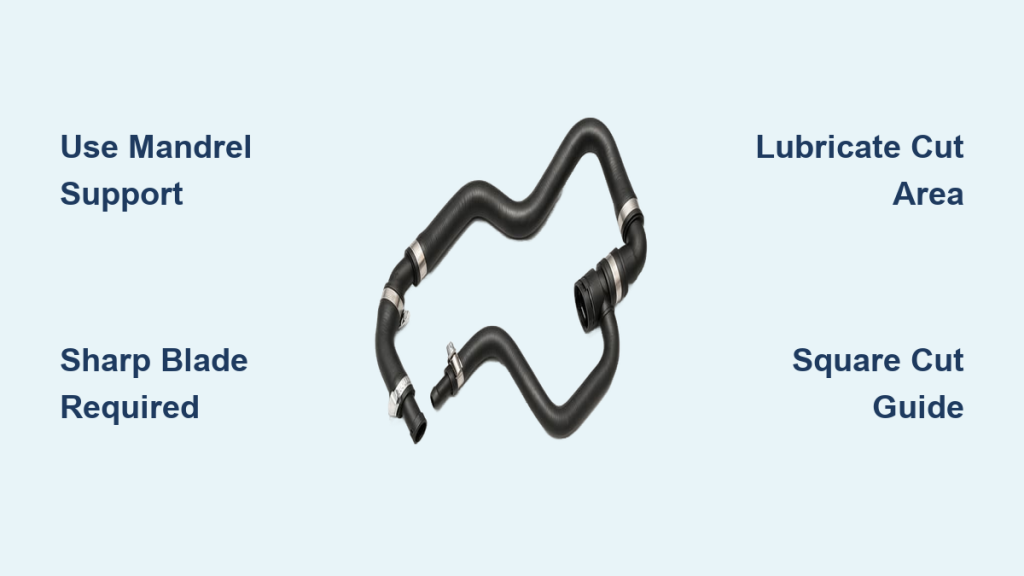
Cutting a coolant hose might seem simple, but getting a clean, square, and professional cut is essential for a reliable, leak-free cooling system. Whether you’re replacing a radiator hose on a daily driver or building a show car, a poorly cut hose can lead to misalignment, pinched lines, or sudden failure under pressure. The right technique ensures the hose fits snugly over barbs and seals properly with clamps, with no gaps or leaks.
A jagged or angled cut prevents the clamp from seating evenly, creates stress points, and can damage internal wire reinforcement or O-rings. Fortunately, with the right tools, support, and method, anyone can make precise cuts, even without expensive equipment. This guide reveals proven techniques used by mechanics and fabricators, from simple hand-tool hacks to precision power-tool setups.
Choose the Right Cutting Tool for Your Hose Size
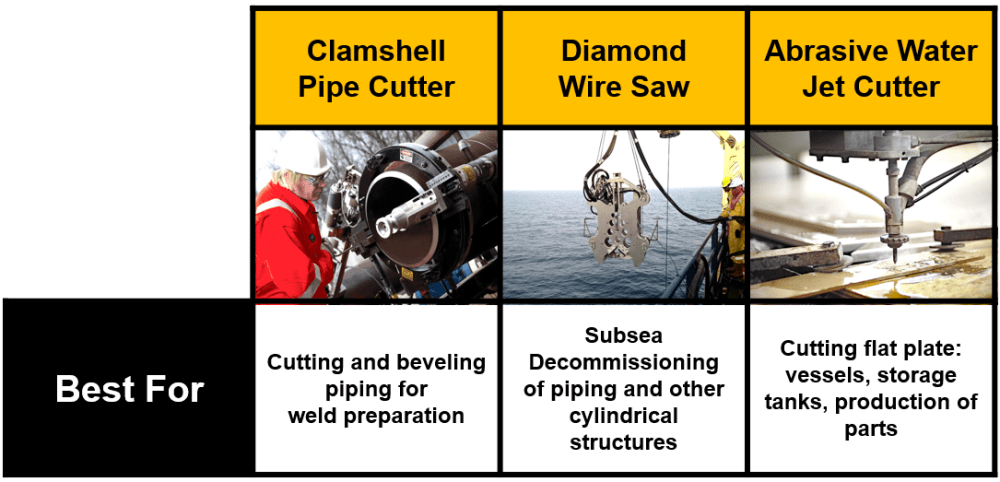
Selecting the best tool depends on hose diameter, material stiffness, and available equipment. Each option has specific strengths and limitations.
Match Tool to Hose Diameter
Small hoses under 1 inch respond well to hand tools, while larger or reinforced hoses demand power tools and internal support. Using the wrong tool leads to crushing, tearing, or crooked cuts.
Hand Knives for Small Hoses
A sharp utility knife with snap-off blades or an OLFA-style retractable cutter works well for thin or small-diameter hoses. These tools offer maximum control and clean slicing when used correctly.
• Replace blades frequently because dull edges drag and tear rubber
• Use a guide such as tape or clamp to ensure straight cuts
• Lubricate both blade and hose surface for smoother action
Avoid old pocket knives because they bind and crush the material instead of slicing it cleanly.
Power Saws for Large Hoses
For hoses over 1.5 inches, especially those with wire reinforcement, bandsaws, miter saws, or chop saws deliver superior results.
• Bandsaw: Best overall choice. Delivers fast, square cuts with minimal effort. Use a carbide-tipped blade for reinforced hoses
• Miter saw: Ideal for repeatable, accurate cuts. Use an 80-plus tooth fine-tooth blade to reduce fraying
• Angle grinder with cut-off wheel: Emergency use only. High risk of overheating and rough edges
One user reported cutting a 2-inch radiator hose on a 10-inch miter saw with an 80-tooth blade, and it worked great.
Specialty Tools That Work
Some unconventional tools outperform traditional ones in real-world use.
• Electric carving knife: Dual oscillating blades stabilize and slice rubber cleanly. Found at thrift stores for under $10
• Serrated bread knife: When lubricated with soapy water, mimics the action of a carving knife. Great for field repairs
• Japanese pull saw: Fine teeth reduce tearing. Excellent for controlled cuts when clamped
Support the Hose During Cutting
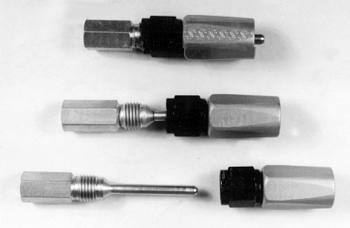
Without internal support, coolant hose collapses under blade pressure, especially soft or large-diameter types. A mandrel keeps the bore open and ensures a straight, round cut.
Use a Tight-Fitting Mandrel
Insert a rigid rod inside the hose to prevent deformation during cutting.
• Wooden dowel: Turned to fit snugly. Ideal for custom jobs
• PVC pipe: Readily available and corrosion-resistant
• Steel or aluminum tube: Best for repeated cuts. Does not compress
Use a piece of steel tubing to support the rubber next to the cut for best results.
Clamp Securely
Once the mandrel is in place, clamp the assembly firmly in a vise or saw jig.
• Prevents movement that causes angled or uneven cuts
• Allows hands-free operation with power tools
• Use soft jaws or wrap metal clamps with tape to avoid damaging the hose
Guide Your Cut Accurately
Even with sharp tools and support, freehand cuts often go off-angle. A physical guide ensures your cut is perfectly square and straight.
Hose Clamp as Cutting Guide
One of the most effective and accessible methods uses a worm-drive hose clamp.
How to Use It
- Slide the clamp onto the hose at the cut line
- Tighten until it bites into the rubber, creating a raised ridge
- Align your knife blade with the outer edge of the clamp
- Cut around the hose, following the ridge as a guide
- Loosen and reposition the clamp once to clear the screw housing, then finish the cut
This method ensures a square, repeatable cut with no extra marking or measuring needed.
Tape Line for Precision Marking
Wrap blue painter’s tape or masking tape around the hose circumference.
• Apply tape tightly at the desired cut point
• Draw a straight line with a permanent marker
• Lubricate the blade and cut along the line
The tape prevents blade wander and gives visual feedback during the cut. Spray the area with soapy water mid-cut for smoother glide.
Lubricate for a Smoother Cut
Rubber creates high friction against metal blades, leading to binding, heat buildup, and rough edges. Lubrication reduces resistance and improves cut quality significantly.
Best Lubricants for Coolant Hose
Not all lubricants are safe for rubber. Avoid petroleum-based oils because they degrade rubber over time.
Safe options include:
• Dish soap such as Dawn: Mix with water and apply to blade and hose. Reduces friction and cools the cut zone
• Water: Simple and effective. Soak the hose or spray during cutting
• Clear silicone grease: Long-lasting. Ideal for repeated cuts. Non-reactive with rubber
• CRC spray: Use sparingly for quick jobs. May affect rubber if overapplied
The key is a seriously sharp knife along with lubrication from dish soap.
Apply Before and During Cutting
• Coat the blade tip and cutting path before starting
• Reapply during long cuts, especially with power tools
• For miter saws, mist the area with soapy water as the blade descends
Cut with Control and Precision
Speed kills when cutting rubber. A slow, deliberate approach yields a clean, square edge.
Let the Tool Do the Work
For power tools, do not force the blade. Let it cut at its own pace because forcing causes deflection, especially in flexible hoses. On miter saws, lower the blade gently and let gravity feed the cut.
Use a Steady Hand with Knives
When using a utility knife, make multiple shallow passes instead of one deep cut. Rotate the hose slightly after each pass to maintain alignment. Keep the blade perpendicular to the hose axis.
Smooth is fast. Slow is smooth.
Finish the Cut Edge Properly
Even a clean cut may leave burrs or exposed wire. Finishing ensures safety and proper fit.
Deburr the Inside and Outside
Use a small file, die grinder, or deburring tool to remove sharp rubber edges. Smooth both inner and outer lips. Run your finger around the edge to ensure no snags catch.
Tuck Back Exposed Wire Reinforcement
Many coolant hoses contain an internal metal helix for crush resistance.
- Inspect the cut end for protruding wire
- Use needle-nose pliers to bend the wire back into its groove
- Ensure it is flush with the inner wall
This prevents damage to O-rings or sealing surfaces and eliminates sharp points that could puncture clamps or fittings.
Handle Special Hose Types Correctly

Different hoses require tailored approaches based on material, age, and construction.
Reinforced Hoses with Wire Core
Common in modern radiators and turbo systems.
• Use power tools with carbide blades for clean cuts
• Always use internal support to prevent wire distortion
• Finish by tucking the helix. Never leave it exposed
Large Diameter Hoses 2 to 3 Inches
Found in high-performance or heavy-duty applications.
• Mandrel plus miter saw is the gold standard
• Use a V-block to stabilize round hose on flat saw beds
• Soak in water or spray with lubricant to reduce blade buildup
We used water to keep the rubber from building on the blade. I probably cut close to a million pieces of radiator hoses in my day.
Rigid or Antique Hoses
Older hoses such as pre-1970s types are stiff and difficult to cut.
• Radial arm saw or miter saw with carbide blade works best
• Avoid hand knives because they chip or crush the material
• Cut slowly to prevent cracking
Soft or Thin-Walled Hoses
These are prone to collapsing under pressure.
• Always use internal support, even for hand cuts
• Lubricate generously to reduce drag
• Use sharp blades because dull tools pinch and deform the material
Follow the Pro Checklist
Use this quick reference before every cut to ensure success.
Measure Twice, Cut Once
• Confirm exact length with a tape measure
• Account for stretch or compression during installation
Mark the Cut Line Clearly
• Use hose clamp ridge or tape plus marker
• Double-check alignment before cutting
Insert Internal Support
• Choose wood, PVC, or metal mandrel
• Ensure snug fit with no wobble
Lubricate Blade and Hose
• Apply dish soap and water mix or silicone grease
• Reapply if cut feels sticky
Select the Right Tool
| Diameter | Recommended Tool |
|---|---|
| Under 1 inch | OLFA cutter, utility knife |
| 1 to 1.5 inches | Electric carving knife, small bandsaw |
| 1.5 to 2.5 inches | Miter saw with 80-plus teeth, bandsaw |
| Over 2.5 inches | Bandsaw, radial arm saw |
Make the Cut
• Use guide such as clamp or tape
• Cut slowly and steadily
• Let the tool do the work
Finish the Edge
• Deburr with file or grinder
• Tuck internal wire with pliers
• Inspect for smoothness
Avoid Common Mistakes
Even experienced mechanics make avoidable errors that compromise results.
Using a Dull Blade
Causes tearing instead of slicing, increases effort and heat buildup. Replace blades often, especially snap-off types.
Skipping Internal Support
Leads to collapsed or oval-shaped ends. Always use a mandrel for hoses over 1 inch.
Forcing the Cut
Especially with power saws, forcing causes deflection and angled cuts. Let the blade feed naturally.
Ignoring Wire Reinforcement
Exposed wire damages clamps and seals. Always inspect and tuck after cutting.
Using Petroleum-Based Lubricants
Degrades rubber over time. Stick to soap, water, or silicone grease.
Best Methods by Skill Level
Choose the method that fits your tools and experience.
Beginner: Hose Clamp Plus Utility Knife
Best for small to medium hoses. Tools needed are worm-drive clamp, sharp knife, and dish soap. The clamp acts as a built-in guide with no special tools required. Reposition the clamp to clear the screw housing mid-cut.
Intermediate: Tape Plus Electric Carving Knife
Best for medium hoses with clean aesthetic results. Tools needed are dowel support, tape guide, and electric carving knife. Dual blades stabilize while cutting. Buy a used carving knife for under $10. Great value.
Professional: Miter Saw Plus Mandrel
Best for large, reinforced, or show-quality hoses. Tools needed are 80-plus tooth blade, PVC or wood mandrel, V-block, and soapy mist. Delivers factory-level precision. Use water spray to prevent rubber buildup on blade.
Frequently Asked Questions About Cutting Coolant Hose
What is the best tool for cutting small coolant hoses under 1 inch?
A sharp utility knife with snap-off blades or an OLFA-style cutter works best for small hoses. Use a worm-drive hose clamp as a cutting guide and lubricate with dish soap and water. Replace blades frequently to maintain clean cuts.
Do I need internal support when cutting coolant hose?
Yes, internal support is essential for hoses over 1 inch in diameter and recommended for all sizes. A mandrel such as a wooden dowel, PVC pipe, or steel tube prevents the hose from collapsing or deforming during cutting, ensuring a straight, round cut.
Can I use petroleum-based lubricants when cutting rubber hose?
No, avoid petroleum-based oils such as motor oil or WD-40 because they degrade rubber compounds over time. Use safe options instead such as dish soap mixed with water, plain water, or clear silicone grease.
How do I finish the cut edge after cutting coolant hose?
Deburr the inside and outside edges with a small file or die grinder to remove sharp rubber. Inspect for exposed wire reinforcement and use needle-nose pliers to bend any protruding wire back into its groove. Run your finger around the edge to check for snags.
What causes rough or jagged cuts when cutting rubber hose?
Rough cuts typically result from dull blades, skipping lubrication, forcing the cut, or cutting without internal support. Use sharp blades, apply soap or water lubricant, let the tool work at its own pace, and always support the hose internally.
Can I use a miter saw to cut large diameter coolant hoses?
Yes, a miter saw with an 80-plus tooth fine-tooth blade works excellently for large hoses. Use internal support such as a PVC mandrel, apply soapy water lubrication, and lower the blade gently. This method delivers factory-quality precision.
Key Takeaways for Cutting Coolant Hose Professionally
A perfect coolant hose cut comes down to four essential principles: support, guidance, lubrication, and sharpness. Whether working with hand tools or a full shop setup, applying these principles ensures a square, clean, and leak-free fit every time.
Always use internal support to prevent hose collapse, especially for larger diameters. Choose a cutting guide such as a hose clamp or tape wrap to ensure accuracy. Lubricate with dish soap and water or silicone grease to reduce friction and achieve smooth cuts. Keep blades sharp and let the tool do the work rather than forcing through the material.
With these methods, even beginners can achieve professional-grade results. The investment in proper technique pays off in reliable cooling system performance, no leaks, and clean installation appearance.