If your coolant fan not turning off after the engine shuts down, you are not imagining things, and it is not normal if it runs for more than 10 to 15 minutes. While brief post-shutdown operation is designed to cool hot components, a fan that keeps running for 30 minutes or longer, restarts on its own, or runs when the engine is cold signals a real problem. Left unattended, it can drain your battery, overwork your alternator, and mask serious cooling system faults.
This guide cuts through the confusion. You will learn exactly why your radiator fan will not turn off, how to diagnose the root cause in under an hour, and which parts to replace without wasting money on guesswork. Whether you drive a GM truck, Ford Edge, or Honda Accord, this step-by-step breakdown covers all major causes, fixes, and preventive tips.
Normal Fan Operation Explained
Fan Runs After Engine Off: Is It Normal?
Yes, brief fan operation after shutdown is intentional and built into most modern vehicles. The electric radiator fan continues running to dissipate residual heat from the engine block, radiator, and turbochargers in turbo-equipped engines. It also prevents coolant boiling or expulsion through the pressure cap and maintains condenser temperature stability when the air conditioning has been used.
Normal behavior includes running 2 to 10 minutes after the engine is off, cycling on and off as temperature drops, and only activating when the engine was hot or the AC was in use. The fan automatically stops once the coolant cools below approximately 185 degrees Fahrenheit. If your fan stops within 10 minutes and does not restart, no action is needed. This is a protective feature, not a failure.
Abnormal Fan Behavior Signs
When the Fan Will Not Stop: Red Flags
Your cooling fan has a problem if it runs longer than 15 minutes after shutdown, restarts hours later when the engine is cold, or operates immediately upon reconnection of the battery. Additional warning signs include running even in cold weather with a cold engine, causing battery drain or requiring jump-starts, staying on at full speed nonstop, or triggering a Check Engine Light.
One 1994 Honda Accord owner described the issue perfectly: “Fan runs indefinitely unless I pull the fuse—that’s not normal.” These symptoms point to faulty sensors, stuck relays, or wiring issues that trick the ECU into thinking the engine is overheating. Addressing these signs promptly prevents secondary damage to your battery and charging system.
Faulty Coolant Temperature Sensor

Why a Bad Sensor Keeps Fan On
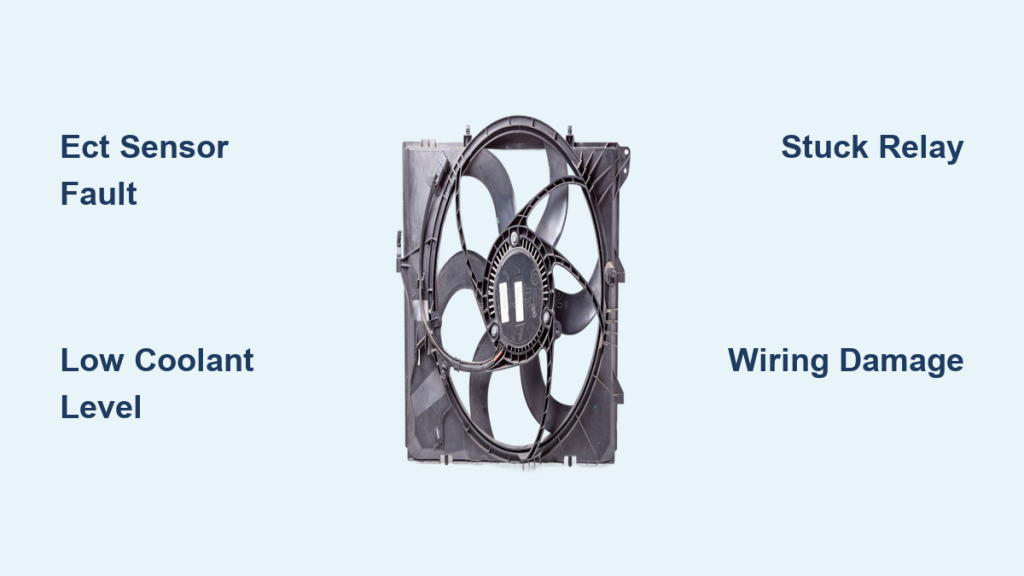
The Engine Coolant Temperature sensor tells the ECU how hot the coolant is. If it fails and sends a false hot signal, such as 230 degrees when the engine is cold, the ECU responds by running the fan continuously to prevent overheating even when it is unnecessary.
Common failure signs include the fan running nonstop even when the engine is cold, no actual overheating present, a Check Engine Light with codes P0115, P0117, or P0118, and an inaccurate temperature gauge reading. The quickest diagnostic test is to start the engine, let the fan turn on, then unplug the ECT sensor. If the fan stops, the sensor is faulty and needs replacement.
When replacing the sensor, use OEM-specified coolant, bleed air from the system after replacement, and install a new O-ring or gasket to ensure a proper seal.
Low Coolant Level Triggers Fan
How Low Coolant Causes Continuous Fan
Low coolant reduces heat transfer and creates air pockets, leading to localized hot spots. The ECT sensor may detect these temperature spikes and report high readings, forcing the ECU to run the fan nonstop to protect the engine.
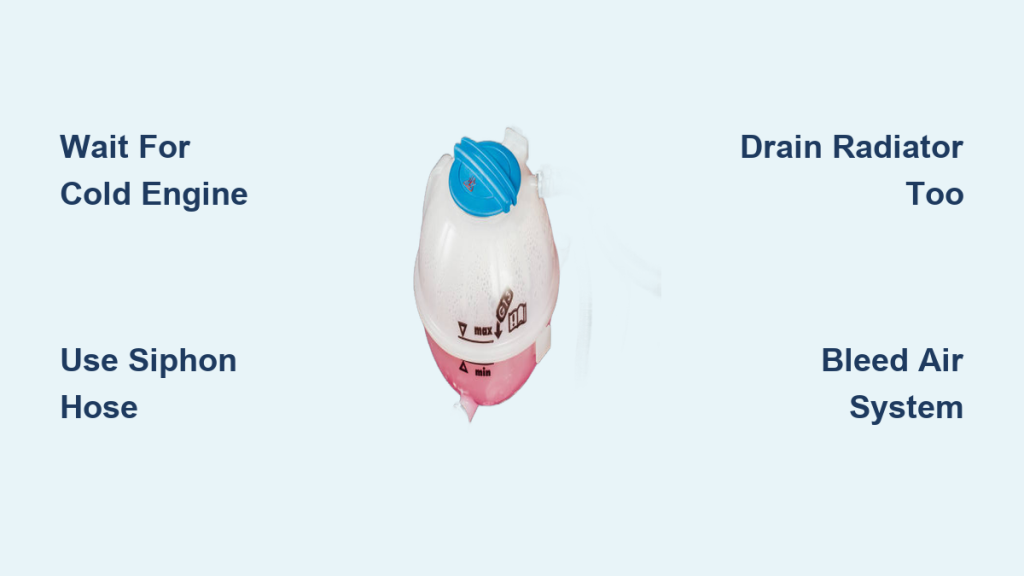
Common causes of low coolant include leaks from the radiator, hoses, water pump, or heater core, a failed radiator cap that cannot hold pressure, and evaporation in infrequently used vehicles. To check properly, only inspect when the engine is cold. Look at the coolant reservoir. The level should be between the MIN and MAX marks. Top off with the correct coolant type if low, then recheck after 2 to 3 days. If the level drops again, a leak test is needed.
Stuck or Failed Thermostat
Thermostat Failure and Fan Overrun
A stuck-open thermostat prevents the engine from reaching normal operating temperature between 195 and 220 degrees Fahrenheit. The ECU sees this as a cooling system fault and may keep the fan running to compensate for the perceived problem.
Symptoms include the engine running cold with the gauge reading approximately 160 degrees, poor heater performance, weak air conditioning, and a Check Engine Light with code P0128 indicating “Coolant Thermostat Rationality.” A 2014 Chevy Silverado owner fixed a constantly running fan by replacing both the thermostat and ECT sensor together, which is a common combination failure in GM trucks.
To test, after warm-up touch the upper radiator hose. It should be hot. Use an infrared thermometer to compare engine and radiator temperatures. If the radiator heats up too soon, the thermostat is likely stuck open.
Failed Radiator Fan Relay

Stuck Relay: Most Common Cause
The fan relay is an electrical switch that powers the fan. If its internal contacts weld shut due to heat or arcing, the fan receives constant power even when the engine is off.
Relays fail because repeatedly pulling fuses while the fan is running causes arcing that welds the contacts closed. Age, heat, and vibration degrade contacts over time. Aftermarket relays with lower amperage, such as 25-amp units, overheat and fail faster than OEM-spec components.
To diagnose, locate the fan relay in the underhood fuse box and swap it with a similar relay like the horn or A/C relay. If the fan stops, the original relay is bad. When replacing, use an OEM-spec or 40-amp relay. Ford upgraded to 40-amp relays after 2017 specifically to reduce these failures.
Malfunctioning Fan Control Module
When the Module Keeps Fan Running
Some vehicles, especially older Hondas and Ford models, have a dedicated fan control module that manages fan speed and timing. If it fails, the fan may run 10 minutes or more after shutdown, restart randomly when the engine is cold, or operate independently of temperature readings.
Common locations for the module include behind the glove box in Honda vehicles and near the ECU or under the dash in Ford models. You should only suspect the module after ruling out sensor, relay, and wiring issues. Diagnosis may require a professional scan tool to monitor module inputs. A temporary fix is disconnecting the battery, but the problem returns.
Repair involves replacing the module, ensuring connectors are clean and grounded. In some models, the fan motor and controller are integrated and must be replaced as a unit.
A/C System Triggering Fan
How A/C Problems Keep Fan On
The radiator fan often runs when the A/C is on to cool the condenser. However, if the high-pressure switch or A/C relay fails, the system may falsely signal high pressure, keeping the fan engaged even when it is not needed.
Clues that the issue is A/C-related include the fan running even when A/C is turned off, weak or intermittent A/C performance, and fan behavior changing when the A/C button is pressed. To test, turn A/C off completely. If the fan still runs, disconnect the A/C pressure switch on the refrigerant line. If the fan stops, replace the switch. Additional fixes include replacing the faulty high-pressure switch, checking the A/C relay and wiring, and using a refrigerant gauge to verify system pressure.
Damaged Wiring or Harness
Short Circuits Power Fan Constantly
Damaged insulation or chafed wires near the fan motor or relay box can create a direct short to power, bypassing the ECU and keeping the fan on continuously.
Inspect wiring visually from the fan to the relay to the ECU. Look for rodent damage, abrasion against sharp edges, and corrosion in connectors. Pay special attention to areas near the firewall, radiator, and fan shroud. To repair, cut out the damaged section and splice with heat-shrink butt connectors. Secure the harness with zip ties to prevent rubbing, and use conduit or loom for extra protection.
One Ford Edge owner traced recurring fan failure to a chewed wire and fixed it by replacing the harness section.
ECU Glitch or Ground Fault
When the Computer Causes Fan Issues
A corrupted ECU, poor ground connection, or shorted wiring can cause erratic fan behavior including continuous operation.
Symptoms include the fan running randomly, multiple unrelated trouble codes, the problem resetting after battery disconnect but returning, and voltage fluctuations. To diagnose, check ground connections at the battery, engine block, and chassis. Inspect the harness for moisture or chafing. Use an OBD2 scanner to view live data including coolant temperature and fan commands.
Fixes involve cleaning and tightening ground points, reprogramming the ECU if a software update is available, and replacing damaged wiring. A loose engine ground can mimic sensor failures.
Battery and Charging System Impact
Can a Weak Battery Cause Fan Problems
A weak battery does not directly cause fan problems, but voltage instability from a failing battery or alternator can confuse the ECU, leading to relay sticking or fan control errors.
The risks of continuous fan operation include draining the battery overnight, forcing the alternator to work harder, and shortening battery lifespan. To protect your system, test the battery with a load tester, check alternator output which should be 13.8 to 14.4 volts, and use a trickle charger if the vehicle sits unused.
Diagnostic Flow: Find the Cause Fast
Step-by-Step Troubleshooting Guide
Use this sequence to isolate the issue quickly. First, observe runtime. Less than 10 minutes is normal, while more than 15 minutes indicates a fault. Second, check coolant level when the engine is cold, top off if low, and look for leaks. Third, scan for trouble codes using an OBD2 reader, focusing on P0115 through P0118 and P0128.
Fourth, test the ECT sensor by unplugging it. If the fan stops, replace the sensor. Fifth, inspect the thermostat by checking the temperature gauge and testing upper hose heat. Sixth, swap the fan relay with a known-good relay and check for heat damage. Seventh, check the A/C system by turning it off and disconnecting the pressure switch. Eighth, examine wiring for damage near the fan and relay. Ninth, test the battery and charging system. Tenth, suspect the fan module or ECU only if all else fails.
Repair Procedures You Can Do
Replace Coolant Temperature Sensor
Tools needed include a 19mm socket, ratchet, screwdriver, and catch pan. The repair takes approximately 20 minutes.
Disconnect the battery, remove the airbox by pressing the clip and loosening the clamp, then locate the sensor behind the thermostat housing. Disconnect the electrical plug, unscrew the old sensor expecting minor coolant loss, and install the new sensor. Hand tighten first, then turn an additional quarter turn. Reconnect the plug and reassemble the airbox. Use OEM coolant and do not mix brands.
Replace Thermostat
Tools needed include a 10mm socket, catch container, and new gasket. The repair takes approximately 45 minutes.
Drain the coolant into a pan, disconnect the upper and lower radiator hoses, then remove the 3 to 4 bolts holding the thermostat housing. Pull out the old thermostat and gasket, clean the mounting surface, and install the new thermostat with the arrow pointing toward the engine. Use a new gasket, reinstall the housing, refill coolant, bleed air, and check for leaks.
Replace Fan Relay
The relay is located in the underhood fuse/relay box and the repair takes about 5 minutes. Find the relay using the diagram on the fuse box lid, pull out the suspect relay, and inspect for melting, discoloration, or carbon. Insert a new 40-amp OEM-spec relay and test fan operation.
Prevent Fan Problems Before They Start
Regular maintenance prevents most fan problems. Flush coolant every 30,000 to 60,000 miles to prevent sludge and sensor contamination. Use the correct coolant type to avoid gasket swelling and corrosion. Inspect relays annually to catch heat damage early. Never pull fuses while the fan is running because this causes arcing and damages relays. Fix Check Engine Lights quickly to stop small issues from becoming big ones. Use a battery maintainer for stored vehicles to prevent drain from post-shutdown fan operation. Replace the thermostat and sensor together to ensure long-term reliability.
Real Fixes from Real Drivers
What Actually Works
GM trucks, specifically Silverado and Sierra models, are fixed in over 80 percent of cases by replacing the thermostat and ECT sensor together. Ford Edge issues are often resolved with relay replacement, but check wiring for damage. Honda Accord failures are commonly traced to a failed relay caused by repeated fuse pulling. DIY repairs cost between 30 and 100 dollars in parts, while dealer repairs cost 200 to 600 dollars including labor.
OEM relays last significantly longer. Ford is 40-amp upgrade after 2017 reduced relay failures in their vehicles.
Key Takeaways for Fixing Your Coolant Fan
A coolant fan not turning off is usually a simple, affordable repair if you know where to start. Fan runtime exceeding 15 minutes after shutdown indicates a problem, not normal operation. Begin troubleshooting with the ECT sensor, coolant level, and relay because they cause approximately 80 percent of cases. The unplug sensor test is the fastest way to confirm sensor failure. Replace relays with 40-amp OEM-spec units and avoid cheap 25-amp alternatives. Fix leaks and use correct coolant to prevent recurrence. Never pull fuses while the fan is running because it damages the relay contacts. Use an OBD2 scanner to read codes and monitor live data. Seek professional help only if wiring or ECU issues are suspected. Get it done this weekend and stop worrying about a dead battery tomorrow.
Frequently Asked Questions About Coolant Fan Not Turning Off
How Long Should My Radiator Fan Run After Shutting Off the Engine?
A normal radiator fan should run for 2 to 10 minutes after engine shutdown to dissipate residual heat. If it runs longer than 15 minutes, there is likely a fault in the cooling system or electrical control. The exact duration depends on how hot the engine was at shutdown and whether the air conditioning was in use.
Can a Bad Coolant Temperature Sensor Cause the Fan to Stay On?
Yes, a faulty ECT sensor is one of the most common causes. When the sensor fails and sends a false high-temperature signal to the ECU, the computer believes the engine is overheating and keeps the fan running to protect it. Unplugging the sensor is a quick test—if the fan stops, the sensor needs replacement.
Will Disconnecting the Battery Stop the Fan?
Disconnecting the battery may stop the fan temporarily by cutting power, but this is not a fix. The root cause remains, and the fan will likely resume operation once the battery is reconnected and the ECU re-initializes. This approach only masks the problem.
Is It Safe to Drive With a Fan That Will Not Turn Off?
Driving is generally safe, but the issue wastes fuel, drains the battery, and stresses the alternator. The underlying cause could be a real cooling system problem. It is best to diagnose and repair the issue promptly to avoid being stranded with a dead battery.
What Does It Mean if the Fan Runs When the Engine Is Cold?
This indicates the ECU is receiving incorrect temperature data or there is a wiring short. The ECT sensor is likely stuck sending a high-temperature reading, or the fan relay contacts have welded shut providing constant power. Either way, the vehicle needs inspection before the problem worsens.