Coolant is one of the most overlooked yet critically important fluids in any vehicle. While engine oil often gets the spotlight, coolant quietly protects your engine from catastrophic failure every time you drive. Without it, modern engines would overheat within minutes, leading to warped components, blown gaskets, or even total engine replacement.
So, how important is coolant? The answer is simple: it is essential for engine survival. It does not just cool the engine. It prevents freezing in winter, fights corrosion, lubricates the water pump, and maintains stable operating temperatures in all conditions. This guide breaks down why coolant matters, how it works, the risks of neglect, and how to maintain it properly.
What Coolant Actually Does
Coolant is not just anti-overheating fluid. It performs multiple vital functions that keep your engine intact and running smoothly.
Regulates Engine Temperature
Combustion generates extreme heat over 2,000°F in some areas, yet engines must stay between 195°F and 220°F. Coolant circulates through the engine block and cylinder heads, absorbing excess heat. It then flows to the radiator, where it releases heat into the air before returning to the engine. This continuous cycle prevents overheating.
Prevents Freezing and Boiling
A 50/50 mix of coolant and water lowers the freezing point to -34°F and raises the boiling point to about 225°F, even higher under system pressure. This prevents freezing in cold weather, which can crack the engine block, and boiling during high-load driving, which causes vapor lock and loss of cooling.
Stops Corrosion and Rust
Modern cooling systems contain aluminum, copper, steel, rubber, and plastic. Coolant contains additive packages that inhibit rust and scale buildup, protect metal surfaces from oxidation, and prevent electrolytic corrosion caused by electrical currents. Without these additives, internal components corrode, leading to clogs and leaks.
Lubricates Critical Components
Coolant lubricates the water pump seal and shaft, reducing wear. It also helps protect thermostat components and rubber hoses from drying out or cracking.
Types of Coolant: Matching the Right One
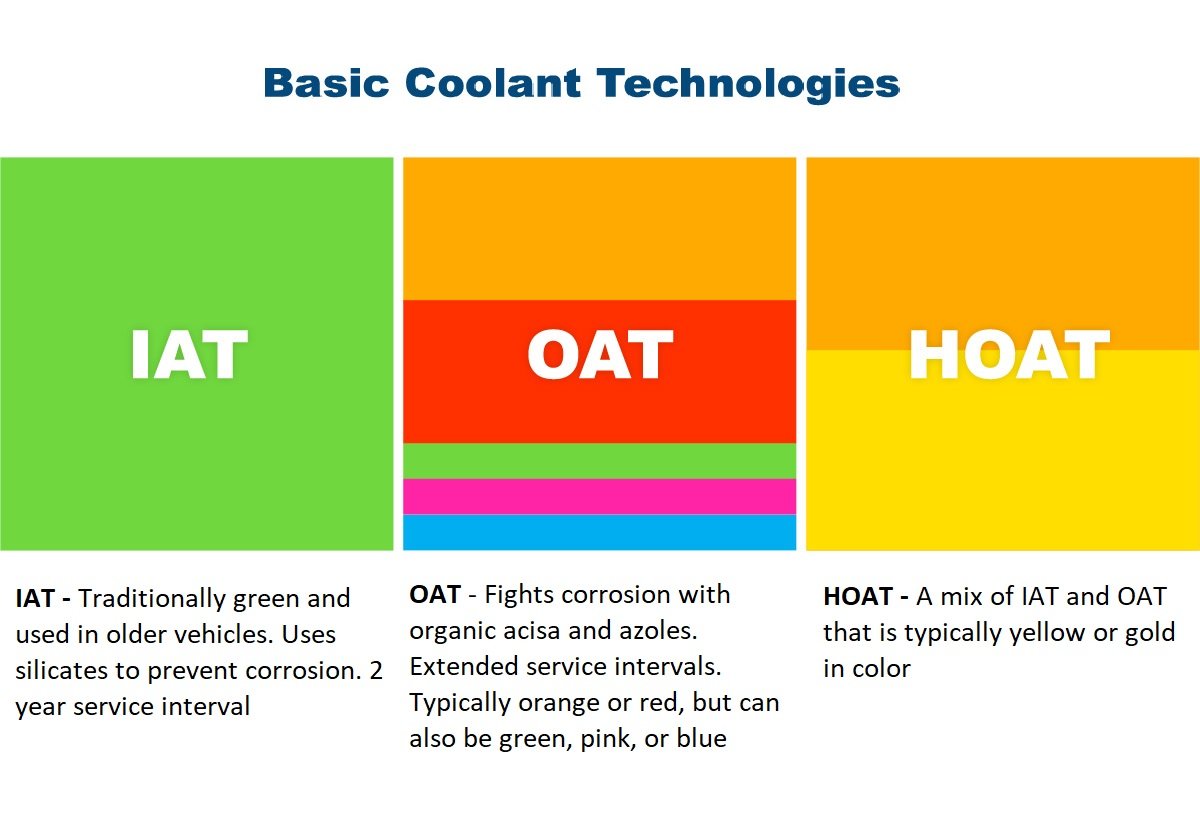
Using the wrong coolant can cause gels, sludge, or rapid corrosion. There are three main types, each with different chemistries and service lives.
IAT: Traditional Green Coolant
This coolant type features bright green coloring and requires service every 50,000 km or approximately 30,000 miles. It works best in vehicles made before the mid-1990s. The formula contains silicates and phosphates for fast metal protection, though additives deplete quickly, making it unsuitable for modern engines.
OAT: Long-Life Orange Coolant
This type appears in orange, amber, blue, or dark green and can last up to 200,000 km or approximately 125,000 miles. It is used in GM vehicles with DEX-COOL, as well as Honda, Toyota, VW, and Tesla models. The formula is silicate-free and organic acid-based for extended life, though it is slower to protect aluminum on cold starts.
HOAT: Hybrid for Modern Engines
This coolant comes in yellow, pink, red, blue, or purple and lasts up to 200,000 km. It is used in BMW, Audi, Ford, Jaguar, Volvo, and Toyota vehicles. There are two subtypes: Si-OAT (pink or red) for Asian and European models, and P-HOAT (yellow) common in Ford and Japanese brands.
Never mix coolant types. Incompatible fluids can form sludge, clog passages, or neutralize corrosion protection.
Signs Your Coolant Needs Attention
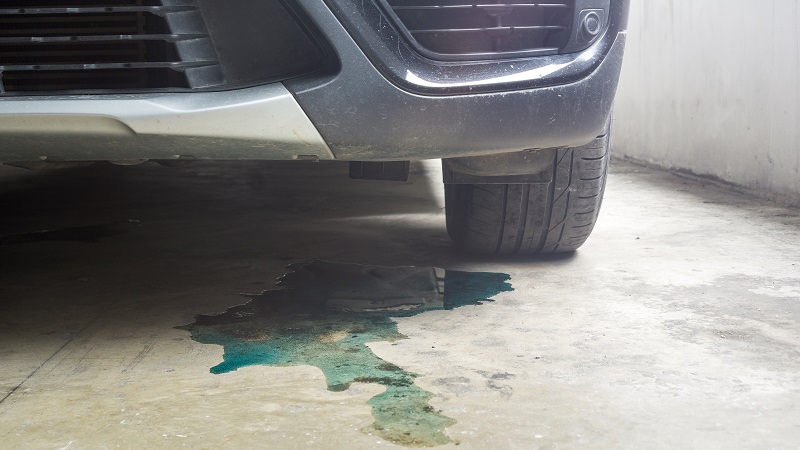
Ignoring coolant leads to preventable engine damage. Watch for these red flags.
Engine Overheating
Watch for the temperature gauge reaching the red zone, steam from under the hood, or check engine or overheat warning lights. This typically stems from low coolant, air pockets, degraded fluid, or blockages.
Low Coolant Level
If the reservoir sits below the Min line or requires frequent top-offs, this could indicate an external leak from hoses or radiator, or an internal leak from a blown head gasket or cracked block.
Discolored or Dirty Coolant
Healthy coolant appears bright green, orange, pink, or blue. Trouble signs include rusty brown indicating corrosion and rust, Milky or oily appearance signaling oil contamination from head gasket failure, and cloudy or sludgy texture meaning chemical breakdown or mixing incompatible fluids.
Sweet Smell in Cabin or Under Hood
Ethylene glycol has a syrupy, sweet odor. If you smell this inside the cabin, a heater core is likely leaking. If detected outside the vehicle, look for external leaks under the car.
Visible Leaks
Puddles of colored fluid (green, orange, pink) under the vehicle indicate leaks. Common leak points include the radiator, water pump seal, hoses and clamps, freeze plugs, and heater core.
Dashboard Warning Lights
Low coolant, check coolant, or high temp lights may activate even if the level looks normal. This could indicate a faulty sensor or air in the system.
Risks of Ignoring Coolant Maintenance
Skipping coolant service does not just risk overheating. It invites a cascade of failures.
Warped Cylinder Heads
Overheating causes metal to expand unevenly. Heads can warp, leading to loss of compression, coolant or oil mixing, and blown head gasket, which is a costly repair.
Cracked Engine Block
Severe overheating or frozen coolant can crack the block. This often means engine replacement is necessary.
Radiator and Heater Core Clogs
Corrosion and sludge build up in narrow tubes, reducing coolant flow. This causes poor cooling, weak cabin heat, and overheating under load.
Water Pump Failure
Coolant lubricates the pump. Old or acidic fluid increases friction, leading to bearing wear, seal leaks, and complete pump failure.
Acidic Coolant Damage
As coolant ages, it oxidizes and turns acidic with pH below 7.0. Acid attacks aluminum parts, rubber hoses, solder joints, and water pump bearings. This accelerates wear and increases risk of sudden failure.
Coolant Flush: Why It Matters
A coolant flush is not just a top-off. It is a deep cleaning and reset of your cooling system.
What Happens During a Flush
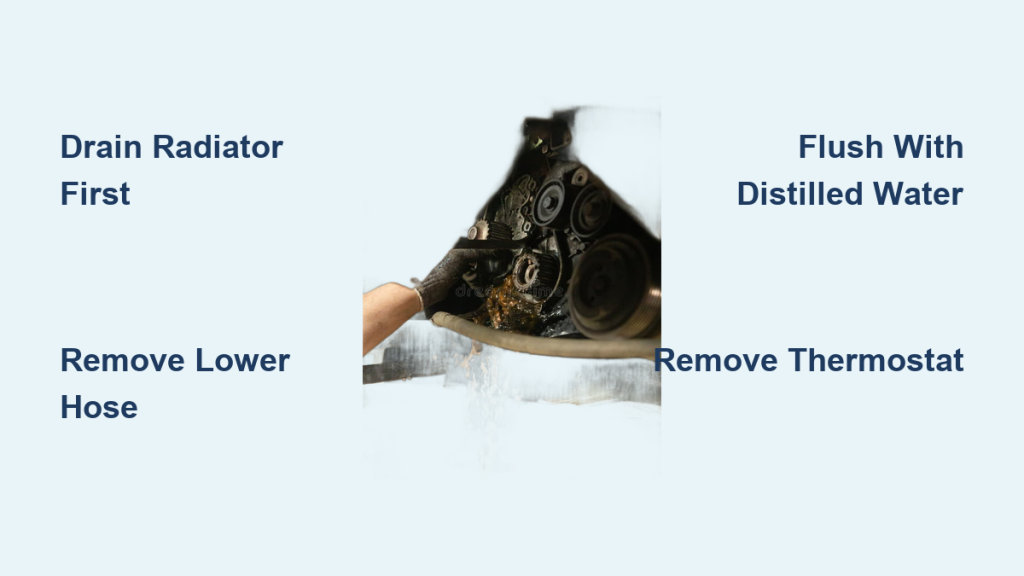
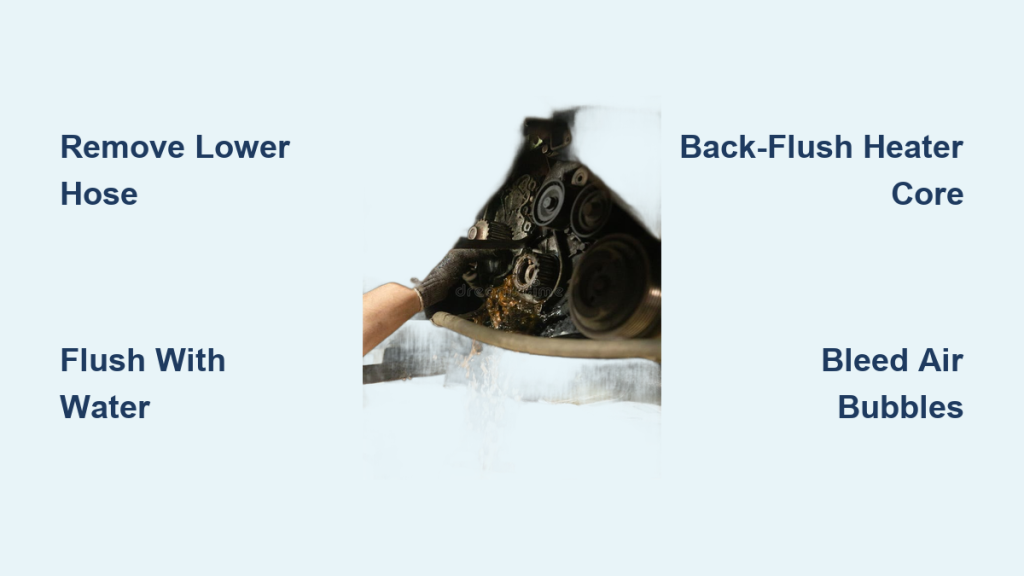
A flush involves draining old coolant, flushing the system with cleaning solution, removing contaminants like rust, sludge, and scale, and refilling with fresh, properly mixed coolant.
Benefits of a Coolant Flush
The procedure restores heat transfer efficiency, removes damaging deposits, replenishes corrosion inhibitors, lubricates the water pump, prevents acidic buildup, improves heater performance, and extends system life.
When to Flush Coolant
Follow these intervals based on coolant type. IAT (green) requires flushes every 2 years or 50,000 km. OAT and HOAT (orange, yellow, pink) last 5 years or 200,000 km. Severe use from towing, city traffic, or extreme temperatures requires more frequent service. Always check your owner is manual for exact intervals.
How to Check and Top Off Coolant

Simple checks can prevent major issues.
When to Check Coolant
Check coolant twice a year before summer and winter, before long trips, and if overheating or warning lights occur.
How to Check Coolant Level
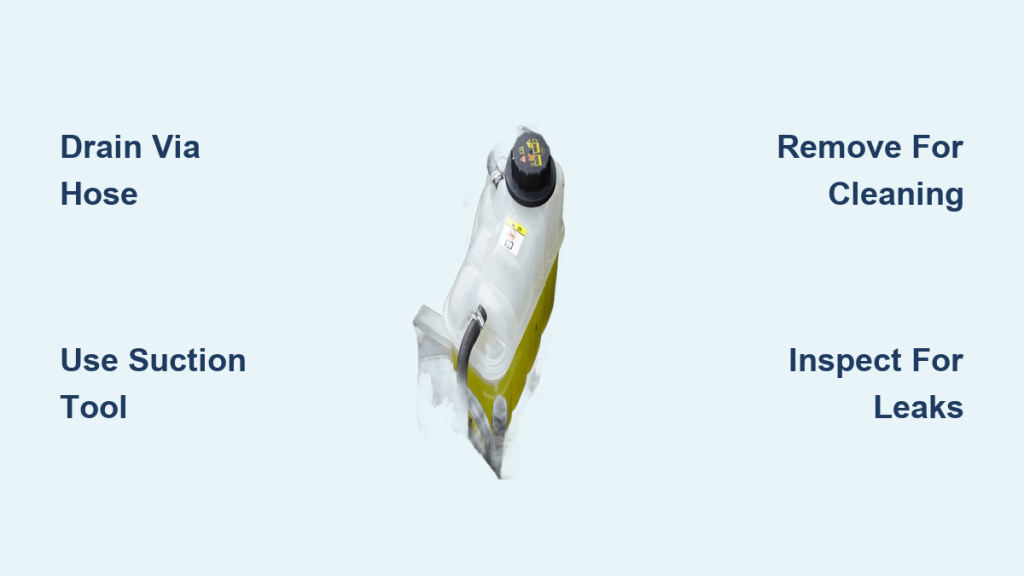
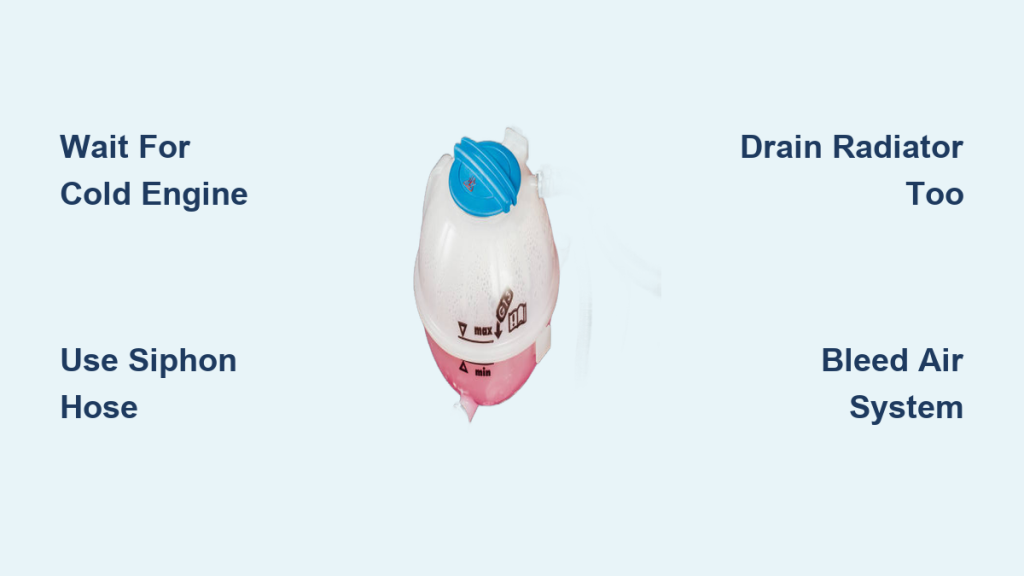
Wait for a cold engine (30+ minutes after shutdown). Locate the coolant reservoir (clear plastic with Min/Max lines). Check the fluid level and color and clarity. Do not open the radiator cap when hot to avoid scalding.
How to Add Coolant
Use a clean funnel. Add the correct type (or premixed 50/50). Fill to the Max line. Replace the cap securely. Start the engine, let it warm up, then recheck the level. Burping the system (letting it run with the cap off, carefully) helps remove air pockets.
Choosing the Right Coolant
Color is not enough. Use the correct formulation for your vehicle.
Steps to Pick the Right Coolant
Check the owner is manual for specifications (IAT, OAT, HOAT). Match the chemical type, not color. Look for OEM approval (e.g., GM 6277M, Ford WSS-M97B44-D). Use premixed 50/50 to avoid mixing errors. Avoid universal coolants unless approved.
Never use plain water. It lacks protection and promotes rust.
Coolant Maintenance Best Practices
Treat coolant like oil. It is preventive medicine for your engine.
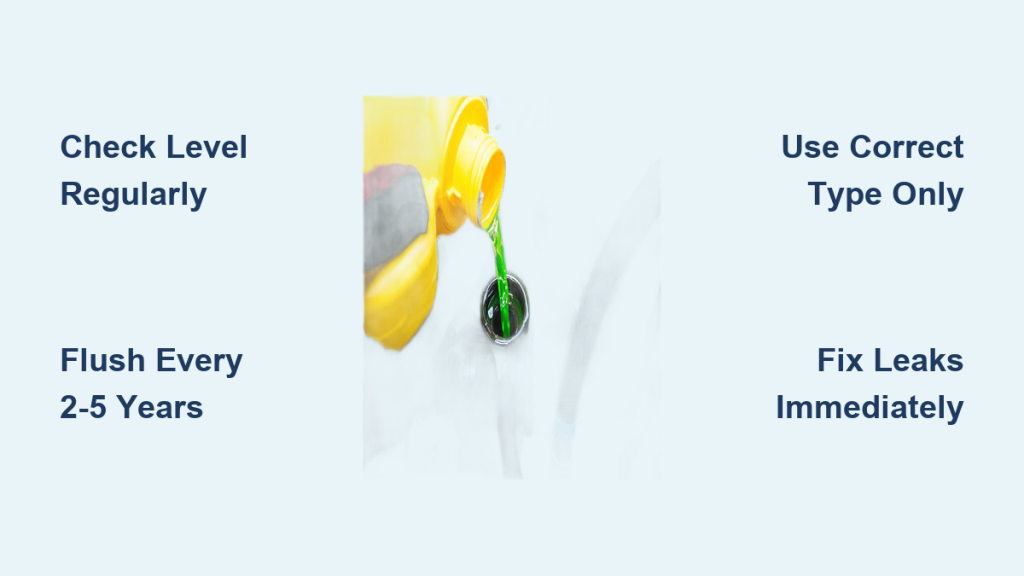
Check Every Six Months
Inspect the level and condition. Look for leaks. Note any changes in color or smell.
Follow Service Intervals
Stick to manufacturer-recommended flush schedules. Adjust for severe driving conditions.
Fix Leaks Immediately
Even small leaks lead to low coolant and overheating. Internal leaks (oil in coolant) require prompt diagnosis.
Use a Professional Flush
DIY top-offs are not enough. A full flush removes buildup. Technicians inspect hoses, radiator, and pump during service.
Annual Cooling System Inspection
Annual inspections cover the radiator and cap, hoses and clamps, thermostat, water pump, and electric fans. This catches small issues before they become big problems.
Frequently Asked Questions About Coolant
How Often Should I Check My Coolant Level?
Check coolant at least twice a year, ideally before summer and winter. Also check before long trips or if your dashboard shows warning lights.
Can I Use Water Instead of Coolant in an Emergency?
Using plain water is acceptable only in a genuine emergency. Water lacks corrosion inhibitors and promotes rust. It also freezes in cold weather and boils at lower temperatures than coolant. Replace it with proper coolant as soon as possible.
What Happens If I Mix Different Coolant Types?
Mixing incompatible coolants can form gels or sludge, clog cooling passages, and neutralize corrosion protection. This leads to overheating and expensive repairs. Always use the manufacturer-specified type.
How Do I Know When My Coolant Needs Flushing?
Flush coolant when it becomes rusty, cloudy, or sludgy, when you notice a sweet smell, if your engine runs hotter than normal, or when reaching the mileage interval specified for your coolant type.
Does Coolant Type Affect Engine Performance?
Yes. Correct coolant maintains optimal operating temperature, which directly impacts engine efficiency, fuel economy, and power output. Poor cooling causes the engine to run hot, reducing performance and increasing wear.
Is It Normal for Coolant to Disappear Over Time?
A small amount of consumption is normal due to evaporation. However, frequent top-offs indicate a leak. Have the system inspected promptly to avoid overheating and damage.
Final Note: Coolant Is Non-Negotiable
How important is coolant? It is not just important. It is indispensable. It protects your engine from extreme heat, freezing temps, corrosion, and mechanical failure. Without it, even a well-maintained engine can self-destruct in minutes.
Neglecting coolant leads to warped heads, cracked blocks, and blown gaskets. It results in costly repairs costing thousands of dollars. It causes stranded vehicles and towing bills. It can void your warranty.
But with simple, regular maintenance, checking levels, flushing on schedule, and using the right type, you can avoid these disasters completely. Treat coolant with the same respect as oil or brakes. It is not just a fluid. It is your engine is lifeline.