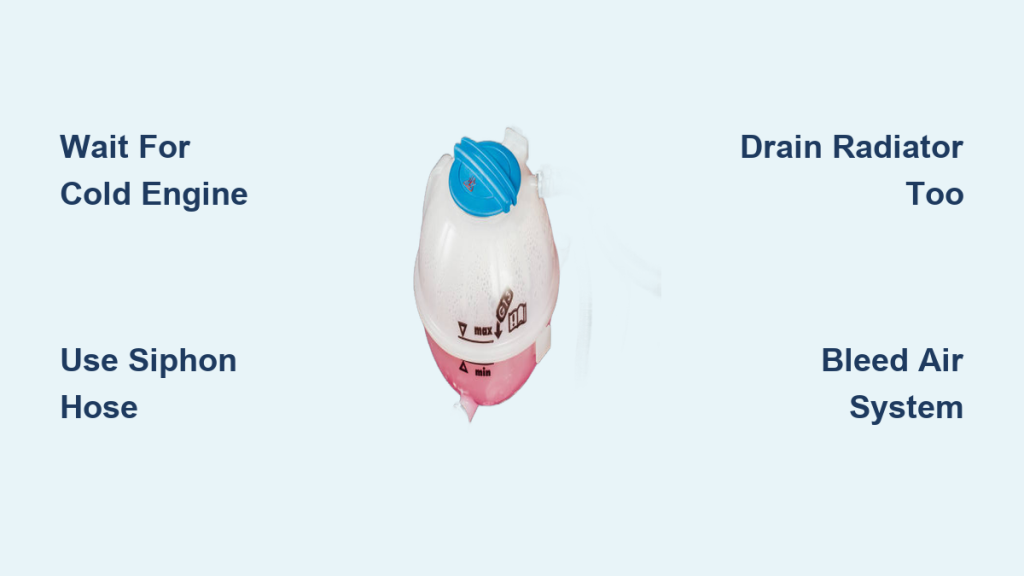
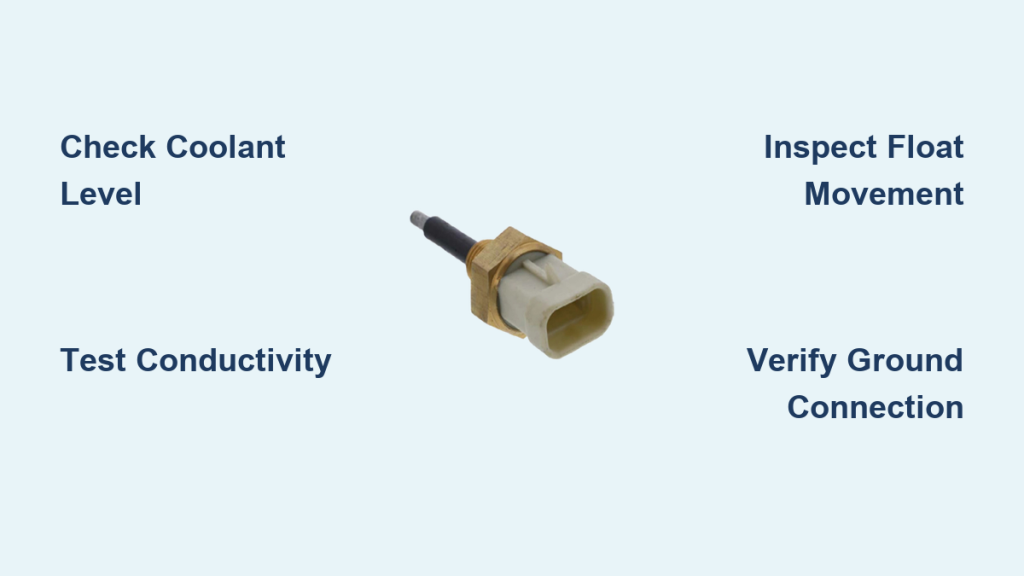
A sudden dashboard warning light for low coolant can send any driver into panic mode, especially if the expansion tank looks full. But behind that alert is a small yet vital component: the coolant level sensor. This unassuming device plays a critical role in protecting your engine by monitoring coolant volume and triggering a warning before overheating or serious damage occurs. Understanding how a coolant level sensor works is key to diagnosing false alarms, avoiding misdiagnosis, and maintaining long-term engine health.
Unlike the coolant temperature sensor, which monitors heat, the coolant level sensor tracks fluid volume. It is typically mounted on the expansion tank or radiator and uses one of two distinct technologies: electrical conductivity or a magnetic float with a reed switch. While both achieve the same goal, they operate on completely different principles and require different diagnostic approaches. Misunderstanding the type in your vehicle can lead to replacing the wrong part, as seen in cases where mechanics swapped out temperature sensors to no avail.
Two Main Sensor Technologies
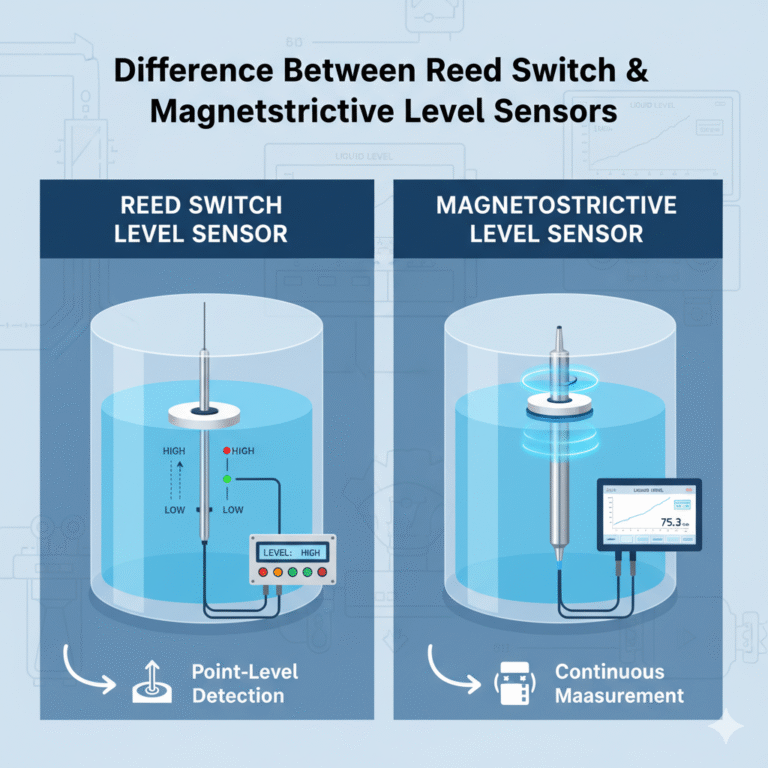
Despite serving the same purpose, coolant level sensors are not one-size-fits-all. Vehicle manufacturers use two fundamentally different methods to detect fluid levels, each with unique advantages and failure patterns.
Resistive Conductive Sensors Explained
This design uses the coolant’s ability to conduct electricity to complete a circuit between the sensor probe and engine ground.
The sensor features a metal probe extending into the coolant reservoir. Coolant, a mix of water and ethylene glycol, conducts a small current when it surrounds the probe. This creates a path to ground through the engine block, signaling normal to the instrument cluster. When coolant drops below the probe tip, the circuit breaks, triggering the warning light.
Why it works: Even diluted coolant conducts enough electricity to close the circuit. No moving parts mean fewer mechanical failures.
However, this system depends on proper coolant chemistry and electrical grounding. Changes in mixture, temperature, or probe contamination can disrupt readings.
Magnetic Float Reed Switch Sensors
This mechanical design relies on buoyancy and magnetism, not conductivity.
A floating magnet rises and falls with the coolant level inside a guide tube. A sealed reed switch is housed nearby but isolated from direct fluid contact. When coolant is sufficient, the magnet rises close enough to close the reed switch, turning off the warning. As coolant drops, the float lowers, the magnetic field weakens, and the switch opens, activating the dashboard light.
Key advantage: Immune to coolant type or electrical resistance changes. Works even with distilled water or non-conductive fluids.
Because the reed switch is sealed, it avoids corrosion, but the float can stick or the magnet can detach, leading to failure.
How Conductive Sensors Detect Coolant
These sensors depend on electrical properties of the coolant rather than physical movement.
Coolant Conductivity Basics
Coolant conducts electricity due to ions in the water-glycol mix. While pure antifreeze is a poor conductor, the water content allows a small current to flow.
The sensor sends a low-voltage signal through the probe. When coolant covers the tip, current flows to ground via the engine block. The instrument cluster detects this closed circuit and keeps the warning off.
Note: Some systems measure resistance, not just continuity. Higher resistance may indicate weak mixture or low level.
Why Temperature Affects Readings
Coolant resistivity changes with temperature. Cold coolant has higher resistance.
In the morning, a borderline coolant level may show intermittent warnings until the system warms up. Once warmed, increased conductivity may stabilize the signal, turning the light off.
This explains why some drivers see the warning vanish after a few minutes of driving, even though the actual level has not changed.
Common Conductive Sensor Issues
| Problem | Cause | Solution |
|---|---|---|
| Light stays on despite full tank | Corroded or coated probe | Clean or replace sensor |
| Intermittent warning | Poor grounding or wiring fault | Check ground connection and wiring |
| Light off even when low | Short circuit or failed open | Test continuity and resistance |
Pro tip: Use a multimeter to test between the sensor terminal and engine ground. With coolant at proper level, expect low resistance between 500 and 2000 ohms. An open circuit means failure.
How Float Reed Switch Sensors Operate
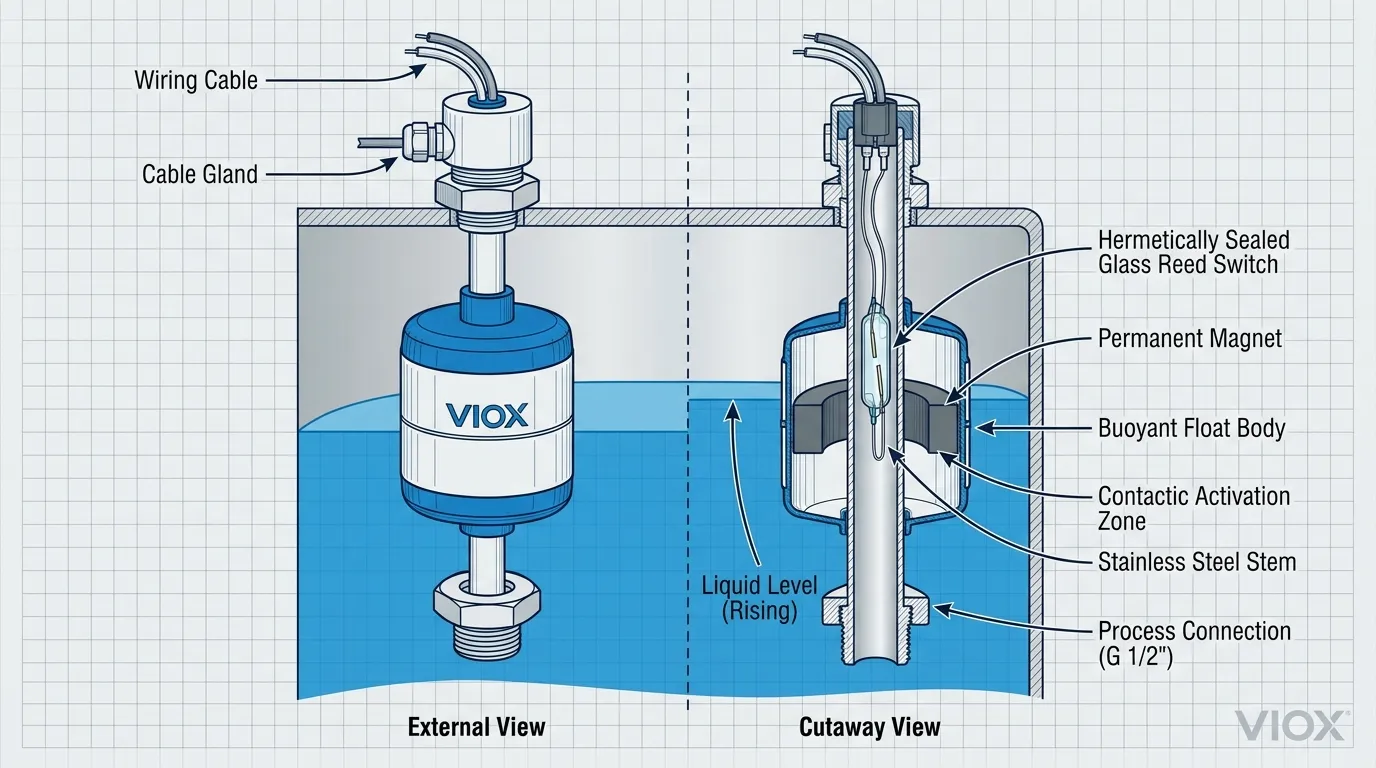
These sensors use physical movement and magnetism, no reliance on electrical conductivity.
Internal Components
Float: Hollow plastic or rubber piece that rises with coolant. Magnet: Embedded in or attached to the float. Reed switch: Glass-encased electrical contacts sealed in a dry chamber.
The float moves up and down along a guide rod, bringing the magnet into range of the reed switch only when coolant is adequate.
Magnetic Activation Threshold
The reed switch does not respond to partial movement. It requires the magnet to be within a precise range.
Pushing the float down manually may not trigger the light if the magnet stays near the switch. The float and magnet are often not rigidly connected, allowing independent motion.
This design prevents false alarms from sloshing but means visual inspection is not always enough.
Testing a Reed Switch Sensor
Observe float movement. Ensure it moves freely without sticking.
Use a magnet: Bring a small magnet near the sensor housing to simulate full coolant. If the warning light turns off, the reed switch is likely functional.
Multimeter test: Set to continuity mode. Probe the sensor terminals. With magnet close, should show continuity. With magnet away, should show open circuit.
Diagnosing a Faulty Coolant Sensor
A malfunctioning sensor can give false warnings or fail to warn at all, both dangerous scenarios.
Symptoms of Failure
Warning light stays on despite correct coolant level. No light when coolant is low. Intermittent activation, especially after refilling or cold starts. Light only turns off when overfilled.
Each symptom points to different underlying issues depending on sensor type.
Step-by-Step Diagnosis
Confirm actual coolant level. Always check the expansion tank with the engine cold. Look for min/max markings on the side. If level is correct but light is on, the sensor or wiring is suspect.
Visual inspection. Check for sludge, rust, or algae on the sensor. Inspect wiring for corrosion, fraying, or loose connections. For float sensors, ensure the float moves smoothly with no debris blocking it.
Test by type. For conductive sensors, disconnect the connector and use a multimeter to test resistance between the probe and engine ground. Should read low resistance when submerged, infinite when dry. For reed switch sensors, disconnect and test continuity. Use a magnet to simulate full level. Continuity should appear when magnet is present and break when removed.
Check fuses and grounds. Some systems rely on a specific fuse for the warning circuit. Test fuse integrity. Verify ground connection at the instrument cluster or sensor harness.
Warning: Disabling the warning by jumping connectors should only be done temporarily as a diagnostic step.
Common Causes of False Warnings
Even with a working sensor, false alerts can occur due to maintenance or environmental factors.
Overfilled Coolant
Technicians sometimes overfill to prevent early warnings.
As coolant heats and expands, excess is pushed out through the overflow hose. When engine cools, level drops, possibly below the sensor threshold. Result: Warning returns despite no actual loss.
Coolant Mixture Imbalance
Conductive sensors are sensitive to glycol-to-water ratio.
Too much water: Higher conductivity may keep circuit closed even when low. Too much glycol: Lower conductivity may simulate low condition.
Most systems tolerate 40 to 60 percent glycol, but extreme deviations cause issues.
Contaminated or Degraded Coolant
Old or dirty coolant can coat probes, insulating them from conduction. It can cause float to stick due to sludge buildup. It promotes corrosion in wiring and connectors.
Solution: Flush and refill with correct OEM-spec coolant every 5 to 7 years.
Coolant Level vs. Temperature Sensor
Drivers often confuse these two critical components.
| Feature | Coolant Level Sensor | Coolant Temperature Sensor |
|---|---|---|
| Function | Monitors fluid volume | Measures engine temperature |
| Warning Light | Low coolant icon | Overheat or check engine light |
| Dashboard Gauge | No | Drives temperature gauge |
| ECU Input | No | Yes |
| Failure Sign | Light on despite full tank | Engine runs hot or fan does not engage |
The coolant level sensor has nothing to do with the temperature gauge. Misdiagnosis is common, especially when dealers replace the temperature sensor for a level-related warning.
Real-World Case: VW Coolant Light Misdiagnosis
A documented case highlights the cost of misdiagnosis.
Symptom: Coolant warning lit every morning, disappeared after driving. Dealer action: Replaced coolant temperature sensor, claiming internal short. Result: No fix. Warning returned after level dropped from overfill. Root cause: Likely a failing conductive sensor or marginal coolant level.
This case shows the importance of identifying the correct sensor type. It shows the risk of ignoring simple fixes like proper coolant level. It shows the need for mechanics to test, not assume.
Sensor Comparison Summary
| Feature | Conductive Sensor | Reed Switch Sensor |
|---|---|---|
| Principle | Uses coolant conductivity | Uses magnet and float |
| Moving Parts | None | Yes |
| Affected by Coolant Mix | Yes | No |
| Temp Sensitivity | Yes | Minimal |
| Failure Modes | Corrosion, poor ground, wiring | Stuck float, detached magnet |
| Best Test Method | Multimeter for resistance | Magnet test, continuity check |
| Common Models | Many American and Asian | BMW, VW, Audi, Mercedes |
Frequently Asked Questions About Coolant Level Sensors
How does a coolant level sensor know when coolant is low?
The sensor detects low coolant through two main methods. Conductive sensors rely on the electrical circuit breaking when coolant falls below the probe tip. Reed switch sensors use a floating magnet that drops away from the switch when coolant is insufficient, opening the circuit and triggering the warning light.
Can I drive with a faulty coolant level sensor?
Driving with a faulty sensor is risky because you may not receive warning when coolant is actually low. This can lead to engine overheating and serious damage. However, a stuck-on warning light can also be annoying. If the sensor is faulty, have it diagnosed and replaced promptly.
Why does my coolant light come on in the morning but disappear after driving?
This behavior typically occurs with conductive sensors in cold conditions. Cold coolant has higher electrical resistance, which may cause intermittent circuit breaking. Once the engine warms the coolant, conductivity increases and the light may turn off even though the actual level has not changed.
Can I test a coolant level sensor without special tools?
Yes, you can perform basic tests. For reed switch sensors, hold a small magnet near the sensor housing. If the warning light turns off, the switch is working. For conductive sensors, a simple multimeter can test for continuity between the sensor terminal and engine ground.
Why did the dealer replace my temperature sensor when the coolant light was on?
This is a common misdiagnosis. The coolant level sensor and temperature sensor serve completely different functions. The level sensor monitors fluid volume while the temperature sensor measures heat. Some mechanics confuse these components, leading to unnecessary replacements.
Are coolant level sensors interchangeable between different vehicles?
Some sensors, particularly reed switch types, may be interchangeable with other fluid level sensors in the same vehicle. For example, the windshield washer fluid sensor is often identical to the coolant sensor on many BMW, VW, and Audi models and can be swapped for testing purposes.
Key Takeaways for Understanding Coolant Level Sensors
The coolant level sensor is a small but essential guardian of engine health. Whether it uses electrical conductivity or a magnetic float mechanism, understanding how it works helps you avoid misdiagnosis, reduce repair costs, and prevent engine damage. Always verify the actual coolant level first, then test the sensor based on its type. Conductive sensors are sensitive to coolant mixture and temperature, while reed switch sensors are mechanical and immune to electrical variations but can suffer from stuck floats or detached magnets. Regular maintenance, including using the right coolant mix and inspecting the system during service, keeps the warning light silent when it should be. When the light comes on, do not ignore it, but do not assume the worst either. With the right knowledge, you can diagnose the issue like a pro.