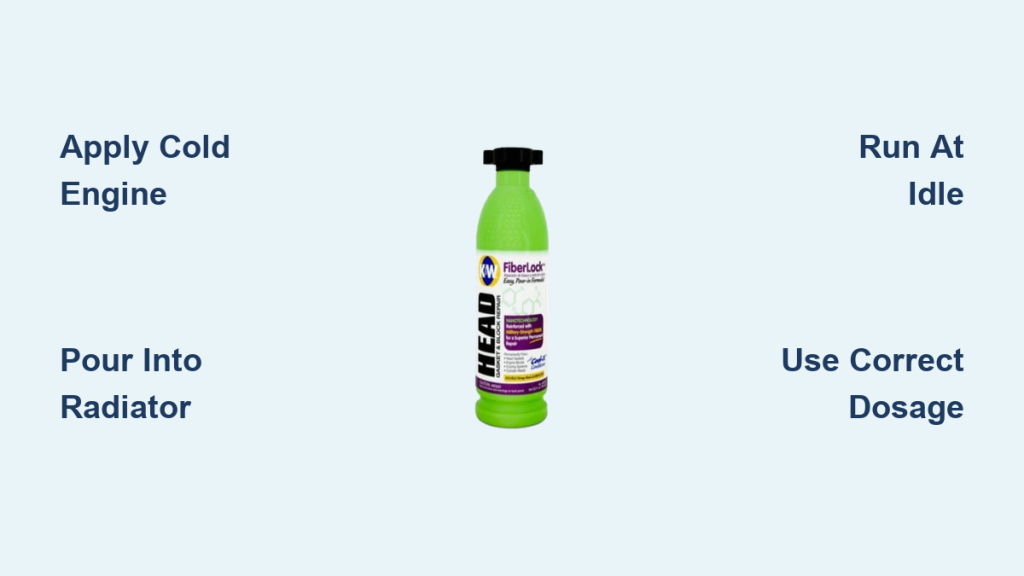
If your engine is overheating, losing coolant, or puffing white exhaust smoke, you might be dealing with a blown head gasket or cracked engine block. These problems typically cost $1,200 or more in professional repairs. FiberLock Coolant Repair offers a faster, cheaper alternative that claims to seal leaks permanently without engine disassembly. This guide covers how it works, step-by-step application, real-world results, and what to avoid.
How FiberLock Seals Coolant Leaks
FiberLock uses a multi-technology approach to repair leaks ranging from microscopic porosity to visible cracks. Unlike basic stop-leak products with single-component formulas, it combines four key elements for lasting results.
Dual-Action Repair Mechanism
The core of FiberLock’s effectiveness lies in its mechanical fiber web plus chemical hardening process. As the liquid circulates through your cooling system, synthetic fibers get drawn to leak points by pressure differentials. There, they interlock into a dense mesh that bridges gaps. Simultaneously, sodium silicate reacts with heat and micro-exposure to air, hardening into a ceramic-like seal. This combination handles both large and small leaks more reliably than silicate-only or particulate-based alternatives.
Advanced Ingredients That Work Together
The formulation includes several high-performance components.
• Military-strength synthetic fibers form a heat-resistant and pressure-resistant matrix at leak sites.
• Nano-scale particles penetrate micro-fractures and porosity in aluminum castings.
• Sodium silicate base creates a permanent, non-degradable seal upon curing.
• Cool-X Conditioner improves heat transfer and reduces engine operating temperatures.
These components make FiberLock one of the few consumer-grade sealants validated under ASTM D6107, a standardized test for cooling system repair products.
What FiberLock Can and Cannot Fix
FiberLock works effectively for blown or leaking head gaskets, cracks in engine block or cylinder head, porosity leaks in aluminum components, leaking heater cores and radiators, and freeze plug and water pump seal leaks.
It is not recommended for warped cylinder heads, foamy oil or crankcase emulsification, complete loss of compression, severely overheated or mechanically damaged engines, or systems with heavy sludge or blockages.
Apply FiberLock the Right Way
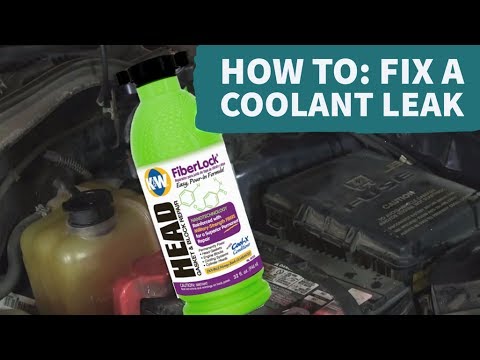
Using FiberLock incorrectly can reduce effectiveness or cause clogging. Follow these steps to ensure optimal results and avoid common mistakes.
Prepare the Engine Properly
Always start with a cold, depressurized engine. Never remove the radiator cap when hot because risk of severe burns is high. If the system is under pressure, wait until it cools completely, then open the cap slowly to release any residual pressure before proceeding.
Ensure the thermostat is functional. A stuck-closed thermostat prevents proper circulation, which stops the product from reaching leaks. Some users remove the thermostat temporarily during treatment to maximize flow.
Inject Directly Into Radiator
Do not pour FiberLock into the overflow reservoir because it may take too long to enter circulation, reducing effectiveness.
Instead, remove the upper radiator hose and use a funnel to pour the product directly into the radiator inlet. Alternatively, remove the radiator cap and pour slowly into the filler neck. This ensures immediate mixing and full system distribution.
Use Correct Dosage
The full 32 oz bottle treats cooling systems up to 12 quarts according to CRC specifications or up to 20 quarts according to K&W specifications. The half bottle, approximately 16 oz, is sufficient for systems up to 10 quarts.
To make room for the product, drain 1 to 2 quarts of coolant first, or temporarily disconnect the upper hose during pouring. Do not exceed recommended dosage because extra product increases clogging risk without improving results.
Run the Engine to Activate the Seal
After application, running the engine under specific conditions triggers the sealing process. Skipping this step leads to failure.
Idle Until Temperature Rises
Start the engine and let it idle until it reaches normal operating temperature. This ensures the thermostat opens and coolant flows through all parts of the system, including the heater core. Monitor the temperature gauge. If it spikes, shut off immediately because this could indicate trapped air or an existing blockage.
Maximize Heater During Treatment
Set the heater to maximum temperature and fan speed for the entire 15 to 20 minute idle period. This forces coolant through the heater core, helping seal internal leaks and preventing fiber buildup in narrow passages.
This step is critical if you suspect a heater core leak, which is common in older vehicles. Users have reported restored heat and eliminated cabin steam after treatment.
Allow Time for Full Sealing
While initial sealing occurs within 15 to 30 minutes, full effectiveness may require up to 50 miles of driving or multiple heat cycles. Some users report gradual improvement over days as the seal strengthens.
Avoid long drives immediately after treatment if the engine was already overheating. Stick to short trips and monitor coolant levels closely.
Avoid Clogging and System Damage
Though designed to be safe, improper use can lead to clogging, especially in older or dirty systems.
Heater Core Clogging Risk
There are anecdotal reports of lost cabin heat after application. While not definitively proven, the temporal link suggests fibers may settle in restricted passages.
To reduce risk, flush the cooling system first if coolant is dirty or degraded. Replace the thermostat to ensure unrestricted flow. Run the heater on max during treatment to keep fibers moving.
Prevent Flow Restrictions
Never use FiberLock in a system with sludge or rust buildup, a partially blocked radiator, or previous stop-leak products that did not fully dissolve. These conditions increase the chance of clogs. For best results, start with a clean system.
Do Not Overdose
Using more than the recommended amount does not speed up repairs. It raises the risk of particulates clumping in narrow channels like heater cores or water pump seals. Stick to the dosage based on your system capacity.
Why FiberLock Outperforms Other Stop-Leaks

Most chemical sealants rely on a single technology. FiberLock’s hybrid design gives it a broader range of repair capability.
Multi-Technology Advantage
The combination of synthetic fibers, nanoparticles, sodium silicate, and Cool-X Conditioner allows FiberLock to fix leaks that single-component products miss, especially in aluminum blocks prone to casting porosity.
Lab-Validated Performance
FiberLock is one of the few consumer sealants tested under ASTM D6107, a standardized method for evaluating cooling system additives. Results show faster sealing times, lower fluid loss post-repair, and greater durability under thermal cycling.
Permanent Repair Claim
Unlike temporary fixes that require reapplication every few months, FiberLock claims to deliver a lifetime repair. Once sealed, the bond remains stable and does not degrade under normal operating conditions. Residual product stays suspended in coolant indefinitely and is compatible with future coolant changes.
Real Results: What Users Say
With an average rating of 4.97 out of 5 across verified reviews, most users report success in stopping leaks and restoring drivability.
Success in High-Mileage Vehicles
One user turned a write-off 4WD into a working vehicle after a major internal leak. Another fixed a 2005 Chrysler 300C heater core leak that was causing cabin steam and overheating. After using half a bottle, coolant levels stabilized and heat returned, deferring a $1,000 repair.
Mixed Long-Term Feedback
Some users express uncertainty about long-term durability while still recommending the product. Others report the vehicle remains drivable while planning engine work. The technology is engineered for permanence, but success often depends on timing. Applying it early in the failure cycle yields the best long-term results.
When It Works Best
Users see the most reliable outcomes when coolant loss is slow rather than sudden, when there is no milky oil or engine misfires, when the vehicle can idle safely, and when the system is relatively clean.
Know When NOT to Use FiberLock
Even the best chemical repair has limits. Applying it in the wrong situation can waste money or cause further damage.
Signs of Severe Engine Damage
Do not use FiberLock if you observe foamy oil or milky residue under the valve cover, bubbles in the radiator when the engine is running indicating combustion gases entering coolant, complete loss of compression, or engine knocking or misfiring. These indicate advanced failure beyond what any pour-in product can fix.
System Conditions That Block Success
Avoid use if the thermostat is stuck closed, coolant is acidic or contaminated, the radiator is clogged, or the vehicle cannot maintain idle. Also, do not apply after an acidic flush because low pH can interfere with sodium silicate bonding.
Warranty and Compatibility Warnings
Using chemical additives may void powertrain warranty if detected. Only use on out-of-warranty or privately owned vehicles unless manufacturer-approved. FiberLock is not for use in transmission fluid, power steering, or other systems.
Save Money Without Sacrificing Reliability
FiberLock offers one of the highest return-on-investment ratios in DIY auto repair.
Repair Cost Comparison
Head gasket replacement averages $1,200 to $2,500, while FiberLock costs only $35, saving $1,165 to $2,465. Heater core replacement costs $500 to $1,000, saving $465 to $965 with FiberLock. Radiator repair costs $300 to $900, saving $265 to $865.
Ideal for Older or High-Mileage Cars
For vehicles where repair cost exceeds value, FiberLock extends usable life. It is especially useful for DIYers avoiding shop bills, rural drivers with limited mechanic access, and fleet managers keeping aging trucks on the road.
Double Money-Back Guarantee
CRC-branded FiberLock includes a double money-back guarantee. If it does not work, you get twice your money back. This rare promise boosts consumer confidence and underscores the company faith in the product.
Maintain the Repair for Long-Term Success
A successful application is not the end. Ongoing maintenance ensures the fix lasts.
Monitor Coolant Levels Regularly
Check the coolant reservoir weekly for the first month. A stable level confirms the leak is sealed. If loss continues, the damage may be too severe for chemical repair. Top off with 50/50 antifreeze and distilled water as needed.
Perform Routine Cooling System Care
Even after sealing, protect your engine by replacing coolant every 2 to 5 years depending on type, inspecting hoses and clamps for wear, and ensuring fans and thermostats function properly. Address root causes of overheating like a failing water pump or clogged radiator to prevent recurrence.
No Need to Flush Later
FiberLock remains stable in the system indefinitely. You can change coolant normally without removing the product. Residual fibers and silicate do not settle or degrade under proper conditions.
Frequently Asked Questions About FiberLock Coolant Repair
How long does FiberLock take to work?
Initial sealing occurs within 15 to 30 minutes of idling, but full effectiveness may require up to 50 miles of driving or multiple heat cycles.
Can FiberLock fix a head gasket leak?
Yes, FiberLock is designed to seal blown or leaking head gaskets, along with cracks in engine blocks, cylinder heads, heater cores, and radiators.
Is FiberLock safe for aluminum engines?
Yes, FiberLock is safe for both aluminum and cast-iron engines and is compatible with all coolant types.
Will FiberLock clog my heater core?
There is a risk if the system is dirty or if dosage is exceeded. To minimize risk, flush the system first, replace the thermostat, and run the heater on max during treatment.
How much does FiberLock cost?
FiberLock typically costs $30 to $40, compared to $1,200 to $2,500 for professional head gasket repair.
Key Takeaways for Using FiberLock Coolant Repair
FiberLock Coolant Repair is a powerful, cost-effective solution for early to mid-stage cooling system leaks. When used correctly on a compatible, functional engine, it can permanently seal head gasket, block, and heater core leaks, saving time, money, and hassle. The product combines military-grade synthetic fibers, nanotechnology, and sodium silicate to create a dual-action seal that is both mechanical and chemical. It outperforms single-component stop-leak products and is lab-validated under ASTM D6107 standards. While not a substitute for mechanical repair in catastrophic failures, it is one of the most trusted DIY options on the market. By following proper application steps and understanding its limits, you can keep your vehicle running safely and affordably for months or even years.