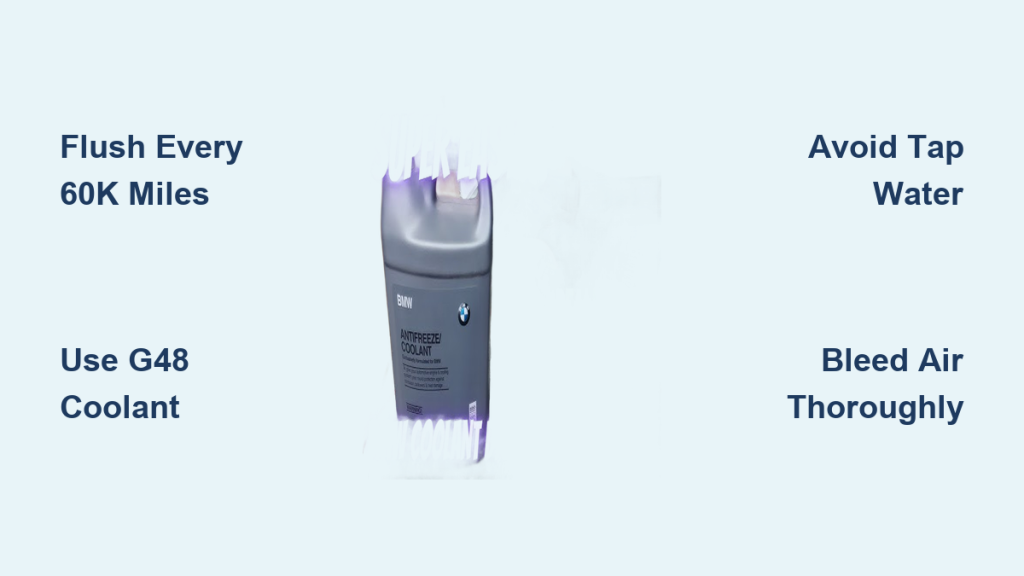
If your BMW is overheating, losing coolant, or approaching 60,000 miles, a radiator flush might be the most cost-effective way to prevent costly engine damage. Despite what your owner’s manual says about “lifetime” coolant, that label is misleading. Coolant degrades over time, losing its ability to protect aluminum components and regulate temperature.
A proper BMW radiator flush is not just about replacing old fluid. It is about preserving the integrity of your engine, water pump, and cooling system. Whether you drive an E90 M3 with no block drain or a modern B58-powered 340i, this guide delivers a clear, step-by-step approach to flushing your BMW cooling system safely and effectively, plus when to skip the flush and what upgrades to make while you are in there.
Why the “Lifetime Coolant” Myth Costs BMW Owners Money
BMW’s claim of “lifetime fill” coolant often leads owners to skip maintenance until failure occurs. In reality, “lifetime” typically means the duration of the factory warranty or ideal driving conditions, not 10 years or 100,000 miles. Coolant breaks down due to heat cycles, oxidation, and contamination.
After 5 years, corrosion inhibitors weaken, increasing the risk of internal rust, scale buildup, and component failure. Even if the fluid looks clean, its chemical protection may be gone. This is why a BMW radiator flush on a regular schedule protects your investment far better than trusting the factory label.
How Often to Flush Your BMW Cooling System
The sweet spot for most BMWs is 60,000 miles or 5 years, whichever comes first. This interval balances cost and protection. High-performance engines like the B58 or N54 generate extreme heat, accelerating coolant breakdown.
If you have topped off with water in the past, inhibitors are diluted, making a flush even more critical. Proactive flushing helps avoid $800+ repairs for failed water pumps, thermostats, or radiators. Some industry standards suggest shorter intervals of 2 years or 30,000 miles for conventional coolants, but the 60k/5-year rule remains the most widely accepted for BMW owners.
BMW Coolant Types: What to Use and What to Avoid
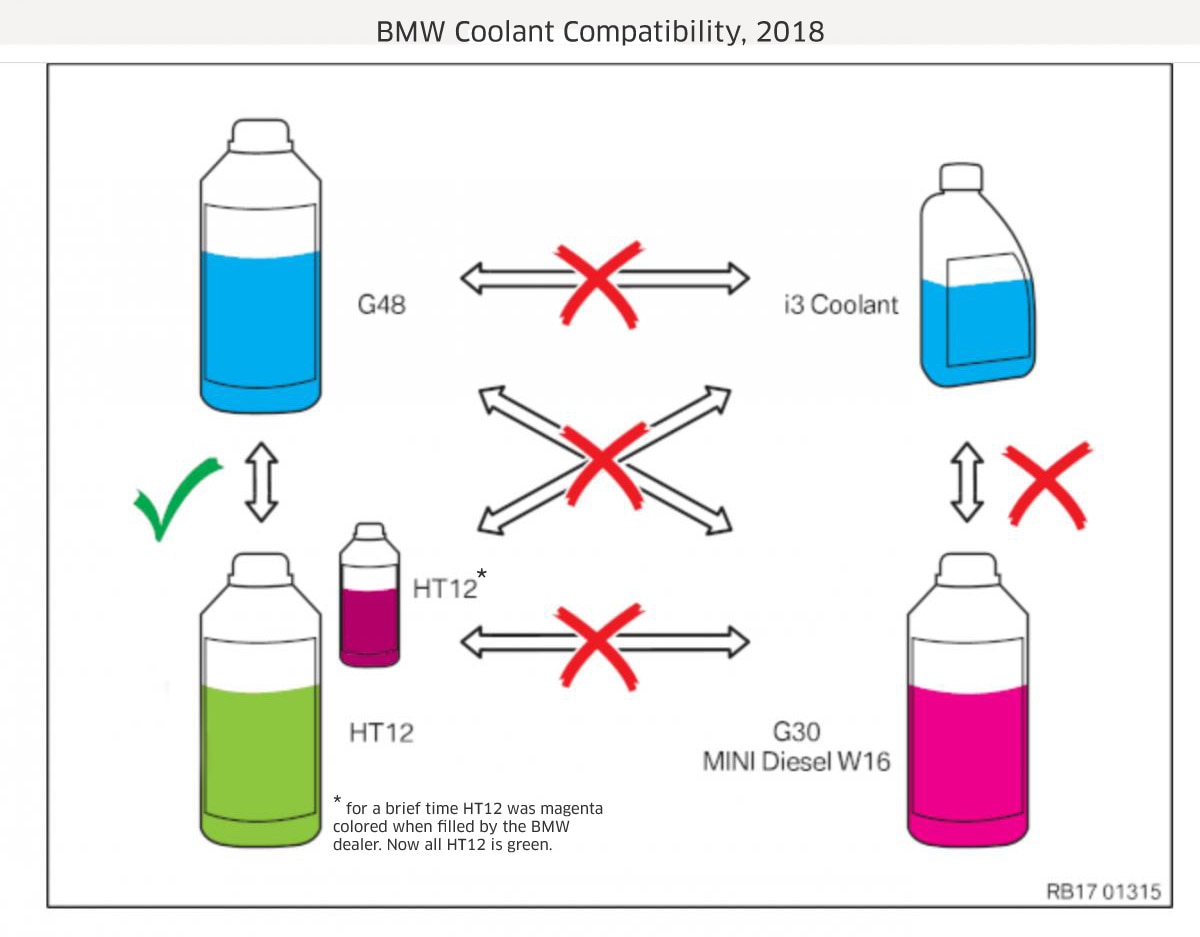
Yes, the coolant you choose matters. BMW specifies blue G48 coolant (or equivalent) for most post-2000 models, especially those with aluminum or alumasil blocks. Using yellow (G12++) or red coolant can cause chemical incompatibility, leading to sludge and accelerated corrosion.
If the wrong coolant was used, a full chemical flush with up to 10 gallons of distilled water may be required. Always use BMW-approved G48 or equivalent ZC (coolant meeting GS 94021 spec). Pure antifreeze has roughly 35% less heat transfer capability than pure water, so a proper 50/50 mix is essential for cooling efficiency.
Engine-Specific Flush Challenges (S65, N52, B58)
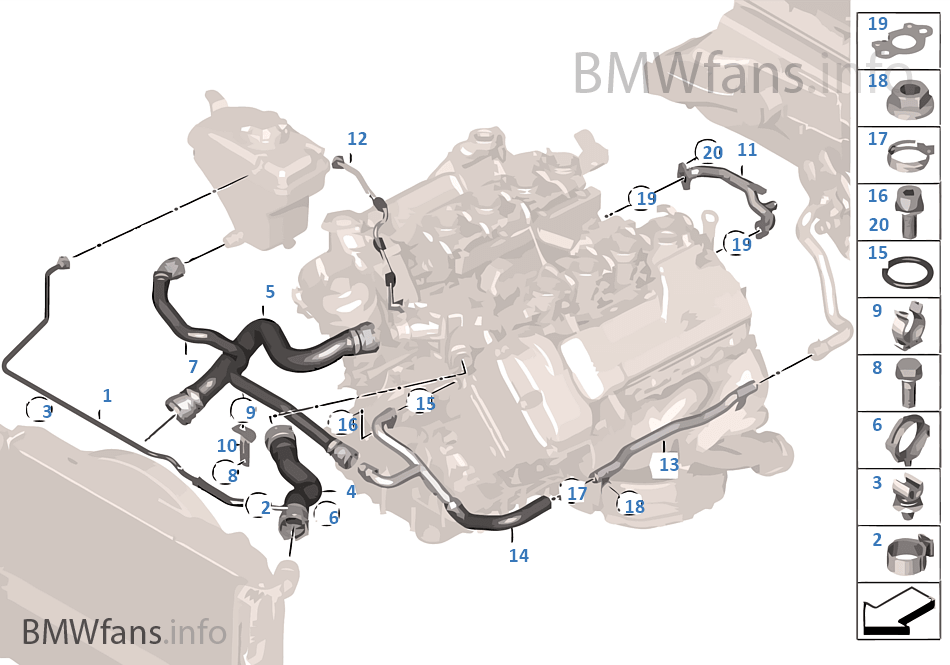
S65 (E90/E92 M3): No Block Drain Plug
The S65 engine lacks an engine block drain plug, making a complete flush impossible without disassembly. You will never remove 100% of old coolant. However, a multi-cycle distilled water flush can dilute and remove most contaminants.
Expect residual fluid to remain in the block. This is normal. Focus on flushing the radiator, expansion tank, and heater core. The S65 system holds approximately 12 quarts (3 gallons) total.
N52 Engines: Water Pump Failure Is Not Always Coolant-Related
While many assume old coolant kills N52 water pumps, most failures stem from overheated control electronics, not mechanical wear. That said, degraded coolant still contributes to system inefficiency and corrosion in the aluminum block.
Flushing will not prevent all N52 pump failures, but it supports overall engine health. The N52 system holds roughly 11 to 12 quarts.
B58/N55: Replace Plastic Fittings Now
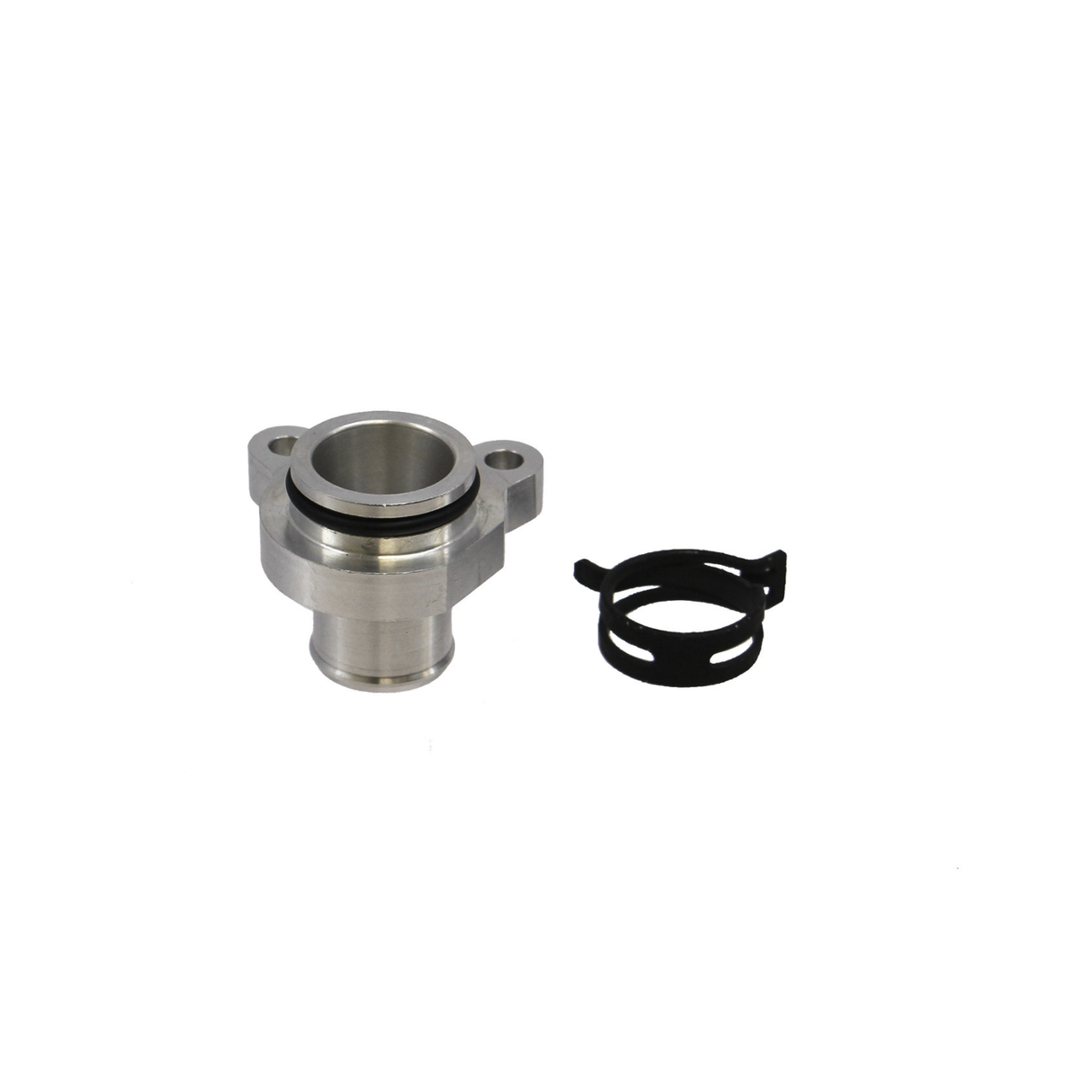
The B58 engine is notorious for coolant leaks from the plastic “Mickey Mouse” fitting and top return hose connector. These brittle parts crack under heat and pressure. During any coolant service, replace both with aluminum upgrades. It is a $50 fix that prevents a $500+ repair later.
Standard Drain and Fill Method for BMW Cooling Systems
Best for routine maintenance when block drains are inaccessible. This method only replaces 50 to 70% of coolant, so residual fluid remains in the block and heater core.
Steps:
- Cool Engine Only: Never open the system hot.
- Drain Radiator: Locate the 8mm or Phillips drain plug at the bottom of the radiator. Place a pan underneath.
- Remove Lower Hose if Needed: On some models (such as E38), disconnecting the lower radiator hose improves drainage.
- Refill Expansion Tank: Add 50/50 BMW-approved coolant mix.
- Bleed Air:
* Open radiator bleed screw.
* Set heater to max heat, fan to low.
* Start engine, run 7 to 8 minutes until thermostat opens (cabin heats up).
* Top off reservoir as level drops.
Warning: This method only replaces roughly half to two-thirds of coolant. For a more complete BMW radiator flush, use the super flush method below.
Super Flush Method for Maximum Coolant Replacement
Ideal for S65, B58, or cars with unknown service history. This approach uses multiple distilled water cycles to push out old fluid.
Steps:
- Drain Radiator Fluid.
- Flush with Distilled Water:
* With drain plug open, pour 1 gallon of distilled water into the expansion tank.
* Let it flow through to flush sludge. - Add 1 Quart Premix: Helps displace remaining water and old coolant.
- Cycle the System:
* Fill reservoir to max.
* Open bleed valve.
* Turn ignition ON (engine off).
* Set heater to max, fan to low.
* Depress gas pedal to kick-down point for 12 to 15 seconds. This activates the electric water pump.
* Wait up to 12 minutes for pump to cycle and purge air. - Repeat 2 to 3 Times: For best results, repeat the water flush and pump cycle before final fill.
Pro Tip: Watch the drain output. When clear water turns blue, close the plug. Fresh mix is circulating.
Vacuum Fill: The Most Thorough BMW Radiator Flush
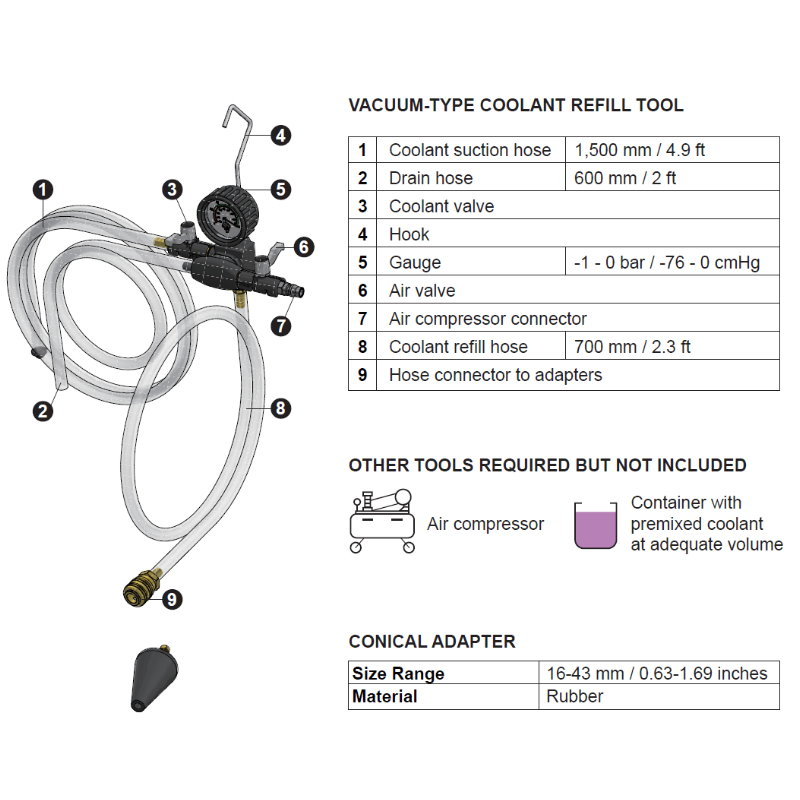
Recommended for DIYers with tools or professionals. This method uses a cooling system vacuum filler to remove air before adding coolant.
Vacuum filling prevents overheating and poor heater performance caused by trapped air. After filling, perform both low-temperature and high-temperature bleed cycles:
- Low-temp cycle: 12-minute pump cycle with ignition on.
- High-temp cycle: Run engine to operating temperature, then cool down. Repeat twice.
Tools and Supplies Needed for a BMW Radiator Flush
What You Will Need
- BMW-approved coolant (G48 or equivalent)
- Distilled water (1 to 2 gallons)
- Funnel and catch pan
- 8mm and 10mm sockets or wrenches
- Torque wrench (for block plugs)
- Vacuum fill tool (optional but recommended)
- Gloves and eye protection
- Cardboard or drip cloths (it will get messy)
System Capacities by Model
| Engine | Capacity | Mix Ratio |
|---|---|---|
| M62 / M62TU | 12.0 liters (12.7 quarts) | 50/50 |
| S65 (E90 M3) | 12 quarts (3 gallons) | 50/50 |
| N52 / B58 | Roughly 11 to 12 quarts | 50/50 |
DIY Cost: $24 to $50, compared to $249 to $260 at a dealer.
Critical Component Upgrades During Coolant Service
Replace Plastic with Metal
| Component | Problem | Fix |
|---|---|---|
| Mickey Mouse Fitting | Cracks under pressure | Install aluminum replacement |
| Top Return Hose Connector | Brittle plastic fails | Upgrade to aluminum adapter |
| Expansion Tank Cap | Leaks cause white residue | Replace every 5 years or with flush |
Inspect and Replace Key Parts
Water Pump: Check for leaks around the housing. If over 60,000 miles, consider replacement, especially on N52/N54 engines.
Thermostat: Often fails with the water pump. Replace during major cooling work. It costs little extra when the system is already open.
Hoses and Clamps: Look for swelling, cracking, or softness. Replace any rubber hoses showing age and do not reuse old clamps.
Expansion Tank: Inspect for hairline cracks or white crust (dried coolant). Replace if the tank is cloudy or leaking.
Bonus Upgrades: Brass clutch fork pin (E9x models) and stainless steel rotor set screws (prevent stripping).
Warning Signs Your BMW Needs a Radiator Flush
Flush Immediately If:
- Coolant is rusty, murky, or has particles
- White powder appears around the expansion tank cap
- Overheating occurs with no visible leaks
- Wrong coolant color was previously used
- Replacing water pump, radiator, or thermostat
Test Coolant Health
Freeze Point Test: Use a refractometer or hydrometer. Target -34°F protection (50/50 mix). Never test on a hot engine.
pH Test: Indicates corrosion inhibitor depletion. Below pH 7.5? The coolant is acidic and needs flushing immediately.
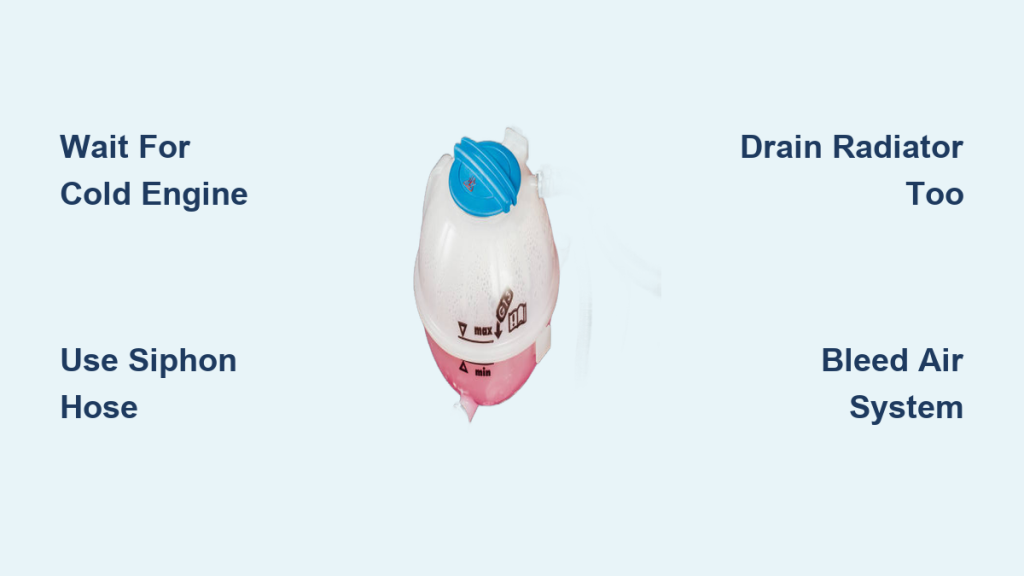
Visual Inspection (Every Oil Change): Check level between “Min” and “Max.” Look for leaks under the car. Note color: bright blue means good, brown means bad.
Common BMW Radiator Flush Mistakes to Avoid
Never Use Tap Water
Tap water contains minerals that form scale in aluminum blocks, reducing heat transfer and promoting corrosion. Always use distilled water only, even for flushing.
Skip Chemical Flush Additives
In older systems, chemical flushes can dislodge large chunks of debris, clogging the heater core or radiator. Stick to distilled water cycles. They are safer and effective.
Do Not Overtighten Block Plugs
Engine block drain plugs (such as on E38) are often hex plugs in tight spaces. Use a torque wrench or quality impact driver to avoid rounding. Typical spec: 10 to 15 Nm.
Bleed Thoroughly. Air Kills
Trapped air causes overheating, cold cabin heat, and false temperature gauge readings. Use the pedal trick or vacuum fill to ensure complete air removal.
DIY vs. Dealer: BMW Radiator Flush Cost Comparison
| Option | Cost | Pros | Cons |
|---|---|---|---|
| DIY | $24 to $50 | Cheap, full control | Messy, requires tools |
| Mobile Specialist | Around $249 | Comes to you, thorough bleed | Scheduling needed |
| Dealership | Around $260 | OEM parts, warranty | May skip intercooler reservoir |
Insider Tip: Some dealers miss the air-to-water intercooler coolant reservoir on turbo models. Ask specifically if it was flushed.
BMW Cooling System Maintenance Schedule
| Interval | Action | Purpose |
|---|---|---|
| Every Oil Change | Visual check | Catch leaks early |
| Every 2 Years | Test freeze point | Confirm 50/50 mix |
| 60k Miles / 5 Years | Full flush and refill | Prevent corrosion |
| Component Replacement | Full system flush | Avoid contamination |
| Used Car Purchase | Immediate flush | Reset unknown history |
Frequently Asked Questions About BMW Radiator Flush
How often should I flush my BMW radiator?
Most BMWs benefit from a radiator flush every 60,000 miles or 5 years, whichever comes first. High-performance engines or vehicles with unknown service history may need more frequent attention.
Can I use any coolant in my BMW?
No. BMW requires blue G48 coolant or an equivalent meeting the GS 94021 specification. Using yellow or red coolant can cause chemical incompatibility, leading to sludge and corrosion in aluminum components.
Is a BMW radiator flush necessary if the coolant looks clean?
Yes. Coolant can look clean while its corrosion inhibitors have already degraded. A visual check alone is not enough. Testing freeze point and pH gives a more accurate picture of coolant health.
How much does a BMW radiator flush cost at a dealership?
Dealership service typically runs around $260 for parts and labor. Mobile specialists charge roughly $249, while DIY costs only $24 to $50 in supplies.
What happens if I never flush my BMW cooling system?
Old coolant loses its corrosion protection, leading to internal rust, scale buildup, and eventual failure of the water pump, thermostat, or radiator. Repairs can easily exceed $800.
Can I do a BMW radiator flush without a block drain plug?
Yes. On engines like the S65, a multi-cycle distilled water flush dilutes and removes most old coolant. While 100% replacement is impossible, this method still refreshes the system significantly.
Key Takeaways for a Successful BMW Radiator Flush
A BMW radiator flush is one of the best investments you can make in long-term reliability. The “lifetime coolant” label is misleading, and proactive maintenance every 60,000 miles or 5 years prevents costly failures.
While you cannot achieve 100% fluid exchange on engines like the S65, a disciplined multi-cycle flush with distilled water and OEM-spec coolant dramatically refreshes system protection. Combine it with aluminum fitting upgrades and proper air bleeding, and you will avoid most cooling-related failures.
Your next step: gather your supplies, set aside a weekend, and perform the flush before symptoms appear. Whether you DIY or hire a pro, do not wait for overheating. Flush on schedule and keep your BMW running cool for years to come.