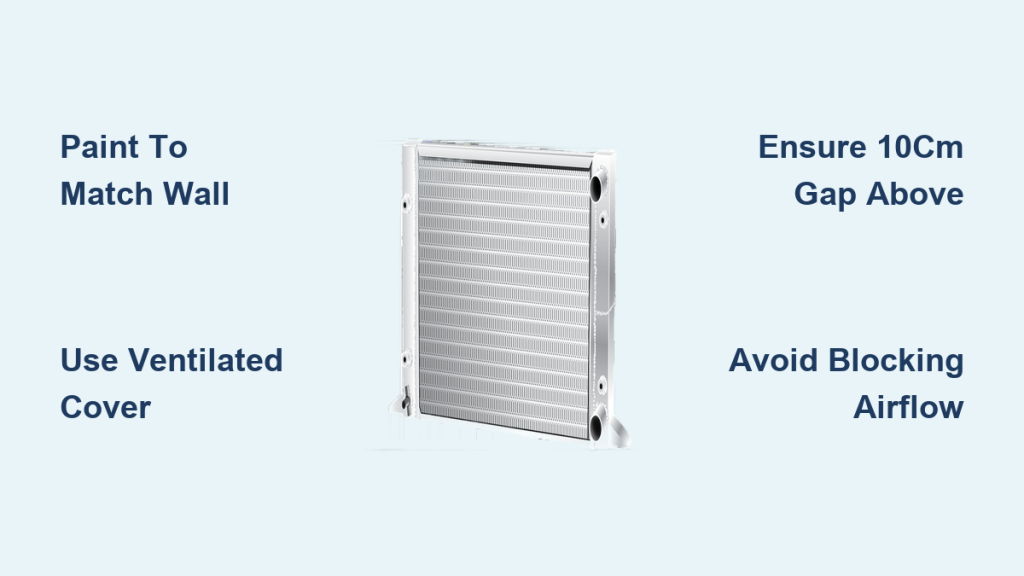
That bulky radiator ruins your carefully designed room. It juts out from the wall, clashes with your décor, and seems impossible to disguise without sacrificing warmth. You want it gone, but you also need your home to stay cozy all winter.
The good news? You can hide a radiator effectively without trapping heat or breaking the bank. This guide reveals every proven method, from simple paint tricks to custom cabinetry, backed by thermal performance data and design expertise. You’ll learn how to blend radiators into walls, turn them into shelves or seating, and even make them a design feature.
Paint Your Radiator to Disappear

The fastest, cheapest way to hide a radiator is paint. A perfectly matched color makes the unit visually recede into the wall.
Match the Wall Color Exactly
Use interior woodwork or metal paint in gloss, satin, or eggshell finish. Water-based options work well, though a slight odor may appear when heat activates. Brands like Little Greene offer wipeable emulsions safe for radiators, requiring two to three coats.
This technique works especially well in small rooms where bold elements feel overwhelming. The radiator simply fades into the background.
Paint Behind the Fins Too
Exposed white metal between fins creates a jarring contrast. Painting the wall behind eliminates this problem.
Follow these steps:
- Turn off the heating and let the radiator cool completely.
- Clean behind with a long-handled microfiber brush.
- Mask off valves, pipes, and skirting boards.
- Cut in edges with an angled sash brush.
- Use a long-reach radiator roller for larger areas.
- Allow four to six hours between coats.
- Wait 24 hours before turning heat back on.
Pro Tip: Previously painted radiators may need only one fresh coat. Unpainted or older units often require up to four coats for full coverage.
Install Ventilated Radiator Covers
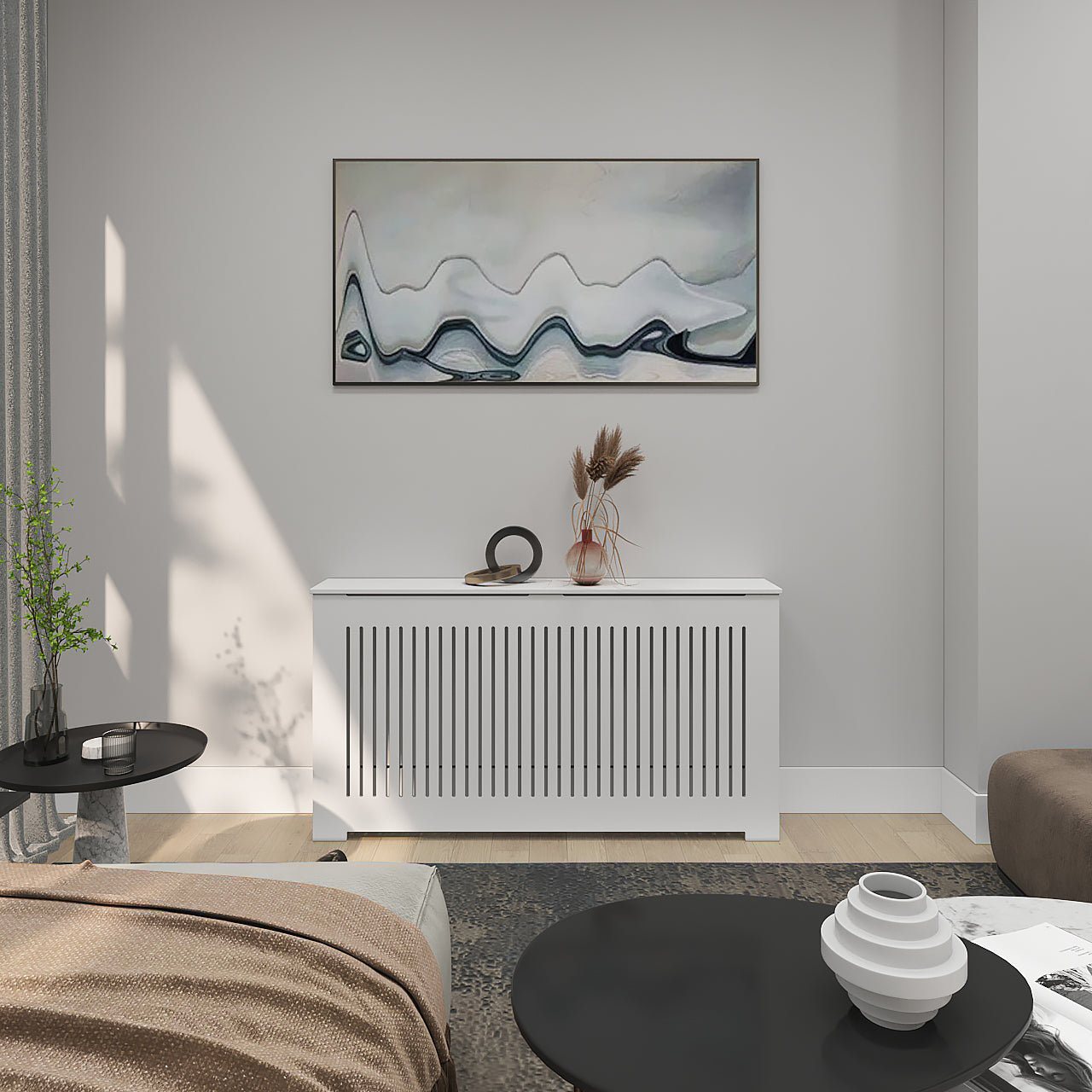
Radiator covers hide the unit completely while adding function. The key is choosing a design that allows airflow.
Choose the Right Ventilation Design
Solid-front covers block heat and reduce efficiency. Effective covers must feature slatted wood fronts, laser-cut panels, perforated metal grilles, or cane inserts.
These designs promote the chimney effect: cool air enters at the bottom, heats up, and rises out the top. This is exactly how radiators are meant to work.
Minimum clearance requirements:
- Top: 10cm (4 inches) of open space
- Front and sides: Several centimeters of gap for air intake
Pick the Best Material for Your Space
| Material | Pros | Best For |
|---|---|---|
| MDF/Wood | Affordable, paintable, warm look | DIY projects, rental-friendly |
| Solid Oak | Durable, high-end finish | Bespoke builds |
| Metal | Modern, scratch-resistant | Bathrooms, high-traffic areas |
Ready-made options from B&Q or Homebase start under £50. For custom fits, Jali offers semi-bespoke panels that assemble in about 25 minutes.
Turn the Top into a Display Shelf
Most covers include a flat top surface. Use it for potted plants, framed photos, table lamps, or small baskets.
Avoid heavy books or dense décor that blocks rising heat. Light decorative items work perfectly.
Safety Note: Covers are ideal for homes with kids or pets. Just ensure no sharp edges and secure construction.
Build Custom Joinery Around It
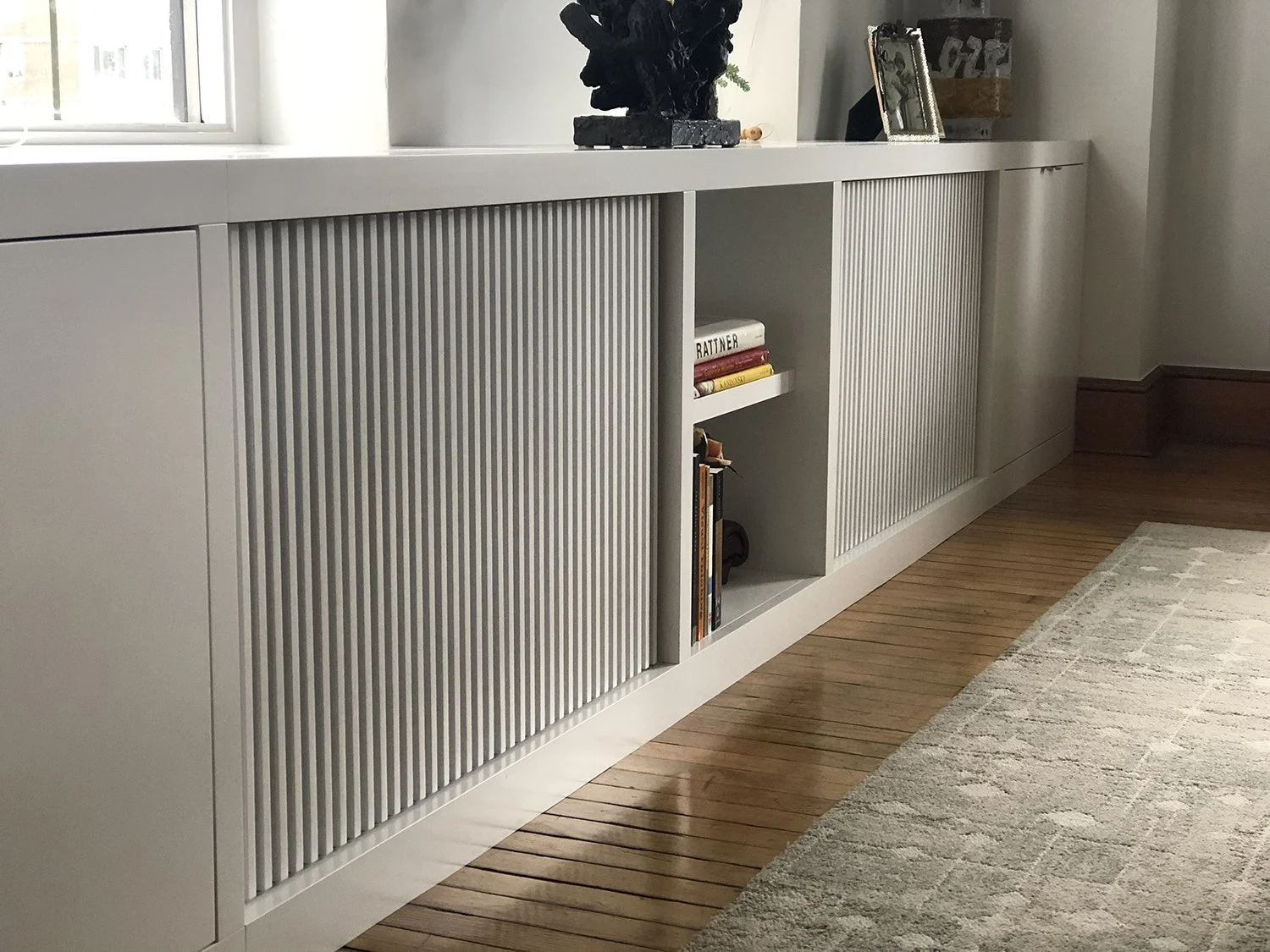
For a seamless, high-end look, integrate the radiator into your room’s architecture.
Create Wall-to-Wall Cabinetry
Hide the radiator inside a fitted cupboard with vented fronts. This works brilliantly in hallways as a storage unit, in bathrooms as a linen cupboard with a towel-warming bay, or in living rooms as a media cabinet.
Use laser-cut panels or cane inserts on the front to maintain airflow. Match the cabinet depth to the radiator’s projection, especially on chimney breasts.
This approach adds major storage while creating a clean, uninterrupted wall line.
Build a Bench Seat Over It
Turn heat into comfort with a radiator bench in a bay window or recess.
Here’s how it’s done:
- A joiner frames the seat with a vented front using slats or a grille
- A cushion sits on top with fire-resistant fabric
- Optional side storage or flanking curtains enhance the look
Perfect for breakfast nooks, reading corners, or kitchen banquettes.
Pro Tip: Never fully enclose the top. Keep the 10cm heat-rise gap clear.
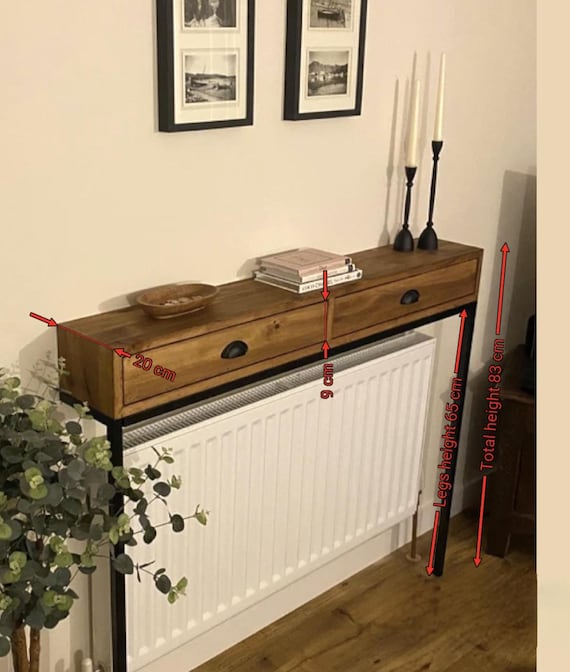
Slide in a Console Table
Use a console table with legs to straddle the radiator. The legs lift the table, allowing air to flow underneath while the surface hides the unit.
Lucite or acrylic tables keep the space feeling open. This works well in narrow hallways or living rooms where floor space is tight.
Use Furniture and Decor to Conceal It
No tools required. Smart layout and styling can hide a radiator effectively.
Position Furniture Strategically
In bathrooms, align a horizontal bathtub to cover part of the radiator. In bedrooms, slide a low bed frame over a floor-mounted unit, leaving side gaps. In living rooms, place a sofa slightly in front, ensuring 5–10cm gap at sides and top.
Warning: Never block airflow completely. Heat needs to circulate freely.
Modify a Bookcase
Hack an IKEA Billy bookcase or build a shallow shelf in front of the radiator. Remove the back panel or cut large ventilation holes, then mount it on the wall so the radiator sits behind.
This adds storage and breaks up the radiator’s visual mass.
Distract with Art and Greenery
Draw eyes away from the radiator by leaning a large mirror or artwork against the wall in front. Cluster potted plants around it using heat-tolerant varieties like snake plants or ZZ plants.
Hang textiles like a Turkish towel or use a clothing rack in small spaces to break up visual mass.
Avoid: Placing plants directly on a hot cover. They’ll get slow-cooked.
Embrace It as a Feature
Sometimes the best move is to stop hiding. Paint the radiator a bold color like mustard yellow, deep pink, or charcoal gray and make it a statement.
In period homes, exposed cast-iron radiators add character. Companies like Castrads or The Radiator Company offer elegant, vintage-style models worth showing off.
Room-by-Room Hiding Strategies
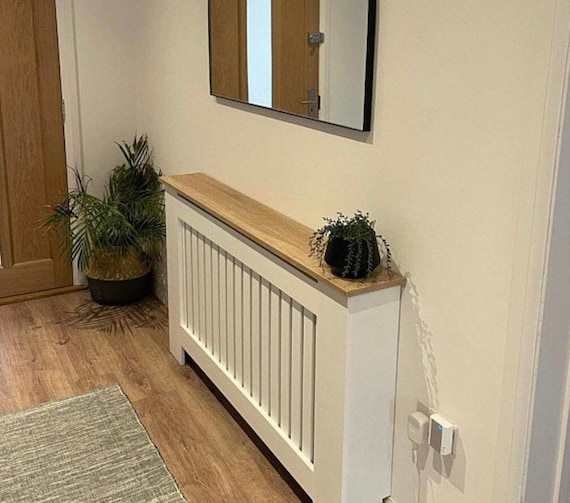
Hallways: Slim and Functional
Use ultra-slim radiators painted wall-color. Fit a narrow ventilated cover with a shelf for keys. Add a console over radiator plus mirror combo for a functional vignette.
Avoid bulky designs since hallways hate visual clutter.
Living Rooms: Seamless or Stylish
Paint to disappear for minimalist spaces. Fit bespoke cabinetry with drawers and an oak top for storage. Style the cover like a display plinth to show off vases or sculpture.
Bedrooms: Safe and Cozy
Use safety covers with shelves as bedside tables. Build a window seat over the radiator for a reading nook. Ensure all edges are rounded and units secure.
Bathrooms: Moisture-Resistant and Practical
Choose metal or MDF with moisture-resistant coating. Add vented panels to prevent damp. Integrate into a towel-warming cabinet for luxury and function.
Vertical column radiators fit neatly beside tubs or between fixtures.
Kitchens: Built-In Comfort
Install banquette seating over the radiator. Integrate into lower kitchen cabinets with vented doors. Top with a small table for a warm breakfast spot.
Rented Homes: Non-Permanent Fixes
Magnetic radiator wraps work for flat-panel units. Freestanding covers slot in without drilling. Paint it if the landlord allows.
Ensure wraps are high-temperature rated to avoid warping.
Boost Efficiency While Hiding It
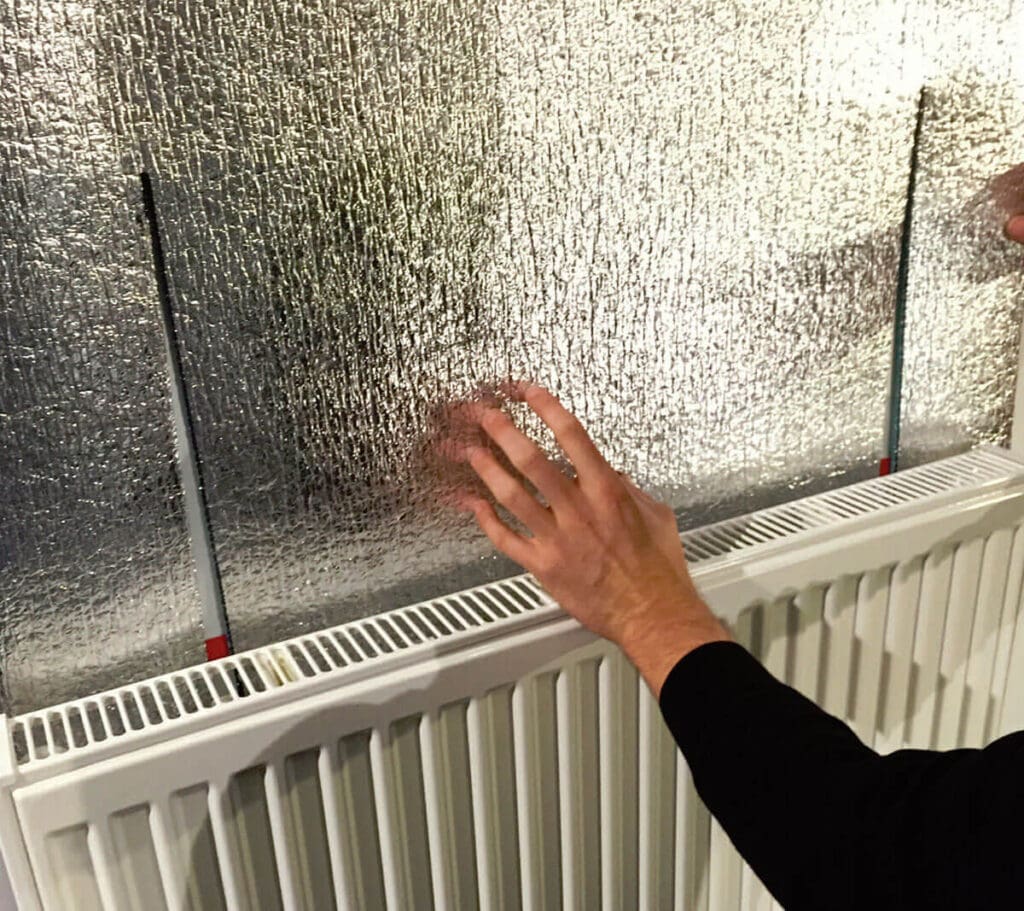
Hiding a radiator shouldn’t cost you warmth. In fact, it can improve performance.
Install Reflective Foil
Stick aluminum foil-backed insulation behind the radiator, especially on external walls. This prevents heat loss into the wall and reflects warmth back into the room.
It costs under £10 and cuts heating bills significantly.
Pro Tip: Cut to size and staple or tape in place. It works with any hiding method.
Avoid These Heat Traps
- Solid-front enclosures
- Heavy objects on top that block rising air
- Tightly sealed cabinets
- Furniture placed flush against the radiator
If your room feels colder after hiding the radiator, ventilation is too restricted.
Troubleshoot Common Problems
Room Feels Colder
Poor airflow from a tight cover or blocked top is the likely cause. Ensure 10cm gap above, add slats or perforations to the front, and remove heavy items from the shelf.
Paint Is Peeling
Wrong paint type or heat turned on too soon causes peeling. Use high-temperature or metal-specific paint and wait 24 hours before reactivating heating.
Damp in Bathroom
Moisture trapped behind a poorly ventilated cover creates dampness. Increase side and top gaps, use moisture-resistant materials, and install a larger grille.
Plants Are Wilting
Direct exposure to rising hot air damages plants. Move them to the sides, use taller stands to elevate them above heat flow, or choose heat-tolerant species.
Final Tips for Success
- Measure first. Note radiator height, width, depth, and pipe positions before buying or building.
- Prioritize airflow. Ventilation matters more than aesthetics. No heat flow means wasted energy.
- Color match. Paint the radiator, wall behind, and cover the same shade for invisibility.
- Double-dip function. Turn covers into shelves, desks, or seats to maximize utility.
- Safety check. Secure all units, especially in homes with kids. No loose parts or sharp edges.
- Clean regularly. Dust builds up fast. Vacuum behind and inside every three to six months.
Frequently Asked Questions About Hiding a Radiator
Does hiding a radiator reduce heat output?
Yes, if done incorrectly. Solid covers or blocked airflow trap heat and force the system to work harder. Always maintain 10cm clearance at the top and use vented fronts to preserve efficiency.
What is the cheapest way to hide a radiator?
Painting it the same color as your wall is the most affordable option. This costs only paint and a few hours of work, with no structural changes required.
Can I put a radiator cover in a bathroom?
Yes, but choose moisture-resistant materials like metal or treated MDF. Ensure adequate ventilation to prevent damp buildup, and consider adding a towel-warming bay for extra function.
How much gap do I need above a radiator cover?
Maintain a minimum of 10cm (4 inches) of open space above the radiator. This allows warm air to rise and circulate properly throughout the room.
Will furniture in front of a radiator cause problems?
It can if placed too close. Leave 5–10cm gaps at sides and top for airflow. Solid furniture flush against the radiator blocks heat circulation and reduces efficiency.
Are magnetic radiator wraps safe?
Yes, when rated for high temperatures. They work best on flat-panel radiators and offer a non-permanent solution ideal for renters.
Key Takeaways for Hiding Your Radiator Successfully
You don’t have to choose between warmth and style. With the right approach, your radiator can disappear, enhance, or even elevate your space without costing you comfort.
The most important rule: always design with airflow in mind. Whether you paint, cover, build, or rearrange, ventilation determines whether your room stays warm or grows cold.
Start by measuring your radiator and identifying your room’s specific needs. Then choose the method that matches your budget, skill level, and design goals. A simple paint job takes an afternoon. Custom joinery takes planning but delivers a seamless, high-end result.
Your perfect balance of warmth and style is within reach. Pick one method from this guide and begin transforming your space today.