
You pop the hood, peek into the reservoir, and notice your coolant is bright orange. But last time it was green. Or maybe it is pink now. You wonder: Why is coolant different colors? Does the color mean something important? Can I mix them?
The truth is, coolant color is not a chemical label. It is a visual code that manufacturers use for identification, not chemistry. While older coolants loosely tied color to technology type, today’s dyes are primarily for brand and model recognition. The real differences lie beneath the surface in additive technologies that protect your engine’s metals, gaskets, and cooling passages.
What Coolant Actually Does Beyond Preventing Overheat
Coolant serves multiple critical functions in your engine beyond just controlling temperature. Understanding these functions helps you appreciate why choosing the right type matters so much.
Prevents Corrosion in Multi-Metal Systems
Modern cooling systems contain aluminum, copper, brass, steel, and magnesium. Without proper inhibitors, these metals react and cause galvanic corrosion, pitting, and leaks. Coolant uses additive packages to form protective layers on each metal type.
Lubricates the Water Pump
The water pump seal relies on coolant for lubrication. Poor-quality or degraded coolant increases wear, leading to early pump failure and coolant leaks.
Protects Non-Metal Components
Rubber hoses, plastic reservoirs, and silicone gaskets degrade over time. Coolant additives prevent swelling, cracking, and hardening of these materials, especially critical in turbocharged and high-output engines.
Maintains Heat Transfer Efficiency
Sludge, scale, or gel formation insulates engine surfaces and reduces heat transfer. This leads to hot spots, overheating, and head gasket failure, even if coolant level appears normal.
Green Coolant: The Traditional IAT Standard
Green coolant represents Inorganic Additive Technology, which was the standard from the 1930s through the 1990s. Most manufacturers used green dye to make IAT coolant easily identifiable, though some early versions were blue or yellow.
What Is IAT Technology
IAT uses phosphates, silicates, and borates to quickly coat metal surfaces and prevent rust. These inorganic inhibitors have been used for decades in traditional cooling systems.
Short Lifespan and High Maintenance
IAT coolants deplete inhibitors fast. They require replacement every 2 to 3 years or 30,000 to 36,000 miles. If not changed, silicates fall out of suspension and form sludge that clogs radiators and heater cores.
Compatibility with Modern Engines
IAT is unsuitable for post-2000 vehicles. Its high silicate content can abrade soft aluminum metals and degrade rubber seals, making it poor choice for modern engines.
Orange Coolant: GM’s Dexcool and OAT Technology
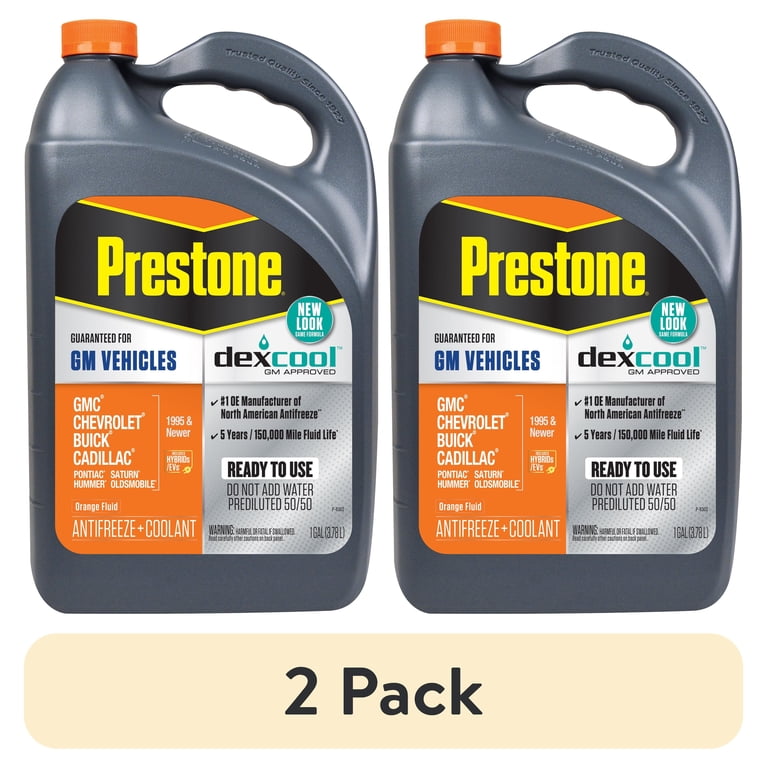
Orange coolant emerged in the mid-1990s when General Motors introduced Dexcool, an Organic Acid Technology formulation marketed as long-life coolant promising 5 years or 150,000 miles between changes.
Organic Acids Instead of Silicates
OAT uses carboxylic and ethylhexanoic acids to protect metals. These inhibitors last longer and do not form sludge like silicates, providing extended protection without the maintenance burden.
Why Orange? Branding
GM chose orange to distinguish Dexcool from traditional green coolants. But soon, other brands used orange for their OAT formulas, regardless of chemistry. Color became about marketing, not chemistry.
Early Problems with Plastics
Early OAT formulations were too aggressive toward nylon and plastic components. GM’s 3.1L and 3.4L engines experienced intake manifold gasket failures due to coolant attack on these materials.
Slow Protection Build-Up
OAT coolants take time to form a passivation layer on metal surfaces. During this period, engines are more vulnerable to corrosion, especially in short-trip driving where the engine never fully warms up.
Yellow and Gold Coolants: The Hybrid HOAT Approach
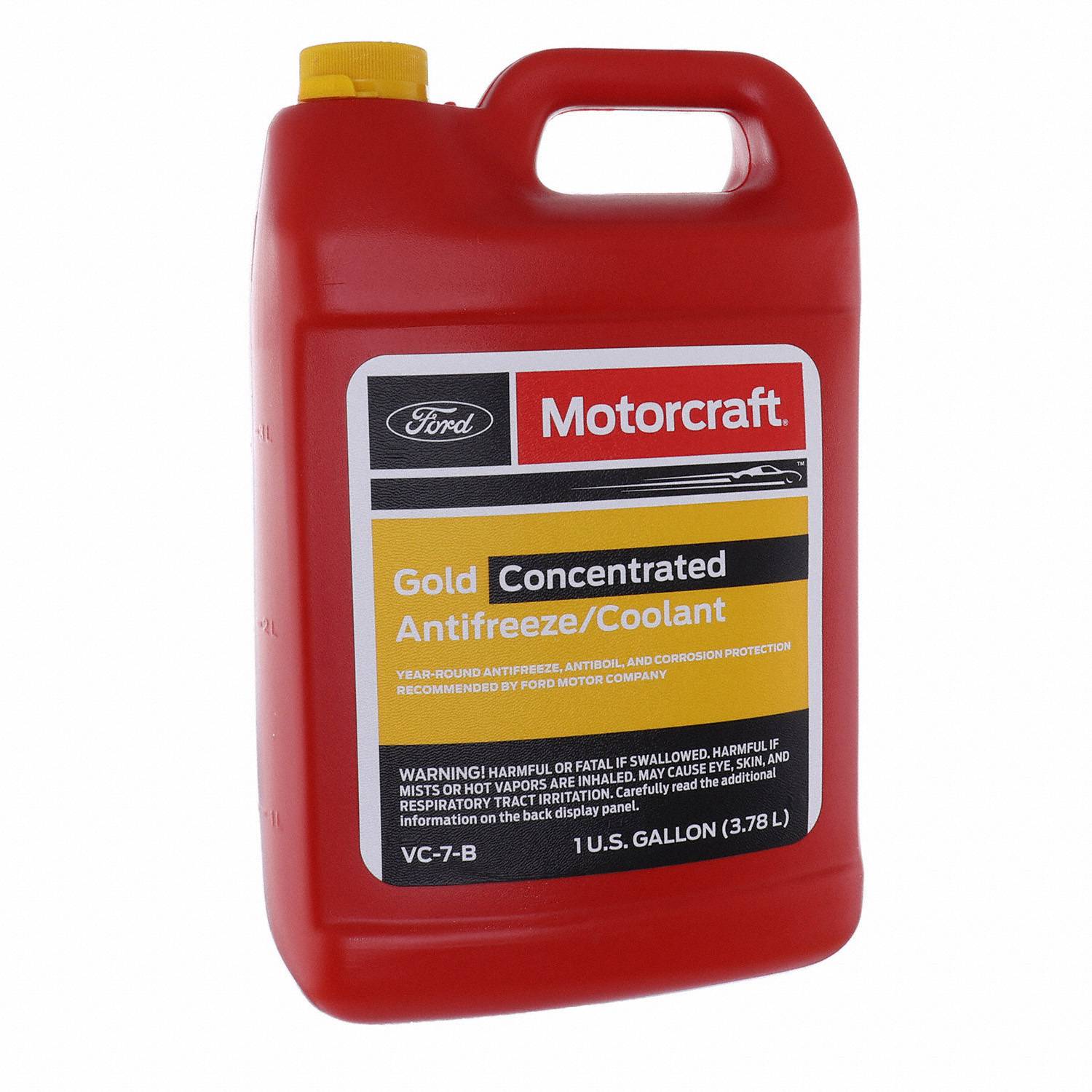
Yellow and gold coolants represent Hybrid Organic Acid Technology, which blends organic acids with a small amount of silicate for fast-acting protection while maintaining long life.
What Makes HOAT Different
HOAT combines the longevity of organic acids with the quick-acting protection of silicates. This gives the best of both worlds for modern engines with aluminum components and rubber seals.
Ford and Chrysler Color Choices
Ford and Chrysler used gold for early HOAT coolants. After 2018, Ford switched to yellow for newer formulations. These color changes reflect branding decisions, not chemistry shifts.
Silicate Dropout Risk
If overheated or contaminated, silicates can precipitate and form deposits. This was a major issue in early 6.0L Power Stroke diesel engines, where clogged EGR coolers led to failures.
Turquoise and Violet Coolants: European SIOAT Formulas
Turquoise and violet coolants represent Stabilized Silicate-Organic Acid Technology, used by BMW, Audi, Mercedes, Porsche, and Volkswagen for their high-performance engines.
Why These Distinctive Colors
European manufacturers use distinctive colors to prevent misfills. Turquoise signals BMW and VW chemistry, while violet indicates Mercedes specifications. These colors are not interchangeable.
Designed for Extreme Conditions
SIOAT coolants handle turbocharging, stop-and-go traffic, and electric water pumps. They maintain stability in narrow coolant passages and aluminum radiators found in European vehicles.
Not Interchangeable
Never substitute green or orange coolant in a European car. Even universal coolants may lack the LL-04 or LL-18 specifications required for long-term protection in these engines.
Red and Pink Coolants: Asian Manufacturer Specifications
Many Japanese manufacturers use red or pink coolants based on phosphate-organic-acid technology, offering long life and aluminum protection for their vehicles.
Toyota and Honda Specifics
Toyota’s Super Long Life Coolant is red and requires no change for 100,000 miles or 10 years. Honda uses blue for its long-life formula, proving color does not equal chemistry across manufacturers.
Sensitive to Water Quality
These coolants are highly sensitive to hard water. Using tap water for topping off can cause scale buildup, restricting flow in radiators and heater cores. Always use distilled water.
Common Coolant Color Myths You Should Stop Believing
Several persistent myths about coolant colors lead to expensive mistakes. Understanding the truth helps you make better decisions about your vehicle’s cooling system.
Myth: Green Means Old, Orange Means New
This is false. While green was historically IAT and orange was OAT, modern dyes do not reflect chemistry. Prestone’s universal coolant is yellow, but it is OAT-based. Some HOAT coolants are blue or red.
Myth: Color Tells You What to Use
This is a dangerous assumption. Two yellow coolants can be chemically incompatible. Always check OEM specifications, not color, when selecting coolant.
Myth: Universal Coolants Are Safe Forever
This is not true. Universal coolants like Prestone All-Vehicle claim 10-year or 300,000-mile protection, but they may not meet OEM corrosion standards and can cause scaling in European engines. Use them temporarily when coolant type is unknown.
The Real Dangers of Mixing Coolant Types
Mixing incompatible coolants can destroy your cooling system. Understanding these risks helps you avoid costly repairs.
What Happens When You Mix
IAT mixed with OAT forms thick brown sludge. HOAT mixed with IAT causes gel formation in heater cores. Phosphate mixed with silicate creates scale and deposits. These reactions clog narrow passages and reduce cooling efficiency.
Is Any Mixing Safe
Only after a complete system flush. A simple drain-and-refill leaves 10 to 20 percent old coolant, which can still trigger incompatibility and cause problems.
When Universal Coolants Are Acceptable
Prestone yellow is fine for topping off in emergencies. However, long-term use risks inadequate protection for soft metals, premature water pump wear, and loss of reserve alkalinity.
How to Pick the Right Coolant for Your Vehicle

Choosing the correct coolant protects your engine and prevents expensive repairs. Follow these steps to ensure you select the right type.
Check Your Owner Manual
This is the most reliable source. Look for the OEM part number, specification like G05 or G12, and technology type such as HOAT or OAT.
Use Manufacturer-Specific Coolants
GM vehicles require Dexcool (OAT, orange). Ford needs Motorcraft (HOAT, yellow). Chrysler and Jeep need Mopar (P-HOAT, purple). BMW, Audi, and Mercedes require specific SIOAT formulas.
When Unsure: Use Universal Temporarily
Prestone All-Vehicle is fine for topping off, but schedule a full flush and refill with OEM coolant soon after.
When and How to Flush Your Cooling System
Regular flushing maintains cooling system health and prevents problems caused by degraded coolant.
When to Flush
Flush before switching coolant types, every 5 to 10 years depending on type and driving, after overheating or head gasket repair, and if coolant is cloudy, sludgy, or discolored.
Proper Flush Procedure
Drain the radiator and engine block completely. Refill with distilled water and run the engine to operating temperature without overheating. Drain and repeat 2 to 3 times until water runs clear. Refill with correct 50/50 mix of coolant and distilled water. Bleed air from the system, especially in European models with high-mounted bleed screws.
A proper flush removes 95 to 98 percent of old coolant, but residual fluid can still cause issues.
Signs Your Coolant Needs Attention
Recognizing bad coolant early prevents engine damage. Watch for these warning signs.
Visual Clues
Color change from bright to brown, cloudiness or particles, sludge in reservoir or radiator, and rust flakes on cap or filler neck all indicate degraded coolant.
Smell and Texture
Loss of sweet odor indicates degradation. Oily or slimy feel signals contamination.
Testing Methods
pH strips should read 8 to 11. Below 7 means acidic and corrosion risk. Refractometers check freeze point and concentration. Test kits measure nitrite levels, reserve alkalinity, and glycol content.
Frequently Asked Questions About Coolant Colors
Does coolant color indicate what chemistry the coolant uses
No. Coolant color is primarily a dye for identification, not a chemical label. While older coolants loosely tied color to technology type, modern colors are arbitrary and vary by manufacturer.
Can I mix different colored coolants in an emergency
No. Mixing incompatible coolants creates sludge, gel, or scale that clogs cooling passages. Only use a complete flush before switching types. Universal coolants work for temporary topping off but are not a permanent solution.
Why is my coolant changing color
Color change indicates degradation. Fresh coolant is bright and fluorescent. Brown, rust-colored, or cloudy coolant has lost its protective additives and needs replacement.
What happens if I use the wrong coolant
Wrong coolant can cause corrosion, gasket failure, water pump damage, and overheating. European and high-performance engines are especially sensitive to incorrect formulations.
How often should I change my coolant
Service interval depends on coolant type. IAT requires 2 to 3 years. OAT and HOAT last 5 to 7 years. Always check your owner manual for manufacturer recommendations.
Can I use tap water to top off my coolant
No. Tap water contains minerals that react with coolant additives and cause scale and corrosion. Always use distilled or deionized water when topping off.
Key Takeaways for Choosing the Right Coolant
Coolant comes in different colors for identification, not chemistry. Manufacturers use dyes to distinguish their products and prevent misfills. The real difference is in additive technology: IAT for older engines, OAT for long-life applications, HOAT for Ford and Chrysler vehicles, SIOAT for European performance cars, and P-HOAT for Stellantis models. Mixing incompatible types, even if colors seem similar, destroys cooling systems.
Always check your owner manual for OEM specifications. Use manufacturer-specific coolant for best protection. Universal coolants are temporary fixes, not long-term solutions. Flush properly when switching types, and test coolant regularly in older or high-mileage vehicles. European and high-performance engines require specific formulas, so never guess.
When in doubt, check the manual, use the OEM coolant, and if topping off without knowing the type, use universal but flush soon. Coolant is cheap. Engines are not. Get it right.