
Yes, coolant prevents rust, but only when it is fresh, properly mixed, and compatible with your engine. Most drivers assume coolant’s main job is to stop freezing or overheating, yet its anti-rust additives are equally critical for protecting your radiator, water pump, and engine block from the inside out. Without these protective chemicals, metal components can deteriorate rapidly due to oxidation and galvanic reactions.
Rust forms when water, oxygen, and metal interact inside your cooling system. Over time, even the best coolant loses its protective power, leaving metal components vulnerable to corrosion. After approximately three years, corrosion inhibitors deplete, and old coolant can actually accelerate rust instead of preventing it. In this guide, you will learn exactly how coolant fights rust, why it eventually fails, and what you must do to keep your engine safe.
How Coolant Prevents Rust
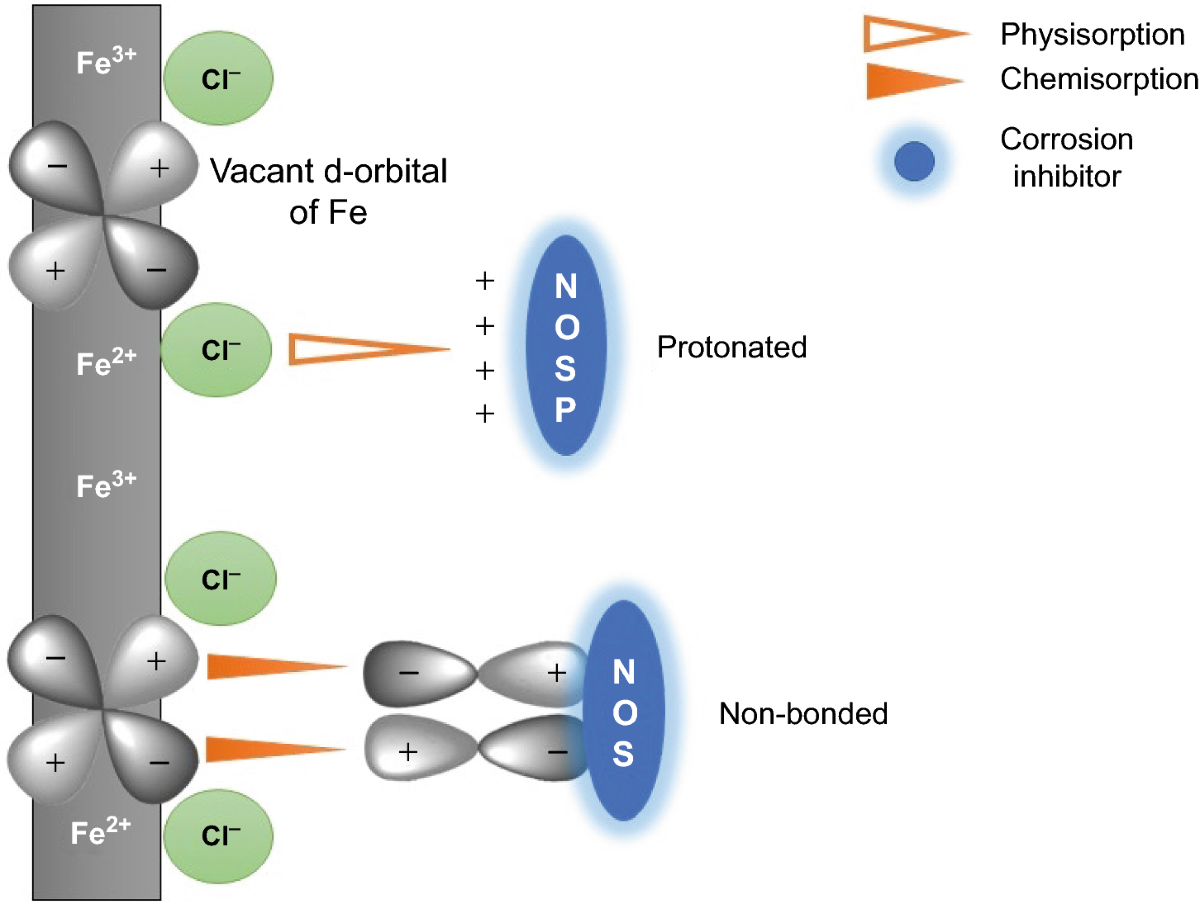
Coolant uses multiple chemical mechanisms to protect metal surfaces inside your engine cooling system.
Forming a Protective Barrier
Coolant contains corrosion inhibitors that bond to metal surfaces, creating a thin, invisible shield. This passivation layer blocks water and oxygen from reacting with iron, aluminum, copper, and other metals in the system.
Key inhibitor types include:
- Silicates that protect aluminum instantly
- Carboxylates that provide long-term coverage on steel and cast iron
- Phosphates that defend against ferrous rust
Without this layer, bare metal is exposed, and oxidation begins immediately.
Neutralizing Harmful Acids
Ethylene glycol, the base of most antifreeze, breaks down over time and forms organic acids like glycolic and formic acid. These acids eat away at metal and lower coolant pH.
Coolant includes buffering agents like borates that neutralize these acids, keeping pH between 8.5 and 10.5. Once buffers are used up, the system turns acidic and starts corroding from within.
Reducing Galvanic Corrosion
Your engine contains multiple metals: aluminum heads, steel bolts, copper radiator tubes, and solder joints. When connected in liquid, they create tiny electrical currents that cause dielectric corrosion, pitting and weakening components.
Coolant additives reduce ionic conductivity and coat metals to minimize these reactions, especially in aluminum-heavy modern engines.
Why Coolant Stops Preventing Rust

Even the best coolant eventually fails to protect against rust. Understanding these failure modes helps you prevent damage.
Additive Depletion After Three Years
Even if your car sits unused, coolant’s rust protection fades because corrosion inhibitors are consumed over time, regardless of mileage.
Different coolant types lose protection at different rates:
- IAT (green) coolants: Lose protection in approximately 2 years
- OAT (orange) coolants: Last up to 5 years
- HOAT (yellow/gold): 3 to 5 years
After three years, most coolants have lost significant corrosion resistance and can become corrosive themselves.
Wrong Coolant-to-Water Ratio
Too little antifreeze means too few inhibitors. For rust protection, you need at least 30 to 50 percent coolant.
Below 30 percent, inhibitor levels drop below effective range. Above 70 percent, poor heat transfer occurs and risk of gel formation increases. Use a refractometer to check concentration rather than guessing.
Using Tap Water
Tap water contains minerals like calcium, magnesium, and chloride that:
- React with inhibitors and reduce effectiveness
- Increase electrical conductivity, leading to faster galvanic corrosion
- Form scale that traps moisture and promotes rust
Always mix with distilled or deionized water, never tap.
Air in the Cooling System
Air pockets introduce oxygen, which reacts with iron to form rust. This is common in radiators with improper bleed, low overflow tank levels, and faulty radiator caps.
After a coolant change, bleed the system and check levels after several heat cycles.
Mixing Incompatible Coolants
Combining IAT, OAT, and HOAT types can cause additive interference, gel or sludge formation, and rapid corrosion. Mixing green (IAT) with orange (OAT) can disable silicate protection on aluminum.
Always follow your owner’s manual and never mix colors unless specified.
Coolant Types and Rust Protection
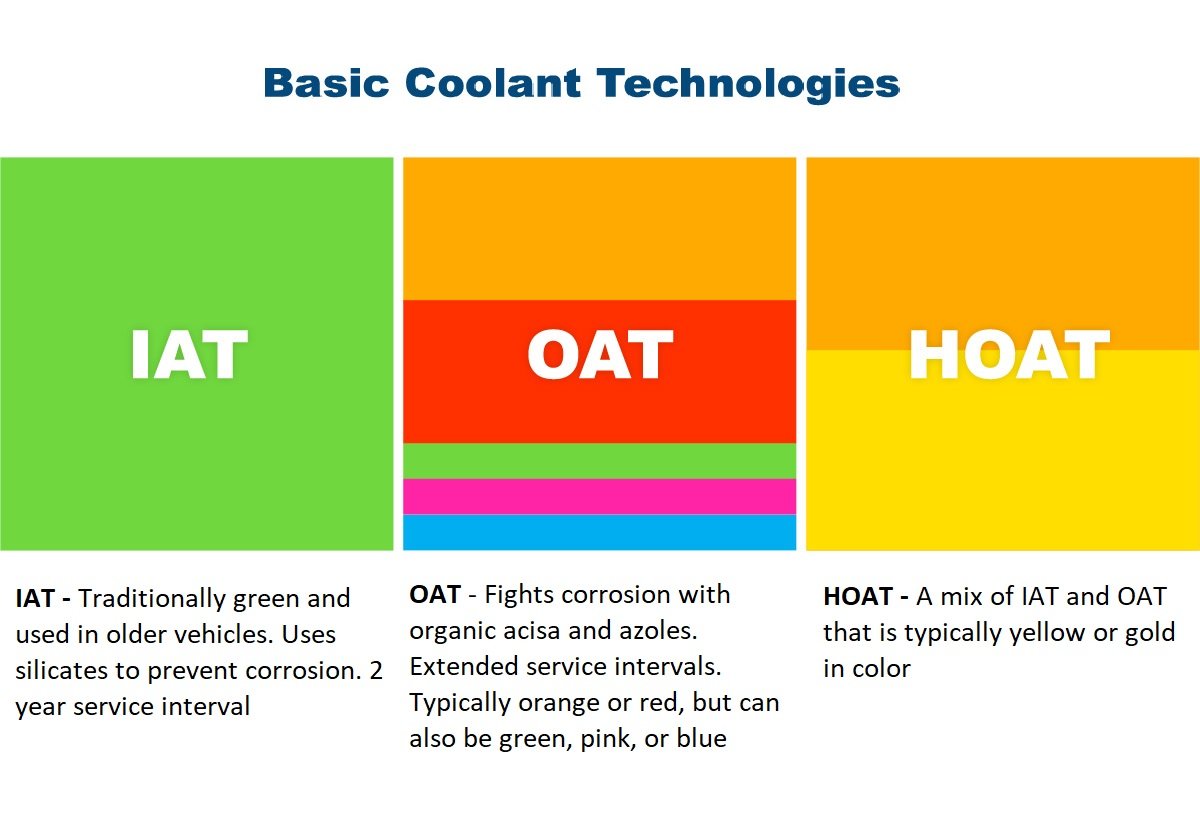
Choosing the right coolant type matters for long-term rust prevention.
IAT Traditional Green Coolant
IAT coolants use silicates, phosphates, and borates as additives. They provide strong short-term rust protection, especially for iron and steel, but have the shortest lifespan at 2 years or 30,000 miles.
These work best for older vehicles pre-1990s and classic cars. The downside is that silicates can form sludge in aluminum radiators over time.
OAT Long-Life Organic Acid Coolant
OAT coolants use carboxylic acids like sebacate and 2-EHA. They provide slow-acting but long-lasting rust protection with no silicates, lasting 5 years or 150,000 miles.
These coolants excel with aluminum and cause no sludge, but offer poor protection for soft metals like solder if not formulated correctly.
HOAT Hybrid OAT Yellow Gold
HOAT coolants combine silicates with organic acids. They provide immediate protection from silicates plus long-term protection from OAT, lasting 3 to 5 years.
Ford, Chrysler, and many European brands use this type. Some HOAT formulas include nitrates to protect diesel cylinder liners from cavitation.
Real-World Rust Risks and Fixes
Rust from Old Coolant
Even clean-looking coolant can be dead. After 3 years or more, inhibitors are gone, acids build up, and pH drops, causing metal to corrode.
Signs of failure include:
- Brown or murky coolant
- Rust flakes in radiator
- Sludge on radiator cap
Flush and replace coolant every 3 years with no exceptions.
Aluminum Radiator Corrosion Myth
A common claim suggests distilled water causes more corrosion in aluminum. This is false. Pure water has no ions, so it is less conductive and less corrosive. The problem is not the water but rather lack of inhibitors.
Power plants use ultra-pure water plus chemical treatment for maximum corrosion control.
Zinc Anodes for Extra Protection
A sacrificial zinc rod installed in the radiator or drain plug corrodes instead of your engine parts. This is common in marine engines and used by enthusiasts in vintage or high-heat applications.
Replace zinc anodes every 1 to 2 years. Ground your aluminum radiator to the chassis to reduce galvanic current.
Water Wetter Additives
Products like Red Line Water Wetter improve heat transfer and may enhance lubricity. They help in hot climates of 115 degrees Fahrenheit or higher and are often used with distilled water plus a zinc anode.
Water wetter is not a substitute for corrosion inhibitors.
Best Practices to Prevent Rust
Use the Right Coolant
Check your owner’s manual for OEM specs. Ford requires WSS-M97B44-D (yellow HOAT), GM requires DEX-COOL (orange OAT), and Toyota requires 00276-00100 (pink OAT).
Match chemistry, not just color.
Mix with Distilled Water
Never use tap water. Premixed 50/50 coolant uses distilled water and is convenient but pricier. If mixing concentrate, use 50 percent coolant and 50 percent distilled water.
Maintain 30 to 50 Percent Concentration
Below 30 percent, there are not enough inhibitors. Use a refractometer for accuracy rather than guessing.
Replace Coolant Every Three Years
Regardless of mileage, replace IAT every 2 years and OAT/HOAT every 3 to 5 years. Never exceed the 3-year maximum.
Bleed Air After Refill
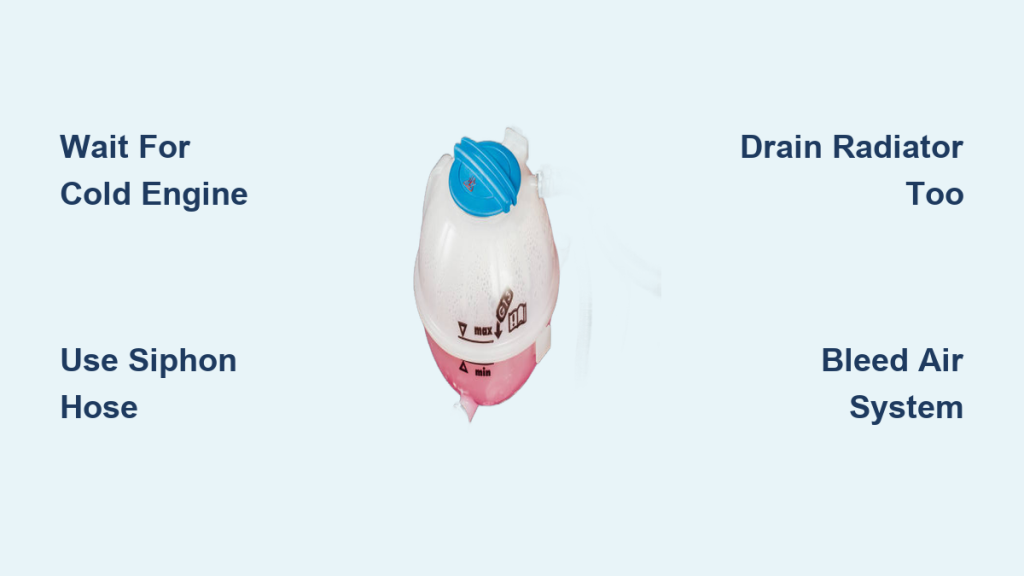
Air causes oxidation. To remove air, park with front end raised, open the bleed valve if equipped, run the engine with cap off when cold, and top off expansion tank after cooling.
Inspect System Regularly
Check coolant color and clarity, radiator cap seal and pressure, hoses for soft spots or leaks, and water pump weep hole for seepage.
Testing Coolant Health
Visual Check
Bright green, orange, or pink indicates healthy coolant. Brown or murky means rust or contamination. An oily film suggests a head gasket leak. Sludge indicates advanced degradation.
pH Test
Use coolant test strips. A pH of 8.5 to 10.5 is safe. Below 7.0 is acidic and corrosive. Above 11.0 risks scaling.
Replace if outside the safe range.
Refractometer Test
A refractometer measures glycol concentration accurately, ensuring proper freeze and boil protection while confirming inhibitor levels are sufficient.
Avoid cheap hydrometers because they are unreliable.
Lab Analysis
For high-mileage or classic cars, test for reserve alkalinity, check chloride, sulfate, and nitrite levels, and predict remaining service life.
Common Myths Debunked
Distilled Water Causes Aluminum Corrosion
This is false. Distilled water lacks ions and is less conductive. Corrosion only happens if inhibitors are missing. Pure water plus proper coolant equals best protection.
Tap Water Is Fine If You Change Coolant Often
This is partially true but risky. Minerals in tap water reduce efficiency and increase scaling. Even with frequent changes, you invite long-term damage.
Antifreeze Does Not Prevent Rust
This is misleading. Pure ethylene glycol does not, but coolant absolutely does. The rust protection comes from the inhibitor package, not the glycol.
If It Is Not Leaking, It Is Fine
This is a dangerous myth. Internal corrosion is invisible until it fails. A clogged radiator or seized water pump can kill your engine quietly.
Key Takeaways for Preventing Rust
Coolant does prevent rust, but only if you respect its limits and maintain it properly.
Do this:
- Use OEM-specified coolant (IAT, OAT, or HOAT)
- Mix with distilled or deionized water
- Maintain 30 to 50 percent concentration
- Replace every 3 years maximum
- Bleed air after service
- Test pH and concentration annually
Avoid this:
- Tap water
- Mixing coolant types
- Extending beyond the 3-year limit
- Ignoring coolant color changes
For bonus protection, install a zinc anode, ground your aluminum radiator, and use a coolant filter on older engines.
Coolant is your engine’s first defense against rust. But it is not install and forget. Replace it every 3 years, and you will avoid costly repairs like radiator clogs, water pump failure, and internal engine damage. Your cooling system is out of sight, but it should not be out of mind.
Frequently Asked Questions About Coolant and Rust
How long does coolant actually prevent rust?
Coolant prevents rust for approximately 3 years. After this time, corrosion inhibitors deplete regardless of mileage or usage. Even if the coolant looks clean, its protective additives are exhausted.
Can I use tap water instead of distilled water in my coolant?
Using tap water is not recommended. Tap water contains minerals that react with inhibitors, increase electrical conductivity, and promote galvanic corrosion. Distilled or deionized water lacks these minerals and provides better protection.
Does mixing different coolants cause rust?
Yes, mixing incompatible coolants can cause additive interference, gel formation, and rapid corrosion. Combining IAT, OAT, and HOAT types may disable protective additives. Always follow manufacturer recommendations.
What happens if I do not change my coolant for 5 years?
After 5 years, coolant becomes corrosive rather than protective. Additives are depleted, acids build up, and pH drops. This causes internal rust, pitting, sludge, and potentially catastrophic engine damage.
Does coolant rust protection work on all metals in my engine?
Coolant protects cast iron, cast aluminum, steel, copper, brass, and solder through different inhibitor types. No single additive protects all metals, which is why modern coolants use composite additive packages.
Can I add rust inhibitors to old coolant to extend its life?
Adding aftermarket rust inhibitors is not a reliable solution. The original additive package is balanced for specific metals and concentrations. Old coolant has already depleted its inhibitors and likely contains harmful acids. Replacement is the only safe option.