An overflowing water tank causes more than just a mess; it threatens your home’s foundation and wastes precious resources. The single most critical factor in preventing these disasters is selecting the correct water tank overflow pipe size. A pipe that is too small cannot handle peak inflow, while one that is too large may be inefficient or costly to install.
This guide explains exactly how to calculate the right diameter based on your specific inflow rate and local plumbing codes. You will learn to apply hydraulic formulas, choose durable materials like PVC or HDPE, and install systems that meet strict IPC and UPC safety standards.
Match Inflow Rate to Overflow Capacity

The golden rule of overflow design is simple: the overflow pipe must handle the maximum possible inflow rate. If your tank fills at 150 gallons per minute, your overflow system must discharge at least that volume instantly.
Determine Your Peak Flow Source
You must identify the source of your water to calculate the correct size. Ignoring this step often leads to dangerous overtopping during heavy storms or pump surges.
* Pumped Systems: Use the maximum output rating of your supply pump.
* Rainwater Harvesting: Calculate flow using local rainfall intensity multiplied by your catchment area.
* Municipal Supply: Use the full capacity of the supply line feeding the tank.
Apply Code-Based Sizing Tables
For potable water tanks, the International Plumbing Code (IPC) and Uniform Plumbing Code (UPC) provide mandatory minimum sizes. These tables ensure your water tank overflow pipe size matches the inflow capacity safely.
| Max Inlet Flow (gpm) | Min Overflow Diameter (inches) |
|---|---|
| 0 – 50 | 2 |
| 50 – 150 | 2.5 |
| 150 – 200 | 3 |
| 200 – 400 | 4 |
| 400 – 700 | 5 |
| 700 – 1,000 | 6 |
| Over 1,000 | 8 |
Pro Tip: Always round up to the next standard size if your calculation falls between two values.
Calculate Pipe Diameter Using Flow Velocity
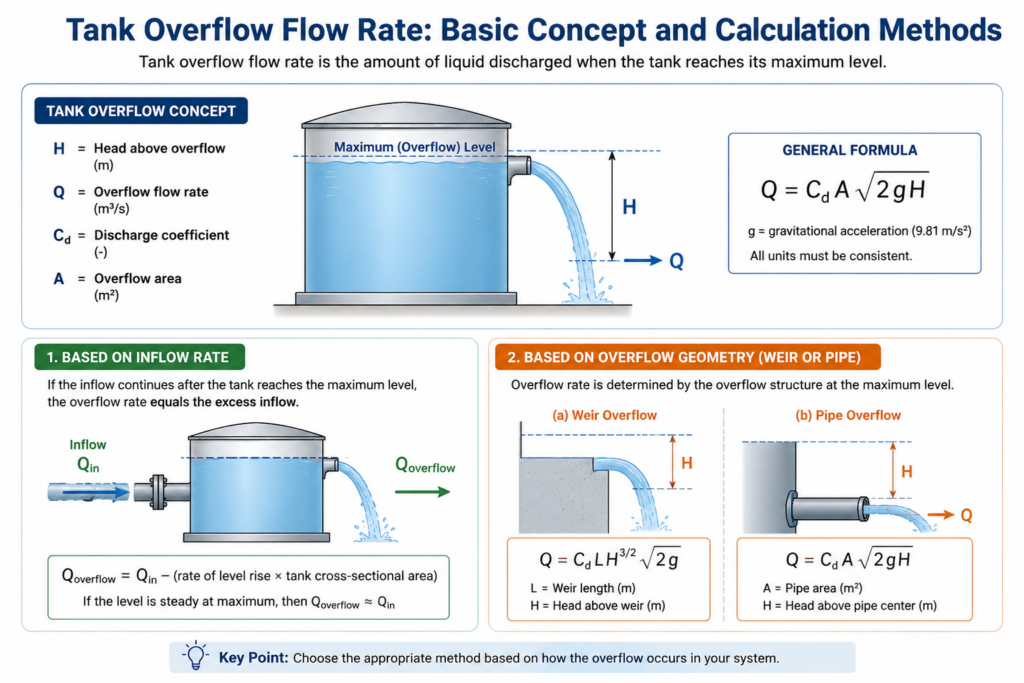
When specific code tables do not apply to your custom or industrial system, you must use hydraulic calculations. The goal is to maintain a self-venting gravity flow that prevents air locks.
Target 1 Foot Per Second Velocity
Unlike pressurized plumbing lines, overflow pipes should run partially full under gravity. A velocity of 1 foot per second is the standard for safe self-venting flow.
Use this formula to find your required diameter:
$$ d = \sqrt{\frac{gpm}{2.448 \times V}} $$
- d = Internal pipe diameter in inches
- V = Velocity (use 1 ft/s)
- gpm = Gallons per minute
Adjust for Industrial Applications
Some atmospheric storage tanks allow velocities up to 3 feet per second. This is acceptable only if the pipe area remains larger than the total inlet area. Never exceed 3 feet per second to avoid air entrainment issues that reduce flow efficiency.
Choose Full-Bore or Weir Flow Design

Your overflow system will operate in one of two modes: full-bore pressurized flow or open channel weir flow. Understanding this distinction affects your water tank overflow pipe size and performance.
Vertical Standpipes Act as Weirs
If your overflow is a vertical pipe inside the tank, it functions as a circular weir. Water flows over the rim rather than through a pressurized line.
* The pipe does not run full unless the entrance is submerged.
* Flow depends entirely on the water depth over the rim.
* You must size these for part-full flow to prevent backpressure.
Utilize Weir Boxes for Elevated Tanks
Elevated water towers often use weir boxes fed by a controlled spillway. The top of the box is sized so a 6-inch rise over the weir handles the design flow. This design prevents vortexing and ensures stable discharge even during high inflow events.
Prevent Siphoning with Breakers
A continuous vertical drop can create a siphon that drains your tank dry. Install a siphon breaker, which is a small air inlet at the high point, to break the vacuum and stop unintended drainage.
Prevent Air Locks With Froude Number

A hidden danger in overflow pipes is air locking, where trapped air blocks water flow. This occurs when the Froude number exceeds 0.3, causing the pipe to seal off.
Keep Froude Number Below 0.3
The Froude number compares inertial forces to gravitational forces. Keeping this value below 0.3 ensures air can rise against the downward water flow.
* Use larger pipes to reduce velocity if air locks occur.
* Ensure your design allows air to escape freely.
Use Manning’s Equation for Sloped Lines
For non-pressurized, sloped overflow lines, use Manning’s equation to verify flow capacity.
$$ V = \frac{1}{n} R^{2/3} S^{1/2} $$
* n: Roughness coefficient (0.009 for PVC)
* R: Hydraulic radius
* S: Pipe slope
Maintain a minimum slope of 1:100 to prevent sediment buildup and ensure self-cleaning.
Select the Right Pipe Material
Material choice directly impacts flow efficiency, durability, and maintenance requirements for your system.
PVC and UPVC for Efficiency
Polyvinyl Chloride (PVC) and Unplasticized PVC (UPVC) are the industry standards for most applications.
* Smooth interior with a roughness coefficient of 0.009 maximizes flow.
* UV-resistant formulations are ideal for outdoor tanks.
* They are corrosion-proof and perfect for potable water systems.
HDPE for Buried Installations
High-Density Polyethylene (HDPE) offers superior flexibility and impact resistance. It is the best choice for buried lines or areas prone to ground movement, with a lifespan reaching 50 years.
Avoid Corrugated Metal
Corrugated metal pipes have a rough interior that reduces flow by up to 40 percent. They are prone to rust and clogging, making them a poor choice for reliable overflow management.
Install With Proper Fittings and Slope
Even a perfectly sized pipe will fail if installed incorrectly. Proper geometry and fittings are essential for long-term reliability.
Use Bulkhead Fittings for Leaks
Threaded bulkhead fittings with rubber gaskets provide leak-free connections.
* Available in sizes from 20mm to 63mm.
* Hand-tighten only; do not use solvent cement on the gasket area.
* Drill the hole 6–10mm larger than the pipe body for proper compression.
Maintain Minimum Slope Requirements
Your horizontal runs need a minimum slope of 1:100. This ensures the pipe drains completely and prevents debris accumulation. Use pipe brackets every 2 to 3 feet to maintain alignment and prevent sagging.
Discharge With a 6-Inch Air Gap
Codes require a minimum 6-inch air gap between the overflow outlet and any drain or roof surface. This prevents backflow contamination from sewer gases or floodwater. Never connect an overflow directly to a sewer line without this gap.
Screen and Protect the Outlet
An unfiltered outlet invites pests, leaves, and blockages that can render your system useless.
Install Mandatory Screens
You must cover the outlet with a corrosion-resistant screen.
* Use 16×20 mesh or 1/4-inch hardware cloth.
* Prevents birds, rodents, and insects from entering the tank.
* Stops large debris from clogging the pipe interior.
Add Anti-Vortex Plates
Install a flat plate above vertical standpipes to disrupt swirling water. This prevents air vortexes that reduce flow efficiency. Verify that the plate does not increase entrance loss excessively.
Route Discharge Away From Foundation
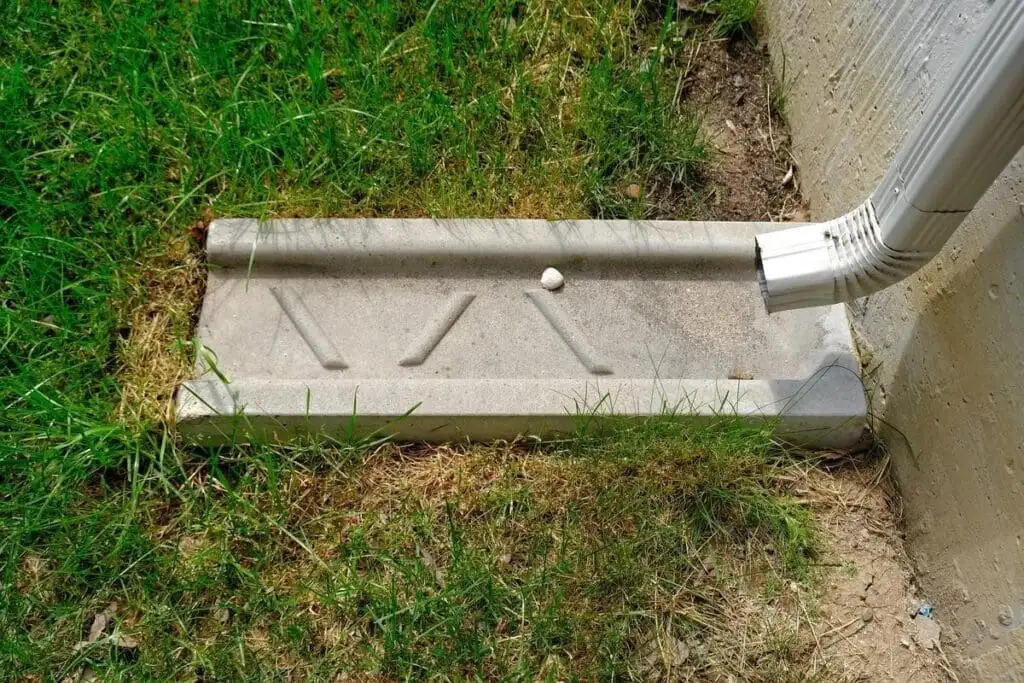
One of the most overlooked risks is foundation erosion caused by poorly directed overflow water.
Extend Pipe Six Feet Minimum
Direct the discharge at least 6 feet away from the tank and your home’s foundation.
* Prevents soil saturation and structural settling.
* Use splash blocks or dry wells to dissipate water energy.
* Direct flow to rain gardens or approved storm drains.
Manage Below-Ground Tank Discharge
Underground tanks require pumped discharge or a connection to a municipal storm system. Include a high-water alarm to detect clogs early before flooding occurs.
Maintain and Troubleshoot Annually
Even perfectly sized systems fail without regular maintenance. Inspect your system at least twice a year.
Inspect for Common Issues
Check for debris, sediment, or bird nests inside the pipe. Look for cracks, sagging sections, or loose fittings. Water pooling near the foundation is a clear sign of a clog or undersized pipe.
Fix Clogs and Undersizing
- Flush clogged pipes with a hose or use a drain snake.
- Upgrade to the next pipe size if overflow occurs during moderate rain.
- Add a parallel overflow line for systems with high inflow variability.
Prevent Freezing in Cold Climates
Ensure pipes slope to drain completely after use. Insulate exposed sections or use heat tape if necessary to prevent ice blockages during winter.
Upgrade for Climate Resilience
Increasing rainfall intensity requires future-proofing your water management system.
Increase Pipe Size by One Standard
Upsizing your pipe provides a safety margin for extreme weather events. Moving from a 4-inch to a 6-inch pipe is a low-cost upgrade with a high return in safety.
Add Smart Monitoring
Modern sensors can alert you to blockages or reduced discharge rates. Integrating these with home automation provides real-time alerts before an overflow event damages your property.
Follow Safety and Environmental Rules
A compliant system protects both people and local ecosystems from harm.
Meet Local Code Requirements
Many jurisdictions require permits for rainwater harvesting and specific overflow designs. States like Colorado and Utah have unique restrictions you must follow.
Filter Roof Runoff Before Discharge
Use first-flush diverters to remove initial dirty water. In-line filters prevent sediment from entering storm drains and protect local waterways from pollutants.
Frequently Asked Questions About Water Tank Overflow Pipe Size
What is the minimum overflow pipe size for a standard residential tank?
For most residential tanks with inflow under 50 gallons per minute, the minimum water tank overflow pipe size is 2 inches. Always check your local plumbing code table based on your specific inlet flow rate.
Can I use the same size pipe for inflow and overflow?
Yes, but it is often better to make the overflow one size larger than the inlet. This ensures the system can handle surges and prevents backpressure if the inlet valve fails.
How do I calculate overflow size for rainwater harvesting?
Multiply your local maximum rainfall intensity by your catchment area to find the peak flow rate. Then use the flow velocity formula or code tables to determine the required diameter.
Why does my overflow pipe need an air gap?
An air gap prevents contaminated water from flowing back into your potable water supply. Codes typically require a minimum 6-inch gap between the pipe outlet and the drain.
What material is best for an outdoor overflow pipe?
UV-resistant PVC or UPVC is best for outdoor use due to its smooth interior and resistance to sun damage. HDPE is also excellent for buried sections or areas with ground movement.
How often should I clean my overflow pipe?
You should inspect and clean your overflow pipe at least twice a year. Remove any debris, sediment, or nests to ensure it functions correctly during heavy rain.
Key Takeaways for Water Tank Overflow Pipe Size
Selecting the correct water tank overflow pipe size is a critical engineering task that protects your property from water damage. Always size your overflow to handle the maximum possible inflow rate, using code tables or hydraulic calculations as your guide. Prioritize self-venting designs with proper slopes and air gaps to ensure reliable performance.
Remember to use smooth materials like PVC or HDPE and install mandatory screens to prevent clogs. Regular maintenance twice a year will keep your system functioning safely for decades. Take action today by inspecting your current setup and verifying it meets these essential standards.