Your engine is overheating, the heater blows cold air, and you have confirmed coolant levels are fine. Yet something is clearly wrong. The culprit is likely a water pump not pumping coolant. This failure can bring your engine to its knees in minutes, even if the pump looks completely intact and is not leaking a single drop. Without coolant circulation, heat builds rapidly, risking warped cylinder heads, blown head gaskets, or total engine seizure.
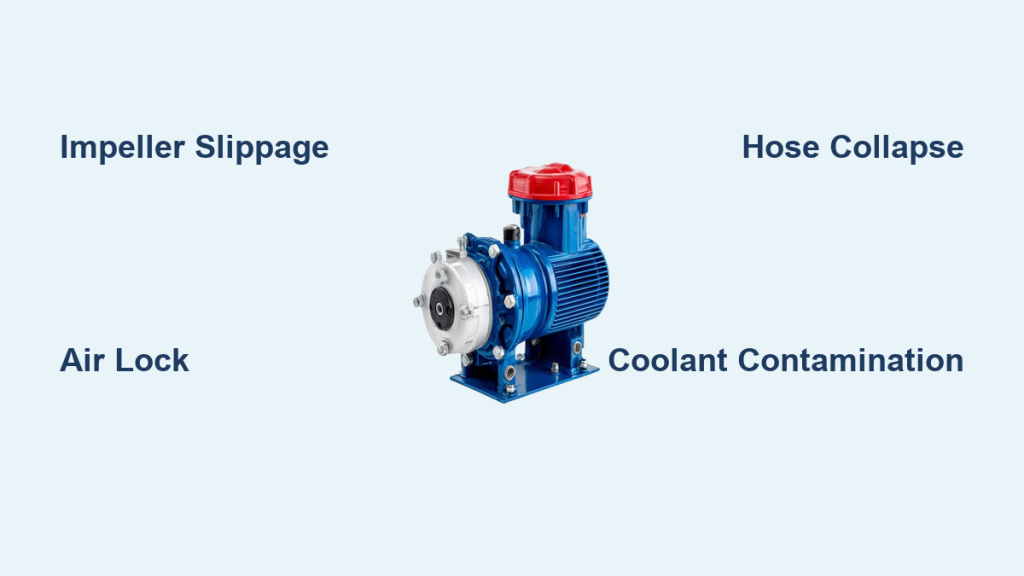
The problem is not always obvious. A failed impeller might spin freely but move no fluid at all. Air pockets can mimic pump failure perfectly. Collapsed hoses or faulty radiator caps disrupt flow without any coolant escaping. And because modern water pumps often use plastic impellers and rely on precise manufacturing, internal breakdowns happen silently, with no noise, no leaks, just sudden overheating.
In this guide, you will learn exactly how to diagnose a non-pumping water pump, identify the real cause even when there is no visible leak, and avoid the most common misdiagnoses. You will also discover proven fixes, essential maintenance steps, and why replacing the pump during timing belt service could save you thousands in future repairs.
Impeller Failure: The Silent Killer of Coolant Flow

When coolant is not moving, the impeller is often the unseen culprit. This spinning component inside the pump generates the force needed to push coolant through the entire engine. If it fails, circulation stops completely, even if the pulley turns normally and there are no external leaks.
Impeller Slippage on the Shaft
A growing cause of intermittent failure is impeller slippage, where the plastic or metal impeller no longer stays fixed to the drive shaft. During cold starts, the press-fit connection is loose, allowing the shaft to spin without turning the impeller at all. As the engine warms, thermal expansion may temporarily restore contact, restoring flow and dropping temperature suddenly from 240°F to 190°F, confusing drivers and mechanics alike.
This issue is especially common in remanufactured or low-quality aftermarket pumps where improper assembly techniques weaken the interference fit. Original equipment units are typically assembled by heating the impeller and freezing the shaft for a precise bond, steps often skipped entirely in cheaper rebuilds.
What to look for:
– Engine overheats at idle or low speed
– Temperature normalizes under load or after warm-up
– No noise, no leaks, pulley spins freely
– Coolant flow resumes after several minutes
Diagnosis requires removing the pump entirely. If the impeller spins independently of the shaft, replacement is the only fix.
Plastic Impeller Degradation
Many modern OEM water pumps use plastic impellers to reduce weight and manufacturing costs. While effective initially, they are vulnerable to hydrolysis, which is chemical breakdown from moisture, thermal fatigue from repeated heating and cooling cycles, and cavitation erosion where bubble implosions eat away at the blades.
Over time, blades crack, warp, or detach completely. One verified report described an impeller broken into pieces despite no prior symptoms whatsoever. The pump appeared completely functional on external inspection, but coolant never moved.
Pro tip: If replacing, opt for a pump with a reinforced plastic or stainless steel impeller, especially in hot climates or high-load applications.
Metal Impeller Corrosion
Older or poorly maintained systems may use metal impellers, which resist breakage but fall prey to rust and corrosion. Tap water introduces minerals that accelerate galvanic corrosion, especially when mixed with incompatible coolants. The result is a once-solid impeller that rusts into a skeleton, completely unable to generate any flow.
Visual inspection after removal usually confirms this. Blades are missing, pitted, or eroded entirely. In extreme cases, only the hub remains attached to the shaft.
Bearing and Seal Failures That Stop Circulation
Even if the impeller is completely intact, failing internal components can halt coolant movement entirely.
Worn or Seized Bearings
Bearings keep the shaft spinning smoothly. When they wear out, the shaft wobbles, reducing impeller efficiency dramatically. Misalignment causes the impeller to rub against the housing. Severe wear leads to complete seizure with no rotation and no flow at all.
Symptoms include:
– High-pitched whining or grinding noise increasing with RPM
– Visible pulley wobble when engine runs
– Shaft runout measurable with a dial indicator
Common causes are:
– Contaminated coolant containing rust or debris
– Over-tightened drive belt placing excess stress
– Loss of lubrication due to consistently low coolant
Once bearings fail, the pump must be replaced entirely. No repair kits can restore precision alignment.
Internal Seal Failure Without External Leak
Water pumps have weep holes, small drain ports that leak coolant when internal seals fail. But here is the catch. Early seal degradation may not produce visible puddles. Instead, air gets sucked into the system, creating air pockets that prevent proper priming entirely.
Air locks stop coolant flow, especially at startup. As the engine warms, trapped air may work its way out naturally, restoring circulation. This is another reason symptoms appear intermittent and confusing.
How to test: After engine shutdown, inspect the weep hole for dampness or dried coolant residue. A steady drip means the seal is completely gone.
Drive System Issues: Belts and Pulleys

The water pump relies on external components to spin. If they fail, the pump stops completely regardless of internal condition.
Broken or Slipping Drive Belt
Most water pumps are driven by a timing belt on interference engines, a serpentine belt on some V6 and V8 setups, or occasionally a timing chain mostly on diesel applications.
A cracked, glazed, or broken belt means zero rotation, halting coolant flow immediately. Even a slipping belt due to low tension or contamination reduces pump speed and flow rate significantly.
Check for:
– Belt cracks, fraying, or glazing visible on inspection
– Squealing at startup or under load
– Misaligned pulleys causing excessive vibration
Pro tip: If your pump is timing-belt-driven, replace both together. Labor is nearly identical, and a new belt will not save an old pump or vice versa.
Pulley Misalignment and Damage
Even with a good belt, a bent or misaligned pulley stresses the pump shaft and bearings severely. This leads to premature bearing wear, seal failure, and wobbling that reduces impeller efficiency dramatically.
GMB and other premium brands now include matched pulleys with replacement pumps to ensure perfect alignment. Never reuse old pulleys unless confirmed completely straight and true.
Air Lock and Vapor Lock: Fake Pump Failure
One of the most misdiagnosed issues is air lock, trapped air preventing coolant circulation. It mimics pump failure perfectly but has a simple fix.
Why Air Lock Happens
After any coolant service, air can get trapped in the heater core, cylinder head passages, and high-point areas of the engine. The pump cannot push coolant through air pockets. The result is no flow, no heat, and overheating, despite a fully functional pump.
Common causes include:
– Improper bleeding procedure after refill
– Rapid temperature changes creating vapor
– Low coolant level during the refill process
How to Bleed the System Properly
Fix air lock with a proper cooling system bleed. First, fill coolant using a high-position funnel, such as a modified 2-liter bottle positioned above the radiator. Second, start the engine and set the heater to maximum temperature and fan speed. Third, gently rev to 2,500 to 3,000 RPM in short bursts. Fourth, watch for bubbles in the funnel and continue until flow is steady and completely bubble-free. Fifth, let the engine cool completely, recheck the level, and top off as needed.
Skipping this step leads directly to false pump failure diagnosis and unnecessary repairs.
Radiator Hose Collapse: Hidden Flow Blocker
A collapsed radiator hose can stop coolant return to the engine entirely, making it look like the pump has failed completely.
Lower Hose Collapse Missing Spring Support
The lower radiator hose is under suction when the pump draws coolant from the radiator. If it lacks an internal support spring, negative pressure can collapse it inward completely.
Symptoms include:
– No flow at idle or low speed
– Flow returns at higher RPM or when engine warms
– Hose appears flattened when inspected visually
Fix: Replace the hose with one that includes a coil spring insert, a small part that prevents collapse effectively.
Upper Hose Collapse From Bad Radiator Cap
The upper radiator hose collapses when the radiator cap fails to vent properly. The cap maintains system pressure typically 14 to 18 psi, raises the coolant boiling point, and allows vacuum relief during cooldown.
A faulty cap creates vacuum during cooling, sucking the hose completely shut. One user fixed identical symptoms by switching to a proper vented cap.
Test: Pressure-test the cap with a radiator pressure tester. Replace if it will not hold rated pressure.
Coolant Problems That Kill Pumps
The coolant itself can be the enemy.
Contamination and Corrosion
Old or contaminated coolant loses its protective additives completely. Over time, it becomes corrosive, leading to rust particles clogging passages, galvanic corrosion between dissimilar metals, and sludge buildup on the impeller and housing.
Signs of bad coolant:
– Rust-colored particles visible in the reservoir
– Milky oil indicating head gasket leak
– Slimy or gritty texture when inspected
Never use tap water. Minerals cause scaling and accelerate corrosion dramatically, especially in aluminum engines.
Cavitation Damage
Cavitation occurs when vapor bubbles form in low-pressure zones and collapse violently. This creates micro-implosions that pit metal surfaces permanently.
Causes include:
– Low coolant level
– Incorrect coolant mix with too much water
– Air in the system
– Consistently high engine temperatures
Symptoms are:
– Pitting visible on impeller or housing
– Marble-rattling noise from the pump area
– Gradual loss of flow over time
Prevent cavitation with proper fill, thorough bleeding, and correct coolant mix, typically 50/50.
Diagnose: Is Your Water Pump Really the Problem
Do not replace the pump blindly. Rule out other causes first.
Test Coolant Flow at the Radiator
Only when the engine is completely cool. First, remove the radiator cap. Second, start the engine and let it warm up. Third, look into the filler neck. Coolant should flow steadily, increasing noticeably with RPM.
No flow indicates:
– Failed pump
– Air lock
– Thermostat stuck closed
– Collapsed hose
Check Heater Core Flow
First, disconnect a heater hose at the firewall. Second, place the end in a container. Third, start the engine. Coolant pours out means the pump is working. No flow indicates pump failure, blockage, or air lock.
Bypass the Thermostat to Rule It Out
To rule out thermostat failure, remove the thermostat entirely and reinstall the housing with sealant. Refill and test. If flow returns, the thermostat was the issue. If not, the problem lies elsewhere.
Prevent Failure: Maintenance That Works
Avoid catastrophic breakdowns with these proven steps.
Replace Coolant Every 30,000 to 60,000 Miles
Follow the manufacturer schedule exactly. Use OEM-specified coolant type, whether OAT, HOAT, or IAT. Always mix with distilled water, never tap water.
Replace Pump With Timing Belt Service
Labor overlaps significantly. Replacing both together saves money long-term, prevents future breakdowns, and reduces risk of catastrophic engine damage. The cost difference is only $100 to $200. Peace of mind is priceless.
Use High-Quality Replacement Pumps
Avoid cheap aftermarket units entirely. Choose OEM pumps from Aisin or Bosch, or premium aftermarket from GMB or Gates. Select units with metal or reinforced impellers specifically.
Low-cost pumps fail faster, often within 20,000 miles, making the initial savings meaningless.
Frequently Asked Questions About Water Pump Not Pumping Coolant
Can a water pump fail without any visible coolant leaks?
Yes. A water pump can fail completely without any external leak. Internal failures include plastic impeller detachment, bearing seizure without seal breach, shaft breakage, internal corrosion blocking flow, and impeller slippage on the shaft. In these cases, the pump housing appears completely dry, but coolant circulation has stopped entirely.
How do I know if my water pump impeller is damaged?
Remove the pump and manually spin the impeller. If it spins freely without resistance or wobbles on the shaft, it has failed. You can also check for overheating symptoms, lack of cabin heat, and no visible coolant flow at the radiator with the engine running and warmed up.
Why does my engine overheat only at idle but run fine at higher speeds?
This pattern points to impeller slippage or a collapsed lower radiator hose. At idle, pump speed is low and suction is weak, so any restriction or slippage stops flow. At higher RPM, increased pressure may force coolant through or temporarily engage a slipping impeller.
Can air in the cooling system cause overheating that looks like pump failure?
Yes. Air lock prevents proper coolant circulation, causing overheating even with a fully functional pump. This commonly happens after coolant service. Bleeding the system properly using a high-position funnel and revving the engine usually resolves this issue completely.
How long does a typical water pump last?
Most water pumps last 60,000 to 100,000 miles. However, plastic impellers in particular tend to fail around 80,000 miles, especially in vehicles not maintained with regular coolant flushes. Hot climates and heavy loads can shorten lifespan significantly.
Should I replace the water pump when replacing the timing belt?
Yes, absolutely. Since both require similar labor access, replacing the water pump during timing belt service is cost-effective and prevents future breakdowns. The additional cost is minimal compared to the labor savings from doing both jobs simultaneously.
Key Takeaways for Fixing Water Pump Not Pumping Coolant
A water pump not pumping coolant is a critical failure that leads to rapid engine overheating and potential catastrophic damage. The failure can occur with or without visible leaks, as internal impeller or bearing damage may stop flow while the pump appears completely intact on the outside.
The primary causes include impeller slippage on the shaft, air lock in the system, collapsing radiator hoses from missing springs or bad caps, disintegrated or corroded impellers, bearing wear, seal degradation, and coolant contamination. Always diagnose carefully by testing flow at the radiator, checking heater core output, and bleeding the system before assuming the pump is faulty.
Prevention relies on regular coolant flushes using distilled water and proper coolant mix, replacing the pump during timing belt service, and using high-quality OEM-spec replacement parts. The cost of proactive maintenance is far less than the $2,000 or more required for catastrophic engine repairs. Fix it before the temperature gauge hits red. Your engine depends on it.