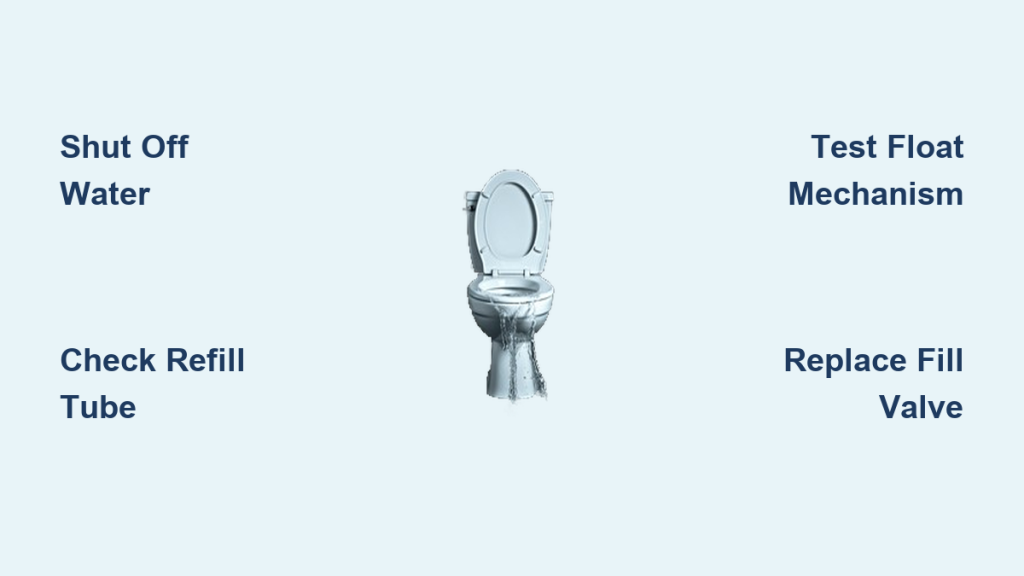
Water spilling over the top of your toilet tank is more than just a mess. It signals a broken internal system that can soak your floor and damage your home. A toilet tank overflow often happens suddenly, creating panic and potential water damage if you do not act fast.
You can fix most causes in minutes with basic tools and no plumbing degree. This guide shows you how to stop the flow, diagnose the root cause, and repair components like the fill valve or refill tube to prevent future flooding.
Shut Off Water Immediately to Stop Flooding
When water starts spilling over the tank, you must act fast to limit damage. The very first step is to stop the water supply before the situation worsens.
Locate the shutoff valve behind or beside the base of the toilet. Turn it clockwise until it feels tight. This action cuts off water to the tank and stops the toilet tank overflow at the source. If the valve is stiff or leaking, plan to replace it during your repair work.
If the bowl is also full or backing up, use a bucket to bail out excess water. This prevents accidental spills and makes it safer to work inside the tank without making a bigger mess.
Once the water is off, flush the toilet to empty the tank completely. This gives you a clear view of internal components and lets you begin diagnosis without constant refilling.
Pro Tip: Mark your shutoff valve location now. Do not wait for an emergency. A quick-access valve can save you hundreds in water damage repairs.
Diagnose the Exact Overflow Source
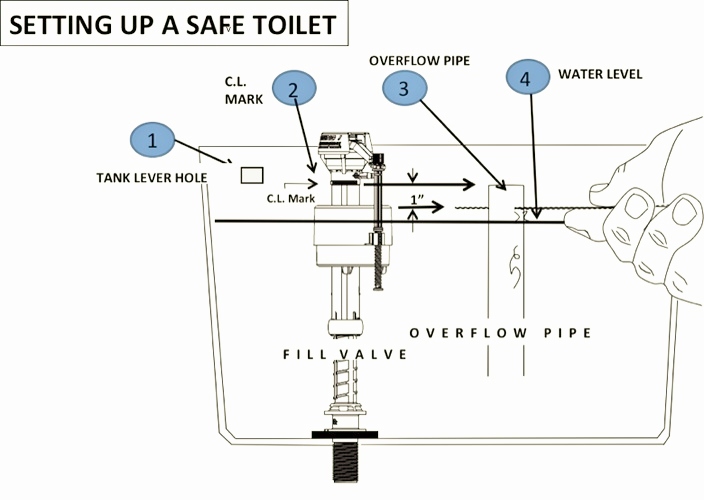
Before replacing parts, identify exactly why the tank is overflowing. Not all overflows stem from the same problem, so careful observation is key.
Check Water Level vs. Overflow Pipe
Remove the tank lid and inspect the current water level. It should sit about one inch below the top of the overflow tube. This vertical pipe sits in the center of the tank.
If water rises above this tube and spills over the tank rim, the fill system is failing. If water flows into the tube but the tank still overflows, your inflow may exceed drainage capacity.
If only the bowl is overflowing, the issue is likely a clog. Distinguishing this early helps you avoid unnecessary repairs on the tank mechanisms.
Observe During a Flush Cycle
Turn the water back on briefly and watch what happens inside the tank. Look for specific behaviors that point to the culprit.
- Does the water stop rising at the correct level?
- Is water spraying outside the overflow tube?
- Does the fill valve keep running after the tank is full?
These clues point to specific failures like float issues, refill tube misalignment, or excessive water pressure.
Fix a Misaligned Refill Tube

One of the most common causes of overflow is a misdirected refill tube. This small white tube connects the fill valve to the overflow pipe.
Its job is to direct a steady stream of water into the overflow pipe during refill. This water then flows into the bowl to reset the seal. If the tube is loose or spraying water into the tank body, that water adds volume without draining.
How to Realign the Refill Tube
- Shut off water and drain the tank completely.
- Locate the refill tube. It is a thin, flexible white tube from the fill valve.
- Insert the end into the hole on top of the flush valve canister.
- Ensure it points directly into the overflow pipe.
- Never let it rest in the tank water. Only place it inside the pipe.
- Turn water back on and test the flush.
Visual Cue: You should see a steady trickle going into the overflow tube. It should not splash off the tank wall.
This 60-second fix resolves over 30% of overflow cases with no parts needed.
Test the Float Mechanism for Failure

The float controls when the fill valve shuts off. As water rises, the float lifts. When it reaches the cutoff point, it signals the valve to close.
If the float is stuck, waterlogged, or rubbing against the tank wall, it will not rise properly. Consequently, the valve stays open and causes a toilet tank overflow.
How to Check Float Function
- With water off, manually lift the float by hand.
- If the water stops flowing when lifted, the mechanism works but may be misaligned.
- Lower the float. If water starts again, the valve responds but may not shut off at the right level.
- Inspect for cracks or water inside a ball float. A waterlogged float will not rise correctly.
- Ensure the float moves freely without obstruction from tank walls.
If the float is damaged or cannot be adjusted, replacement is necessary to stop the running water.
Replace a Faulty Fill Valve
When the fill valve fails to shut off even with a working float, it is time for a new unit. Old valves wear out, internal seals degrade, and sediment can prevent proper closure.
Even if the float rises, a bad valve keeps water flowing. This continuous flow often overwhelms the overflow tube.
Choose the Right Replacement
The Fluidmaster 400A is the go-to universal fill valve for most toilets. It is reliable, easy to install, and includes adjustable height settings. Avoid patching old valves. Replace the entire assembly for long-term reliability.
Step-by-Step Fill Valve Replacement
- Shut off water and drain the tank.
- Disconnect the supply line from the bottom of the valve.
- Unscrew the lock nut under the tank holding the valve in place.
- Remove the old valve completely.
- Insert the new fill valve, aligning the base gasket.
- Reconnect the supply line. Use a new braided stainless steel line for durability.
- Attach the refill tube to the overflow pipe.
- Turn water on and adjust the float. Ensure water stops one inch below the overflow tube top.
Time Estimate: 20 to 30 minutes for beginners. No special tools are needed.
Clear Overflow Tube Blockages
Even with a working fill valve, a clogged overflow tube can cause overflow. Debris like mineral buildup, algae, or disintegrated flappers can restrict flow.
This restriction prevents excess water from draining properly. If the tube cannot drain fast enough, the tank spills over.
How to Inspect and Clean the Tube
- Shut off water and drain the tank.
- Shine a flashlight down the overflow tube.
- Look for visible obstructions or slime buildup.
- Use a bottle brush or pipe cleaner to scrub the inside.
- Flush with vinegar to dissolve mineral deposits.
- Reconnect and test the system.
Ensure water flows freely into the tube during refill. If not, cleaning or replacement may be needed.
Address High Water Pressure Issues
:max_bytes(150000):strip_icc()/testing-water-pressure-in-your-home-2718692-04-c37ab3236d0d4b61b87079ebf9ef823e.jpg)
Even with perfect parts, excessive water pressure can overwhelm the system. Most toilets are designed for pressures under 80 PSI.
If your home’s pressure is higher, water enters the tank too fast for the overflow tube to drain it. This creates a toilet tank overflow despite functional components.
Test Your Home’s Water Pressure
- Buy a water pressure gauge. These cost under $15.
- Attach it to an outdoor spigot or hose bib.
- Turn on the spigot fully.
- Read the PSI on the gauge.
If it is above 80 PSI, consider installing a pressure-reducing valve at the main water line. Chronic high pressure damages faucets, washing machines, and water heaters too.
Prevent Future Overflows
A one-time fix is not enough. You must prevent repeat issues with simple maintenance habits.
Monthly Inspection Checklist
- Ensure refill tube is securely in overflow pipe
- Verify float moves freely and is not waterlogged
- Listen for running water after flush
- Check for drips at the supply line connection
Upgrade Key Components
Replace old rubber supply lines with braided stainless steel versions. These are resistant to bursting and corrosion. You can also install a leak detection alarm under the toilet for early warning.
Avoid Flushing Non-Flushables
Flush toilet paper only. Do not flush wipes, hygiene products, or toys. These cause clogs that trigger bowl overflows and strain the entire system.
Know When to Call a Pro
Some issues go beyond DIY capabilities. You should recognize when professional help is the best option.
Call a Plumber If:
- Multiple fixtures back up simultaneously
- Water pressure is consistently high and you lack a PRV
- You have replaced parts but overflow continues
- The tank or bowl shows cracks
- You feel uncomfortable working with plumbing connections
Professionals have specialized tools like video drain cameras and pressure regulators to solve complex issues fast.
Frequently Asked Questions About Toilet Tank Overflow
Why does water spill over the top of my toilet tank?
Water spills over the top when the fill valve fails to shut off or the refill tube is misaligned. This causes the water level to rise above the overflow tube, spilling onto the floor instead of draining into the bowl.
How do I stop my toilet tank from overflowing immediately?
Turn the shutoff valve clockwise behind the toilet to stop the water supply. Then remove the tank lid to check if the refill tube is spraying outside the overflow pipe or if the float is stuck.
Can high water pressure cause a toilet tank overflow?
Yes. If your home water pressure exceeds 80 PSI, water enters the tank faster than the overflow tube can drain it. This overwhelms the system and causes spilling even with working parts.
What is the most common cause of toilet tank overflow?
A misaligned refill tube is a very common cause. If this small white tube sprays water into the tank instead of into the overflow pipe, the tank fills artificially fast and overflows.
When should I replace my toilet fill valve?
Replace the fill valve if it fails to shut off, makes noise, or if the float mechanism is damaged. Older valves often wear out, leading to continuous water flow and potential overflow.
Key Takeaways for Fixing Toilet Tank Overflow
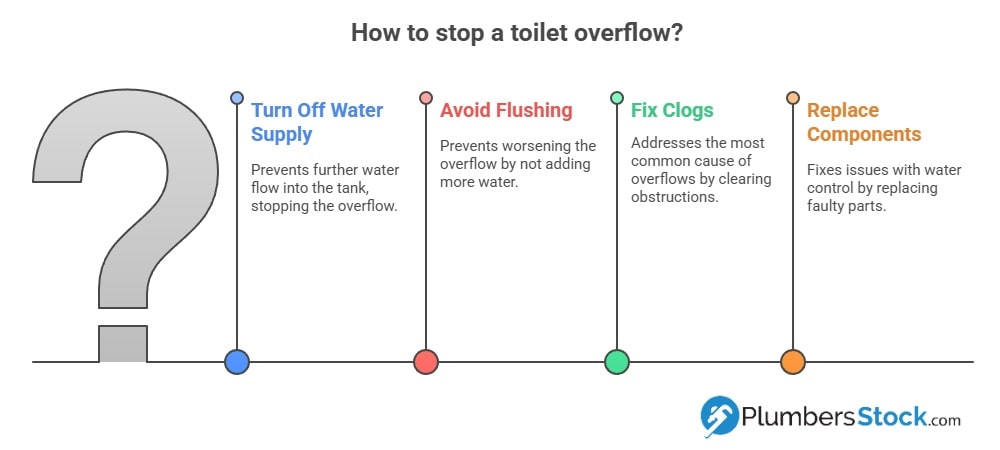
A toilet tank overflow is usually a simple fix, but ignoring it risks serious water damage. The most common causes are a misaligned refill tube, a stuck float, or a faulty fill valve. By following this guide, you can diagnose and repair the issue in under 30 minutes.
Remember to shut off the water first, check the refill tube alignment, and replace the fill valve if needed. Test your water pressure if problems persist. With routine checks and smart upgrades, you can keep your toilet running smoothly and your floor dry for years to come.