Nothing beats stepping out of a shower and wrapping yourself in a warm, dry towel. A towel radiator makes that luxury accessible every day, not just in spa resorts. Whether you use an electric towel warmer or a hydronic model, knowing how to use a towel radiator properly ensures safety, efficiency, and long-term performance. These units do more than warm towels; they help prevent mildew, enhance bathroom comfort, and add a sleek design element to any space.
But incorrect use, like hanging wet towels, overcrowding the rack, or ignoring safety checks, can lead to poor performance, higher energy bills, or even hazards. This guide walks you through every step: from pre-use inspection and correct towel placement to activation, deactivation, and maintenance. You’ll learn how electric and hydronic models differ in operation and how to avoid the most common mistakes.
Pre-Use Safety Check for Your Towel Radiator
Before turning on your towel radiator, perform a quick safety inspection to prevent electrical faults, leaks, or structural issues.
Inspect Electric Units
For electric towel warmers, start with the power system:
– Check the cord and plug for fraying, cracks, or exposed wires
– Ensure the outlet is GFCI protected, especially in bathrooms where moisture is high
– Test the switch or control panel to confirm it responds when toggled
– Shake the unit gently to verify it’s securely fastened
Inspect Hydronic Units
For central heating connected models:
– Look for water leaks around valves or pipe joints
– Check for rust, corrosion, or loose bars
– Confirm the mounting brackets are tight and the unit doesn’t wobble
– Ensure the lockshield valve hasn’t been tampered with
Verify Installation Environment
- Keep the unit at least 24 inches from the shower or bath unless rated for direct moisture exposure
- Avoid placing near open windows or drafty areas that reduce heating efficiency
- Never install over an electrical socket or near flammable materials
Proper Towel Placement on a Towel Radiator

Correct towel placement ensures even heating, prevents damage, and maximizes energy efficiency.
Use Only Dry Towels
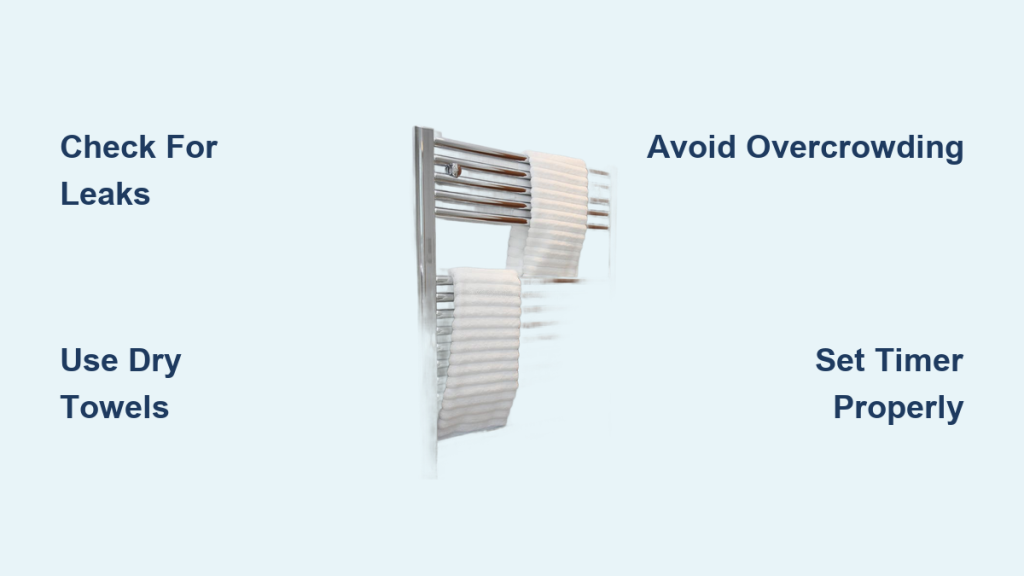
Never place wet or damp towels on a towel radiator. Moisture can cause water to drip into electric components, risking short circuits. It also leads to mineral buildup on hydronic rails and reduces heat transfer. If towels are damp, air-dry them first before placing them on the rail.
Hang Towels Correctly
- Drape each towel flat over a single bar; don’t fold or bunch them
- Avoid stacking multiple towels on the same bar, which blocks airflow
- Leave space between towels to allow heat to circulate evenly
Avoid Overloading the Rail
Overcrowding is one of the most common mistakes. It leads to uneven heating and strain on electric heating elements. As a rule, use one towel per bar for best results.
Activate the Towel Radiator
The activation process depends on whether you have an electric or hydronic model.
Turn On Electric Models
- Plug in the unit (if freestanding) or confirm it’s hardwired safely
- Flip the power switch to “On”
- If your model has a timer or digital control, set it to heat 15 to 30 minutes before use
- Wait 15 to 20 minutes for towels to feel warm and cozy
Pro Tip: Use a programmable timer to automate heating cycles and avoid leaving the unit on all day.
Activate Hydronic Models
- Ensure your central heating system is running
- Locate the thermostatic radiator valve (TRV) or manual valve
3.