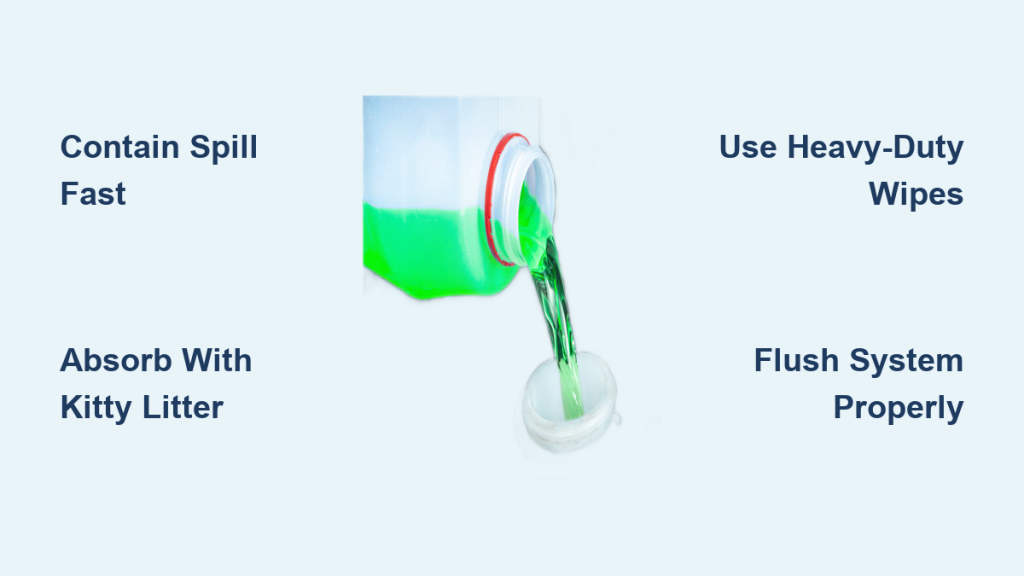
Radiator fluid, also called antifreeze or coolant, is a glycol-based liquid that keeps your engine from overheating or freezing. When it spills, however, it becomes a serious hazard. The sweet smell attracts pets and children, while the liquid itself corrodes concrete, asphalt, and garage floors within hours.
Knowing how to clean up radiator fluid quickly protects your family, pets, property, and the surrounding environment. This guide covers two proven cleanup methods, internal cooling system flushing, safe disposal practices, and critical mistakes to avoid. You will learn how to handle fresh spills, dried stains, and long-term maintenance with clear, actionable steps.
Immediate Spill Response Steps
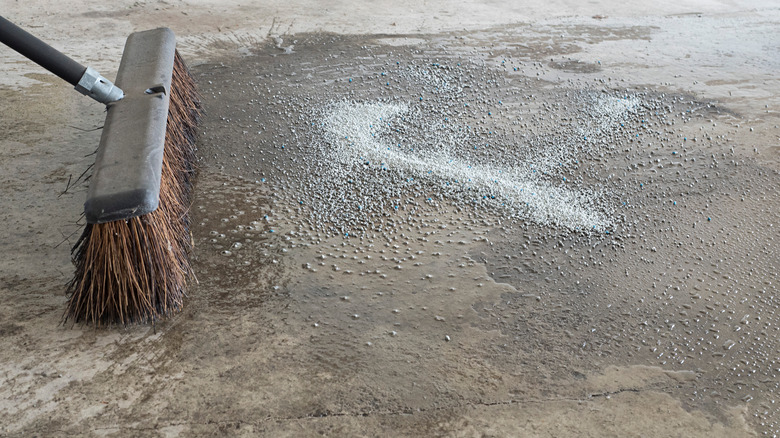
Acting fast makes cleanup dramatically easier. The longer radiator fluid sits, the deeper it penetrates porous surfaces and the harder it becomes to remove.
Contain the Spill Immediately
Your first priority is preventing contact with people and animals:
– Block off the area to keep children and pets away
– Wear gloves to avoid skin contact with toxic coolant
– Stop the source if possible by tightening a loose hose clamp or cap
Delaying cleanup even by a few hours increases environmental and health risks. Antifreeze remains attractive to pets for days, leading to accidental ingestion and potentially fatal poisoning.
Absorb Excess Fluid Fast
Use highly absorbent materials to soak up liquid before it spreads further:
– Kitty litter (clay-based works best)
– Sand
– Baking soda
– Paper towels or newspapers
Pour or sprinkle the absorbent over the entire spill, covering all edges. Press down gently with paper or cardboard to enhance absorption. Let sit for at least 30 minutes, or up to two hours for large spills, before sweeping or wiping up.
Pro Tip: Keep a spill kit in your garage with gloves, absorbent pads, and heavy-duty wipes for quick response.
Clean Concrete and Driveway Stains
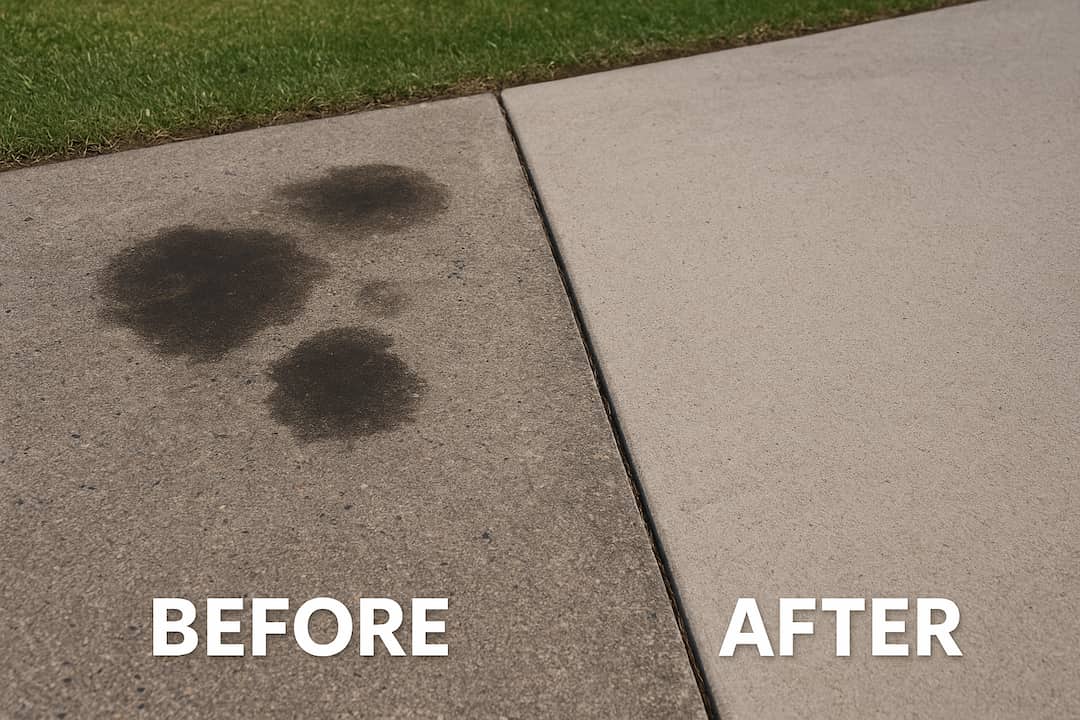
Radiator fluid leaves stubborn stains on concrete and asphalt. Choose one of two methods depending on the tools available and time constraints.
Traditional Detergent Scrub Method
This affordable, DIY-friendly method uses household items but requires physical effort.
Supplies Needed:
– Liquid dish or laundry detergent
– Stiff-bristled brush or broom
– Water hose or bucket
– Baking soda or sand for initial absorption
– Powdered detergent for dried stains
For Fresh Spills:
1. Absorb excess fluid with kitty litter or baking soda
2. Apply liquid detergent directly to the stain
3. Scrub vigorously with a stiff brush for 2 to 3 minutes
4. Rinse thoroughly with water
5. Repeat until the stain disappears
For Dried or Set-In Stains:
1. Wet the area lightly with water
2. Sprinkle powdered laundry detergent over the stain
3. Cover with newspapers and saturate with water
4. Wait three hours to let the powder break down the residue
5. Scrub and rinse well
6. Blot dry with newspapers or towels
Note: This method may require multiple rounds for older stains.
Use Heavy-Duty Wipes for Fast Cleanup
For faster results with less scrubbing, use industrial wipes designed to break chemical bonds.
Recommended Product: Heavy-duty cleaning wipes with Bond Buster technology, such as Tub O’ Towels.
Steps:
1. Wipe up excess fluid with paper towels
2. Squeeze a cleaning wipe over the stain to release cleaning solution
3. Scrub the area using the wipe to lift stains with minimal effort
4. Rinse with water to remove residue
Advantage: These wipes dissolve antifreeze bonds on concrete and asphalt, reducing scrub time by up to 70%.
Flush the Cooling System Internally
After external cleanup, inspect your cooling system. Old or contaminated coolant reduces efficiency and can lead to recurring leaks.
When to Flush the System
Flush every five years or 100,000 miles, whichever comes first. Also flush if:
– Coolant looks rusty or cloudy
– You have used tap water long-term, especially well water
– Engine overheats frequently
Warning: Never open the radiator cap when hot. Wait until the engine is cool to avoid steam burns.
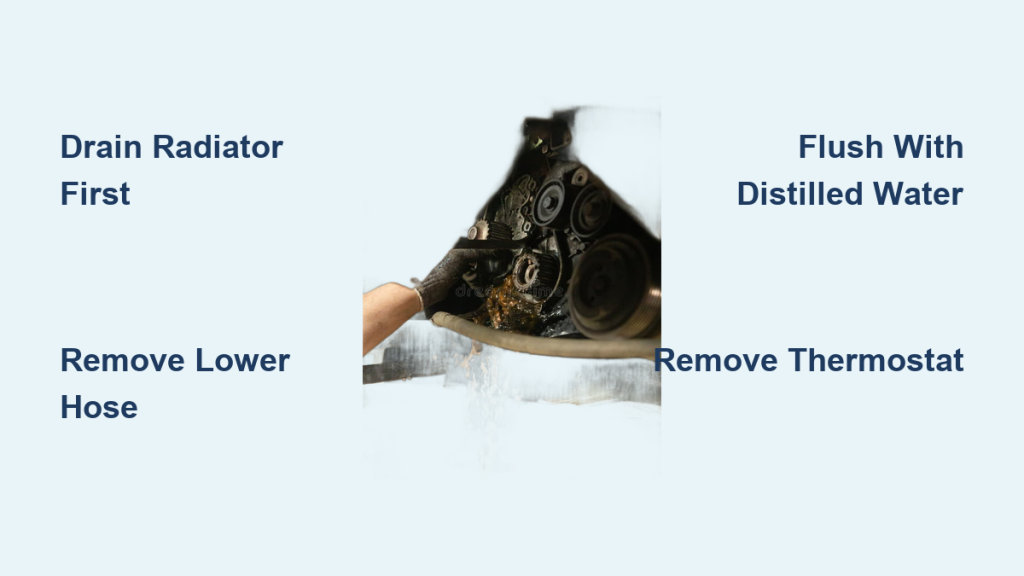
Drain Old Coolant Safely
Tools Needed:
– Drain pan with 2+ gallon capacity
– Gloves
– Wrench or pliers for the petcock valve
Steps:
1. Place the drain pan under the radiator’s petcock valve
2. Remove the radiator cap to allow air flow and faster draining
3. Open the valve and let all fluid drain completely
4. Close the valve tightly before refilling
Caution: Collect every drop. Even small amounts of coolant are hazardous.
Use Safe Cleaning Agents Only

Choosing the right cleaner prevents damage to your engine and the environment.
Approved Flushing Solutions
Use one of these safe and effective options:
Commercial Radiator Flush:
– Products include DEI Radiator Relief and Permatex Heavy Duty Radiator Cleaner
– Dosage: One bottle per approximately 16 quarts of system capacity
– Benefits: Removes rust, scale, and oily residue; safe for aluminum, copper, and brass
Simple Green Pro HD Alternative:
– Mix ratio: 1 part Simple Green to 15 parts water
– Non-corrosive and biodegradable
– Effective for light to moderate buildup
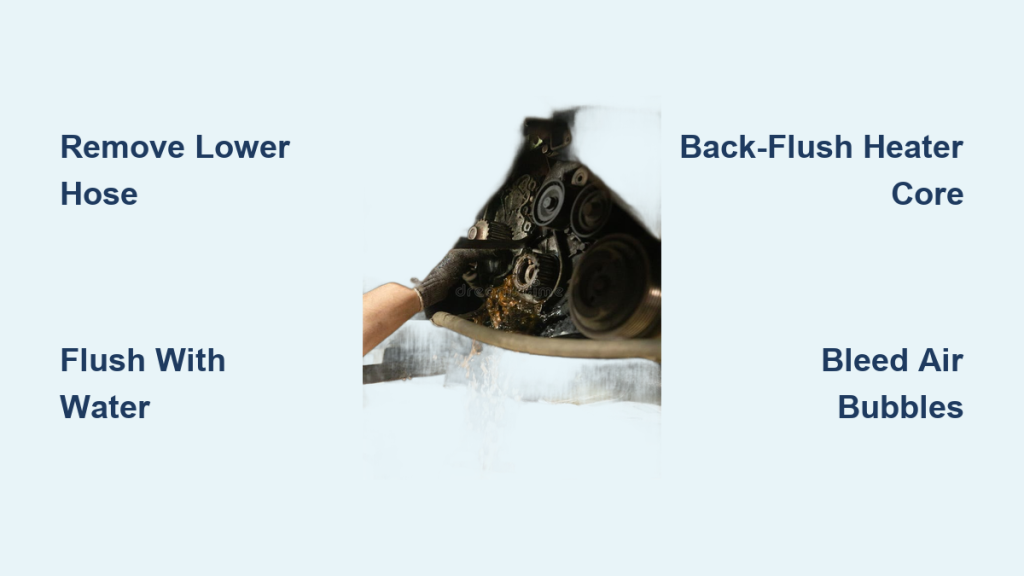
Flushing Procedure:
1. Fill radiator with water and add cleaner
2. Run engine at operating temperature for 15 minutes so the thermostat opens
3. Turn off, cool, then drain completely
4. Repeat rinse with distilled water until runoff is clear and foam-free
Key Tip: Use distilled water for final rinses to prevent mineral deposits.
Avoid Dangerous Household Cleaners
Some common cleaners cause serious damage to cooling systems and should never be used.
Never Use Vinegar
Despite being a popular DIY cleaner, vinegar is harmful to your engine:
– Contains acetic acid that corrodes metal parts
– Damages intake manifolds, engine blocks, and cylinder heads
– Degrades rubber gaskets and seals
Result: Can lead to leaks, overheating, and costly repairs.
Never Use Bleach
Bleach containing sodium hypochlorite is even more destructive:
– Rapidly corrodes steel and aluminum
– Attacks internal engine components
– Reacts unpredictably with glycol-based fluids
Bottom Line: Stick to approved radiator flush products only.
Prevent Future Leaks and Buildup
Regular maintenance keeps your system clean and leak-free over time.
Annual Exterior Radiator Cleaning
Dirt and debris clog radiator fins, reducing airflow and efficiency.
Steps:
1. Mix a 1:3 solution of Simple Green Pro HD and water
2. Spray liberally on radiator fins
3. Gently brush away bugs, leaves, and grime with a soft-bristled brush
4. Rinse from the engine side outward using low-pressure water
5. Let dry completely before starting the engine
Inspect: Look for bent fins. Use a flathead screwdriver to gently straighten them back into alignment.
Choose the Right Coolant and Water
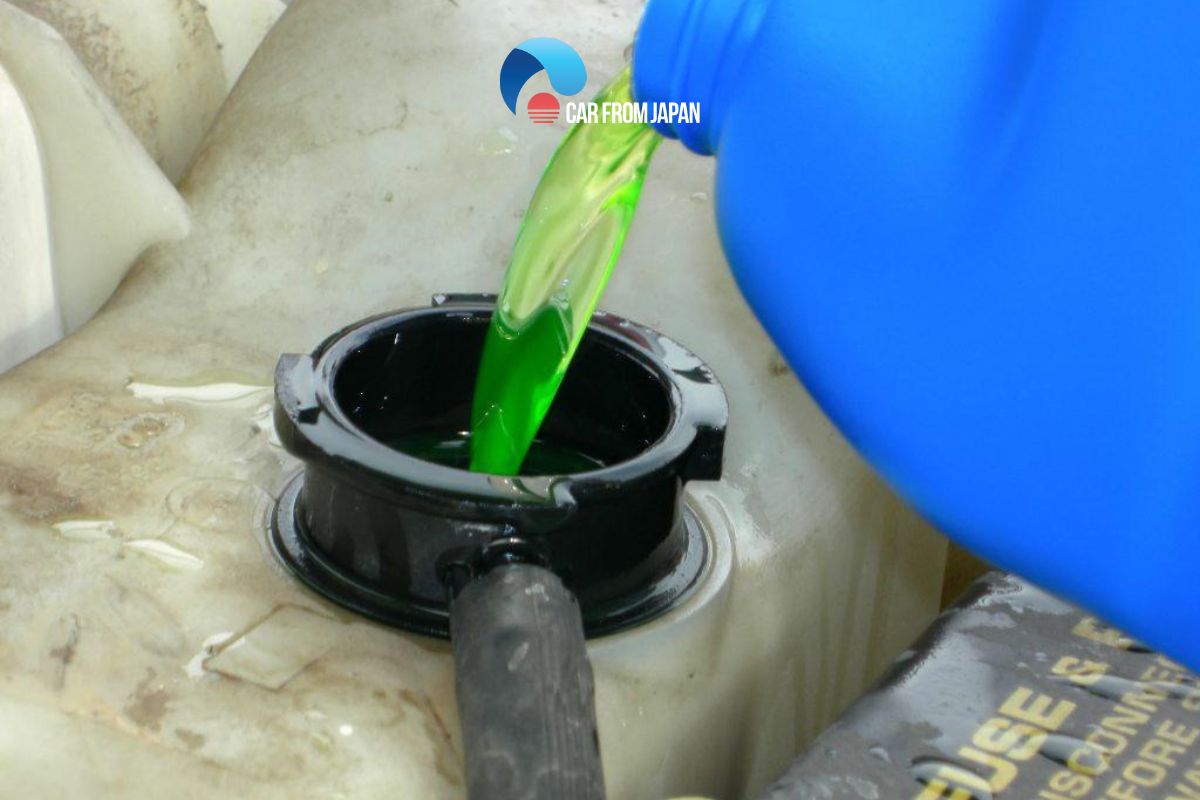
The final fill determines long-term system health and performance.
Use Distilled Water, Not Tap
- Tap water contains minerals, especially iron, that form scale and deposits
- Well water is high-risk and can cause heavy iron buildup in months
- Distilled water is cheap, widely available, and mineral-free
Best Practice: Mix coolant with distilled water or use pre-mixed coolant for convenience.
Add Super-Coolant Additives
Products like Water Wetter improve performance by:
– Reducing water surface tension for better heat transfer
– Lubricating the water pump
– Preventing corrosion and electrolysis
Compatibility: Works with all coolant types including green, orange, red, and others.
Dispose of Coolant Responsibly

Radiator fluid is hazardous waste and should never be poured down drains or onto the ground.
Proper Disposal Steps
- Store used coolant and flush water in sealed containers
- Label clearly with “Used Antifreeze – Toxic”
- Take to approved locations:
– Auto parts stores that offer free recycling
– Municipal hazardous waste facilities
– Certified recycling centers
Environmental Impact: One gallon of antifreeze can contaminate millions of gallons of water.
Troubleshoot Common Issues
Solve lingering problems after cleanup to restore full system performance.
Iron Buildup in Radiator
Signs:
– Rust-colored coolant
– Reduced cooling performance
– Gunk on radiator cap
Fix:
– Perform a second flush with rust-removing cleaner
– Use a flush T-fitting adapter for easier repeated rinsing
– Always finish with distilled water
Bent Radiator Fins
Impact: Blocks airflow and causes overheating.
Repair:
– Inspect fins visually after cleaning
– Use a flathead screwdriver to gently realign bent fins
– Work slowly to avoid puncturing tubes
Persistent Concrete Stains
If stains remain after scrubbing:
– Try heavy-duty wipes with bond-breaking technology
– Reapply the powdered detergent method with a 3-hour soak
– Repeat the detergent-scrub-rinse cycle up to three times
Final Steps: Replenish and Test
Once clean, refill and verify system function before returning to regular driving.
Refill with Correct Coolant
- Check owner’s manual for coolant type (OAT, HOAT, or IAT)
- Mix with distilled water at recommended ratio, usually 50/50
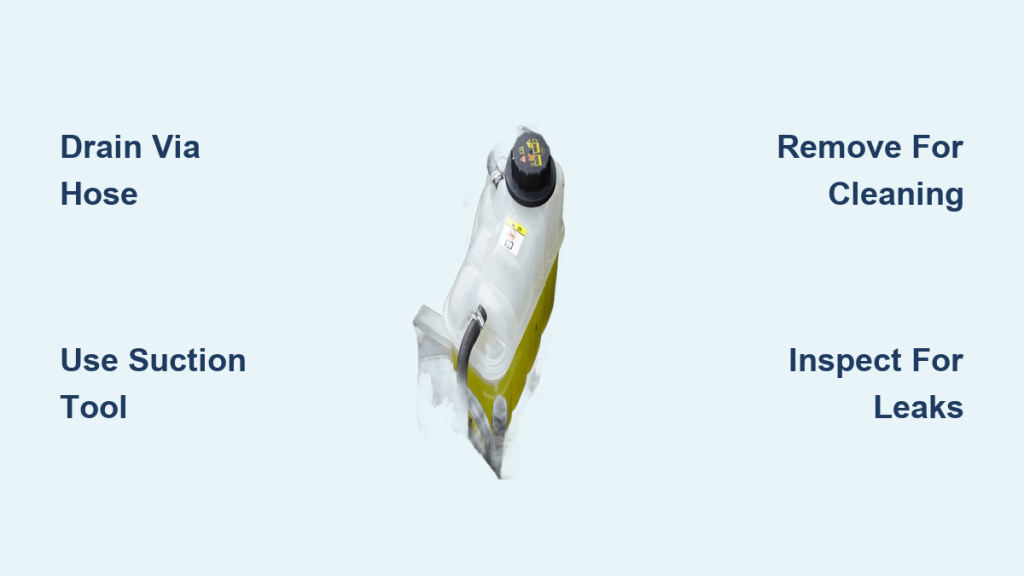
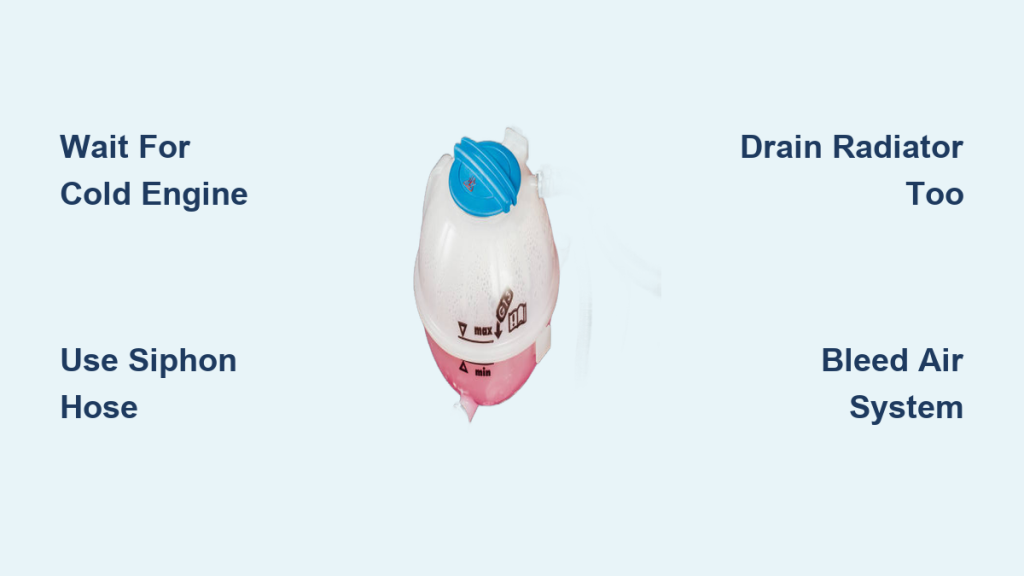
- Fill radiator and overflow tank
- Run engine briefly with heater on to bleed air
- Recheck levels after cooling
Test Drive: Monitor the temperature gauge for normal operation during your next trip.
Frequently Asked Questions About Cleaning Up Radiator Fluid
What makes radiator fluid so dangerous to clean up?
Radiator fluid contains ethylene glycol, which is highly toxic to humans, pets, and wildlife. Its sweet smell and taste attract animals, leading to accidental poisoning. It also corrodes concrete, asphalt, and metal surfaces if left uncleaned.
Can I use vinegar to clean radiator fluid stains?
No. Vinegar contains acetic acid that corrodes metal engine components, damages rubber gaskets, and degrades seals. Using vinegar in your cooling system can cause leaks, overheating, and expensive repairs.
How long should I let absorbent materials sit on a fresh spill?
Allow kitty litter, sand, or baking soda to sit on a fresh spill for at least 30 minutes. For large spills, extend the dwell time to two hours. This ensures complete absorption before you begin scrubbing.
Is tap water safe for flushing my radiator?
Tap water is acceptable for initial flushing steps, but distilled water is strongly preferred for the final rinse. Tap water, especially from wells with high iron content, causes mineral buildup and rust over time.
Where should I take used radiator fluid for disposal?
Take used coolant to auto parts stores with recycling programs, municipal hazardous waste facilities, or certified recycling centers. Never pour it onto the ground, into storm drains, or down household sinks.
How often should I flush my radiator completely?
Flush your cooling system every five years or 100,000 miles, whichever comes first. You should also flush sooner if coolant appears rusty, the engine overheats frequently, or you have used unfiltered tap water long-term.
Key Takeaways for Safely Cleaning Up Radiator Fluid
Understanding how to clean up radiator fluid protects your health, vehicle, and the environment from serious harm. Act immediately when spills occur by absorbing excess fluid with kitty litter or baking soda, then scrub with detergent or use heavy-duty wipes for stubborn stains. Flush your cooling system every five years using approved commercial cleaners or Simple Green Pro HD, and always avoid vinegar and bleach. Finish with distilled water to prevent mineral buildup, and dispose of all used fluid at certified hazardous waste facilities. With these steps, you can handle radiator fluid spills and maintenance safely every time.