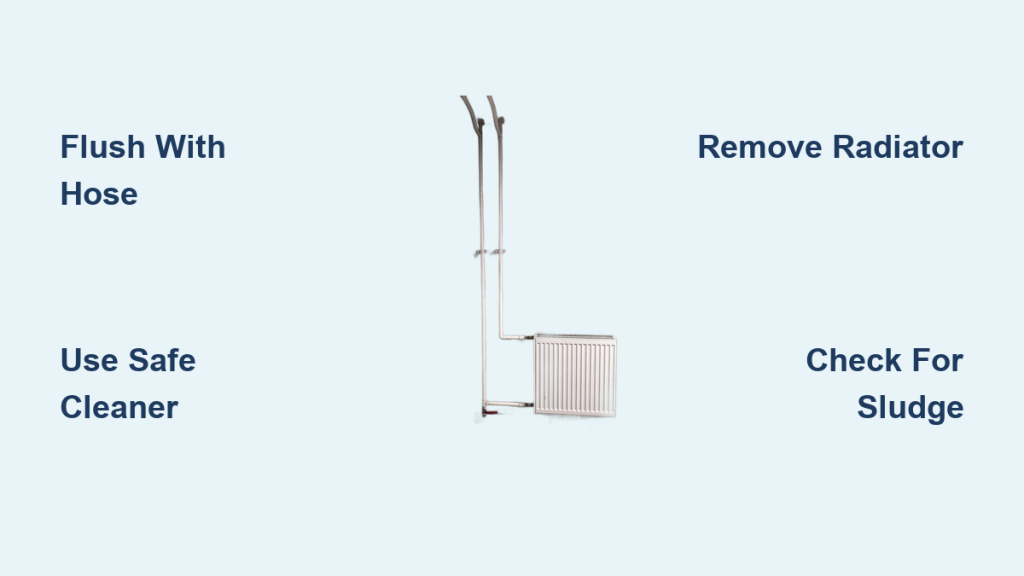
Cold spots on your home radiator or an engine that overheats within an hour of use often trace back to one culprit: clogged radiator pipes. Sludge, rust, scale, and debris accumulate inside the passages over time, choking circulation and forcing your system to work harder than it should.
This guide walks you through exactly how to clean radiator pipes safely and effectively. You will learn how to spot early warning signs, choose the right cleaning chemicals, flush both home heating systems and vehicle radiators, and stop buildup before it starts.
Identify Radiator Pipe Blockage Before It Worsens
Spot Sludge Symptoms in Home Heating Systems
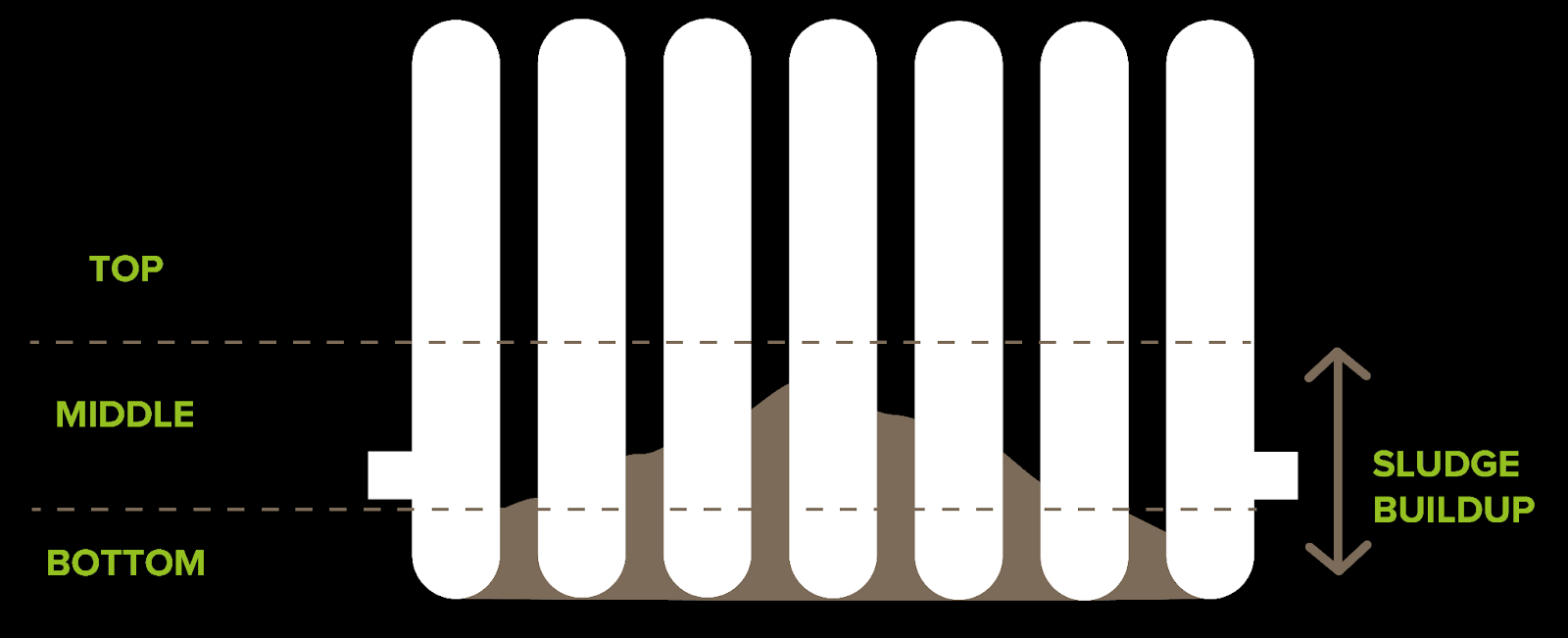
Sludge develops when rust, dirt, and oxygen react inside hydronic pipes. It settles at the bottom of radiators and gradually chokes off hot water flow. Ignoring it raises fuel bills and shortens boiler life.
Watch for these warning signs:
– Cold bottom with warm top on the radiator surface
– Brown or rusty water appearing when you bleed the radiator
– Gurgling or banging noises from the boiler
– Uneven room heating, especially in radiators far from the boiler
If several radiators show symptoms at once, the entire system likely needs attention.
Diagnose Clogs in Automotive and Industrial Radiators
In vehicles and heavy machinery, blocked pipes restrict coolant circulation and trigger overheating. Common clues include:
– Temperature spikes within 45 to 60 minutes of operation
– Hydraulic components too hot to touch
– Thick or discolored coolant during a drain
– Plugged tubes visible at the bottom outlet
Even radiators that look clean on the outside can hide heavy internal scale, especially in older copper and brass units.
Skip the Dangerous DIY Chemicals
Why Vinegar and Bleach Cause Harm
Despite what many online tutorials suggest, vinegar and bleach are unsafe for radiator systems.
- Vinegar corrodes aluminum, copper, and steel. It also degrades rubber seals and gaskets in cooling systems.
- Bleach aggressively attacks metal surfaces, causing pitting and leaks over time.
Using either can lead to cracked engine blocks, leaking boilers, and expensive repairs.
Choose Safe Cleaners That Actually Work
Match the cleaning product to your system type for the best results.
For home heating systems:
– Clean water flushing handles moderate sludge
– Professional power flush chemicals tackle severe contamination
– Magnetic filters trap iron particles before they settle
For vehicles and industrial equipment:
– Simple Green Pro HD works on aluminum and seals without corrosion
– Muriatic acid suits only old copper and brass radiators with heavy mineral deposits
– Commercial restorers like Cummins Restore + Flush handle diesel engines well
Always wear gloves and eye protection, and dispose of used fluids responsibly.
Flush Home Radiator Pipes in Four Stages
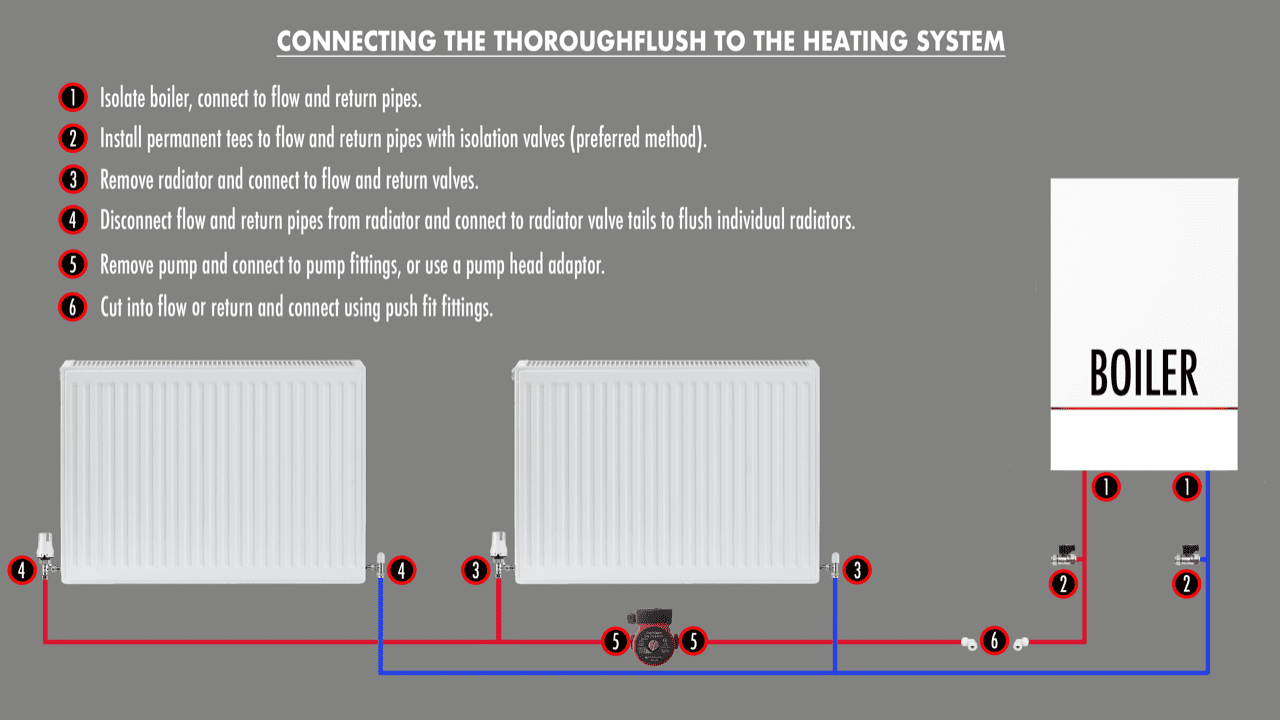
Prepare and Isolate the Radiator
Safety comes first. Shut down the system before touching any valves.
- Turn off the boiler and wait at least 30 minutes for the radiators to cool.
- Lay old towels beneath the radiator to catch spills.
- Close the thermostatic valve by turning it to “0” by hand.
- Remove the lockshield valve cap and close it with a spanner. Count the turns so you can restore the setting later.
- Loosen both valve nuts slightly without disconnecting them.
Drain and Remove the Radiator
- Place a large bucket under the thermostatic valve.
- Open the bleed valve with a bleed key to release trapped air.
- Loosen the lockshield nut to speed drainage.
- Once empty, close the bleed valve.
- Lift the radiator off the brackets and cover open valves with plastic bags during transport.
Flush the Pipes Until Water Runs Clear
- Move the radiator outside or to a floor drain.
- Attach a garden hose to one inlet and run water at full pressure.
- Tap the radiator gently with a rubber mallet to loosen stubborn sludge.
- Reverse the hose to the opposite inlet and repeat.
- Keep flushing until water exits clear from both ends.
Reinstall and Rebalance the System
- Hang the radiator back on the wall and tighten both valve nuts.
- Open both valves fully.
- Reset the lockshield valve to the exact number of turns you counted earlier.
- Bleed the radiator until water spurts out, then close the valve.
- Check the boiler pressure gauge. It should read between 1.0 and 1.5 bar. Use the filling loop to repressurize if it drops below 1 bar.
The full process takes roughly 1.5 hours per radiator.
Clean Automotive Radiator Pipes Inside and Out
Clear External Fins and Surface Debris
Blocked fins choke airflow even when internal pipes are clean. Always wait for the engine to cool before starting.
- Mix Simple Green Pro HD with water at a 1 to 3 ratio in a spray bottle.
- Spray the solution generously across the fins.
- Use a soft-bristled brush to remove bugs, leaves, and road grime.
- Straighten bent fins carefully with a flathead screwdriver.
- Rinse gently from the engine side outward using low-pressure water.
- Repeat until runoff is clear, then let the fins air dry.
Avoid high-pressure washers, which can crush delicate fin edges.
Flush Internal Cooling Pipes
This step clears internal scale and old coolant residue.
- Place a drain pan under the petcock and remove the radiator cap.
- Open the drain valve and empty the old coolant. Close the valve afterward.
- Mix Simple Green Pro HD at a 1 to 15 ratio with water. Use about one gallon for a typical four-cylinder engine.
- Pour the solution into the radiator and replace the cap.
- Let it sit for 5 minutes.
- Start the engine and run it for 5 to 15 minutes until the thermostat opens and coolant circulates.
- Turn off the engine, let it cool, and drain the cleaning solution.
- Rinse by filling with distilled water, idling for 5 minutes, and draining. Repeat two to three times until the water runs clear and foam-free.
- Refill with manufacturer-specified coolant.
Clear rinse water confirms the system is clean.
Tackle Severe Buildup in Industrial Radiators

Use Muriatic Acid on Old Copper and Brass Units
For antique tractors or legacy equipment with hardened mineral deposits, muriatic acid can break down years of buildup.
- Drain the system completely.
- Fill with a muriatic acid and water mix following the product label.
- Run the engine until warm without overheating.
- Let the solution soak for one hour.
- Drain the acid safely and refill with clean water.
- Run the engine briefly, then drain again. Repeat rinsing two to three times to neutralize all acid.
Wear gloves, goggles, and work in a ventilated area. Acid left behind will destroy metal components.
Know When to Visit a Radiator Shop
If flushing does not solve the problem, professional services may be necessary:
– Boil-out cleaning deep cleans cores with industrial solutions
– Leak testing and re-soldering repairs pinholes and weak joints
– Re-coring replaces damaged cores and typically costs between $600 and $800
Many shops have stopped offering acid baths due to environmental regulations. Call ahead to confirm available services.
Prevent Future Radiator Pipe Clogs

Maintain Home Heating Systems Year After Year
- Add chemical inhibitors annually to slow corrosion and sludge formation.
- Install a magnetic filter on the boiler return line to catch iron particles.
- Schedule yearly boiler servicing so engineers can spot early buildup.
- Arrange a power flush every 5 to 6 years, or sooner if cold spots return.
A professional power flush costs between $400 and $900 but can prevent boiler replacement.
Care for Vehicle and Equipment Radiators
- Flush coolant every five years or per the manufacturer schedule.
- Clean external fins yearly, especially after summer or off-road use.
- Use distilled water and high-quality coolant to reduce mineral deposits.
- Inspect hoses and caps regularly for wear or leaks.
If overheating occurs, check the fins first. Roughly 90 percent of cooling problems stem from airflow restriction rather than internal blockage.
Troubleshoot Common Pipe Cleaning Mistakes
Cold Top vs. Cold Bottom: Read the Symptoms Correctly
| Symptom | Cause | Fix |
|---|---|---|
| Cold at top | Trapped air | Bleed the radiator |
| Cold at bottom | Sludge buildup | Flush or power flush |
Always bleed first, then flush if symptoms persist. Misdiagnosis wastes time and effort.
Match Cleaners to Radiator Material
| Material | Safe Options | Avoid |
|---|---|---|
| Aluminum (modern vehicles) | Simple Green, commercial flush | Muriatic acid, vinegar |
| Copper and brass (older equipment) | Muriatic acid with thorough rinsing, Simple Green | Bleach only |
Verify the radiator material before applying any strong chemical.
Why Some Shops No Longer Use Acid
Environmental regulations restrict acid disposal in many regions. As a result, many radiator shops now offer mechanical rodding, replacement cores, or leak repair instead of acid baths. Always call ahead to confirm what services are available locally.
Frequently Asked Questions About Cleaning Radiator Pipes
How often should you clean radiator pipes in a home heating system?
Clean individual radiators whenever cold spots or rusty bleeding water appear. Schedule a full power flush every 5 to 6 years, or sooner if symptoms keep returning across multiple radiators.
Is vinegar safe for cleaning radiator pipes?
No. Vinegar corrodes aluminum, copper, and steel, and it degrades rubber seals. Use a professional power flush chemical for home systems or Simple Green Pro HD for vehicles instead.
What is the best cleaner for car radiator pipes?
Simple Green Pro HD is the safest and most effective option for modern aluminum radiators. Mix it at a 1 to 15 ratio for internal flushing and a 1 to 3 ratio for external fin cleaning.
Can you clean radiator pipes without removing the radiator?
Yes, for mild buildup. Attach a hose to the bleed valve and flush water through until it runs clear. For heavy sludge, removing the radiator and flushing both directions works much better.
How do you know if your radiator pipes are clogged?
Look for cold spots at the bottom of home radiators, brown water during bleeding, or gurgling boiler noises. In vehicles, watch for engine temperature spikes within an hour of operation or hydraulic components running too hot to touch.
When should you call a professional instead of cleaning radiator pipes yourself?
Call a Gas Safe plumber if multiple radiators show symptoms or if sludge returns quickly after flushing. For vehicles, visit a radiator shop when flushing fails, when leaks appear, or when the core needs replacement.
Key Takeaways for Cleaning Radiator Pipes Safely
Learning how to clean radiator pipes the right way protects both your home heating system and your vehicle from costly damage. Start by diagnosing the symptoms correctly. Cold bottoms mean sludge, while cold tops mean trapped air. Choose cleaners based on your radiator material, and avoid vinegar and bleach entirely.
For home systems, remove the radiator, flush both directions with a garden hose, and reinstall with balanced valves. For vehicles, clean the fins annually and flush the internal coolant every five years. When in doubt, call a qualified plumber or radiator shop to handle severe buildup or core replacement.
Pick one radiator or one vehicle to inspect this week. A small effort now prevents expensive breakdowns later and keeps every system running hot and efficient.