If your Ford Super Duty with a 6.7L Power Stroke diesel displays the “Check Coolant Additive” message, don’t ignore it. This isn’t a warning about low fluid levels or overheating; it’s a scheduled maintenance alert indicating it’s time to test the chemical health of your coolant. The additives that protect your engine from corrosion, cavitation, and scale degrade over time, and without proper testing, you risk serious internal damage, even if the coolant looks clean.
This guide walks you through exactly how to respond: where to check, what tools to use, how to test, when to add revitalizer or flush, and how to reset the message correctly. Whether you’re a DIYer or taking your truck to a shop, this step-by-step process ensures your engine stays protected under high thermal loads from towing, idling, and emissions systems.
What the “Check Coolant Additive” Warning Really Means
The “Check Coolant Additive” alert appears on the instrument cluster of Ford 6.7L Power Stroke trucks and signals scheduled maintenance, not an active fault. It typically triggers every 10,000 to 20,000 miles or every 600 engine hours, depending on model year and calibration.
Why This Warning Matters
Additives prevent corrosion in critical components like the EGR cooler, radiator, and cylinder liners. Cavitation damage can occur if protective inhibitors are depleted. There are no real-time sensors that monitor additive levels, so only manual testing confirms the condition. Ignoring the warning increases risk of head gasket failure, EGR cooler leaks, and costly cooling system repairs.
Important: The message does not mean “add coolant” or “replace fluid.” It means: test the chemistry now.
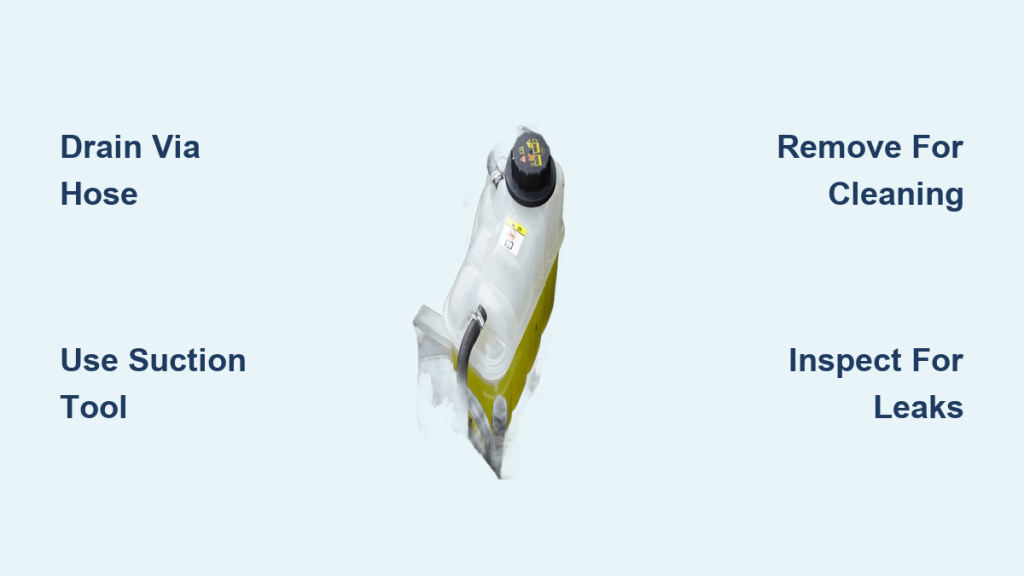
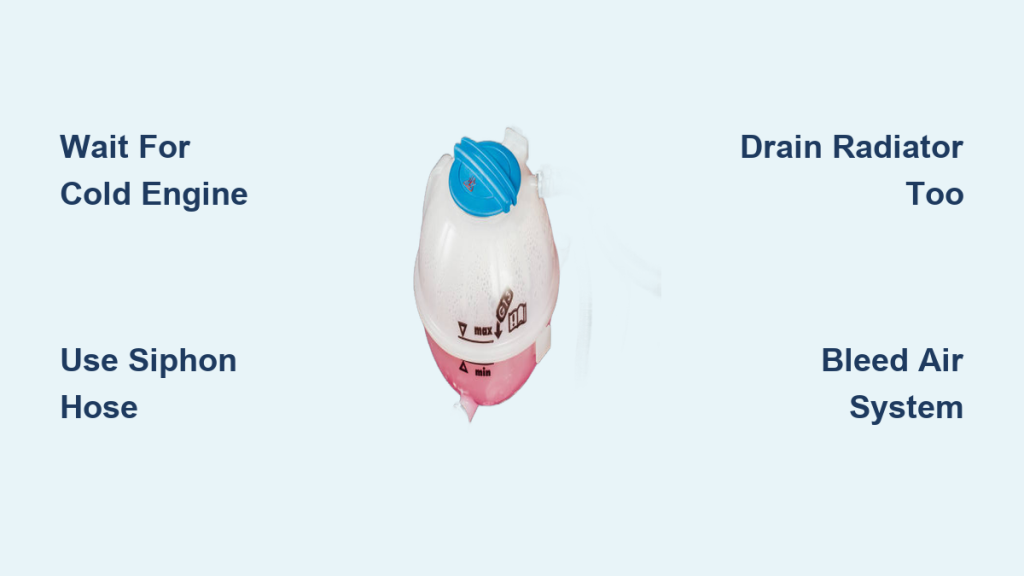
Locate Both Coolant Reservoirs on Your 6.7L
Ford 6.7L engines use a dual reservoir cooling system, and both must be inspected.
Driver’s Side Primary Tank
The larger tank sits near the brake fluid reservoir. It’s marked with MIN and MAX cold-fill lines. This tank is used to check overall coolant level when the engine is cold.
Passenger Side Secondary Tank
The smaller tank is often hidden under the air filter housing. You may need to remove the air box for access. Both tanks must be filled to the correct level to prevent air pockets and inaccurate readings.
Pro Tip: Always inspect both tanks. Missing the secondary can lead to poor circulation and false diagnostics.
Test Coolant Additive Condition With the Right Tools

Since there’s no sensor, manual testing is required. Two options exist: professional testing or DIY kits.
Recommended Test Kits for Accurate Results
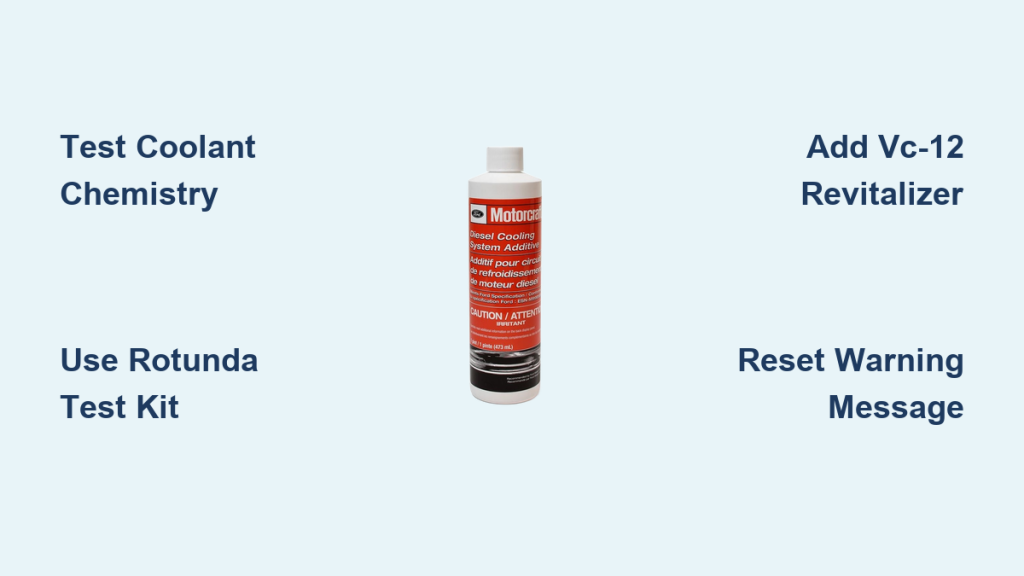
For reliable results, use Ford-recommended tools. The Rotunda 328-00008 tests reverse coolant alkalinity (RCA) and corrosion protection. The Rotunda 328-00001 checks nitrate/nitrite presence. The ACU-4048 series provides general-purpose test strips for glycol, pH, and inhibitors.
User Insight: “You need Rotunda test kit 328-00008. If it fails, add a bottle of revitalizer.”
Step-by-Step DIY Testing Procedure
First, ensure the engine is completely cool. Never open the system when hot, as this risks burns and pressure release. Next, access the coolant by removing the cap from the primary reservoir or radiator. Use long needle-nose pliers if space is tight. Dip the test strip into the coolant and hold it for 1 to 2 seconds. Wait approximately 1 minute for full color development. Finally, compare the results to the color chart on the packaging.
Key Parameters to Check
| Parameter | Acceptable Range | Action Required |
|---|---|---|
| Nitrites | 0 ppm (none) | Presence indicates contamination; full flush needed |
| Glycol Concentration | 40–60% | Outside range means poor freeze/boil protection |
| pH Level | 8.5–10.5 | Below 8.5 means acidic, additive depleted |
| RCA (Reverse Coolant Alkalinity) | Follow kit instructions | Low RCA means add VC-12 revitalizer |
Critical Warning: Nitrites in coolant mean incompatible fluid was added. Carboxylate-based Ford ELC does not mix with nitrite coolants.
Replenish Additives When Testing Shows Low Levels
If tests show low inhibitor levels but no contamination, a full flush isn’t necessary.
Add Ford VC-12 Coolant Revitalizer
The product is Motorcraft VC-12 (Part: VC12). Its purpose is to restore corrosion inhibitors and stabilize pH. One bottle treats the entire 13 to 15 gallon system.
Additive Procedure
Pour the entire bottle into the coolant reservoir. Run the engine until the thermostat opens, which takes approximately 10 to 15 minutes. Let the engine cool, then recheck the level. Top off with correct coolant if needed. Retest RCA or pH after circulation to confirm improvement.
Cost-Saving Tip: “Adding VC-12 is way cheaper than draining 13+ gallons!”
Use Only Compatible Coolant Fluids

Using the wrong coolant can ruin your engine’s protection.
Required Coolant Specification
Use Motorcraft Specialty Orange Coolant (WSS-M97B44-D). This is carboxylate-based, nitrite-free, and HOAT-compatible. It’s designed for extended life up to 120,000 miles with maintenance.
Coolants to Avoid
Traditional green IAT coolants contain silicates that can clog passages. Dex-Cool variants with nitrites react poorly with carboxylates. Universal “all-make” coolants often contain harmful additives. Standard Prestone may include nitrites and is not safe unless labeled Ford-spec.
Rule of Thumb: Only use coolant labeled WSS-M97B44-D or explicitly states Ford 6.7L compatibility.
Never Mix Coolant Types
Blending incompatible types causes additive dropout (sludge formation), corrosion acceleration, gasket and seal degradation, and reduced heat transfer efficiency.
Warning: Ford Orange ELC can soften seals in older engines not designed for it.
Reset the Warning Message Correctly
After testing and servicing, manually reset the message, otherwise it returns at every startup.
On-Board Reset Steps
Turn the ignition to ON (do not start the engine). Press the OK button on the steering wheel to enter the message center. Navigate to Settings, then Vehicle, then Maintenance, then Coolant. Press and hold OK until a chime sounds or confirmation appears. Turn the vehicle OFF, then restart.
Common Mistake: Simply dismissing the message without resetting does not clear the system.
User Confirmed: “Got it reset and now need to check for contamination as mentioned.”
Follow the Recommended Maintenance Schedule
Stick to intervals to avoid long-term damage.
Service Intervals for 6.7L Power Stroke
Check additive level every 10,000 to 13,000 miles or every 600 engine hours. Test the chemistry, don’t just look at the coolant. Replace coolant every 60,000 miles, extendable to 100k+ only if test results remain in spec. Perform a complete flush every 30,000 to 45,000 miles, even if coolant looks clean. Replenish additives as needed based on test results, not time.
Critical Note: A truck with 136,000 miles and no service history needs immediate inspection and likely a full flush.
Understand Diesel-Specific Cooling Risks
High-output diesels face unique threats due to EGR, turbocharging, and emissions systems.
Prevent Cylinder Liner Cavitation
Rapid pressure changes in cylinders cause micro-bubbles that implode, pitting metal surfaces. Coolant additives form a protective barrier. Depleted additives increase risk during towing or high-RPM operation.
No Separate Additive Reservoir
Unlike DEF, there is no dedicated tank for coolant additives. All additives are mixed directly into the cooling system via the reservoir. Add VC-12 to the coolant expansion tank, not a separate container.
Troubleshoot Persistent Warning Lights
If the message returns after reset, investigate further.
Possible Causes
Incorrect reset procedure, coolant level sensor fault, instrument cluster software glitch, or low coolant triggering related logic may be the culprit.
Is the P2073 Code Related?
The P2073 code (Intake Manifold Tuning Valve Stuck) is unrelated to coolant additives. However, multiple warnings may appear simultaneously due to ECU alerts. If the coolant system is confirmed good, perform a full diagnostic scan.
Expert Advice: Some users report faulty sensors mimicking maintenance alerts.
Where to Get Professional Service
For accuracy and peace of mind, consider certified Ford diesel technicians.
Benefits of Dealer Service
Dealers have access to Ford-specific diagnostic tools. They use genuine Motorcraft coolant and VC-12. They follow proper disposal and refill procedures. They guarantee correct reset protocol.
Independent diesel shops familiar with Power Stroke engines can also perform the service if they follow Ford specs.
Compare Costs: DIY vs Dealer
| Item | DIY Cost | Dealer/Shop Cost | Notes |
|---|---|---|---|
| VC-12 Additive (bottle) | $15–$25 | $30+ | One bottle treats full system |
| Test Kit (one-time) | $73–$75 | Free with service | Kits last the life of the truck |
| Coolant (per gallon) | ~$20 | $25–$30 | Requires 13–15 gallons for full fill |
| Professional Test | N/A | Often free | Especially during oil changes |
Owner View: “$75 for a kit that lasts the life of your truck vs. changing coolant every 16k miles? The kit wins.”
Frequently Asked Questions About Checking Coolant Additive
What does the “Check Coolant Additive” message mean on my Ford truck?
This message is a scheduled maintenance reminder, not an emergency warning. It indicates that protective additives in your coolant have likely degraded and need testing. Ford 6.7L Power Stroke engines require manual testing because no sensor measures additive levels.
How often should I check coolant additive in my 6.7L Power Stroke?
Check coolant additive every 10,000 to 13,000 miles or every 600 engine hours, whichever comes first. This interval applies regardless of whether the coolant appears clean, as additives degrade over time through normal thermal cycling.
Can I just add coolant instead of testing the additive?
No. Adding coolant without testing can dilute existing additives and reduce protection. The message specifically prompts you to test the chemistry, not simply top off fluid levels. If additives are depleted, you need VC-12 revitalizer, not more coolant.
What happens if I ignore the “Check Coolant Additive” warning?
Ignoring this warning risks serious engine damage. Depleted additives lead to corrosion in the EGR cooler, cylinder liners, and radiator. Cavitation damage can occur, and you may face costly repairs like head gasket failure or EGR cooler leaks.
Which coolant is safe for my Ford 6.7L diesel?
Only use Motorcraft Specialty Orange Coolant (WSS-M97B44-D). This is a carboxylate-based, nitrite-free formula specifically designed for the 6.7L Power Stroke. Avoid standard green coolants, Dex-Cool variants, and universal coolants, as they contain incompatible additives.
How do I reset the “Check Coolant Additive” message after service?
Turn the ignition to ON without starting the engine. Press OK on the steering wheel to access the message center. Navigate to Settings, Vehicle, Maintenance, then Coolant. Press and hold OK until you hear a chime or see confirmation. Turn the vehicle OFF, then restart.
Key Takeaways for Checking Coolant Additive
The cooling system on your 6.7L Power Stroke carries extreme thermal loads from the EGR system, turbocharger, and emissions equipment. Proper additive maintenance prevents EGR cooler failure, head gasket damage, and radiator clogs. Always test the coolant chemistry using Rotunda test kits rather than relying on appearance. Use only Motorcraft Specialty Orange Coolant (WSS-M97B44-D) and add VC-12 revitalizer when tests show depleted inhibitors. Reset the warning through the vehicle settings menu after servicing. Check additive levels every 10,000 to 13,000 miles and invest in a one-time test kit to save money on dealer visits. By staying ahead of the “Check Coolant Additive” message, you protect one of the most vital systems in your truck and avoid repairs that can cost thousands of dollars.