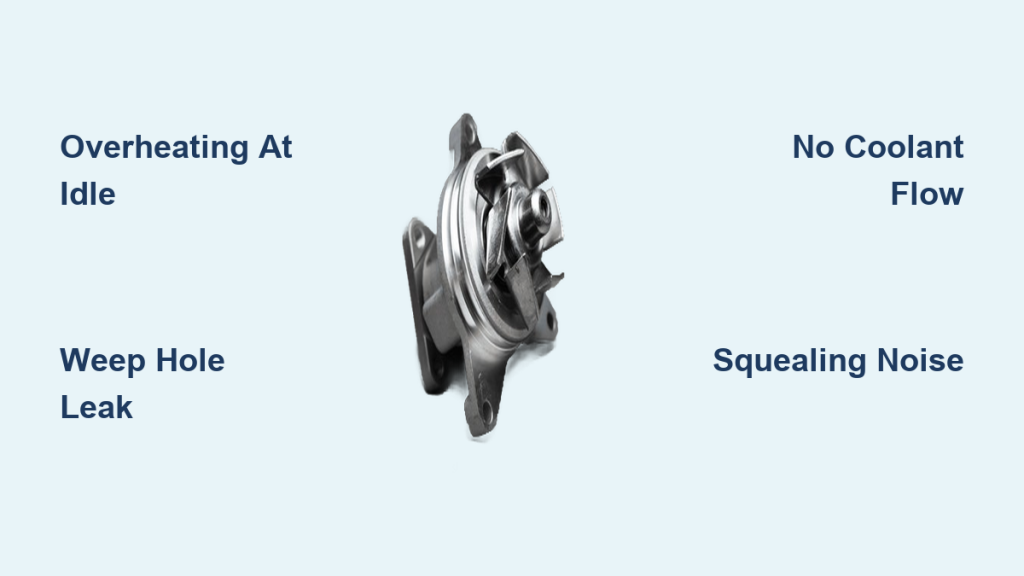
If your coolant pump isn’t working, your engine is at serious risk. The coolant pump, often called the water pump, is the heart of your vehicle’s cooling system, circulating coolant through the engine, radiator, and heater core to prevent overheating. When it fails, even briefly, temperatures can spike, leading to warped cylinder heads, blown gaskets, or total engine failure.
A non-working coolant pump may not always leak. Internal damage like a broken impeller or seized bearing can stop coolant flow while leaving no trace of fluid loss. That’s why recognizing early warning signs like overheating, strange noises, or weak heater output is critical. In this guide, you’ll learn how to diagnose a failing coolant pump using simple tools and proven methods.
Recognize Early Warning Signs
Coolant Leak at Front of Engine
A visible puddle under the front of your car, especially with a sweet syrupy smell, is a red flag. Brightly colored fluid like green, orange, pink, or blue points to a coolant leak, often from the primary water pump. Check the weep hole at the bottom of the pump housing. A steady drip or chalky residue here means internal seal failure.
Even without a puddle, white or rust-colored streaks on the pump or engine block suggest past or ongoing seepage. These form when coolant evaporates, leaving behind mineral deposits. Aftermarket pumps are more prone to weep hole leaks than OEM units. If you spot any of these signs, the pump is failing even if the engine hasn’t overheated yet.
Engine Overheating Without Warning Light
Overheating is the most dangerous symptom of a non-working coolant pump. The temperature gauge climbing into the red zone, even briefly, means trouble. Some vehicles never trigger the check engine light during mechanical pump failure, so do not rely solely on alerts.
Overheating that worsens at idle but improves while driving suggests poor coolant circulation, not radiator inefficiency. This happens because the pump is not moving enough fluid to dissipate heat when the engine is not under load. If overheating persists despite full coolant levels and working fans, suspect impeller damage or internal pump failure.
Squealing or Whining Noise from Engine
Unusual sounds from the front of the engine often signal bearing or pulley issues in the water pump. A high-pitched squeal that changes with engine speed usually means the belt is slipping due to increased resistance from a failing bearing.
A whining noise may point to a loose pulley or cracked housing. Use a long screwdriver as a stethoscope by pressing it against the pump body while the engine runs. If the noise intensifies, the pump’s internals are degrading. Ignoring these sounds can lead to complete seizure, stopping coolant flow dead.
Poor Heater Performance with Hot Hoses
If your cabin heater blows cold air but both heater hoses are hot, the issue is not temperature, it is flow. A damaged impeller or failed auxiliary pump can prevent coolant from circulating through the heater core even if the fluid is hot.
This is especially common in modern vehicles with electric secondary pumps. These run after shutdown to provide cabin heat and cool turbochargers or batteries. If the auxiliary pump fails, you will lose heat at idle and defrost capability. A buzzing sound under the dashboard confirms an electrical issue in the secondary circuit.
No Coolant Movement in Radiator
Remove the radiator cap when the engine is cold. Start the engine and let it warm up until the thermostat opens, usually at 195°F to 220°F. Look into the radiator neck. If the coolant is not flowing or bubbling, the pump is not working.
Stagnant fluid means the impeller is likely damaged or detached. Never open the radiator cap on a hot engine because pressurized coolant can cause severe burns. If you see movement, the pump is at least partially functional. No flow? Replace it immediately.
Diagnose the Failure Mode

Test for Weep Hole Leakage
The weep hole is a built-in early warning system. Located at the base of the water pump, it allows coolant to escape if internal seals fail before major damage occurs. Shine a flashlight at the bottom of the pump housing. Any wetness, drips, or dried residue means the shaft seal is compromised.
Even a minor seepage here is a death sentence for the pump. Unlike external gasket leaks, weep hole leaks cannot be fixed with sealants. Once this seal fails, replacement is the only solution. OEM pumps typically last longer without weep hole issues than lower-quality aftermarket units.
Inspect Pulley for Wobble or Play
Grab the water pump pulley and wiggle it side to side. Any movement indicates bearing wear. A wobbly pulley causes misalignment, belt slippage, and uneven impeller rotation. Even if the belt turns, the pump may not circulate coolant efficiently.
Also check for cracks between the bolt holes, especially on older or rust-prone models. A cracked pulley can break apart at high RPM. If the pulley is loose, corroded, or damaged, replace the entire pump. Do not risk a sudden failure.
Verify Heater Core Flow
Run the engine until it reaches normal operating temperature. Then feel both heater hoses where they pass through the firewall. Both should be hot to the touch. If one is hot and the other cold, there is no circulation, pointing to a blockage or failed pump.
If both hoses are hot but the vents blow cold, the issue is likely the HVAC blend door, not the pump. However, if the auxiliary electric pump is dead, it will not circulate coolant during idle or after shutdown, leading to weak heat. Listen for a buzzing noise, which often means the pump is stuck on or receiving a bad signal.
Use Infrared Thermometer for Flow Check
Point an infrared thermometer at the upper radiator hose, lower hose, and engine block. With a working pump, you will see a consistent temperature gradient, hot at the engine and cooler at the radiator outlet.
Cold spots indicate flow restrictions or air pockets. If the upper hose is hot but the lower hose stays cool, the thermostat may be stuck closed or the pump is not pushing coolant through. This test helps confirm whether the problem is flow or cooling capacity.
Perform Combustion Leak Test
Overheating without visible leaks could mean exhaust gases are entering the cooling system, usually from a blown head gasket or cracked block. Use a chemical combustion leak tester. Draw air from the radiator into blue liquid. If it turns yellow or green, exhaust is present.
This test rules out internal engine failure that mimics pump problems. If the test is positive, the coolant pump might be fine, but the engine has a far more serious issue. Always perform this check if overheating occurs with no external leaks or pump noise.
Identify Root Causes
Impeller Damage Without Leaks
Yes, a coolant pump can fail without leaking. Plastic or stamped steel impellers can crack, erode, or detach from the shaft, stopping flow while leaving no trace. This is common in modern pumps where lightweight materials reduce cost but sacrifice durability.
Even if the pulley spins freely, the impeller may not turn. Cavitation, air bubbles collapsing inside the pump, can eat away at impeller blades over time. The result is reduced flow, overheating, and poor heater performance, all without a single drop of coolant on the ground.
Bearing Seizure from Contaminated Coolant
Dirty or old coolant accelerates bearing wear. Sludge, rust particles, or incompatible antifreeze types create abrasion inside the pump. Over time, this degrades the seals and bearings, leading to seizure.
If the coolant looks brown, oily, or full of debris, flush the entire system. Never reuse old coolant. Always use a 50/50 mix of antifreeze and distilled water. Tap water introduces minerals that promote scaling and corrosion, killing pumps prematurely.
Airlocks from Improper Bleeding
After coolant service, trapped air can block flow, mimicking a failed pump. This is especially common in vehicles with complex cooling circuits or high-mounted thermostats. Symptoms include overheating, fluctuating temps, and coolant loss without leaks.
To burp the system, run the engine with the radiator cap off until the thermostat opens. Squeeze the upper hose to release bubbles. Keep topping off coolant until no more air escapes. Repeat the process with the heater on high to clear auxiliary circuits.
Failed Electric Auxiliary Pump
Secondary pumps are electric and operate independently of engine speed. They power heater circulation at idle, cool EV components, and support stop/start systems. When they fail, you lose post-shutdown heat and risk turbo or battery overheating.
Common failure signs include buzzing or humming under the dash, delayed cabin heat, no flow through heater core, and DTCs related to coolant temperature. Test the pump by listening for operation after engine off. If silent, check fuses, relays, and wiring. Use a multimeter to verify voltage at the connector. No power? Trace the circuit. Power but no spin? Replace the pump.
Drive Belt or Tensioner Issues
In belt-driven systems, the water pump relies on proper belt tension. A loose belt slips, reducing impeller speed. An over-tightened belt overloads the bearings, causing premature wear.
Inspect the serpentine or timing belt for cracks, glazing, or fraying. Check tensioner movement, most have a built-in indicator. Replace the tensioner and idler pulleys when doing pump or belt service. A failing tensioner can cause belt jump, leading to catastrophic timing issues on interference engines.
Confirm with Diagnostic Tools
Scan for P0217 and Other Codes
Pull trouble codes using an OBD2 scanner. While no code directly says water pump failed, P0217, Engine Overtemperature Condition, often points to cooling system failure.
Monitor live data for coolant temperature. Spikes or erratic readings suggest flow problems. A lack of codes does not rule out pump failure because many mechanical issues do not trigger the ECU. Always combine code reading with physical checks.
Pressure Test the Cooling System
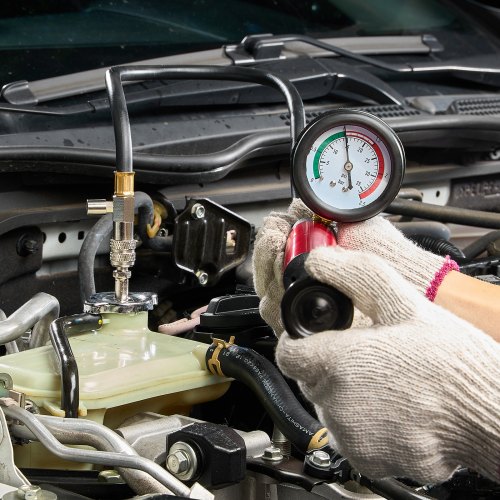
Use a hand-operated pressure tester to pressurize the cooling system, typically to 15 to 18 psi. Watch the gauge for drops. A steady decline means a leak, possibly internal.
This test confirms system integrity. If pressure holds but the engine overheats, the problem is flow, meaning the pump, thermostat, or blockage. If pressure drops fast, inspect hoses, radiator, head gasket, and pump seals.
Check Upper Hose Firmness
With the engine running and warm, carefully squeeze the upper radiator hose. It should feel firm, pressurized by the pump and closed thermostat. A soft or collapsed hose suggests air in the system or a blockage.
When the thermostat opens, you should feel a surge of hot coolant entering the radiator. No surge? The pump may not be generating pressure. Combine this with visual flow inspection for confirmation.
Monitor Temperature Rise After Shutdown
After turning off the engine, watch the temperature gauge. A slight rise of 10 to 15°F is normal due to heat soak. But if the needle climbs into the red, it suggests poor circulation during operation.
Persistent high temps after shutdown may indicate an airlock, failing thermostat, or weak pump. If the engine cools down quickly on restart, the issue is likely thermal management, not immediate mechanical failure.
Prevent Further Damage
Stop Driving Immediately
If you suspect a non-working coolant pump, do not keep driving. Overheating for even a few minutes can warp the cylinder head or blow the head gasket. Tow the vehicle if necessary.
Continuing to drive risks irreversible engine damage. The cost of a tow is minor compared to a $3,000 engine rebuild. If steam is coming from under the hood, pull over, turn off the engine, and wait for it to cool before inspecting.
Flush and Refill with Correct Coolant
When replacing the pump, always flush the system. Old or mixed coolant types can corrode new components. Use the OEM-specified type and a 50/50 mix with distilled water.
Never use tap water because it contains minerals that cause scaling. Never mix coolant colors unless they are chemically compatible. Flushing removes sludge, rust, and contaminants that could clog the new pump.
Replace Thermostat and Radiator Cap
Change the thermostat at the same time as the pump. It often fails around the same mileage and shares the same labor. A stuck-closed thermostat mimics pump failure by blocking flow.
Replace the radiator cap too. A weak cap cannot maintain system pressure, lowering the boiling point and increasing the risk of vapor lock. Use an OEM-spec cap rated for your system’s pressure, usually 15 to 18 psi.
Upgrade to OEM or High-Quality Pump
Avoid cheap aftermarket pumps. Many fail within 20,000 miles due to poor seals or impellers. Opt for OEM or trusted brands like Gates, Aisin, GMB, or CSF.
OEM pumps are less prone to weep hole leaks and last longer. If your vehicle has a timing-belt-driven pump, replace both together. Labor is the same, so why risk another teardown in 30,000 miles?
Final Checklist: Is the Pump Working?
| Symptom | Action |
|---|---|
| Coolant leak at weep hole | Replace pump immediately |
| Overheating at idle | Check pump, thermostat, airlock |
| Wobbly pulley or noise | Inspect and replace pump |
| No heat with hot hoses | Test auxiliary pump or flow |
| Stagnant coolant in radiator | Confirm impeller function |
| P0217 code | Diagnose overheating cause |
| Soft upper radiator hose | Check for air or blockage |
| Buzzing under dash | Inspect secondary pump circuit |
Frequently Asked Questions About Coolant Pump Not Working
How do I know if my coolant pump is not working?
The most obvious signs include engine overheating, especially at idle, coolant leaks at the front of the engine or from the weep hole, strange squealing or whining noises from the front of the engine, and poor cabin heater performance. You can also check by removing the radiator cap when cold, starting the engine, and watching for coolant flow when the thermostat opens.
Can a coolant pump fail without leaking?
Yes, a coolant pump can fail without any visible external leak. Internal failures like a cracked or detached impeller, bearing seizure, or cavitation damage can stop coolant circulation while leaving no trace of fluid loss. In these cases, symptoms like overheating or poor heater performance appear before any leak is detected.
What happens if I drive with a non-working coolant pump?
Driving with a failed coolant pump risks severe engine damage within minutes. Overheating can warp cylinder heads, blow head gaskets, crack engine blocks, or cause complete engine seizure. The cost of towing and minor repairs far exceeds the cost of addressing pump failure promptly.
How much does it cost to replace a coolant pump?
Water pump parts typically cost $100 to $300, with OEM or high-quality pumps ranging from $150 to $250. Professional labor adds $500 to $1,200 if timing belt service is involved. Electric auxiliary pumps cost $400 to $900 for parts. DIY costs vary but require tools and proper bleeding procedures.
Should I replace other parts when replacing the coolant pump?
Yes, it is smart to replace the thermostat, radiator cap, drive belt, tensioner, and idler pulleys at the same time. These components often fail around the same mileage and share labor. Flushing and refilling with fresh coolant is also recommended to prevent contaminants from damaging the new pump.
Key Takeaways for Fixing a Non-Working Coolant Pump
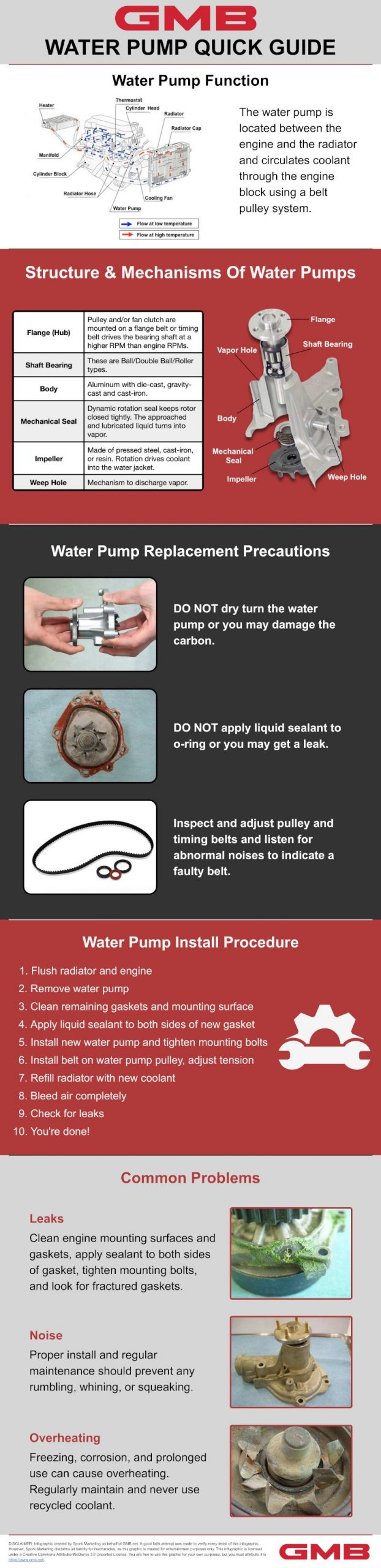
A non-working coolant pump is a ticking time bomb for your engine. Early diagnosis using visual checks, flow tests, and temperature monitoring can save you thousands in repairs. Watch for warning signs like overheating at idle, strange noises, coolant leaks at the weep hole, and poor heater performance. Always stop driving immediately if you suspect pump failure to prevent catastrophic engine damage.
When replacing the pump, invest in OEM or quality aftermarket parts, flush the system, and replace the thermostat and radiator cap at the same time. Use a 50/50 mix of the correct coolant type and distilled water. If your vehicle has an auxiliary electric pump, check fuses, wiring, and listen for buzzing sounds that indicate electrical issues.
Preventive action today prevents catastrophic failure tomorrow. Do not wait for steam to appear from under the hood. Act before the temperature gauge hits red.