
A coolant leak in your BMW isn’t just an inconvenience. It’s a ticking time bomb for your engine. Left unchecked, even a small drip can lead to overheating, warped cylinder heads, or complete engine failure. The good news? Most BMW coolant leaks are preventable, diagnosable, and repairable, often for far less than dealerships claim. This guide cuts through the noise, giving you precise steps to identify, fix, and prevent leaks while avoiding overpriced repairs.
The most common BMW coolant leak occurs at the front hose near the oil filter housing, often misdiagnosed as a radiator issue. With the right tools and knowledge, many of these repairs take under an hour and cost less than $250. Whether you’re facing a puddle under your car or a sudden overheating alert, this guide walks you through every critical step, from DIY fixes to knowing when to call a pro.
Identify the Leak Fast
Spotting a coolant leak early saves thousands in engine damage. Do not wait for overheating. Act at the first sign.
Check for These Warning Signs
Watch for these indicators that your BMW cooling system has a leak. The low coolant warning light on your dash is often the first alert. A sweet, syrup-like smell from the engine bay signals coolant is escaping. Green, pink, or blue puddles under your car after parking are clear evidence. Steam rising from under the hood during driving means pressure is escaping. Frequent top-ups despite no visible leaks suggest an internal issue. Milky residue on the oil dipstick indicates coolant is mixing with oil, a serious problem.
If you see white exhaust smoke that does not clear after warm-up, or bubbles in the coolant reservoir while the engine runs, suspect head gasket failure. Stop driving immediately in these cases.
Pinpoint the Leak Location

Not all leaks are equal. Knowing where to look saves time and money on your BMW coolant leak repair.
Inspect the Front Hose First
The number one failure point on E90, F30, 335i, and B48 models is the coolant hose near the oil filter housing. Factory-installed plastic clips and brittle nipples crack from heat and vibration. Look for coolant spray pattern on the fan shroud. Check for wetness around the lower engine cover. Inspect for residue on the timing cover or oil filter area.
This simple fix is often misdiagnosed as a radiator leak. Do not fall for it.
Test the Coolant Reservoir
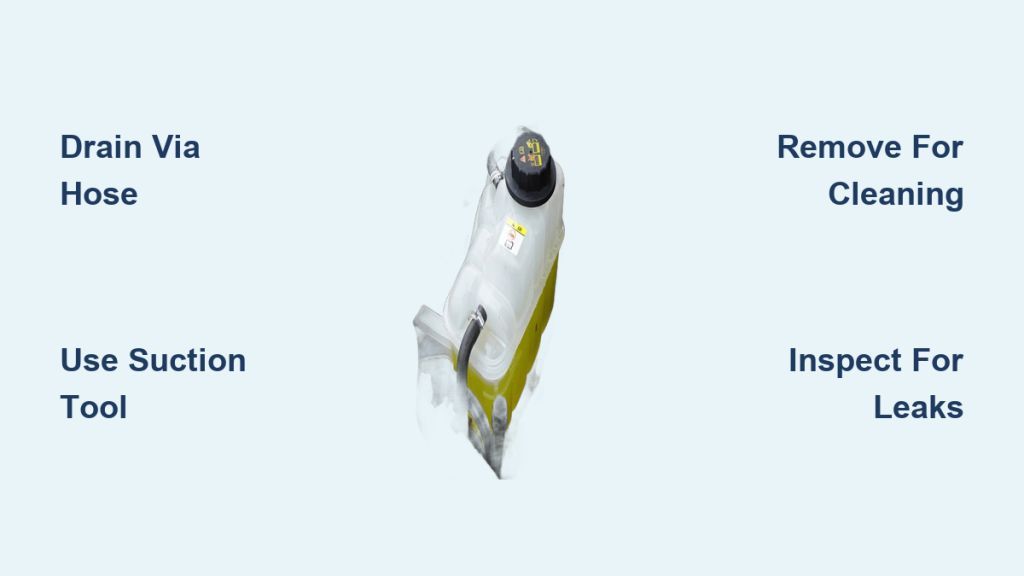
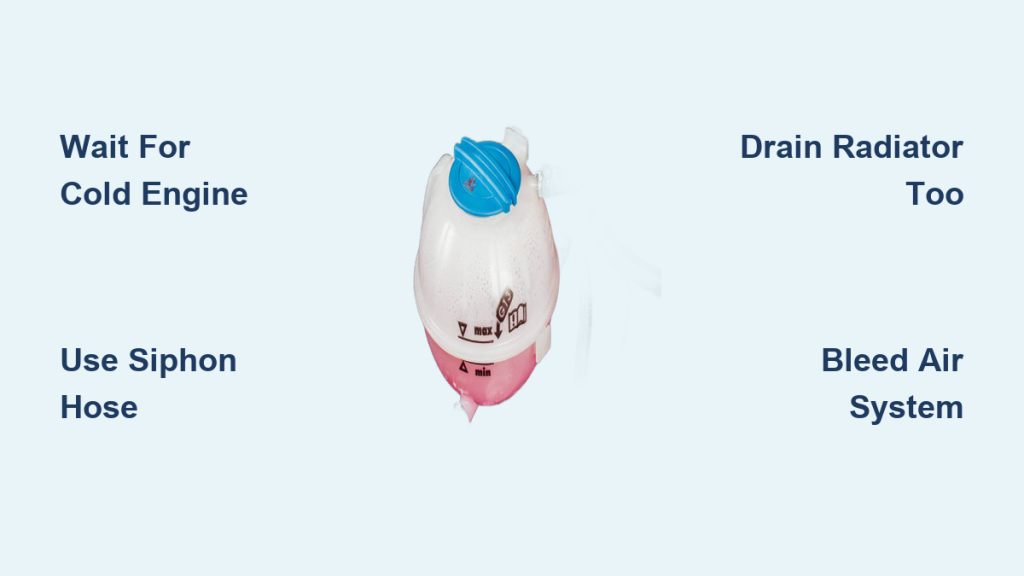
The expansion tank, located on the driver’s side, cracks over time. Look for cracks at the base or seams. Check for drips inside the engine bay. Watch for discoloration or cloudiness in the plastic.
On B48 engines in F30, F32, and G20 models, the plastic pipe from the tank to the cylinder head, especially behind the alternator, is prone to cracking. Replacement costs vary wildly. Dealers charge up to $1,900, while independents fix it for $230 in under 2 hours.
Scan for Hidden Leaks
Some leaks only appear under pressure or heat. Use a pressure tester for accurate diagnosis.
Use a Pressure Tester
Attach the tester to the reservoir filler neck. Pressurize to 1.4 to 1.8 bar, which is 20 to 26 psi. Watch for pressure drop over 15 to 30 minutes. Listen for hissing, as some leaks are audible under the intake boot.
This test confirms active leaks even when the engine is cold.
Try a UV Dye Test
Add fluorescent dye to the coolant. Run the engine until hot. Shine a UV black light under the hood. Glow spots reveal exact leak points. This method is ideal for intermittent or deep-engine leaks.
Fix the Most Common Leak: Front Hose
This repair takes under an hour and costs less than $100 in parts. Yet dealers often quote $600 or more for the same BMW coolant leak repair.
Tools You Will Need
Gather these tools before starting. You will need a Dremel with a circular saw bit. A half-inch hose clamp is required. Have a socket set ready. A turkey baster helps with bleeding. Wear safety gloves and goggles.
Step-by-Step Repair
Follow these steps carefully for a successful repair.
-
Cool the engine completely. Never open the system when it is hot. Pressure can cause scalding.
-
Cut the factory clamp. The OEM clamp is permanent. Use a Dremel to cut it cleanly without damaging the plastic nipple.
-
Remove the old hose. Disconnect retaining clips at both ends. Pull the hose off the reservoir and the nipple under the fan shroud.
-
Inspect the nipple. If cracked, replace it with an OEM part. Never reuse a damaged nipple.
-
Install the new hose. Slide on a standard half-inch hose clamp. Push the hose firmly onto both ends. Secure with original clips. Tighten the clamp, but do not overtighten.
Use a flexible silicone hose for longer life.
Replace the Coolant Reservoir (B48 Engine)

Frequent on 2016 and newer BMWs with the B48 engine, this repair is fast but requires precision.
What to Watch For
The part number 17128677244 is the expansion tank-to-head coolant pipe. Failure occurs due to heat cycling and vibration behind the alternator.
DIY or Pro
DIY difficulty is moderate. Access is tight, and the alternator may need repositioning. The repair takes 25 to 120 minutes. Parts cost around $50, and fully installed cost is $230 at an independent shop. Dealerships often quote 6 or more hours of labor. Question this. Many shops complete it in under 2 hours.
Repair the Water Pump
A failing water pump can dump coolant fast and ruin your BMW coolant leak repair timeline.
Signs of Failure
Watch for drips from the weep hole, which is the small hole at the base. Check for coolant on the timing cover. Listen for a whining noise from the front of the engine.
Replacement Tips
Replace proactively at 80,000 to 100,000 miles, during belt service. Use OEM or high-quality aftermarket parts. Bleed the system afterward, as airlocks cause false overheating. Labor time is 3 to 5 hours depending on model.
When the Radiator Leaks
Radiators fail at the plastic end tanks or the core.
Repair vs Replace
Minor leaks respond to temporary sealants for short-term fixes. For the best long-term fix, replace the unit. On F30 and G20 models, radiator replacement may require subframe removal, adding 2 to 4 hours of labor. Part costs $200 to $500. Labor runs $400 to $800. Total is $600 to $1,200. Get a second opinion, as some shops avoid subframe removal with smarter access techniques.
Diagnose Internal Leaks
Internal leaks mean coolant is getting where it should not be. These are serious.
Is It a Blown Head Gasket
This is common in N63, N54, and B58 turbo engines under stress.
Check for These Signs
White exhaust smoke that does not clear after warm-up is a warning. Bubbles in the coolant reservoir while running indicate a problem. Milky oil on the dipstick or filler cap is definitive evidence. Misfires or rough idle also signal trouble.
Confirm with a Block Test
Use a combustion leak tester, available at auto parts stores. It detects hydrocarbons in the coolant, providing definitive proof of head gasket or crack. Do not assume it is the head gasket. Some dealers overdiagnose. A $245 sensor fix has solved major leaks on N63 engines.
Bleed the Cooling System Properly
Skip this step, and you will get airlocks, overheating, and water pump damage.
BMW Official Bleeding Method
Follow this procedure exactly for best results.
-
Keep the engine cold, with the reservoir cap off.
-
Connect a battery charger to prevent ECU errors.
-
Inside the car, press start once without pressing the brake. Set climate to 84 degrees Fahrenheit. Set the fan to the lowest speed.
-
Press the accelerator pedal fully for 10 seconds.
-
Keep the ignition on for 10 to 12 minutes. Coolant circulates and air escapes.
-
Top off as needed. The level stabilizes when full.
Alternative: Bleeder Screw Method
Remove the screw on top of the expansion tank. Fill until coolant flows steadily from the hole. Reinstall the screw with light torque only. Recheck the level after cooldown.
Refill with the Right Coolant
Using the wrong fluid kills cooling system components.
Use BMW-Approved Coolant Only
Penta Frost NF is the preferred choice. G48, G12++, and HT-12 are model-specific alternatives. The color should be blue, pink, or violet. Never use green coolant.
Mix It Right
Use 50% coolant concentrate and 50% distilled water. Never use tap water, as minerals cause scaling and corrosion. Pre-mix in a clean jug before adding. One 1.5-liter bottle makes 3 gallons of usable fluid.
Know the Real Repair Costs
Dealerships overcharge. Know what is fair.
Average Repair Costs
Front hose replacement costs $150 to $250 at independents versus $400 to $600 at dealerships. Coolant reservoir on B48 engines runs $200 to $230 independently versus $1,500 to $1,900 at dealers. Water pump replacement is $400 to $800 versus $900 to $1,200. Radiator replacement ranges from $600 to $1,200 versus $1,200 to $1,800. Head gasket repairs run $2,000 to $4,000 versus $3,500 to $5,000.
Labor Rate Comparison
Dealerships charge $180 to $250 per hour. Independent BMW specialists charge $75 to $120 per hour. Some six-hour jobs take independents under 2 hours. Get itemized quotes.
Prevent Leaks Before They Start
A few habits extend cooling system life by years.
Monthly Checks
Inspect coolant level and top off with a 50/50 BMW mix. Look for residue on hoses and connections. Smell for sweetness under the hood.
Every 30,000 Miles
Flush the coolant. Do not wait for 60,000 miles. Replace hoses and clamps if they are brittle. Inspect the water pump and thermostat.
Use OEM Parts
Aftermarket plastic clips and hoses fail faster. Invest in durability.
Should You Drive with a Coolant Leak
No. Even a small leak risks overheating in traffic, warped cylinder heads, and catastrophic engine failure. If the coolant is low or the temp gauge spikes, tow the vehicle to a shop.
DIY vs Professional Repair
Choose your path based on skill level and situation.
DIY If the leak is external and accessible, like the front hose or reservoir. You need basic tools and experience. The repair must be well-documented, like the B48 pipe fix.
Call a Pro If the leak is internal, such as head gasket or block crack. It requires dash or subframe removal, like heater core repairs. You lack a pressure tester or UV light. The bleeding procedure fails or overheating continues.
Frequently Asked Questions About BMW Coolant Leak Repair
How Do I Know If My BMW Has a Coolant Leak?
Look for low coolant warning lights, sweet smells, colored puddles under the car, steam from the hood, or frequent top-ups without visible leaks. White exhaust smoke or milky oil indicates internal leaks that need immediate attention.
Can I Drive My BMW with a Small Coolant Leak?
No. Driving with any coolant leak risks overheating and engine damage. Even small leaks can become major problems quickly. If you must drive, keep coolant with you and monitor the temperature gauge constantly.
Why Do BMWs Have So Many Coolant Leaks?
BMW engines experience high thermal stress. Plastic components like hoses, clips, and the expansion tank degrade from heat cycling and vibration. The B48 and N63 engines are particularly prone to specific failure points that are common knowledge in the BMW community.
How Much Does BMW Coolant Leak Repair Cost at a Dealership?
Dealerships charge $400 to $600 for hose replacement, $1,500 to $1,900 for reservoir repairs on B48 engines, and $900 to $1,200 for water pump replacement. Labor rates run $180 to $250 per hour, compared to $75 to $120 at independent shops.
What Is the Most Common BMW Coolant Leak?
The front coolant hose near the oil filter housing is the single most common leak. The plastic clips crack from heat and vibration, causing the hose to leak onto the fan shroud. This is often misdiagnosed as a radiator problem.
Can I Use Generic Coolant in My BMW?
No. BMW requires specific coolant meeting OEM specifications like Penta Frost NF, G48, or G12++. Using green or generic coolants causes corrosion, damages seals, and voids warranties. Always use BMW-approved coolant mixed 50/50 with distilled water.
Key Takeaways for BMW Coolant Leak Repair
BMW coolant leaks are common but manageable with the right knowledge. The front hose near the oil filter housing is the number one failure point across most models, and it is a simple DIY fix that costs under $100. Dealerships routinely overdiagnose and overprice these repairs, with some quoted jobs taking independents under 2 hours at a fraction of the cost. Always use BMW-approved coolant, bleed the system properly after any repair, and address leaks immediately to prevent catastrophic engine damage. Monitor your cooling system monthly, flush coolant every 30,000 miles, and choose independent BMW specialists for out-of-warranty work to save hundreds or thousands of dollars.