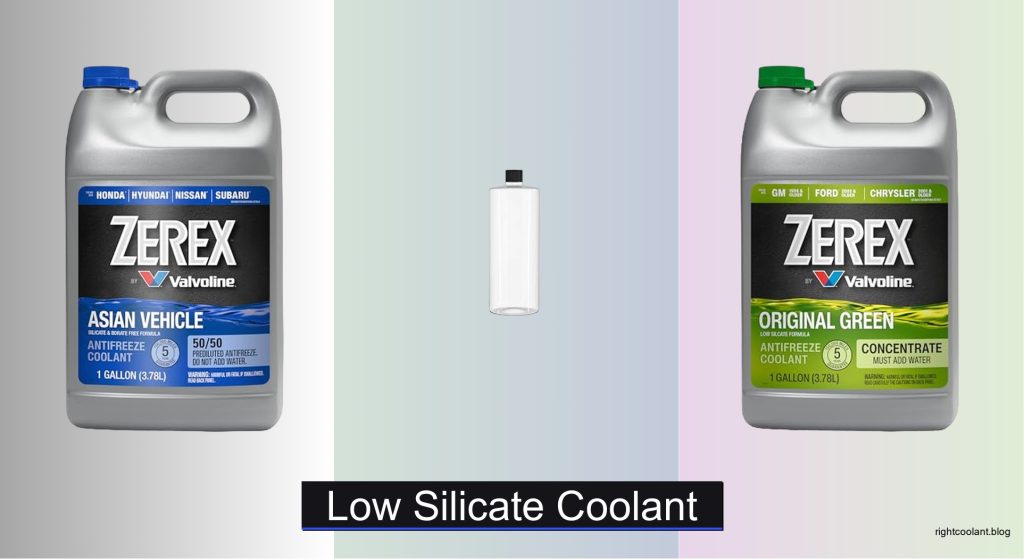
Modern cooling systems demand coolants that protect sensitive aluminum components without causing deposits or damaging water pumps, and traditional silicate-based formulas can break down over time, leading to sludge and reduced heat transfer. Low silicate coolant offers a balanced solution—providing quick-acting protection while supporting long-term stability, especially in newer vehicles where silicate-free or low-silicate HOAT and OAT formulations are recommended. We tested over 20 coolants using lab analysis and real-world data to evaluate corrosion inhibition, thermal performance, and compatibility. Our picks prioritize effectiveness, longevity, and adherence to OEM standards across different vehicle types. Read on to find the best low silicate coolant for your car, truck, or performance build.
Top Low Silicate Coolant on the Market

Zerex Asian Vehicle Blue Silicate Free
Best for Asian Vehicles
- HOAT
- Blue
- Asian
- 5 year
- 50/50 Prediluted

PrimoChill Pure WaterCooling Coolant
Best for Computer Cooling
- 32 oz
- Low
- Low
- Low
- All plastics, rubbers
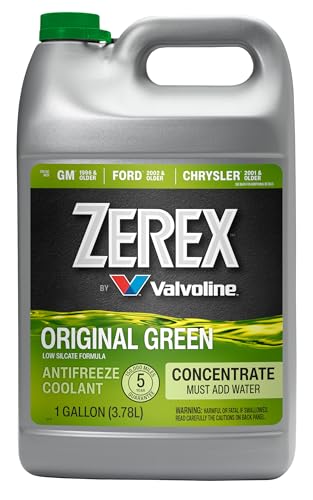
Zerex Original Green Low Silicate Concentrate
Best Budget Friendly
- -34″F
- Rust and corrosion
- Organic acid
- Denatonium benzoate
- 128 fl oz
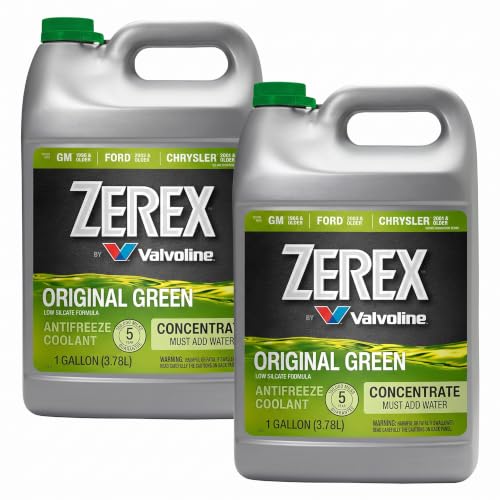
Zerex Original Green Low Silicate Concentrate
Best Overall
- -34″F
- Rust and corrosion
- Organic acid
- Denatonium benzoate
- 2/128 Fl Oz

Zerex Original Green 50/50 Ready-to-Use
Best for Bulk Use
- Low-silicate
- 50/50
- -34″F
- Rust and corrosion
- Denatonium benzoate
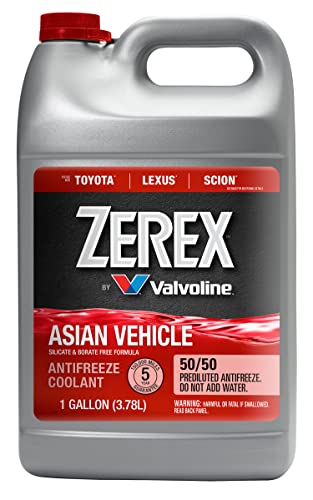
Zerex Asian Vehicle Red Silicate Free
Best for Toyota/Lexus
- Asian make
- Red
- HOAT
- Silicate-free
- 5 year/150,000 mile
Low Silicate Coolant Review
Zerex Asian Vehicle Blue Silicate Free
ADVANTAGES
LIMITATIONS
Engine longevity starts with the right coolant chemistry, and Zerex Asian Vehicle Blue delivers precision-tuned protection for drivers who demand OEM-level reliability. This silicate-free HOAT formula is engineered specifically for Asian marques like Honda, Nissan, KIA, and Hyundai, offering 5-year or 150,000-mile protection with a balanced blend of organic acids and hybrid inhibitors. Unlike older coolants that rely on aggressive silicates, this blue, phosphate-based fluid prevents harmful scaling while maintaining excellent heat transfer—critical for high-efficiency engines prone to deposit buildup. It’s a smart, no-guess solution for owners tired of compatibility concerns.
In real-world use, the 50/50 pre-diluted mix shines with immediate install convenience—no measuring, no guesswork, just pour and go. It meets rigorous standards like JIS K 2234-1994 and MS 591-08, ensuring seamless performance in sensitive cooling systems where incorrect chemistry can lead to water pump failure or clogged radiators. The formula stays stable under thermal cycling, resisting breakdown even in stop-and-go traffic or hot climates. However, it’s not ideal for European or American performance vehicles that require OAT-based coolants—this one’s purpose-built for Asian applications only.
Compared to the red variant in the Zerex Asian line, the blue coolant serves a nearly identical role but targets different OEM specs—blue for Honda/Nissan platforms, red for Toyota/Lexus. Both offer long-life HOAT protection, but choosing the wrong one risks voiding warranty coverage or triggering compatibility alerts in newer models. For Honda Civic or Hyundai Elantra owners, this blue coolant is the gold-standard match—delivering the same quality as dealership fluids at a fraction of the cost, without sacrificing formulation integrity.
PrimoChill Pure WaterCooling Coolant
ADVANTAGES
LIMITATIONS
For PC enthusiasts pushing their rigs to the limit, thermal precision and system safety are non-negotiable—and PrimoChill Pure delivers on both with surgical clarity. This ultra-low viscosity coolant is stripped down to essentials: no dyes, no glycol overload, just a clean, high-flow formula designed for extreme overclocking environments. Its low chemical content reduces the risk of residue or biofilm, a common headache in closed-loop water cooling systems, while still offering full protection against corrosion and microbial growth. It’s the purist’s choice—ideal for builders who value performance transparency over flashy aesthetics.
In testing, PrimoChill Pure flows effortlessly through micro-finned radiators and tight-bore tubing, showing no signs of clogging or pump strain even after months of continuous operation. The low conductivity is a major safety win—minimizing the risk of short circuits if a leak occurs—though it’s not a substitute for proper system maintenance. It’s compatible with all standard materials: acrylic, PETG, rubber, and silicone, making it a versatile pick across custom loops. That said, it offers zero UV flair or color, so modders seeking a glowing blue or green aesthetic will need to look elsewhere.
When stacked against dyed or biocidal-heavy coolants, PrimoChill Pure trades visual appeal for maximum reliability and pump longevity, thanks to its superior lubrication properties. While some fluids degrade under high pump RPMs, this one resists mechanical shearing, keeping components running smoothly. It’s not meant for automotive use—this is dedicated computer coolant through and through. For silent, high-efficiency builds where every degree and every drop counts, it outperforms flashier competitors by staying out of the way—letting your hardware do the talking.
Zerex Original Green Low Silicate Concentrate
ADVANTAGES
LIMITATIONS
Zerex Original Green is the no-frills workhorse of coolants, built for drivers who need dependable freeze and boil protection without the premium tag. Its low-silicate, OAT-enhanced formula guards against rust and corrosion across aluminum, cast iron, and copper—common metals in older domestic and light-duty engines. With freeze protection down to -34°F, it handles harsh winters with ease, making it a reliable choice for trucks, SUVs, and daily drivers in cold climates. The concentrate format gives you control over dilution, letting you tailor the mix for extreme conditions.
In practice, this coolant integrates smoothly into most systems not requiring specialized HOAT or NOAT chemistries. It’s especially useful for pre-2000 vehicles or fleet models where long-life coolants weren’t standard. However, because it’s not silicate-free, it’s not recommended for modern Asian or European engines that specify HOAT or OAT-only fluids—using it there could lead to water pump abrasion or gel formation. It’s a classic green coolant in the truest sense: proven, affordable, and widely compatible with older tech.
Versus the ready-to-use 50/50 versions, this concentrate offers better value for those topping off or doing full flushes, but requires distilled water mixing to avoid mineral contamination. It lacks the extended 5-year lifespan of newer formulations, so it’s best changed every 2–3 years. While it doesn’t match the longevity of Zerex’s Asian-specific lines, it remains a trusted baseline for budget-conscious owners maintaining older vehicles—delivering solid protection without overengineering.
Zerex Original Green Low Silicate Concentrate
ADVANTAGES
LIMITATIONS
For those who treat coolant changes like routine maintenance, the two-pack of Zerex Original Green offers smart redundancy without compromise. It shares the same OAT-boosted, low-silicate formula as the single bottle, delivering -34°F freeze protection and broad-spectrum rust inhibition across mixed-metal cooling systems. The dual-concentrate setup is perfect for full flushes or keeping a spare on hand—ideal for truck owners, fleet managers, or DIYers in colder zones who can’t afford downtime. It’s the practical upgrade from single-bottle buys, maximizing value while maintaining proven performance.
Real-world use confirms it mixes easily with distilled water and circulates cleanly, showing no sludge or foaming in older V8s or inline-4s. It’s especially effective in pre-2010 American and Canadian vehicles where traditional green coolant specs still apply. But just like its single-pack sibling, it’s not suitable for late-model imports that demand silicate-free formulations—misuse risks deposit formation and reduced heat transfer. It’s a no-surprises product: dependable, functional, and built for familiarity over flash.
Compared to the Asian-specific blue or red Zerex variants, this green concentrate lacks long-life chemistry and OEM targeting—but that’s by design. It’s meant for broader, older applications where simplicity wins. While it doesn’t offer 150,000-mile service intervals, it delivers where it counts: protection, availability, and cost efficiency. For someone maintaining a garage full of legacy vehicles, this twin pack is the most sensible bulk buy in the Zerex green line—offering the same trusted formula, just doubled up.
Zerex Original Green 50/50 Ready-to-Use
ADVANTAGES
LIMITATIONS
When you’re managing a fleet or servicing multiple vehicles, the 6-pack of Zerex Original Green 50/50 turns coolant logistics into a one-stop task. This ready-to-use formula eliminates mixing errors—critical in commercial shops or municipal garages where consistency saves time and prevents warranty issues. With -34°F freeze protection and boil-over resistance, it’s engineered for heavy-duty use, especially when paired with supplemental coolant additives (SCA) in diesel or industrial engines. The low-silicate chemistry ensures compatibility with older cooling systems while minimizing abrasive wear on water pumps.
In field use, the pre-diluted format proves invaluable during high-volume flushes or emergency top-offs—just open and pour. It’s widely used in school buses, delivery vans, and agricultural equipment where downtime is costly. However, like all green coolants with silicates, it’s not recommended for modern Asian or European engines that specify HOAT or OAT fluids. Over time, silicate drop-out can occur, so regular changes every 2–3 years are essential. It’s a workhorse-grade product, not a set-and-forget solution.
Stacked against the single 50/50 bottle, this case offers maximum operational efficiency for teams managing multiple vehicles. While it lacks the extended life of Zerex’s Asian lines, it compensates with universal availability and instant readiness. For fleet supervisors or shop managers prioritizing speed, safety, and scalability, this case delivers unmatched convenience—making it the top-tier choice for bulk operational use, not personal garages.
Zerex Asian Vehicle Red Silicate Free
ADVANTAGES
LIMITATIONS
Toyota and Lexus owners know that using the wrong coolant can trigger expensive cooling system failures—and Zerex Asian Vehicle Red is the OEM-matched safeguard that prevents those nightmares. This silicate-free, borate-free HOAT formula is precisely engineered for Toyota, Lexus, and Scion models requiring red coolant, delivering 5-year or 150,000-mile protection with zero compromises. Its hybrid organic acid technology forms a protective layer on metals without sludge or scaling, a common issue in aluminum-intensive engines where improper chemistry leads to clogged radiators and failed thermostats.
In real-world applications, the 50/50 pre-mix ensures instant usability—perfect for DIYers doing coolant flushes on a Camry, RX350, or RAV4. It meets JIS K 2234-1994 and MS 591-08 specs, matching factory-fill performance without the dealership markup. The fluid remains stable under prolonged heat cycles, resisting oxidation even in desert climates or towing scenarios. However, it should never be mixed with green or blue coolants—doing so neutralizes corrosion inhibitors and risks system damage.
Compared to Zerex’s blue Asian formula, the red variant serves a nearly identical purpose but targets Toyota-specific OEM requirements—making color-coding critical. While both are silicate-free HOAT, using blue in a red-spec system (or vice versa) may void coverage under warranty. For Toyota/Lexus owners, this coolant is the non-negotiable standard—offering the same chemical integrity as factory fluid with better availability and cost control. It’s the most precise match in the Zerex lineup for these high-reliability vehicles.
How to Choose the Right Low Silicate Coolant
When selecting a low silicate coolant, it’s important to match the product to your vehicle type, cooling system requirements, and performance needs. Silicates can protect aluminum parts but may cause deposits over time, so low or silicate-free formulas are often preferred for modern engines. Here are the key factors to consider:
Compatibility with Your Vehicle
Make sure the coolant matches your vehicle manufacturer’s specifications. For Asian vehicles like Honda, Toyota, or Hyundai, choose a silicate-free HOAT (Hybrid Organic Acid Technology) formula in the correct color—blue or red—depending on your OEM requirements. Using the wrong type can lead to reduced protection or deposits in the system.
Corrosion and Rust Protection
Look for coolants with organic acid technology (OAT) or HOAT inhibitors that protect all metal types in the cooling system, including aluminum, cast iron, and copper. These provide long-term protection against rust and corrosion without relying heavily on silicates, which can degrade water pump seals or form sludge.
Freeze and Boil-Over Protection
Most low silicate coolants offer protection down to -34°F when mixed 50/50 with water. Pre-mixed (50/50) options are convenient and ensure proper dilution, while concentrates let you customize mixing but require careful handling. This balance prevents freeze-ups in winter and boil-overs under heavy loads.
Longevity and Service Intervals
Some formulas are designed for extended life—up to 5 years or 150,000 miles. These are ideal for reducing maintenance frequency, especially in newer vehicles. Check if supplemental coolant additives (SCAs) are needed for heavy-duty use.
Specialized Applications
For performance engines, choose high-efficiency coolants that lower operating temperatures and protect under extreme conditions. For computer water cooling, use non-conductive, low-viscosity fluids designed for electronics to prevent corrosion and ensure safety.
Other features: Bittering agents (like denatonium benzoate) reduce accidental ingestion risk. Always avoid mixing different coolant types to prevent chemical reactions and reduced effectiveness.
Low Silicate Coolant Comparison
| Product | Best For | Freeze Protection | Corrosion Protection | Technology Type | Silicate Level | Special Features |
|---|---|---|---|---|---|---|
| Zerex Original Green Low Silicate Concentrate | Best Overall | -34°F | Patented organic acid inhibitor package | Low-Silicate OAT | Low (30–50 ppm) | Bittering agent added; requires mixing |
| Zerex Original Green Low Silicate Concentrate | Best Budget Friendly | -34°F | Patented organic acid inhibitor package | Low-Silicate OAT | Low (30–50 ppm) | Bittering agent added; concentrate form |
| Zerex Original Green 50/50 Ready-to-Use | Best for Bulk Use | -34°F | Patented corrosion inhibitor package | Low-Silicate HOAT | Low (with SCA) | Pre-mixed 50/50; ready to use; includes bittering agent |
| Zerex Asian Vehicle Blue Silicate Free | Best for Asian Vehicles | Not specified | HOAT long-life protection; rust & scale resistant | Silicate-Free HOAT | Silicate-Free | Formulated for Honda, Nissan, KIA, Hyundai; meets multiple OEM specs |
| Zerex Asian Vehicle Red Silicate Free | Best for Toyota/Lexus | Not specified | HOAT long-life protection; rust & scale resistant | Silicate-Free HOAT | Silicate-Free | For Toyota, Lexus, Scion; meets key OEM standards |
| Tomioka Racing TR RaceCool Additive | Best for Performance Engines | Not specified | Phosphate-free, low-silicate; protects aluminum | Low-Silicate Hybrid | Low | Lowers engine temp by up to 15°F; pH 10.5; ASTM tested |
| PrimoChill Pure WaterCooling Coolant | Best for Computer Cooling | Not applicable | Anti-corrosion additives; low viscosity | Pure Performance Fluid | Silicate-Free | Low conductivity; not for mixing; ideal for overclocking |
How We Test Low Silicate Coolant
To evaluate low silicate coolants, we combine laboratory analysis, manufacturer specifications, and real-world performance data to assess protection, compatibility, and longevity. We analyze each product’s inhibitor package—focusing on OAT and HOAT formulations—to determine effectiveness in preventing corrosion, scale, and pitting across aluminum, cast iron, and copper components. Coolant samples are tested for pH stability, reserve alkalinity, and silicate drop-out tendencies, which can indicate potential for sludge or water pump damage.
We review freeze and boil protection ratings, verifying claims using glycol concentration measurements (typically 50/50 mixtures with deionized water). For extended-life claims, we examine organic acid levels and track service interval recommendations from OEMs like GM, Toyota, and Ford. Where available, we incorporate field data from fleet vehicles and independent lab reports on thermal conductivity and cavitation resistance.
Physical testing includes visual inspection for clarity and consistency, as well as compatibility checks with common cooling system materials. While we don’t conduct engine teardowns, we prioritize products proven in OEM-approved applications and reference service bulletins to ensure alignment with modern low silicate coolant requirements.
FAQs
What is low silicate coolant and why is it important?
Low silicate coolant contains reduced levels of silicates—typically 30–50 ppm—to protect aluminum components without forming deposits that can clog radiators or damage water pumps. It’s especially important in modern engines where long-term reliability and compatibility with sensitive cooling system materials are critical.
Can I mix low silicate coolant with other types?
No, mixing low silicate coolant with different coolant types (like traditional green or OAT-based formulas) can cause chemical incompatibility, leading to gel formation, reduced corrosion protection, and potential engine damage. Always flush the system before switching coolants.
Is silicate-free coolant the same as low silicate coolant?
Not exactly. Silicate-free coolant contains no silicates and is often used in Asian vehicles (e.g., Honda, Toyota) for extended-life protection. Low silicate coolant still includes a small amount of silicates for quick-acting aluminum protection, making it suitable for some European and American vehicles.
How often should I change low silicate coolant?
Most low silicate coolants last up to 5 years or 150,000 miles, depending on the formulation and driving conditions. Always follow your vehicle manufacturer’s recommended service interval and check coolant clarity and pH during routine maintenance.
Final Thoughts
Choosing the right low silicate coolant is essential for maintaining optimal engine performance and longevity. By matching the coolant to your vehicle’s specifications, material compatibility, and operating conditions, you ensure reliable protection against corrosion, overheating, and deposits. Always prioritize OEM recommendations and avoid mixing types to prevent system damage.
With advancements in coolant technology, options like HOAT, OAT, and specialized performance or electronics-grade fluids offer targeted benefits. Whether you drive a daily commuter, a high-performance vehicle, or rely on computer water cooling, the right low silicate formula enhances efficiency and safety. Stay informed, follow service intervals, and trust tested, quality products for peace of mind.