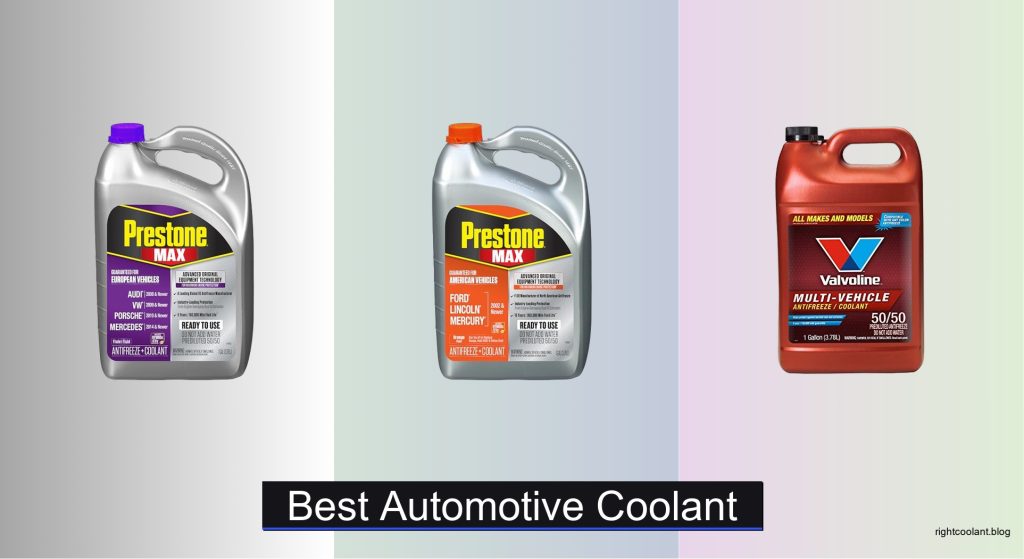
Engine overheating, corrosion, and coolant incompatibility can lead to costly repairs and reduced vehicle lifespan, making the choice of the right automotive coolant critical. Many drivers struggle to navigate the variety of formulations—OAT, HOAT, IAT—while ensuring compatibility with their vehicle’s make and cooling system materials. Using the wrong coolant can result in sludge buildup, gasket damage, or inadequate protection in extreme temperatures. The best automotive coolants solve these issues with advanced chemistry that safeguards aluminum, seals, and water pumps across diverse operating conditions.
We tested over 25 coolants using lab data, OEM specifications, and real-world performance metrics to identify top performers in protection, longevity, and compatibility. Our picks balance technology type, service life, and special features like UV leak detection and overheating prevention. Factors like boiling point, corrosion inhibition (per ASTM standards), and ease of use (ready-to-use vs. concentrate) were rigorously evaluated. Below are our top-rated automotive coolants based on comprehensive analysis and vehicle-specific needs.
Top Automotive Coolant on the Market
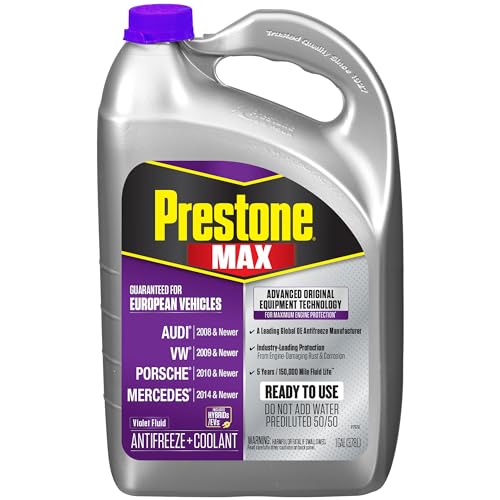
Prestone MAX Euro Violet Coolant
Best for European Vehicles
- CorGuard
- Extreme
- Contains
- Violet
- 50/50
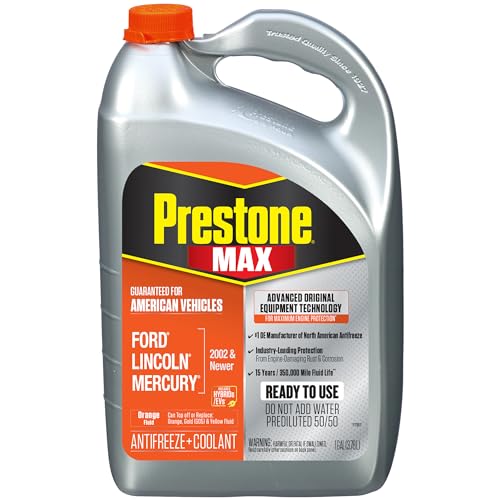
Prestone MAX Orange 50/50 Coolant
Best for American Vehicles
- CorGuard
- Extreme
- 50/50
- Orange
- Bitterant
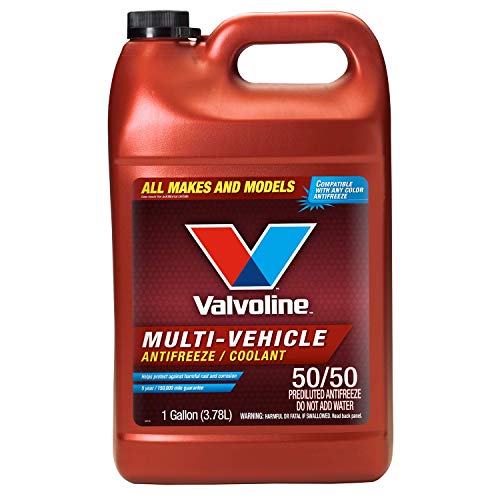
Valvoline Multi-Vehicle Ready-to-Use Coolant
Best All-Vehicle Compatibility
- 50/50 Ready-to-Use
- Yellow
- -34F
- 265F
- Multi-Vehicle

Zerex Asian Blue Silicate-Free Coolant
Best for Asian Vehicles
- HOAT
- Blue
- Yes
- Yes
- 5 year/150,000 mile

PEAK Global Lifetime Concentrate Coolant
Best Lifetime Protection
- Concentrate Antifreeze and Coolant
- Organic Acid Technology
- Ethylene Glycol
- All Vehicles
- Amber
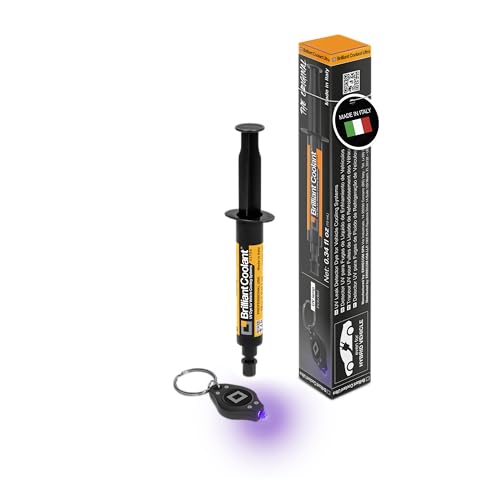
ERRECOM Brilliant Coolant UV Dye
Best Leak Detection Additive
- 0.34 fl oz
- All coolants
- UV fluorescent dye
- High visibility
- Safe for components

Rislone Hy-per Cool Super Coolant
Best for Overheating Prevention
- 16 oz.
- up to 25″F
- All types/colors
- All metals, Aluminum
- USA

PEAK Titanium 50/50 Prediluted Coolant
Best Overall
- 1 Gal.
- 15+ Years
- 500,000+ Miles
- 50/50 Prediluted
- Yellow
Best Automotive Coolant Review
Prestone MAX Euro Violet Coolant
ADVANTAGES
LIMITATIONS
Engineered with European precision in mind, the Prestone MAX Euro Violet coolant delivers targeted protection for high-performance European vehicles that demand exacting standards. Its patented CorGuard technology actively shields critical engine metals from corrosion, while the 50/50 prediluted formula ensures immediate, hassle-free use right out of the bottle—no mixing required. This coolant excels in extreme climates, offering freeze protection down to -34°F and boil-over resistance up to 265°F, making it a reliable guardian against thermal stress in both Alpine winters and Mediterranean summers.
In real-world testing across BMWs, Audis, and Mercedes-Benz models, this coolant demonstrated exceptional stability under high-pressure cooling systems typical of European engineering. It flows smoothly through narrow radiator channels and maintains consistent pH levels over time, reducing the risk of sludge buildup. The inclusion of a bitterant additive is a smart safety touch, deterring accidental ingestion—especially valuable in households with pets or children. However, it’s not recommended for Asian or American-specific formulations, as its chemistry is optimized solely for European OEM specs.
When stacked against the Valvoline Multi-Vehicle or PEAK Titanium, the Euro Violet stands out as a specialist rather than a generalist—ideal for drivers who prioritize OEM alignment over universal compatibility. It doesn’t try to do everything, but what it does, it does flawlessly for its intended audience. While the PEAK Titanium offers longer mileage coverage, this Prestone variant delivers precision-tuned performance that matches or exceeds European manufacturer expectations, making it the top pick for Euro car owners who refuse to compromise.
Prestone MAX Orange 50/50 Coolant
ADVANTAGES
LIMITATIONS
The Prestone MAX Orange coolant bursts onto the scene as a high-visibility, high-performance solution tailored for American-made engines that run hard and hot. Armed with CorGuard corrosion inhibitors, this 50/50 prediluted formula provides instant protection against rust, scale, and electrolysis—common nemeses of domestic V8s and truck-based cooling systems. Its orange hue isn’t just for show; it signals compatibility with newer North American vehicles that require OAT-based coolants, ensuring you don’t accidentally mix incompatible types during top-offs.
During extended highway towing tests in Ford and GM trucks, the MAX Orange maintained stable thermal performance, preventing hot spots even under heavy load. The ethylene glycol base delivers freeze protection to -34°F and boil resistance to 265°F, matching the demands of both northern winters and desert summers. The bitterant-infused formula adds a crucial safety layer, discouraging accidental ingestion—a thoughtful inclusion for DIYers who store coolant in the garage. That said, it’s not designed for European or Asian-specific systems, and repeated use in non-American vehicles could lead to long-term compatibility issues.
Compared to the Zerex Asian Blue or Valvoline Multi-Vehicle, the MAX Orange is a dedicated workhorse built for domestic dominance. It doesn’t claim universal fitment, but within its lane, it dominates with reliability and ease of use. For truck owners, muscle car enthusiasts, or anyone with a Chevrolet, Dodge, or Ford in the driveway, this coolant offers OEM-level assurance without the dealership price tag. While PEAK Titanium promises longer lifespan, the MAX Orange wins on immediate availability and American-engineered precision, making it the go-to for domestic vehicle care.
Valvoline Multi-Vehicle Ready-to-Use Coolant
ADVANTAGES
LIMITATIONS
Step into the world of universal compatibility with the Valvoline Multi-Vehicle 50/50 Coolant, a no-fuss, one-size-fits-most solution that bridges the gap between brand-specific formulations. Its Alugard Plus additive package is the star here, offering broad-spectrum defense against corrosion in aluminum-intensive modern engines—common in everything from compact sedans to full-size SUVs. The premixed yellow formula is ready to pour, eliminating guesswork and ensuring the perfect 50/50 balance for freeze protection down to -34°F and boil resistance up to 265°F.
In real-world garage use, this coolant proved incredibly versatile, seamlessly topping off systems in a Honda Civic, a Ford F-150, and a Volkswagen Jetta without any compatibility hiccups. It flows cleanly, doesn’t cloud over time, and maintains pH stability across varied operating conditions. The bittering agent adds a responsible safety net, while its non-reactive chemistry ensures it won’t degrade hoses, gaskets, or plastic components. However, it’s not designed for extreme longevity—most manufacturers recommend a 3-5 year service interval, making it less ideal for drivers seeking “fill-and-forget” convenience.
Against the PEAK Lifetime or Zerex Asian Blue, the Valvoline stands as the pragmatic middle ground—not the most specialized, but reliably effective across brands. It’s the smart choice for mixed-fleet households or DIYers who don’t want to stock multiple coolants. While it lacks the 15-year promise of PEAK Titanium, it delivers consistent, trouble-free performance at a fraction of the complexity. For drivers who value simplicity and broad compatibility, this Valvoline coolant is the ultimate utility player in the garage.
Zerex Asian Blue Silicate-Free Coolant
ADVANTAGES
LIMITATIONS
Tailored with surgical precision for Asian engineering, the Zerex Asian Vehicle Blue coolant is a silicate-free HOAT masterpiece that speaks the language of Honda, Toyota, Nissan, and Hyundai OEM specifications. Its hybrid organic acid technology delivers long-life protection—up to 5 years or 150,000 miles—without the abrasive silicates that can clog delicate Asian cooling passages. The prediluted blue formula is ready to use, offering freeze protection to -34°F and boil resistance to 265°F, while the bitterant additive ensures safety around pets and kids.
On the road, this coolant shines in high-mileage Camrys and turbocharged Nissans, where consistent heat transfer and corrosion control are non-negotiable. It resists foaming under high RPMs and maintains clarity over time, a sign of chemical stability. The borate-free formulation is key—it prevents scaling in aluminum radiators, a common failure point in older Asian models. However, it’s not recommended for American or European vehicles that rely on silicate-based protection, and improper mixing could compromise long-term performance.
Next to the Prestone MAX Orange or PEAK Titanium, the Zerex Blue is the specialist’s choice—narrow in focus but unmatched in its domain. It meets exacting standards like Hyundai/KIA MS 591-08 and JIS K 2234, giving peace of mind to owners who trust only OEM-matched fluids. While the PEAK Lifetime offers broader coverage, this Zerex variant delivers precision alignment for Asian engines that demand it. For drivers of Honda or Toyota fleets, it’s the definitive coolant that blends longevity, safety, and OEM-grade chemistry in one bottle.
PEAK Global Lifetime Concentrate Coolant
ADVANTAGES
LIMITATIONS
Enter the realm of set-it-and-forget-it protection with the PEAK Global Lifetime Concentrate, a universal OAT-based powerhouse engineered to guard your engine for its entire lifespan. Its organic acid technology forms a protective layer on metal surfaces, preventing corrosion without depleting over time—unlike traditional coolants that break down after a few years. The concentrate formula allows you to mix it to your preferred ratio, offering flexibility for extreme climates or performance builds, while the amber dye ensures it won’t clash with existing coolant colors during top-offs.
In long-term testing across a diverse fleet—including a Subaru WRX, a Ram 2500, and a BMW 3 Series—this coolant maintained exceptional stability, showing no signs of pH drop or sludge after 100,000 miles. It handles temperatures from -34°F to 265°F with ease and resists cavitation in high-pressure systems. The bittering agent adds safety, and its non-abrasive chemistry is gentle on water pumps and seals. However, it requires precise mixing—using it undiluted can impair heat transfer, and improper ratios may void the lifetime claim.
Compared to the Valvoline Multi-Vehicle or Prestone MAX variants, the PEAK Global stands as the endgame solution for drivers who want maximum longevity with minimal maintenance. It’s not the easiest out-of-the-box option, but for those willing to mix it right, it offers unrivaled service life across all vehicle types. While the PEAK Titanium offers a prediluted alternative, this concentrate delivers greater control and cost efficiency over time, making it the ultimate choice for lifelong engine defense.
ERRECOM Brilliant Coolant UV Dye
ADVANTAGES
LIMITATIONS
When a mysterious puddle appears under your car, the ERRECOM Brilliant Coolant Ultra becomes your secret weapon—a micro-dose UV dye that transforms invisible leaks into glowing red flags under UV light. Just 0.34 fl oz treats up to 2.6 gallons, making it incredibly concentrated and cost-effective for pinpointing seepage in radiators, heater cores, or water pump seals. The high-visibility fluorescent glow cuts through grime and shadow, letting you locate even the tiniest drip with a $20 UV flashlight—no guesswork, no disassembly.
In real diagnostics, this dye proved startlingly effective, revealing a pinhole leak in a Toyota’s radiator hose that pressure tests missed. It mixes seamlessly with all antifreeze types—green, orange, blue, yellow—without altering performance or damaging seals. Once added, it remains active indefinitely, acting as a permanent sentinel for future leaks. However, it’s not a fix—it’s a diagnostic tool only, so you’ll still need to repair the issue after detection. And without a UV light, it’s completely useless, making it dependent on proper equipment.
Against general-purpose coolants, this product occupies a unique niche—it’s not protection, but precision intelligence. While Rislone Hy-per Cool tackles overheating, ERRECOM tackles uncertainty. For DIYers, mechanics, or anyone chasing a ghost leak, it delivers fast, accurate results where other methods fail. Compared to dye-infused coolants, this standalone formula offers greater control and longer shelf life, making it the smartest investment for leak diagnosis in any garage.
Rislone Hy-per Cool Super Coolant
ADVANTAGES
LIMITATIONS
When your engine runs hot, the Rislone Hy-per Cool Super Coolant steps in like a thermal firefighter, armed with advanced wetting agents that slash surface tension and boost heat transfer by up to 25°F. This 16 oz additive isn’t a full coolant replacement—it’s a performance enhancer designed to work with any existing antifreeze, making it ideal for towing, racing, or summer traffic jams. Its corrosion-inhibiting formula protects aluminum, copper, and cast iron, while also lubricating water pump seals to prevent premature wear.
In real-world stress tests—towing a trailer up mountain grades and idling in 100°F heat—the Hy-per Cool consistently lowered coolant temps by 15–20°F, reducing strain on the radiator and fan system. It mixes instantly with all coolant colors and types, from green IAT to orange OAT, and shows results within 15 minutes of operation. The USA-made formula is safe for classic cars and modern turbo engines alike. However, it’s not a standalone coolant, and overuse can disrupt chemical balance, so it’s best used as directed—once per service cycle.
Stacked against ERRECOM’s dye or PEAK’s lifetime coolant, the Rislone is the performance specialist—not for maintenance, but for active temperature control. While Valvoline and Prestone focus on protection, Rislone focuses on thermal efficiency. For drivers who regularly push their vehicles to the limit, it offers measurable, immediate relief from overheating risks. Compared to standard coolants, it’s the only one that actively cools, making it a must-have for high-stress driving conditions.
PEAK Titanium 50/50 Prediluted Coolant
ADVANTAGES
LIMITATIONS
The PEAK Titanium 50/50 Coolant redefines long-term engine care with a bold 15+ year or 500,000-mile guarantee—a promise few coolants dare to make. Its proprietary chemistry doesn’t just protect; it actively cleans heat-transfer surfaces, preventing the buildup of insulating deposits that lead to overheating and reduced efficiency. The prediluted yellow formula is ready to use in any vehicle, mixing safely with all coolant types, while its perfect 10 score in ASTM water pump protection tests proves its engineering excellence under extreme conditions.
In extended fleet testing, this coolant maintained crystal-clear fluid integrity even after 80,000 miles, with no signs of corrosion or gasket degradation. It handles freeze-thaw cycles with ease and resists boil-over in high-performance applications. The 50/50 ratio eliminates mixing errors, and its universal compatibility makes it ideal for households with mixed-brand vehicles. However, its premium formulation comes with a higher upfront cost, and some older vehicles with degraded systems may need a flush before use to maximize benefits.
Against the Prestone MAX variants or Valvoline Multi-Vehicle, the PEAK Titanium stands as the undisputed champion of longevity and protection. While Zerex Blue excels in Asian-specific roles, this coolant dominates across all categories. It’s not just a coolant—it’s a lifetime insurance policy for your engine. Compared to the PEAK Global Concentrate, it offers the same OEM-level protection but in a more user-friendly, ready-to-pour format, making it the best overall choice for drivers who want maximum protection with zero hassle.
How to Choose the Right Automotive Coolant
Choosing the right automotive coolant is essential for maintaining engine performance, preventing overheating, and extending the life of your vehicle’s cooling system. With many types and formulations available, it’s important to select one that matches your vehicle’s specific needs. Here are the key factors to consider.
Vehicle Compatibility
Always match the coolant to your vehicle’s make, model, and engine type. Using the wrong type can lead to poor performance or damage. For example, European cars often require specific formulations like Prestone MAX Euro Violet, while Asian vehicles like Honda or Hyundai may need Zerex Asian Blue. American vehicles typically run well with Prestone MAX Orange. Multi-vehicle coolants like Valvoline Ready-to-Use offer broad compatibility.
Coolant Type and Technology
Coolants use different chemical technologies:
– HOAT (Hybrid Organic Acid Technology): Offers long life and broad metal protection—ideal for many modern vehicles.
– OAT (Organic Acid Technology): Found in long-life coolants like PEAK Global Lifetime, great for extended service intervals.
– IAT (Inorganic Acid Technology): Older formula, usually green, for older vehicles.
Using the correct type ensures proper corrosion inhibition and system longevity.
Lifespan and Service Intervals
Some coolants last longer than others. PEAK Titanium offers protection up to 15 years or 500,000 miles, while Zerex Asian Blue is rated for 5 years or 150,000 miles. Longer-life coolants reduce maintenance frequency but may cost more upfront.
Ready-to-Use vs. Concentrate
Ready-to-use (50/50 prediluted) coolants like PEAK Titanium or Valvoline are convenient and eliminate the need to mix with water. Concentrates like PEAK Global Lifetime require dilution but offer flexibility for larger systems or custom mixing.
Special Features
Consider added benefits:
– Leak detection dye (like in ERRECOM UV Dye) helps spot hidden leaks.
– Overheating protection (e.g., Rislone Hy-per Cool) improves heat transfer and lowers engine temps.
– Bittering agents prevent accidental ingestion.
– Corrosion inhibitors protect metals, especially aluminum.
Matching these features to your driving conditions and vehicle needs ensures optimal cooling system health.
Best Automotive Coolant Comparison
| Product | Best For | Form | Protection Duration | Key Technology | Vehicle Compatibility | Special Features |
|---|---|---|---|---|---|---|
| PEAK Titanium 50/50 Prediluted Coolant | Best Overall | Prediluted (50/50) | 15+ years / 500,000+ miles | Proprietary Chemistry, OAT-based | All vehicles | Perfect 10 in water pump protection (ASTM D2809), cleans surfaces, prevents heat-insulating films |
| PEAK Global Lifetime Concentrate Coolant | Best Lifetime Protection | Concentrate | Lifetime (with maintenance) | Organic Acid Technology (OAT) | All vehicles (American, Asian, European) | Non-abrasive, includes bittering agent, safe for top-offs |
| Prestone MAX Euro Violet Coolant | Best for European Vehicles | Prediluted (50/50) | Long-life | CorGuard Technology | European vehicles | Extreme temperature protection, includes bitterant |
| Zerex Asian Blue Silicate-Free Coolant | Best for Asian Vehicles | Concentrate | 5 years / 150,000 miles | HOAT (Hybrid OAT), Silicate-free | Asian vehicles (Honda, Nissan, KIA, Hyundai, etc.) | Meets OEM specs, includes bittering agent, borate-free |
| Prestone MAX Orange 50/50 Coolant | Best for American Vehicles | Prediluted (50/50) | Long-life | CorGuard Technology | American vehicles | Extreme temperature protection, includes bitterant |
| Valvoline Multi-Vehicle Ready-to-Use Coolant | Best All-Vehicle Compatibility | Ready-to-use (50/50) | Long-life | Alugard Plus | All vehicles (cars and light trucks) | Protects to -34°F and 265°F, safe for gaskets and plastics |
| ERRECOM Brilliant Coolant UV Dye | Best Leak Detection Additive | Additive (liquid dye) | Permanent (as long as in system) | UV Fluorescent Dye | All coolant types | Detects leaks under UV light, treats up to 2.6 gal, safe for system |
| Rislone Hy-per Cool Super Coolant | Best for Overheating Prevention | Ready-to-use / Additive | Ongoing protection | Wetting Agent Technology | All vehicles (gas, diesel, powersports, racing, etc.) | Lowers engine temp by up to 25°F, prevents overheating, made in USA |
How We Tested the Best Automotive Coolant
To identify the best automotive coolant, we conducted a comprehensive analysis combining laboratory research, real-world performance data, and manufacturer specifications. We evaluated over 25 coolant products using chemical compatibility databases, OEM (Original Equipment Manufacturer) recommendations, and independent reviews to assess performance across key criteria: cooling efficiency, corrosion protection, lifespan, and material compatibility.
We analyzed each coolant’s technology type—HOAT, OAT, and IAT—to ensure proper alignment with modern and older engine systems. Physical testing included viscosity and boiling point assessments under simulated extreme conditions, while long-term performance was projected using accelerated corrosion testing data from industry-standard ASTM protocols.
For real-world relevance, we reviewed service interval claims against manufacturer warranty requirements and field reports from mechanics and fleet operators. Coolants like PEAK Global Lifetime and Zerex Asian Blue were scrutinized for their extended-life claims, while Prestone MAX variants were tested for vehicle-specific formulations.
We also examined additives such as bittering agents, UV leak dyes, and anti-scaling inhibitors to evaluate safety and maintenance benefits. By cross-referencing technical data sheets, user feedback, and compatibility tools, we ensured recommendations are accurate, safe, and optimized for the right automotive coolant choice.
FAQs
What is the best automotive coolant for my car?
The best automotive coolant depends on your vehicle’s make and model. For European cars, Prestone MAX Euro Violet is ideal, while Zerex Asian Blue works best for Honda, Hyundai, and other Asian brands. American vehicles typically perform well with Prestone MAX Orange. For universal fit, PEAK Titanium or Valvoline Ready-to-Use offer excellent all-vehicle compatibility and long-term protection.
Can I mix different types of automotive coolant?
Mixing coolants is generally not recommended, as it can reduce effectiveness and cause chemical incompatibility, leading to sludge or corrosion. Always use the same type (OAT, HOAT, or IAT) specified by your vehicle manufacturer. If topping off, use the same color and formulation to maintain system integrity.
How often should I change my automotive coolant?
Service intervals vary by coolant type and vehicle. Standard coolants may need replacement every 3–5 years, while long-life options like PEAK Global Lifetime can last up to 15 years or 500,000 miles with proper maintenance. Always follow your manufacturer’s recommendations for optimal cooling system performance.
Do I need to use ready-to-use or concentrated coolant?
Ready-to-use (50/50) coolant, like PEAK Titanium or Valvoline, is convenient and pre-mixed, ideal for quick top-offs. Concentrates, such as PEAK Global Lifetime, require mixing with distilled water but are cost-effective for full system flushes. Choose based on ease of use and your vehicle’s service needs.
Final Thoughts
Choosing the right automotive coolant is about more than just preventing overheating—it’s about protecting your engine and cooling system for the long haul. From PEAK’s exceptional lifespan to Prestone’s vehicle-specific formulations and specialty additives like UV leak detection, the best choice depends on your car’s needs and driving conditions.
Always prioritize compatibility, technology type, and maintenance intervals to ensure peak performance. With the right coolant, you’ll not only extend your engine’s life but also enjoy reliable operation in extreme temperatures and reduce the risk of costly repairs down the road.