You’re driving normally, the temperature gauge sits perfectly in the middle, and everything feels fine until you notice a colorful puddle under your car or catch a sweet smell near the engine. Your coolant is leaking, but your engine isn’t overheating. That might sound like good news, but it’s actually a ticking time bomb.
A car leaking coolant but not overheating is more common than you think, and just as dangerous. The cooling system still has enough fluid to regulate heat for now, but every lost drop brings your engine closer to catastrophic failure. This silent leak often fools drivers into delaying repairs, only to face warped cylinder heads, blown gaskets, or total engine meltdown days or miles later.
Why Coolant Leaks Do Not Always Trigger Overheating
Even with a leak present, your engine can stay cool for a period of time. Understanding why this happens helps explain why the issue gets ignored.
Small Leaks Maintain Adequate Cooling
Tiny cracks or loose connections may only bleed coolant slowly. If the system retains 70 to 80 percent of its fluid, heat dissipation continues normally. The engine runs cool, but the reservoir keeps dropping over time.
Leaks That Appear Only Under Pressure
Many leaks manifest only when the engine reaches operating temperature and pressure builds, typically 15 to 18 psi. Once the car cools, rubber seals contract and close the gap, hiding the leak during cold inspections.
Residual Coolant Maintains Circulation
As long as fluid circulates, the thermostat regulates flow and the radiator disperses heat. You will not see overheating until coolant levels fall below the water pump intake or air pockets disrupt flow entirely.
Evaporation Masks External Leaks
Spray from a burst hose or cracked component can vaporize instantly on hot surfaces. No puddle forms under the car, but coolant vanishes overnight.
Key Insight: It is not that your engine will not overheat. It has not overheated yet. A stable temperature gauge gives false confidence.
Top Causes of Coolant Loss Without Overheating
Multiple components can fail and cause coolant to escape while the engine temperature remains normal.
Radiator Cap Failure
The radiator cap maintains system pressure, which raises the boiling point of coolant. A weak seal lets fluid escape when the engine is hot.
Signs to Watch
– White crusty residue around the cap or neck
– Coolant sprayed inside the engine bay
– Reservoir refills disappear after driving
Fix: Replace with an OEM-spec cap costing 20 to 40 dollars. Test the old cap on a pressure tester if available.
Failing Coolant Hoses
Rubber hoses degrade over time from heat cycling and pressure. The most vulnerable spots include upper and lower radiator hoses, heater bypass lines, and connections at clamps.
Failure Signs
– Swollen, soft, or cracked rubber
– Spray marks near hose runs
– Sudden rupture after warm-up
Pro Tip: On older BMWs like the 2003 Z4, rubber hoses degrade internally. Look for cracking at bends even if the hose feels firm externally.
Water Pump Leak
The water pump can leak from the weep hole, which is designed to signal seal failure. It can also leak from behind the pulley or timing cover when the shaft seal breaks down.
Visual Clue: Dried coolant streaks pointing downward from the front of the engine indicate a water pump issue.
Risk Level: High. Once the seal fails, total pump collapse follows, killing circulation completely.
Radiator Leaks
Radiators commonly crack at the plastic end tanks due to thermal stress. Core tubes can corrode or get damaged by road debris, and inlet or outlet necks can suffer seal failure.
Hidden Behavior: Leaks may only spray when pressurized, then dry when cool, making them difficult to spot during cold inspection.
Heater Core Leak
A failing heater core produces distinct symptoms inside the cabin. These include a sweet smell from ethylene glycol, foggy windows, and damp floor mats. If no interior odor or moisture exists, the heater core is unlikely to be the source.
Thermostat Housing Gasket
Aluminum housings warp over time, causing the gasket to fail and allow slow seepage. The leak may only appear when the thermostat opens and pressure shifts within the system.
Intake Manifold Gasket Leak
V6 and V8 engines have coolant passages through the intake manifold. When the gasket fails, coolant can leak externally along the seam or internally into the combustion chamber. Internal leaks produce white exhaust smoke and misfires.
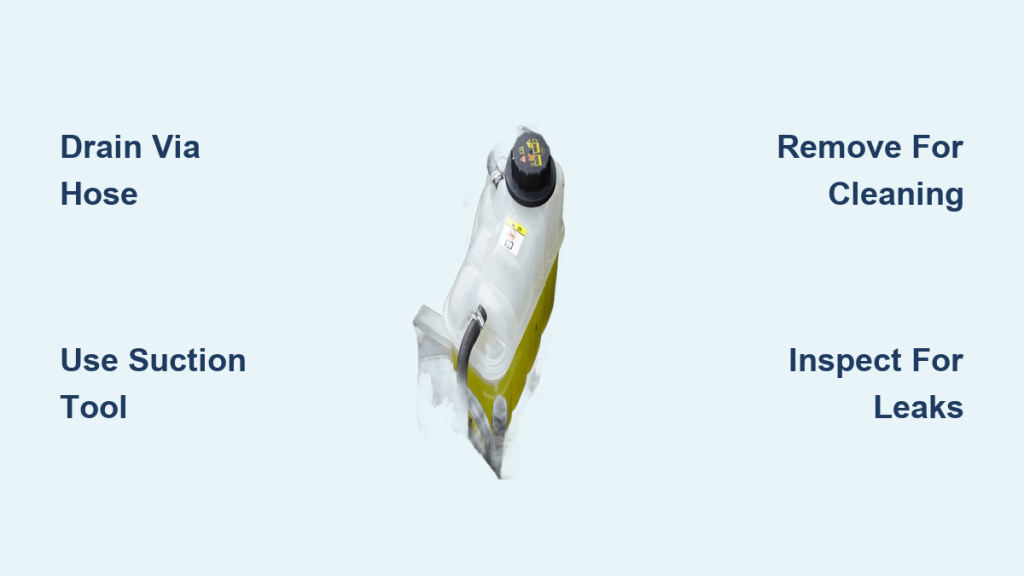
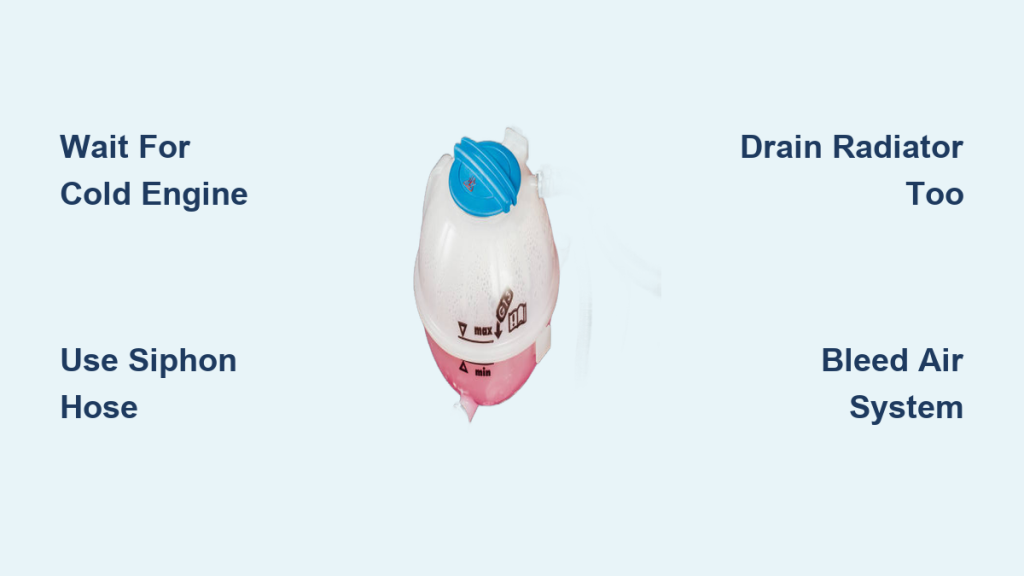
Cracked Overflow Tank
Plastic overflow tanks become brittle with age, UV exposure, or over-pressurization. The tank releases coolant during normal thermal expansion, draining slowly and causing refills to vanish repeatedly.
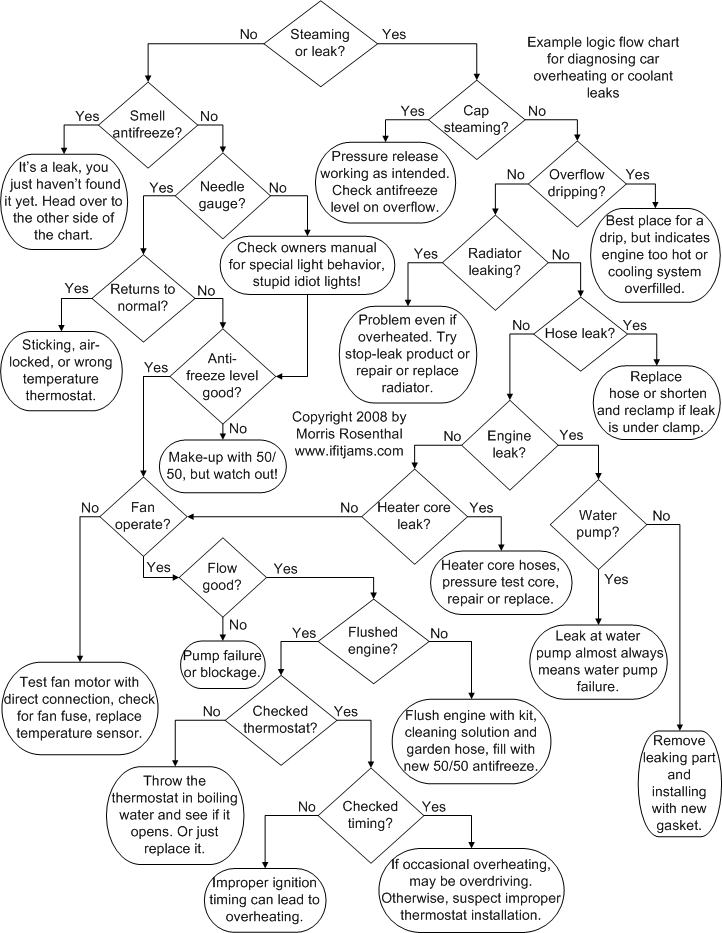
How to Find the Leak: Diagnostic Steps
Visual Inspection: Start Cold
Wait until the engine is completely cool before opening the hood. Scan for crusty white residue, fresh green, blue, or orange stains, and spray patterns on hoses or the firewall.
Focus Areas
– Radiator cap and neck
– Hose connections and clamps
– Water pump weep hole
– Reservoir tank and connecting hose
Warning: Never open the radiator cap when the engine is hot. Risk of severe burns from pressurized coolant.
Trace the Spray Pattern
The direction and shape of coolant residue reveals the leak location. Fan-shaped stains indicate a high-pressure leak. Downward drips suggest gravity-fed seepage. Residue near a pulley points to the water pump. Splash on the hood liner indicates a radiator or hose burst.
Pressure Test the System
Pressure testing reveals leaks that are invisible when the engine is cold. Attach a hand-pump pressure tester to the radiator neck or reservoir. Pump to 15 psi or the vehicle specification. Hold for 10 to 15 minutes and watch for pressure drop or new leaks appearing.
Use UV Dye and Black Light
Add fluorescent dye to the coolant, run the engine until warm, and shine a UV light under the hood. Glow spots reveal the exact location of pinhole leaks in hoses, gaskets, or tanks.
Critical Warning Signs: Stop Driving Now

Even without overheating, certain symptoms mean immediate danger.
| Symptom | What It Means | Action Required |
|---|---|---|
| Coolant light comes on repeatedly | Fluid loss exceeding refill rate | Stop driving immediately |
| Coolant spraying under hood | High-pressure leak with burn risk | Do not drive. Inspect when cool |
| Reservoir empty daily | Severe leak. Engine near dry | Tow to mechanic |
| No puddle under car | Leak sprays or evaporates in engine bay | Pressure test required |
| Temperature gauge fluctuates | Air pockets from low coolant | Check for head gasket or flow blockage |
Mechanic Advice: If you see spray under the hood, walk away from the car until it is fixed.
Case Study: 2003 BMW Z4 with 93,000 Miles
The Problem
The coolant light activated during driving. The reservoir was dry upon check. Refilled coolant disappeared overnight. Blue spray appeared on the hood and windshield. There was no overheating, no cabin smell, and no undercar puddle.
Diagnosis
The spray pattern indicated a high-pressure leak in the engine bay. The absence of a puddle meant the leak was evaporating or draining internally. No sweet smell ruled out the heater core. The known BMW weakness is radiator hoses failing at 80,000 to 100,000 miles.
Solution
Replace the upper and lower radiator hoses. Inspect the water pump. The weep hole was dry. Replace the OEM-spec radiator cap. Perform a pressure test. The system held 15 psi for 15 minutes. No further coolant loss occurred after one week.
Result: A 120-dollar repair prevented a 1,500-dollar head gasket job.
Risks of Ignoring the Coolant Leak
Driving with low coolant, even without overheating, causes serious damage.
Head Gasket Failure
Uneven heating creates stress. One cylinder overheats, blows the gasket, and introduces combustion gases into the cooling system.
Warped Cylinder Head
Aluminum heads warp above 250 degrees Fahrenheit. Even brief overheating can ruin flatness permanently.
Piston Scuffing
Excessive heat expands pistons, scraping cylinder walls and leading to seizure.
Engine Replacement
Total meltdown from running dry costs 3,000 to 7,000 dollars to repair.
Expert Warning: You do not need to overheat for long to cause permanent damage.
DIY Checks You Can Perform Today
Check Oil for Contamination
Pull the dipstick and look for milky, frothy oil indicating water in the oil. Look for oily film in the coolant reservoir indicating oil in the coolant. Both suggest head gasket or intake gasket failure.
Do This First: If you suspect an internal leak, check the oil before assuming an external source.
Monitor Coolant Loss Rate
Track loss by marking the reservoir level when the engine is cold.
| Loss Per Day | Likely Cause |
|---|---|
| Less than 50 mL | Small seep from gasket or cap |
| 200 to 500 mL | Moderate leak from hose or tank |
| More than 500 mL or gone overnight | Major leak from pump, hose burst, or internal |
Inspect for Internal Leaks
Signs include white exhaust smoke from burning coolant, bubbles in the radiator when the engine runs, and a rising reservoir level when hot. Confirm with a block test for combustion gases in the coolant.
Repair Costs and Priorities

| Part | Cost (Parts + Labor) | DIY Possible? | Risk if Ignored |
|---|---|---|---|
| Radiator cap | 15 to 40 dollars | Yes | Moderate |
| Coolant hoses | 50 to 150 dollars | Yes (easy) | High |
| Water pump | 300 to 700 dollars | Moderate | Critical |
| Radiator | 400 to 900 dollars | No | High |
| Head gasket | 1,200 to 2,500 dollars | No | Catastrophic |
| Intake gasket | 400 to 800 dollars | Moderate | High |
Bottom Line: Fixing a 50-dollar hose now saves a 2,000-dollar engine job later.
Preventing Future Coolant Leaks
Annual Checks
Inspect all hoses for cracks, bulges, and softness. Replace the radiator cap every 3 to 5 years. Flush coolant every 30,000 to 60,000 miles. Use OEM or compatible coolant and never mix types.
Monthly Habits
Check the reservoir level when the engine is cold. Look under the hood for stains or residue. Listen for gurgling sounds indicating air in the system.
Pro Tip: Keep a half-gallon of correct coolant in your trunk for emergencies.
Key Takeaways for Fixing Your Coolant Leak
No overheating does not mean no problem. Coolant loss is a pre-failure state that demands attention. Spray in the engine bay likely indicates a hose, cap, or water pump issue. No puddle under the car means the leak is evaporating within the engine compartment, which is still serious. A pressure test is essential for accurate diagnosis. Check the oil first to rule out head gasket problems before assuming an external leak. European vehicles like BMW and Audi have hoses and caps that fail early, so replace them preventively. Do not drive the vehicle until the leak is fixed. One short trip can cause permanent damage. Coolant leaks never fix themselves. Address the issue now before the temperature gauge ever moves.
Frequently Asked Questions About Coolant Leaks Without Overheating
Can a car lose coolant without overheating?
Yes. A small or intermittent leak may allow enough coolant to remain in the system for effective heat dissipation. The engine stays cool temporarily, but the leak will worsen over time.
How long can I drive with a coolant leak?
The safe window is very short. Driving even a few miles with low coolant risks permanent engine damage. The leak will not improve on its own.
Why is there no puddle under my car but coolant is leaking?
The leak is spraying or evaporating within the engine bay. This is common with high-pressure leaks from hoses or the radiator cap. A pressure test is needed to locate the source.
Does no sweet smell mean it is not a heater core leak?
Likely yes. A sweet smell inside the cabin is the most obvious sign of heater core failure. If no odor exists, the heater core is probably not the source.
Can I use stop-leak products to fix the problem?
Stop-leak products are temporary fixes that can cause other problems. They may clog the radiator or thermostat. Professional repair addresses the root cause properly.
How much does it cost to fix a coolant leak?
Costs range from 15 to 40 dollars for a radiator cap to over 2,000 dollars for head gasket repair. Most external leaks like hoses and caps cost under 150 dollars to fix.