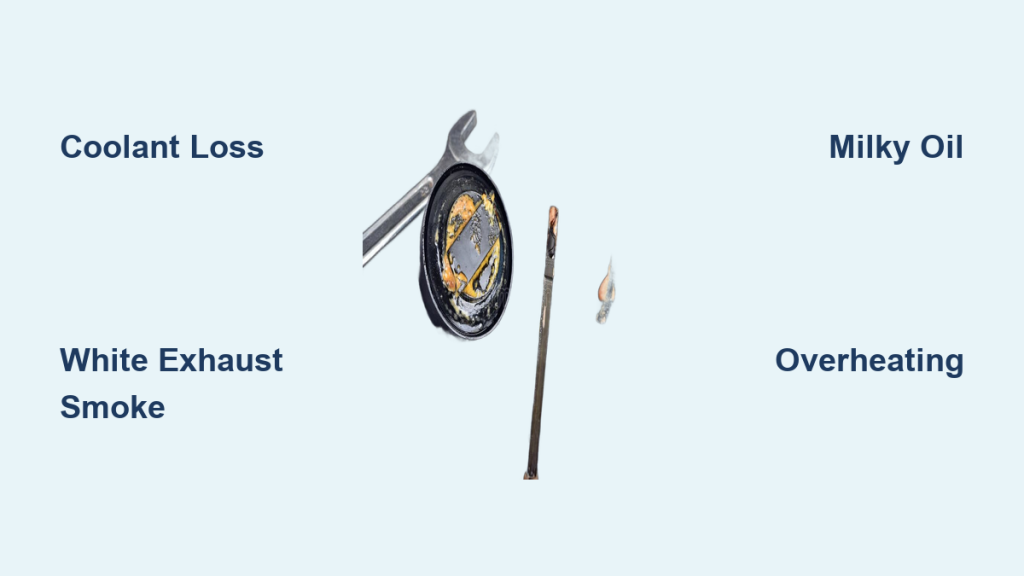
If your car is losing coolant with no visible leak, and you’re noticing white smoke from the exhaust or your oil looks milky, you might be facing a blown head gasket. Yes, a blown head gasket can absolutely leak coolant, often without a single drip under the engine. Unlike a cracked hose or a failing radiator, coolant loss from a head gasket failure is frequently internal, making it harder to detect but far more dangerous to ignore.
This guide breaks down exactly how a blown head gasket causes coolant loss, the different ways it manifests, and what you must do to diagnose and address it before your engine is ruined.
How a Blown Head Gasket Allows Coolant to Escape
The head gasket seals the engine block and cylinder head, keeping combustion gases, coolant, and oil separated under extreme heat and pressure. When it fails, that barrier breaks down. Coolant can be burned in the combustion chamber, mixed into the oil, or forced out through the overflow tank due to combustion pressure.
When the gasket fails between a cylinder and a coolant passage, pressurized coolant enters the combustion chamber and gets burned during operation. This type of leak is invisible externally but consumes coolant rapidly. Drivers often refill the reservoir repeatedly, unaware the fluid is being destroyed inside the engine.
Coolant Enters the Combustion Chamber
As the engine runs, coolant seeps into the cylinder and vaporizes instantly under high temperatures. The steam exits through the exhaust, often mistaken for normal condensation. But unlike harmless water vapor, this produces thick, white smoke that persists after the engine warms up.
Key signs to watch for include continuous white exhaust smoke that appears after startup, a sweet syrupy smell from the tailpipe caused by burning glycol-based coolant, and a coolant reservoir that drops steadily despite no external leak. The engine may also run rough or misfire due to hydrolock or reduced compression.
Coolant Mixes with Engine Oil
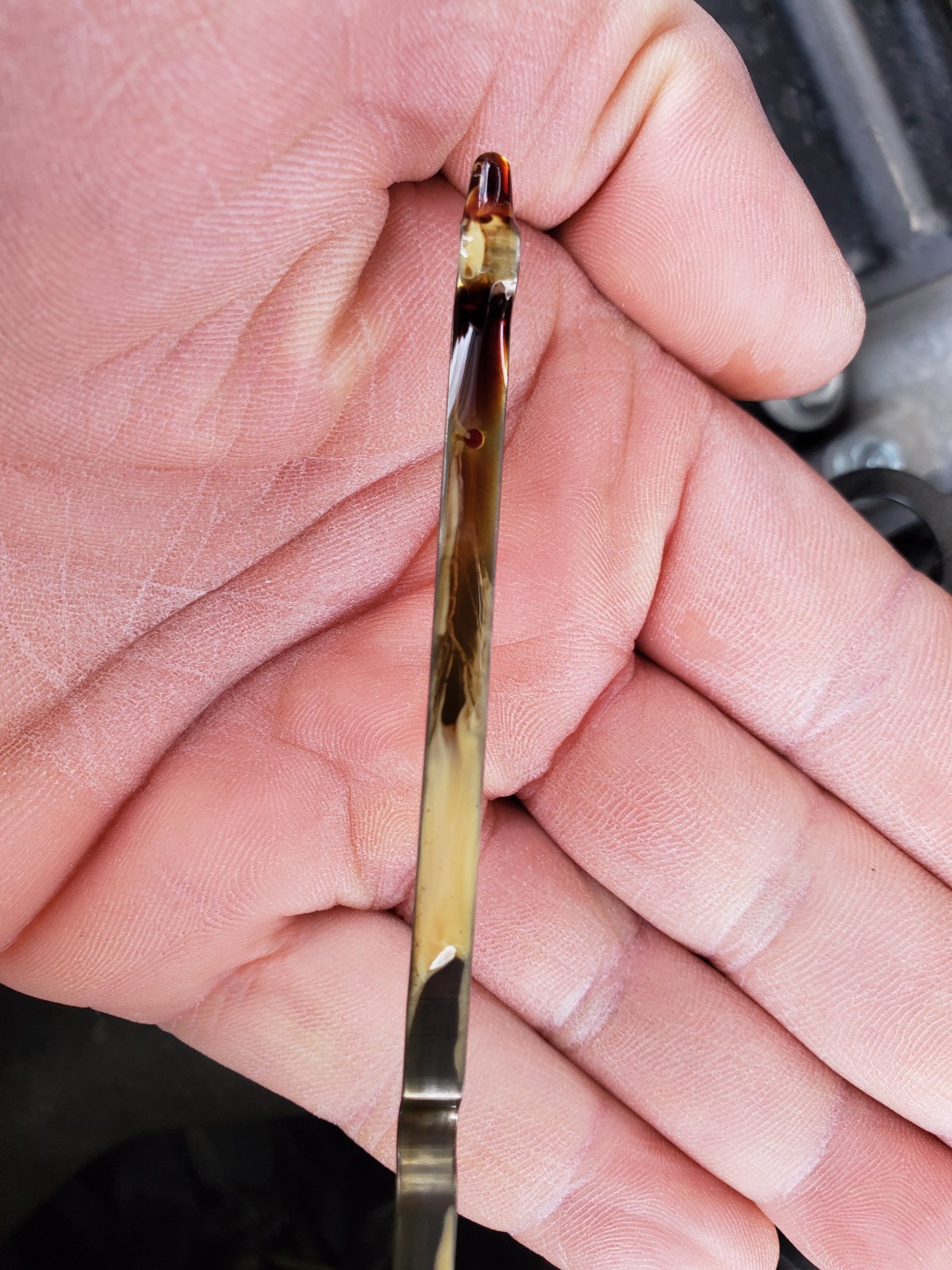
A failed gasket can open a path between coolant passages and oil galleries. When coolant leaks into the oil system, it creates a milky, frothy emulsion often described as mayonnaise-like.
What to check includes the oil dipstick for a creamy texture, the oil filler cap for white or yellow sludge buildup, and the valve cover area for foam around the edges. This contamination severely compromises lubrication and increases the risk of bearing wear, camshaft and crankshaft damage, and complete engine seizure.
External Coolant Leaks from Gasket Failure
While internal leaks are more common, a blown head gasket can also cause external coolant leaks, especially when the failure occurs at the outer edge of the head-to-block seal.
Signs of external leakage include puddles of coolant in green, orange, pink, or blue shades under the engine, drips along the seam between the engine block and cylinder head, and wetness or staining near the exhaust manifold where coolant passages commonly run. These leaks can mimic issues with hoses, water pumps, or radiators, but when combined with other symptoms like overheating or white smoke, the source is likely the head gasket.
Combustion Gases Pushing Coolant Out
Even if coolant is not leaking out, a blown head gasket can allow exhaust gases to enter the cooling system, creating indirect coolant loss. High-pressure combustion gases push into coolant passages, causing the system to become over-pressurized. This forces coolant out through the overflow hose or radiator cap, mimicking a leak but stemming from internal pressure rather than a fluid breach.
Key indicators include bubbling in the radiator or coolant reservoir while the engine runs, coolant reservoir that boils despite normal temperature readings, and frequent need to top off coolant with no visible leak. Subaru owners often report coolant shooting out of the burping funnel when bleeding the system, which is a telltale sign of combustion pressure leaking into the cooling system.
Diagnostic Tests to Confirm Coolant Leak from Head Gasket
Do not guess. Several diagnostic methods can confirm coolant-related head gasket failure.
Block Tester (Combustion Leak Test)
This chemical test detects hydrocarbons in the coolant. Cool the engine completely, remove the radiator cap, attach the block tester with blue fluid, and run the engine while observing the fluid. If the fluid turns green or yellow, exhaust gases are present in the coolant, indicating a blown head gasket.
Compression Test
This measures cylinder pressure to detect leakage. Low or inconsistent readings across cylinders suggest a gasket breach. A wet compression test, where oil is added to the cylinder, helps rule out worn piston rings.
Cylinder Leak-Down Test
This test is more precise than compression testing. It pressurizes each cylinder with 100 psi of air and identifies the leak path. Hissing from the radiator indicates a coolant passage leak, hissing from an adjacent cylinder indicates an inter-cylinder leak, and hissing from the oil cap indicates a crankcase leak.
Oil Analysis
Laboratory testing via ICP spectrometry or gas chromatography detects sodium, potassium, boron, and glycol in the oil. This provides definitive proof of coolant contamination, often before visible symptoms appear. Services like Blackstone Labs offer affordable oil analysis kits that can save thousands in repair costs through early detection.
What to Do When Coolant Is Leaking from a Blown Head Gasket
If you suspect a blown head gasket, act fast to prevent engine destruction.
Stop Driving Now
Continuing to drive risks a warped or cracked cylinder head, a cracked engine block, and hydrolock with a seized engine. If you see white smoke, milky oil, or severe overheating, do not restart the engine.
Perform Quick Checks
Check the coolant level when cold and note any rapid drops. Inspect the oil condition by examining the dipstick and filler cap. Observe exhaust smoke for color, smell, and duration. Watch the temperature gauge for overheating or fluctuations.
Temporary Fixes: Head Gasket Sealers
Products like CRC FiberLock Head Gasket and Block Repair can seal small leaks. These work best for minor internal leaks on engines without milky oil or severe overheating. They are not effective for large breaches or warped heads and may clog heater cores or radiators if overused. Sealers work in about 30% of cases and are a band-aid, not a cure.
Professional Repair Costs
A full head gasket replacement includes removing the cylinder head, checking for warpage or cracks, resurfacing the head if needed, installing a new OEM or performance gasket, and torquing bolts to specification in stages. The cost ranges from $1,500 to $2,500, with higher costs for turbo or interference engines. Always use new torque-to-yield bolts rather than reusing old ones.
Preventing Coolant-Leaking Head Gaskets
Avoiding failure starts with proper maintenance.
Maintain the coolant system by checking levels monthly, flushing every 30,000 to 60,000 miles per manufacturer, using the correct coolant type without mixing, and replacing the radiator cap every five years. Change oil every 5,000 to 7,500 miles using synthetic oil for better heat resistance.
Monitor engine temperature by watching the gauge for spikes, pulling over if overheating occurs, and letting the engine cool before opening the radiator. Fix small problems early by replacing cracked hoses or sticky thermostats, addressing coolant loss immediately, and not ignoring warning lights.
Use quality parts by choosing OEM or premium aftermarket gaskets, never reusing head bolts unless specified, and following the torque sequence exactly. Avoid overloading by staying within towing limits, using lower gears on hills, and avoiding aggressive driving in hot weather.
Subaru-Specific Head Gasket Risks

Subaru boxer engines are notorious for head gasket issues. At-risk models include the 1999 to 2011 Outback, Legacy, Forester, and Impreza. These engines fail because aluminum heads on iron blocks expand at different rates, thermal cycling stresses the gasket, and MLS multi-layer steel gaskets degrade over time.
Common symptoms include coolant expulsion during burping, unexplained coolant loss, white smoke, and overheating. Many Subarus fail between 90,000 and 150,000 miles, and early intervention can extend engine life.
Real-World Consequences of Ignoring the Problem
Delaying repair leads to disaster. Gradual coolant loss often goes unnoticed for months. Intermittent overheating worsens in traffic or summer. DIY sealers may work short-term but fail long-term. Mechanics report engine replacements after ignored gasket issues.
Early detection saves $2,000 or more in repair costs. Waiting can turn a $2,000 fix into a $5,000 engine swap or a totaled car.
Frequently Asked Questions About Blown Head Gaskets and Coolant Leaks
Does a blown head gasket always leak coolant?
No, a blown head gasket does not always leak coolant. It can fail in ways that allow combustion gases to leak into the cooling system or between cylinders without directly leaking coolant. However, coolant leakage is one of the most common failure modes.
Can you drive with a blown head gasket that is leaking coolant?
Driving with a blown head gasket is not recommended, especially if coolant is leaking. Continuing to drive risks catastrophic engine damage including a warped cylinder head, cracked engine block, or complete engine seizure. If you notice white smoke, milky oil, or overheating, stop driving immediately.
How do I know if my head gasket is leaking coolant internally?
Internal coolant leakage produces thick white smoke from the exhaust that persists after the engine warms up, a sweet smell from the tailpipe, unexplained coolant loss without visible leaks, and engine misfires. The coolant may also be mixing with your oil, creating a milky substance on the dipstick.
Why is my car losing coolant but no visible leak?
If you are losing coolant with no visible leak, the coolant is likely being burned inside the engine or mixing with the oil. This is a strong indicator of head gasket failure. Have your vehicle tested with a block tester or oil analysis to confirm the diagnosis.
How much does it cost to repair a head gasket leak?
Head gasket replacement typically costs between $1,500 and $2,500 on most vehicles. The cost increases for turbocharged engines, interference engines, or vehicles requiring head resurfacing. Delaying repair can double or triple this cost if the engine is damaged.
Key Takeaways for Identifying and Addressing Coolant Leaks from Blown Head Gaskets
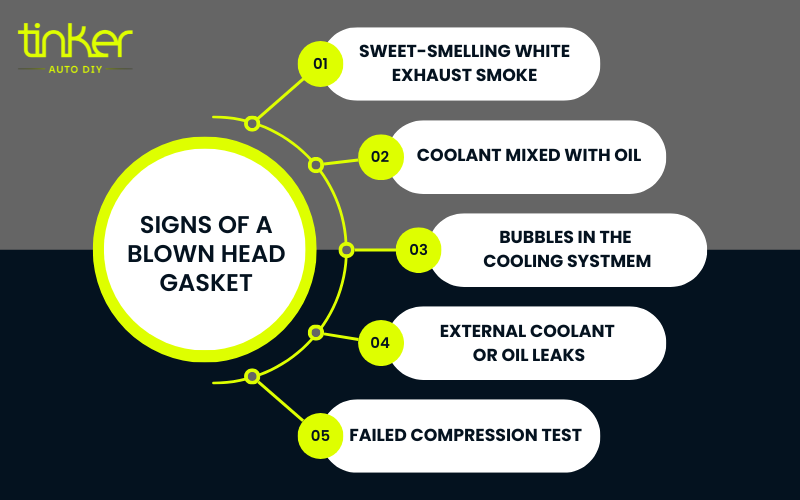
A blown head gasket absolutely can leak coolant, even if you never see a drop on the ground. Internal leaks where coolant enters the combustion chamber, oil contamination where coolant mixes with engine oil, and combustion pressure forcing coolant out of the system are all signs of a serious failure. If you are losing coolant and seeing white smoke, milky oil, or bubbling in the radiator, stop driving and get it tested. Ignore head gasket failure at your own risk because waiting can turn a manageable repair into a complete engine replacement.