You’re driving down the highway when a sweet, syrupy smell creeps into the cabin. The temperature gauge starts climbing. By the time you pull over, steam is rising from under the hood. Your car is losing coolant, and it’s not going to fix itself.
Why does coolant leak? It happens due to component wear, corrosion, thermal stress, or mechanical failure in the cooling system. From cracked hoses to blown head gaskets, even small leaks can lead to overheating, engine damage, or complete failure if ignored. This guide breaks down every possible cause, how to find the leak, and what to do next.
Radiator and Hose Failures Causing Coolant Leaks
Coolant escapes most often through aging or damaged rubber hoses and radiators. These components endure constant heat, pressure, and vibration, making them prime failure points.
Cracked or Swollen Radiator Hoses
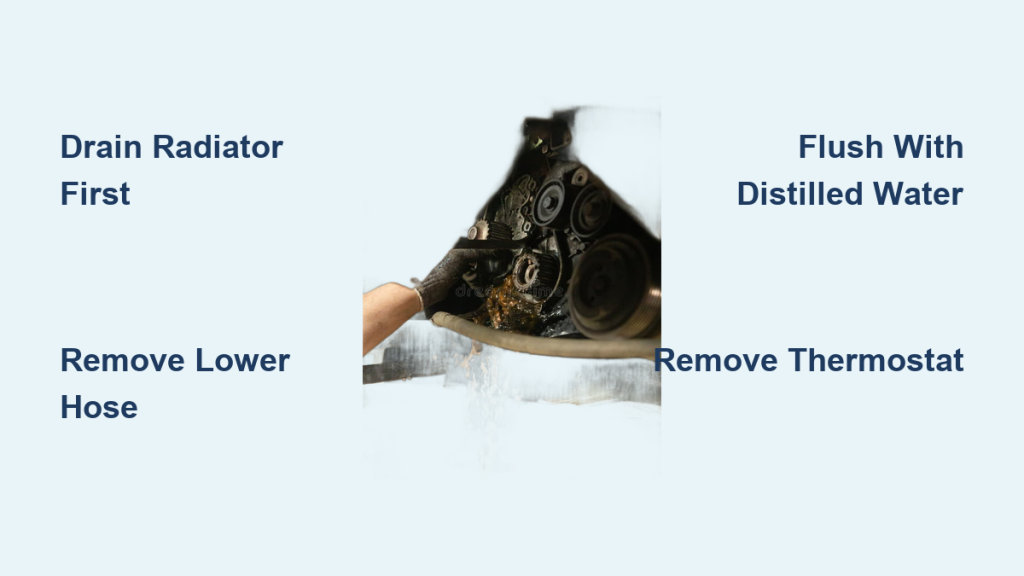
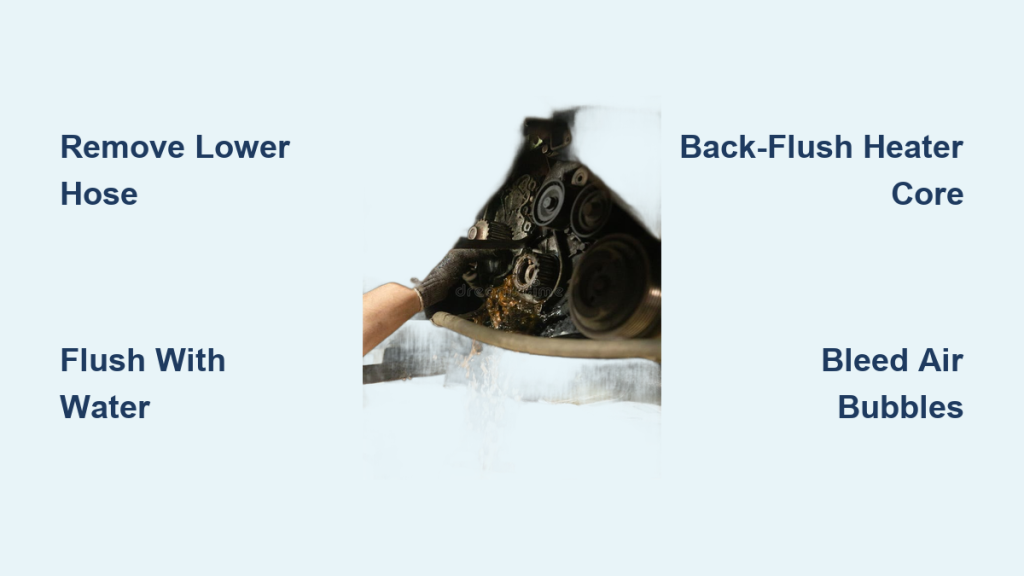
Hoses degrade over time. The lower radiator hose softens from heat soak after shutdown, while the upper hose handles high pressure and can burst if weakened. Heater hoses, often tucked near exhaust manifolds, may leak without visible puddles.
What to look for:
• Bulging, mushy, or brittle texture when squeezed
• Crusty white residue at clamp ends
• Green, orange, or pink fluid pooling under the front of the vehicle
Pro tip: Squeeze hoses only when the engine is cold. A healthy hose should feel firm but slightly pliable.
Radiator Corrosion and Punctures
Aluminum radiator cores corrode when old or mixed coolant breaks down. Plastic end tanks crack from thermal cycling. Even a tiny pinhole can cause steady coolant loss.
Common failure zones include:
• Bottom corners where water collects
• Seams between core and tanks
• Areas behind the AC condenser
Quick fix: Pressure test the system by attaching a hand pump to the radiator neck and watching for pressure drops or seepage. Loaner tools are free at most auto parts stores.
Water Pump Leaks and Failure Warning Signs
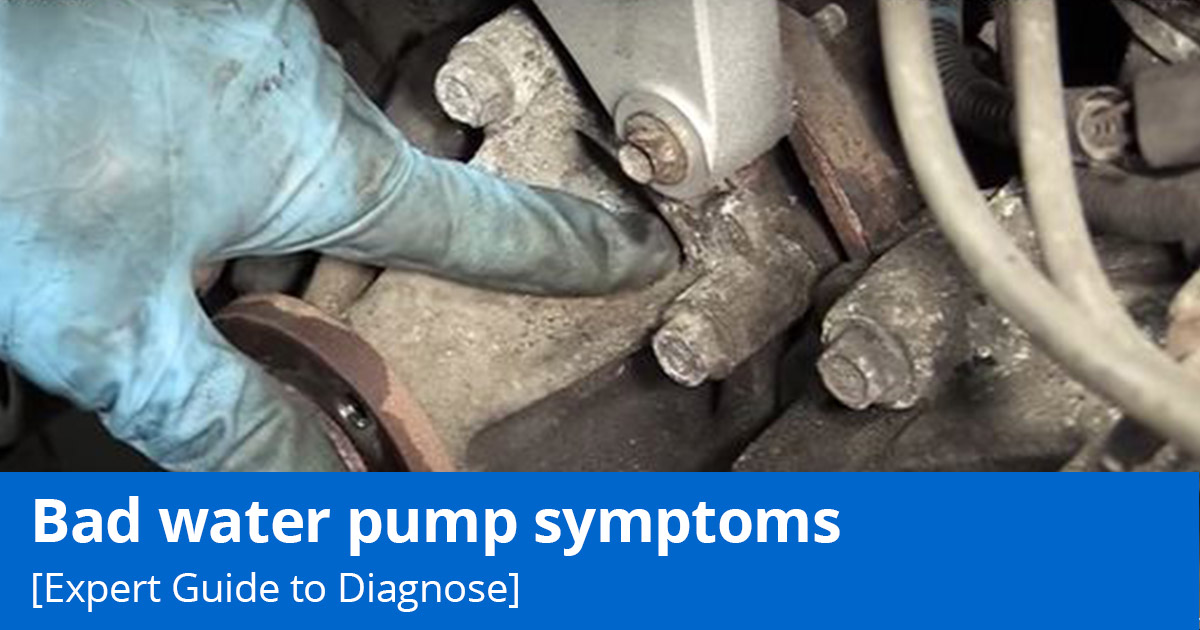
The water pump circulates coolant, but its internal seal wears out. Once it fails, coolant drips from the weep hole, a small opening beneath the pulley designed to warn of impending failure.
How to Spot a Failing Water Pump
• Wetness or rust-colored stains near the timing cover
• Dripping only after driving when the seal fails under heat and pressure
• Whining or grinding noise increasing with RPM
• Play in the pulley when wiggled by hand
Do not wait: If the weep hole is wet, replacement is urgent. A failed pump stops coolant flow, leading to rapid overheating.
When to Replace the Timing Belt Too
On interference engines, the water pump is often driven by the timing belt. Manufacturers recommend replacing both at once. Skipping this risks a $2,000 engine repair later.
Radiator Cap Problems Causing Coolant Loss
It is small, cheap, and often overlooked, but a bad radiator cap can mimic major leaks.
How Radiator Caps Fail
• Rubber seals harden or crack
• Pressure valve will not hold, causing boil-over
• Vacuum valve sticks, preventing reservoir from refilling
Common symptoms:
• Coolant spilled around the filler neck
• Frequent top-offs with no visible leak
• Burping sounds after shutdown
Test it: Use a cap pressure tester. If it will not hold 15 psi or your vehicle’s spec, replace it. Preventative swap every 3 years is smart.
Expansion Tank Cracks and Hidden Leaks
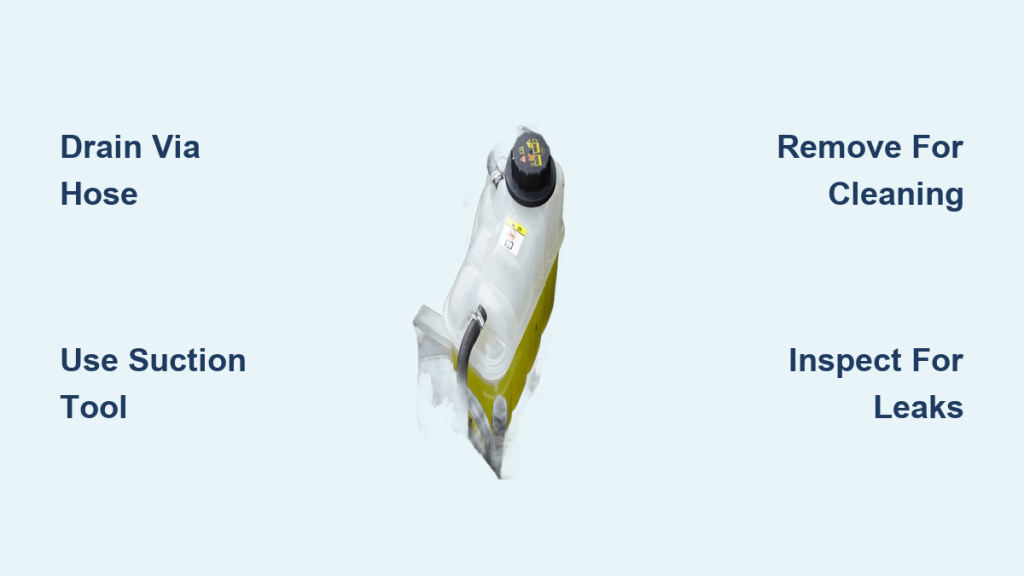
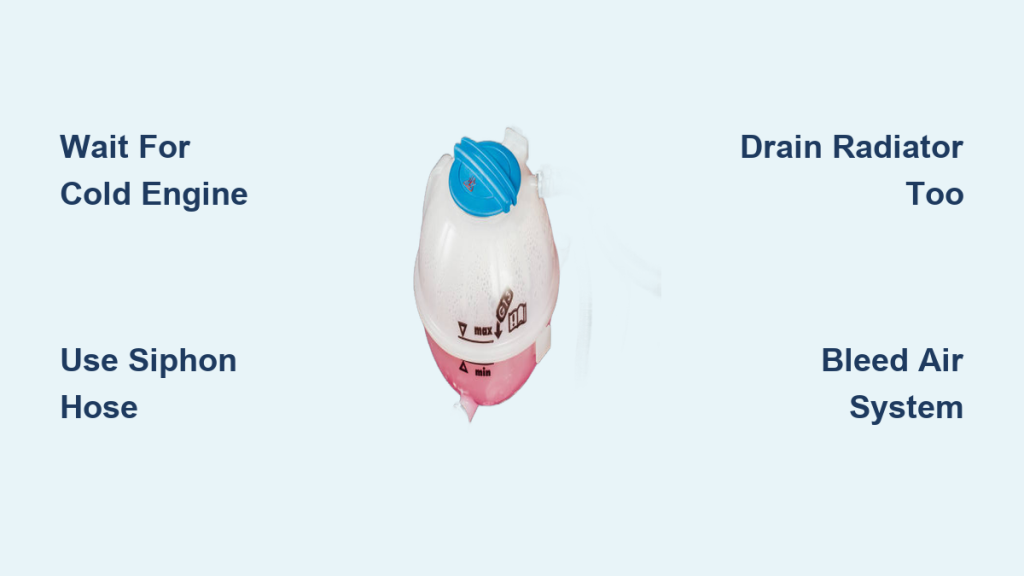
The coolant reservoir expands and contracts daily. Over time, plastic becomes brittle and cracks, especially near mounting brackets or sensor ports.
Hidden Clues to Look For
• Horizontal tidal lines or dried trails
• Bulging sides under pressure
• Coolant dripping from the fender well area
Fix: Replace the tank. They are not repairable. Refill to the MIN/MAX marks based on engine temperature.
Thermostat Housing and Module Leaks
Thermostats regulate coolant flow, but their housings, often plastic, crack from overheating or over-tightened bolts.
Modern Heat-Management Module Failures
Newer cars from BMW, Ford EcoBoost, and GM use complex electronic modules with multiple coolant lines. A single O-ring failure can leak steadily.
Diagnosis challenge: These are hidden under engine covers and require disassembly for visual checks.
Solution: Replace as a complete unit. Never reuse old gaskets.
Heater Core Leaks: Sweet Smell in the Cabin

A leaking heater core sends coolant into the passenger footwell. You will not see it under the hood, but you will smell it.
Telltale Signs of Heater Core Failure
• Sweet, antifreeze-like odor inside the car
• Foggy windshield or soaked floor mats
• Poor cabin heating despite hot engine
Why it is costly: Accessing the heater core means removing the dashboard. Labor alone can hit $500.
DIY test: Run the heater on high. If fog builds fast and smells sweet, suspect the core.
Internal Leaks: Head Gasket and Engine Cracks
When coolant disappears with no puddle, the problem is inside the engine. This is serious and expensive.
Blown Head Gasket Symptoms
• White, sweet-smelling exhaust smoke
• Milky brown sludge on the oil dipstick
• Bubbles in the radiator or reservoir while running
• Engine overheats despite full coolant
How it happens: Overheating warps the cylinder head, breaking the gasket seal between combustion chambers and coolant passages.
How to Confirm a Head Gasket Leak
- Block test: Use a hydrocarbon detection kit. Blue fluid turns yellow or green if exhaust gases are in the coolant.
- Pressure test: Watch for rapid pressure rise in the cooling system.
- Compression test: Low or uneven cylinder readings confirm leakage.
Cracked Block or Cylinder Head
Worse than a head gasket, a cracked block or head allows coolant into cylinders or oil.
Common Causes
• Severe overheating causing thermal stress
• Frozen coolant expanding in winter
• Manufacturing defect
Diagnosis options:
• Dye penetrant test for surface cracks
• Borescope inspection of internal passages
• Hydrostatic test to pressurize the block
Repair reality: Often not cost-effective. Replacement engine or major rebuild required.
Failed Freeze Plugs Causing Coolant Loss
Despite the name, freeze plugs seal casting holes from engine manufacturing, not to pop when coolant freezes.
Why Freeze Plugs Leak
• Rust from poor coolant maintenance
• Electrolysis with stray voltage above 0.1V in cooling system
• Improper installation
Locations: Sides of engine block, rear of cylinder head. Some require transmission removal on transverse V6 engines.
Repair cost: $800 to $1,500 or more due to labor. Stop-leak products may buy time for rear plugs.
Coolant Mixing Mistakes and Corrosion
Using the wrong coolant or mixing types destroys the system from within.
Coolant Compatibility Risks
| Type | Color | Lifespan | Do Not Mix With |
|---|---|---|---|
| IAT | Green | 2 years | OAT, HOAT |
| OAT | Orange or Red | 5 years | IAT |
| HOAT | Yellow or Blue | 3 to 5 years | IAT |
| G-48 | Various | 5+ years | Non-OEM |
Danger: Mixing causes gel, sludge, and clogs. It attacks hoses, water pumps, and heater cores.
Rule: Always use OEM-specified coolant. Never mix colors.
Intermittent Leaks: Why the Problem Seems to Go Away
Some leaks vanish when the engine heats up, creating a false sense of security.
Thermal Expansion Sealing Small Cracks
• Metal expands when hot, temporarily closing small gaps
• Leak reappears when the engine cools
• Reverse scenario: Brittle plastic cracks only when cold
Evaporative Leaks
• Small spray hits hot exhaust manifold and vaporizes instantly
• No puddle forms
• Common at high RPM
Expert warning: A disappearing leak is a red flag. It will return, often during a long drive or hot day.
How to Find Any Coolant Leak
Step 1: Cold Visual Inspection
Look under the hood for stains, crust, or wetness. Check radiator, hoses, pump, reservoir, and firewall. Use a flashlight and mirror for tight spots.
Step 2: Pressure Test the Cooling System
- Wait until engine is cool
- Attach pressure tester to radiator or reservoir
- Pump to 15 psi or your vehicle’s spec
- Watch gauge for 15 to 30 minutes
- Look for drips or spray
Bonus tip: Place a white cardboard sheet underneath to catch faint traces.
Step 3: UV Dye Test
Add fluorescent dye to coolant. Run engine 10 to 15 minutes. Scan with UV light. Glowing trails reveal the exact source.
Stop-Leak Products: When to Use and Avoid
Temporary Fixes Only
• Bar’s Leaks, Steel Seal, and CRC Repair use nanoparticles or fibers to seal micro-cracks under heat
• Best for hard-to-reach freeze plugs or minor gasket seepage
• Risks include clogging heater core, radiator, or oil passages
Never use stop-leak if:
• You have aluminum components that can clog
• Coolant is contaminated
• Leak is large or external
Bottom line: Stop-leak is emergency use only. Replace the part when possible.
Repair Costs and DIY Feasibility
| Repair | Can You DIY? | Average Cost |
|---|---|---|
| Radiator cap | Yes | $10 to $30 |
| Coolant hose | Yes | $20 to $80 |
| Expansion tank | Yes | $30 to $100 |
| Radiator | Intermediate | $200 to $800 |
| Water pump | Intermediate | $150 to $400 |
| Thermostat housing | Intermediate | $100 to $300 |
| Heater core | No | $600 to $1,200 |
| Head gasket | No | $1,000 to $2,500 |
| Rear freeze plug | No | $800 to $1,500 |
DIY tip: Always bleed the cooling system after refilling. Air pockets cause overheating and false symptoms.
Prevent Coolant Leaks Before They Start
Maintenance That Works
• Replace coolant on schedule: IAT every 2 years, OAT every 5 years
• Inspect hoses annually: Replace every 5 to 7 years
• Test radiator cap yearly
• Use distilled water: Prevents mineral buildup
• Check for electrolysis: Test voltage in coolant. It should be below 0.1V
Pro move: Keep a log of coolant changes. Use only OEM-approved types.
Final Checklist: What to Do Now
Act fast based on your symptoms:
• See a puddle? Start with hoses, radiator, and pump
• Coolant vanishing with no sign? Suspect head gasket, freeze plug, or crack
• Sweet smell inside? Heater core is likely
• Overheating with full coolant? Air pocket, stuck thermostat, or failing pump
Every mile driven with low coolant risks irreversible engine damage.
Key Takeaways for Fixing Coolant Leaks
Coolant leaks do not fix themselves. Whether it is a $10 hose or a $2,000 head gasket, early detection saves money and protects your engine. Use pressure tests, visual checks, and smell clues to find the source, then repair it right. With proper maintenance, your cooling system can last 150,000 miles or more. Ignore it, and you are gambling with your car’s life.
Frequently Asked Questions About Coolant Leaks
Why does my car lose coolant but no leak is visible?
When coolant disappears without a puddle, the leak is likely internal. Common causes include a blown head gasket, cracked cylinder head or engine block, or failed freeze plugs. A block test can confirm if exhaust gases are entering the cooling system.
Can I drive with a minor coolant leak?
Driving with any coolant leak is risky. Even small leaks lead to overheating, which can warp cylinder heads or cause head gasket failure. If the temperature gauge rises or steam appears, stop immediately to prevent catastrophic engine damage.
Why does coolant leak only when the engine is cold?
Some leaks appear only when cold because metal contracts as it cools, reopening small cracks that heat sealed temporarily. Conversely, some plastic components crack only when cold. Either way, the leak will worsen over time.
How much does it cost to fix a coolant leak?
Costs range from $10 for a radiator cap to $2,500 or more for head gasket replacement. External leaks like hoses and radiators are DIY-friendly. Internal leaks and heater core replacements require professional service.
Does stop-leak actually work for coolant leaks?
Stop-leak products provide temporary seals for minor, hard-to-reach leaks like freeze plugs. They are not permanent fixes and can clog cooling system components. Use only in emergencies, then replace the faulty part properly.
What happens if I ignore a coolant leak?
Ignoring a coolant leak leads to engine overheating, warped components, head gasket failure, or complete engine seizure. What starts as a $20 hose replacement becomes a $2,000 engine repair if neglected.