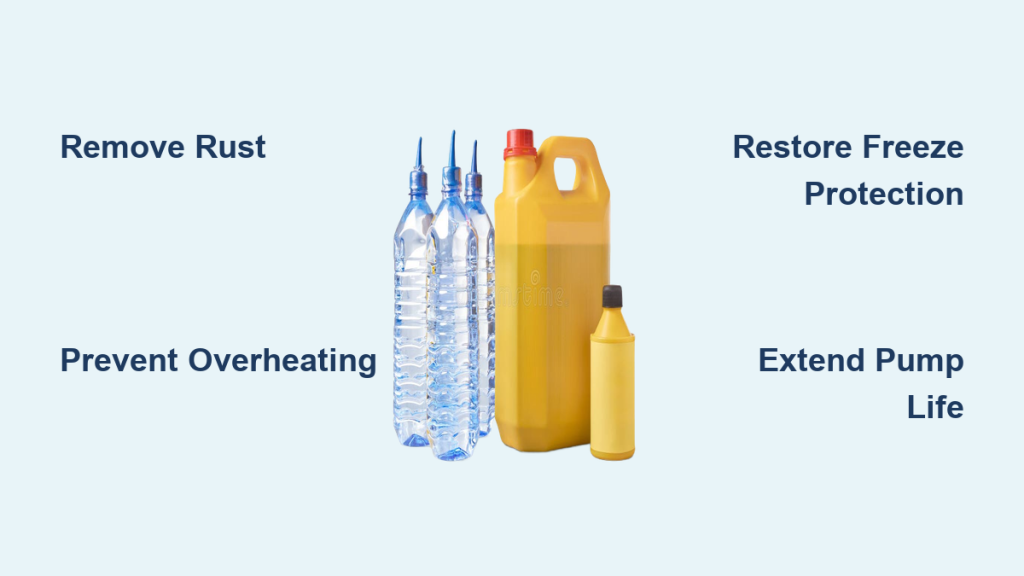
Your car’s engine generates intense heat with every mile driven. Without proper cooling, critical components can warp, crack, or fail completely. At the center of this thermal regulation sits the radiator and the coolant flowing through it. Over time, that coolant breaks down, collects rust and sludge, and loses its ability to protect your engine. A radiator flush is a vital maintenance step that keeps your vehicle running smoothly and safely.
A radiator flush goes beyond a simple drain and refill. It is a complete system cleanse that removes old antifreeze, built-up contaminants, and chemical deposits. By replacing degraded fluid with fresh, properly mixed coolant, you restore critical protection against overheating, freezing, and internal corrosion. In this guide, you will learn the top radiator flush benefits, how to recognize when your car needs one, and what happens if you skip it.
Remove Rust and Scale Buildup
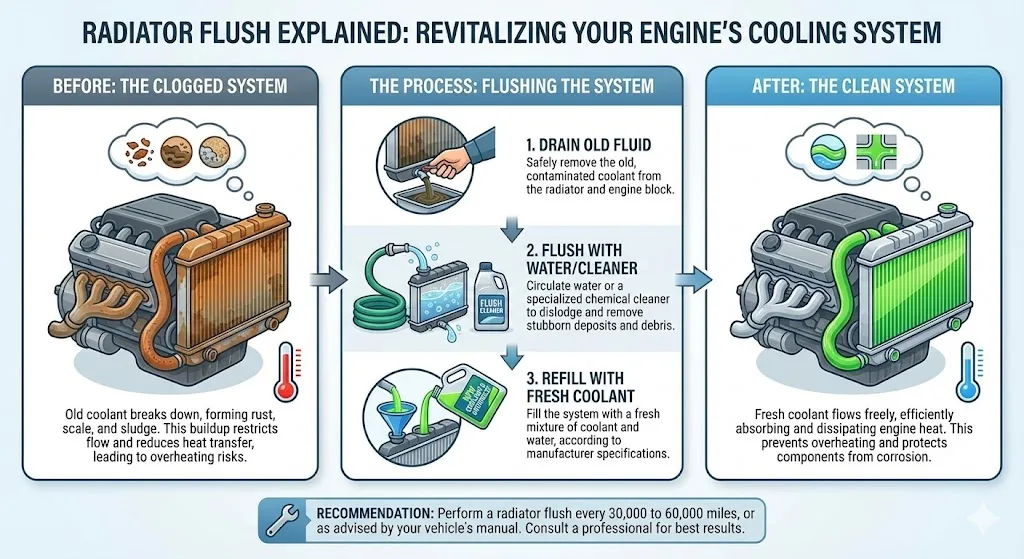
Rust and scale are silent threats inside your cooling system. As coolant ages, its anti-corrosive additives deteriorate, allowing metal components to oxidize. This process creates rust particles and mineral scale that circulate through narrow passages in the radiator, engine water jackets, and heater core.
Flush Out Internal Contaminants
A radiator flush forces cleaning agents and fresh fluid through the entire system, dislodging and removing years of accumulated debris. Unlike a basic drain, which leaves up to 50% of old fluid behind, a full flush expels nearly all contaminated coolant. The result is clean, unobstructed flow paths that allow coolant to move freely and absorb heat effectively.
When rust and scale build up, they act like plaque in arteries. They restrict flow and create hot spots inside the engine. These hot spots can warp or crack cylinder heads. A flush clears these blockages, restoring optimal circulation and preventing long-term damage.
Prevent Clogged Radiator Passages
The radiator contains dozens of small tubes designed to dissipate heat. Even minor clogs from sludge or sediment can reduce cooling efficiency by as much as 30%. A flush clears these passages, ensuring maximum heat transfer.
Visual signs of clogging include:
- Brown or murky coolant
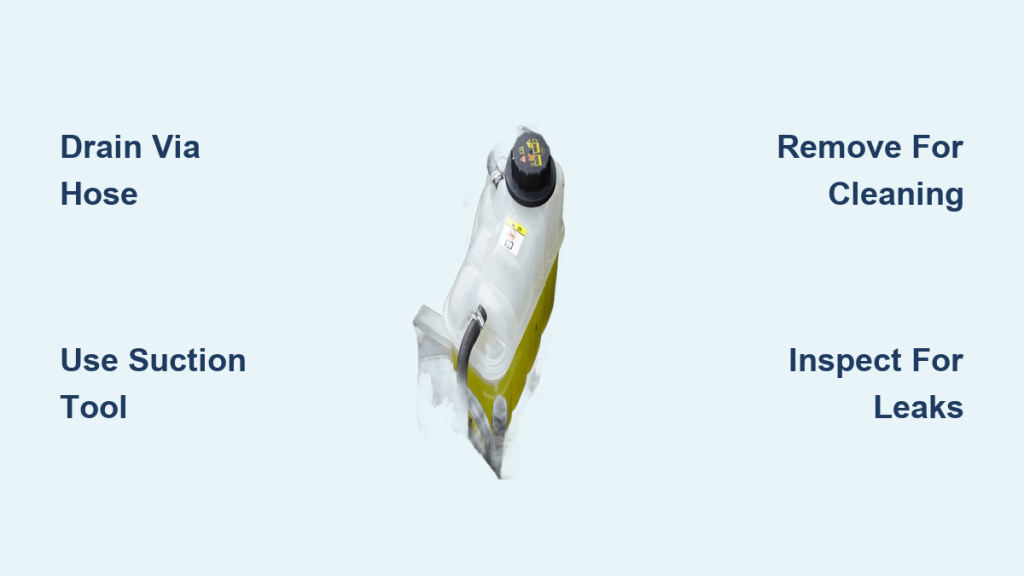
- Visible particles when checking the reservoir
- Sludge under the radiator cap
Left unchecked, clogs force the engine to run hotter than normal, triggering warning lights and increasing wear on all components. A thorough flush eliminates this risk and keeps your radiator functioning like new.
Stop Engine Overheating Fast
Overheating is one of the most dangerous symptoms of a neglected cooling system. While low coolant levels often come to mind, contaminated coolant is just as likely a culprit.
Fix Poor Heat Transfer from Dirty Coolant
Old, dirty coolant does not absorb heat as efficiently as fresh fluid. Rust and scale act as insulators, trapping heat inside the engine instead of transferring it to the radiator. This reduces thermal efficiency and leads to rising temperatures, especially during heavy loads or hot weather.
A radiator flush replaces degraded fluid with fresh coolant engineered to carry heat away quickly. You will notice smoother temperature gauge readings and less strain on the engine during summer drives or uphill climbs.
Avoid Catastrophic Engine Damage
Prolonged overheating can cause irreversible damage:
- Warped cylinder heads
- Blown head gaskets
- Cracked engine blocks
These repairs can cost thousands of dollars, far more than the $40 to $100 price tag of a routine flush. A single severe overheating event can destroy an otherwise healthy engine.
By flushing the system regularly, you eliminate the root causes of overheating. Blockages, poor flow, and ineffective coolant are removed before they cause failure. This simple step can extend engine life by tens of thousands of miles.
Restore Winter Freeze Protection

Coolant does more than keep your engine cool. It also prevents freezing when temperatures drop. But as coolant ages, its freeze protection weakens.
Raise Frost Level to -35°F
Fresh coolant typically provides freeze protection down to -35°F. A radiator flush replaces old fluid with new antifreeze, restoring this critical defense. This is essential for drivers in cold climates where overnight freezes are common.
To check your current frost level:
- Use an antifreeze tester (hydrometer) available at auto parts stores.
- Draw coolant from the radiator when cold.
- Read the float level to see at what temperature it will freeze.
If the tester shows protection below -20°F, it is time for a flush, especially before winter hits.
Prevent Frozen Engine Block Damage
When coolant freezes, it expands. This expansion can crack the engine block or radiator, both expensive and difficult to repair. A cracked block often means engine replacement.
Flushing in the fall ensures your system is filled with properly mixed 50/50 coolant and distilled water. This mixture offers the best balance of freeze protection, boiling point elevation, and corrosion resistance.
Extend Water Pump Life
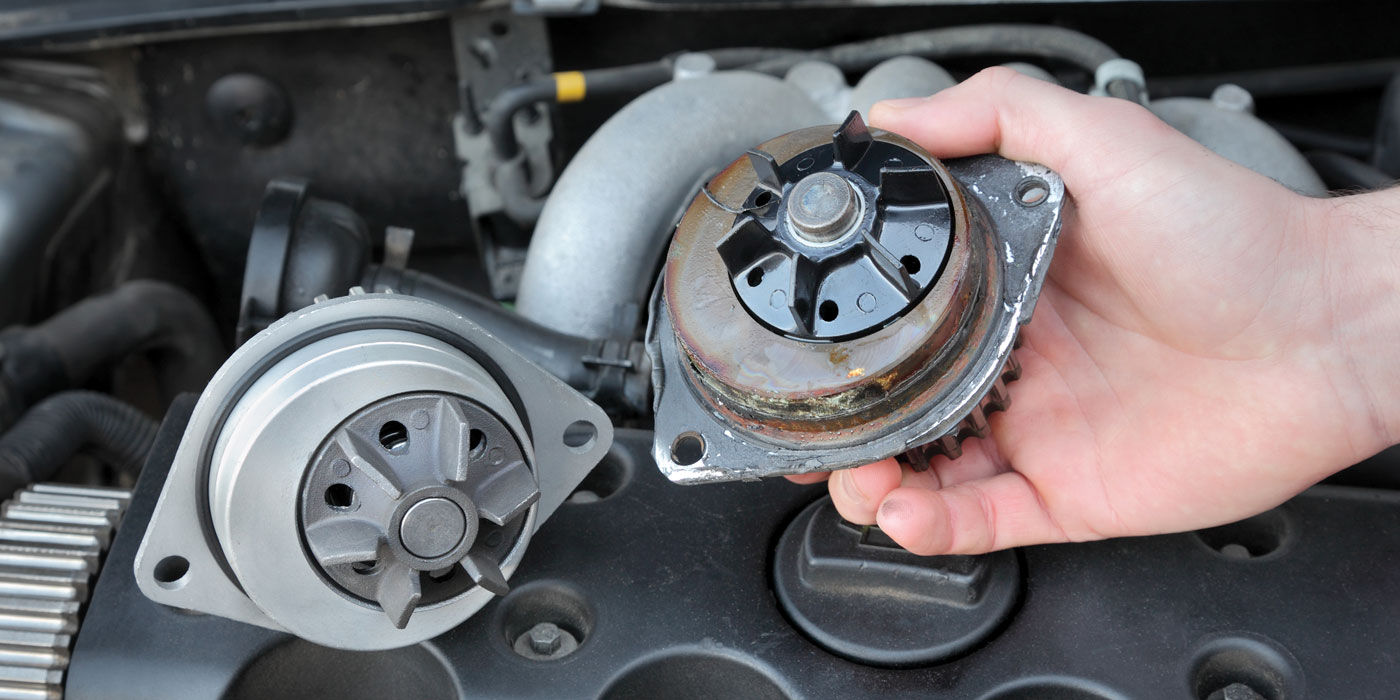
The water pump circulates coolant through the engine and radiator. It is a mechanical part with moving seals and bearings that rely on coolant for lubrication.
Lubricate Pump Seals and Bearings
Fresh coolant contains additives that lubricate the water pump’s internal components. As coolant ages, these additives break down, increasing friction and wear.
Without proper lubrication:
- Pump seals dry out and leak
- Bearings wear prematurely
- Pump noise such as whining or grinding develops
A radiator flush replenishes these protective additives, helping the pump run smoothly and quietly. This can add years to its lifespan and prevent leaks that lead to overheating.
Spot Early Pump Failure Signs
During a flush, inspect for these warning signs:
- Coolant leaks around the pump weep hole
- Wobbling pulley or shaft
- Corrosion on the pump housing
Catching these early signs during maintenance can prevent roadside breakdowns and save you from a $300 to $600 replacement job.
Seal Small Leaks and Prevent Foaming
Modern coolant formulations provide protective benefits beyond temperature regulation. These extras are among the underrated radiator flush benefits many drivers overlook.
Stop Minor Leaks Before They Grow
Sealing agents are often added during the flush process or are present in new coolants. These agents help prevent small leaks from developing within the engine and cooling system components. Catching leaks early avoids larger problems down the road.
Suppress Foam and Air Pockets
Advanced antifreeze solutions include additives that suppress foaming. Foam reduces the fluid’s ability to transfer heat and may create air pockets that hinder circulation. A flush with fresh coolant eliminates foam-related issues and keeps coolant flowing properly.
Restore Corrosion Protection
New fluids replenish the anti-corrosive barrier that protects various metals within the engine. This includes steel, copper, and aluminum components. Without this barrier, oxidation accelerates and damages critical parts over time.
Improve Overall Engine Performance

A clean cooling system does more than prevent problems. It actively enhances how your engine runs.
Maintain Optimal Operating Temperature
Engines are designed to run at a specific temperature range, usually 195°F to 220°F. When the cooling system is clogged or inefficient, the engine runs too hot or too cold, both of which hurt performance.
Running too hot reduces fuel efficiency, increases emissions, and may trigger limp mode. Running too cold increases fuel consumption and oil contamination. A radiator flush ensures consistent temperature control, allowing the engine management system to operate correctly.
Prevent Thermostat and Heater Core Issues
Debris in the coolant can clog the thermostat or heater core. A stuck thermostat causes sudden overheating. A clogged heater core means no cabin heat in winter.
Flushing clears these components, ensuring:
- Fast warm-up times
- Reliable cabin heating
- Smooth thermostat operation
This improves comfort, safety through defogging, and fuel economy.
Follow Correct Flush Intervals
Timing matters with radiator maintenance. Too early wastes money. Too late allows damage to develop.
Flush Every 30,000 Miles or 5 Years
Most manufacturers recommend a radiator flush every 30,000 miles or 5 years, whichever comes first. Some modern vehicles with long-life coolant may go up to 100,000 miles or 10 years, but always check your owner’s manual.
Factors that shorten the interval include:
- Frequent short trips that prevent full warm-up
- Towing or heavy loads
- Extreme heat or cold
- Older vehicles over 8 years old
If you are unsure, have your coolant tested at an auto shop. They can measure pH levels and contamination to determine if a flush is needed now.
Know When to Flush Sooner
Do not wait for the mileage if you see warning signs:
- Coolant looks brown or rusty
- Temperature gauge runs high
- Sweet smell from under the hood
- Heater is not working well
These are red flags that your system needs immediate attention.
Use the Right Coolant and Mix
Using the wrong fluid can cause more harm than good. Matching coolant to your vehicle is essential.
Match Coolant Type to Your Vehicle
Modern coolants come in different formulations:
- IAT (Inorganic Additive Technology): Green, older standard
- OAT (Organic Acid Technology): Orange, red, or pink, long-life
- HOAT (Hybrid OAT): Yellow or turquoise, common in European and newer American cars
Each type has different chemical properties. Mixing them can create sludge that blocks the radiator.
Always consult your owner’s manual for the correct specification. When in doubt, ask a mechanic or use a coolant compatibility chart.
Mix 50/50 with Distilled Water
The ideal ratio is 50% antifreeze and 50% distilled water. This mix prevents freezing to -35°F, raises the boiling point to about 265°F, and provides corrosion protection.
Never use tap water. It contains minerals that cause rust and scaling. Always use distilled water for mixing or topping off. Pre-mixed 50/50 coolant is available and eliminates mixing errors.
DIY vs Professional Flush
You can flush the radiator yourself or pay a professional. Both options have pros and cons.
DIY Flush: Save Money, Take Caution
A DIY flush costs under $30 and takes about one hour.
What you will need:
- Radiator flush cleaner
- 1 to 2 gallons distilled water
- 50/50 coolant mix or concentrate plus distilled water
- Drain pan with 2+ gallon capacity
- Jack and jack stands (optional)
- Gloves and safety glasses
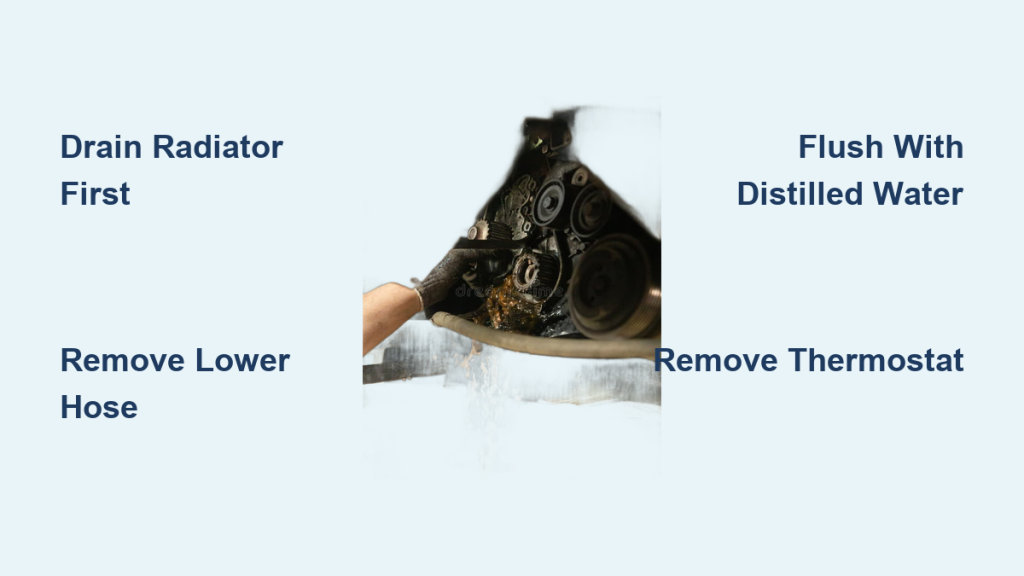
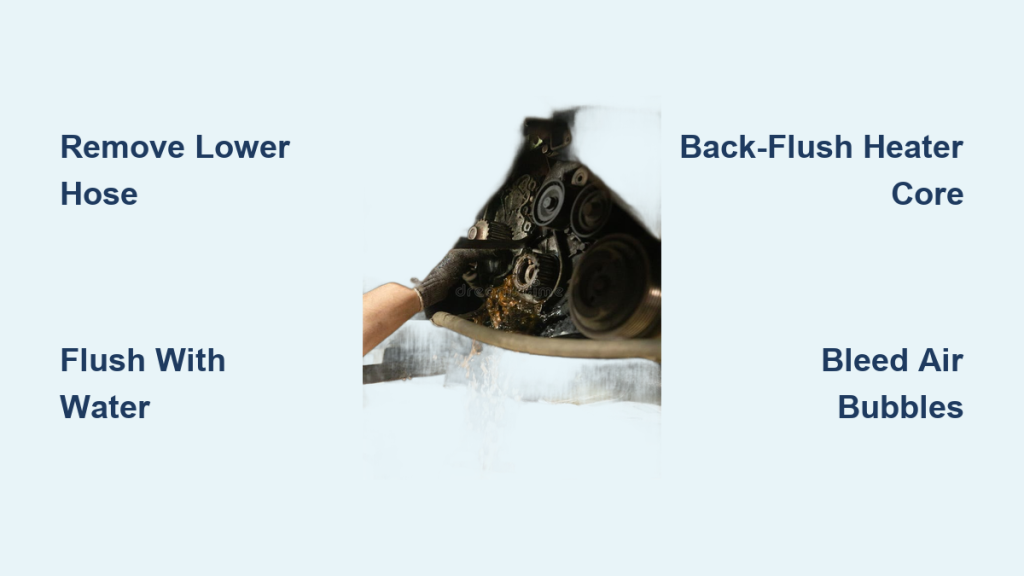
Steps to follow:
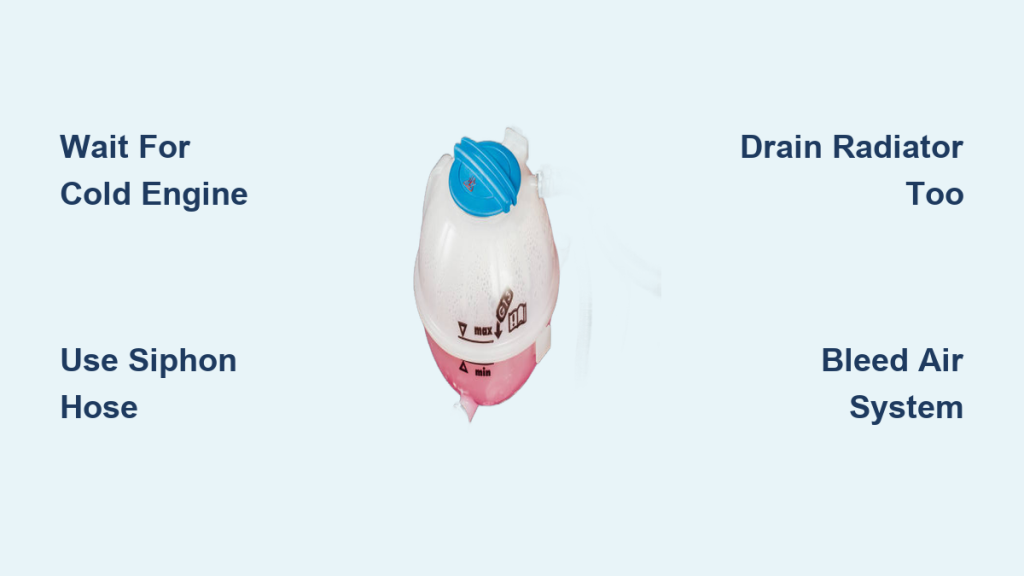
- Let the engine cool completely for at least 30 minutes.
- Drain old coolant via the petcock or radiator cap.
- Add flush cleaner and distilled water, then run the engine 10 to 15 minutes with the heater on full.
- Drain the mixture, then rinse with distilled water until clear.
- Refill with fresh 50/50 coolant.
- Bleed air by running the engine with the cap off.
Risks include air pockets if not bled properly, using the wrong coolant type, spilling toxic antifreeze, and improper disposal.
Professional Flush: Complete and Safe
Mechanics use machine-powered fluid exchange systems that replace nearly 100% of old coolant. This is far more effective than a manual drain.
Benefits include:
- Full system flush covering the engine block and heater core
- Expert inspection of hoses, cap, and pump
- Proper disposal of used coolant
- No risk of air pockets
- Leak detection included
Cost ranges from $40 to $100, a small price for peace of mind and long-term engine protection.
Dispose of Coolant Safely
Antifreeze is toxic and environmentally hazardous. Proper handling protects you and the planet.
Handle with Care
Ethylene glycol, found in most coolants, is deadly if ingested. Even small amounts can kill pets or children. It has a sweet taste that attracts animals.
Always follow these precautions:
- Wear gloves and eye protection
- Store in sealed, labeled containers
- Clean spills immediately with absorbent material
Recycle, Don’t Dump
Never pour coolant on the ground, down drains, or in storm sewers. It contaminates water supplies and harms wildlife.
Instead, take used coolant to an auto parts store (many accept it for free), use a hazardous waste disposal facility, or check local recycling programs. Recycling centers reclaim glycol and reuse it, reducing environmental impact.
Frequently Asked Questions About Radiator Flush Benefits
How often should I flush my radiator?
Most vehicles need a radiator flush every 30,000 miles or 5 years. Some modern cars with long-life coolant can go up to 100,000 miles or 10 years. Always check your owner’s manual for the manufacturer’s specific recommendation.
What are the signs that my radiator needs flushing?
Watch for brown or rusty coolant, visible debris in the reservoir, a sweet smell from under the hood, a temperature gauge that runs high, or a heater that does not work well. These symptoms indicate contaminated coolant that needs replacement.
Can I do a radiator flush myself?
Yes, a DIY flush is possible with basic tools and about one hour of work. You will need flush cleaner, distilled water, fresh coolant, and safety gear. However, improper bleeding or wrong coolant selection can cause problems, so follow instructions carefully.
How much does a professional radiator flush cost?
A professional radiator flush typically costs between $40 and $100. This price often includes a full system inspection, leak detection, and proper disposal of old coolant. Costs above $100 may indicate additional repairs are needed.
What happens if I never flush my radiator?
Skipping radiator flushes allows rust, scale, and sludge to accumulate. This leads to overheating, clogged passages, water pump failure, and eventually catastrophic engine damage. Repairs for cracked blocks or blown head gaskets can cost thousands of dollars.
What type of coolant should I use in my vehicle?
Check your owner’s manual for the correct specification. Common types include IAT (green), OAT (orange, red, pink), and HOAT (yellow, turquoise). Mixing different types can cause chemical reactions that produce sludge and damage your cooling system.
Key Takeaways: Why Radiator Flush Benefits Matter for Your Engine
A radiator flush delivers powerful protection at a low cost. It removes rust and scale that clog vital passages, prevents catastrophic overheating, and restores freeze protection down to -35°F. Fresh coolant also lubricates your water pump, seals small leaks, and keeps your engine running at its optimal temperature.
Following the correct interval of every 30,000 miles or 5 years keeps your cooling system in top shape. Using the right coolant type and a 50/50 mix with distilled water ensures maximum performance and longevity. Whether you choose a DIY approach or professional service, the radiator flush benefits far outweigh the modest investment.
Pro Tip: Schedule your next radiator flush during a routine oil change or seasonal tire swap. This makes it easier to remember and keeps your maintenance on track year after year. Do not wait for a warning light. Flush early, flush right, and protect your engine for the long haul.