
No, the radiator fan does not always run. It operates only when needed to regulate engine temperature, primarily during low-speed driving, idling, or when the air conditioning is active. Continuous operation, especially when the engine is cold or after shutdown for more than a few minutes, points to a malfunction in the cooling system.
Understanding why your radiator fan behaves a certain way can prevent overheating, battery drain, and costly repairs. This guide explains when the fan should run, what causes it to run constantly, how to diagnose the issue, and what steps to take to fix it.
When the Radiator Fan Should Turn On

The radiator fan runs based on real-time engine conditions, not on a continuous loop. It activates only when airflow through the radiator drops or thermal load increases.
Engine Reaches Operating Temperature
The fan turns on when coolant reaches 200–230°F (93–104°C). Below this range, the engine needs to warm up efficiently, so the fan stays off. Once the coolant hits the threshold, the Engine Control Unit signals the fan relay to power the motor. This usually happens 15 to 20 minutes after starting a cold engine.
If the fan runs before the engine warms up, it signals a fault.
Air Conditioning Is Engaged
Turning on the A/C increases engine heat and requires the condenser to release refrigerant heat. Most vehicles automatically activate the radiator fan when the A/C compressor runs, even if engine temperature is slightly below normal. This maintains A/C efficiency and prevents overheating.
After turning off the A/C, the fan may continue briefly to cool the condenser.
Vehicle Is Idling or Moving Slowly
At idle or in stop-and-go traffic, natural airflow through the grille drops significantly. Without enough air passing through the radiator, the electric fan kicks in to force cooling. This is the most common time to hear the fan running.
On highways, where airflow is consistent, the fan often stays off, even in hot weather.
Post-Shutdown Fan Behavior Explained
It is normal for the radiator fan to run briefly after turning off the engine. How long it runs determines whether it is functioning correctly.
Normal: Runs 1–2 Minutes After Off
After heavy driving, hot weather, or prolonged A/C use, residual heat lingers in the engine block and coolant. Since the water pump stops circulating coolant when the engine shuts down, the fan runs independently to dissipate this heat soak. This post-shutdown cycle typically lasts 1 to 2 minutes, though some systems allow up to 5 minutes depending on conditions.
This is a designed safety feature and not a cause for concern.
Abnormal: Runs More Than 5 Minutes
If the fan keeps spinning for more than 5 minutes after shutdown, or starts again hours later, an electrical fault is likely. Common culprits include a stuck relay, shorted wiring, or false temperature readings from a failed sensor.
This behavior drains the battery and risks leaving you stranded.
Key Causes of a Constantly Running Fan
A radiator fan that runs nonstop while driving, idling cold, or parked indicates a failure in the control system. Here are the most frequent causes, ranked by likelihood.
Faulty Coolant Temperature Sensor
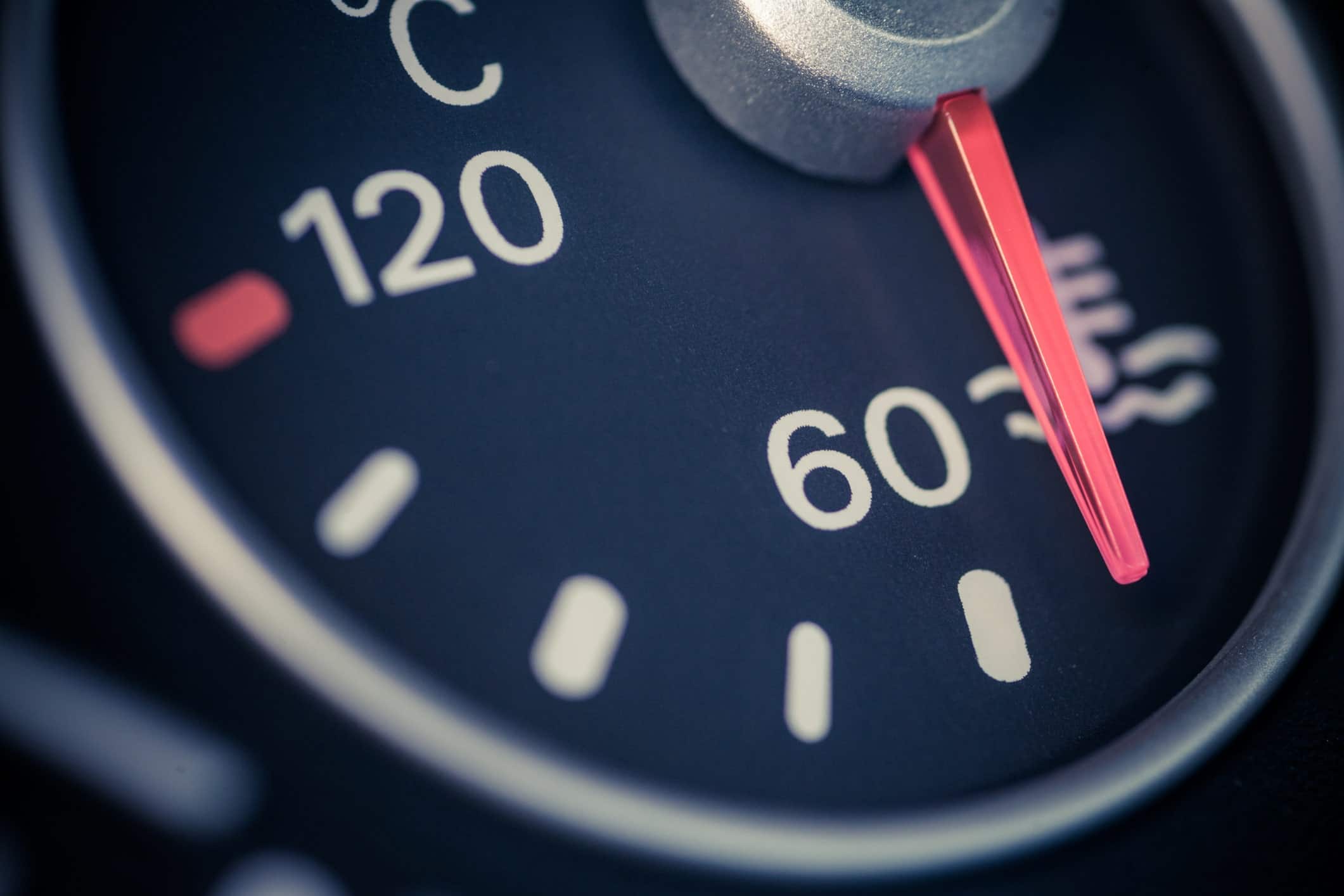
The coolant temperature sensor tells the ECU how hot the engine is. It is a thermistor that changes resistance with temperature.
- Failure mode: If it fails and sends a signal indicating “hot” when the engine is cold, the ECU thinks the engine is overheating and keeps the fan on.
- Symptoms: Fan runs constantly; temperature gauge may read inaccurately; check engine light might illuminate.
- Test: Use a multimeter to measure resistance at different engine temperatures and compare to factory specs.
Pro tip: Unplugging the sensor can help diagnose. If the fan stops when unplugged, the sensor is likely shorted. If it keeps running, the issue lies elsewhere.
Stuck Fan Relay
The fan relay acts as a switch, delivering power to the fan motor when the ECU commands it.
- Failure mode: Internal contacts weld shut due to heat or age, sending constant power to the fan regardless of temperature.
- Symptoms: Fan runs even with a cold engine; sometimes continues indefinitely after shutdown.
- Test: Swap the fan relay with a similar one, like the horn relay. If the fan stops, the original relay was faulty.
Always check the fuse box diagram to identify the correct relay.
Wiring Short to Ground or Power
Damaged wiring can bypass the ECU and keep the fan energized.
- Failure mode: A frayed wire touching the chassis (ground short) or fused to a live circuit (power short) can complete the circuit permanently.
- Common locations: Near the fan motor, radiator support, or engine bay harness where heat and vibration degrade insulation.
- Test: Disconnect the fan connector and check for voltage with the key off. Any reading means there is a parasitic draw or short.
Look for melted insulation, corrosion, or loose terminals at the fan plug.
Defective Fan Switch on Older Models
Some vehicles use a separate thermal fan switch screwed into the radiator or engine block instead of relying solely on the ECU.
- Failure mode: The switch closes at a set temperature. If it fails in the “on” position, the fan runs continuously.
- Test: Monitor the switch’s continuity with a multimeter while heating the engine. It should open when temperatures drop.
This is more common in pre-1990s and some import models.
ECU or PCM Malfunction
The Engine Control Unit or Powertrain Control Module processes all sensor data and controls fan timing.
- Failure mode: Rare but possible. A software glitch or internal hardware fault may cause the ECU to ignore correct temperature data and leave the fan on.
- Diagnosis: Requires a professional OBD2 scanner to view live data streams and check for error codes.
- Symptoms: All sensors test good, relay is functional, but the fan still runs nonstop.
Replace only after ruling out sensors, relays, and wiring.
Mechanical Fan Clutch Failure
Vehicles with mechanical fans use a fan clutch to engage the fan based on temperature.
- Failure mode: The clutch contains thermal wax or a bimetal spring. If it fails, the fan locks up and spins constantly.
- Symptoms: Loud whirring noise at high speeds; reduced fuel economy; fan spins freely when engine is off (should have slight drag).
- Test: With engine off, try spinning the fan by hand. If it spins more than 1 to 2 turns or feels stiff, the clutch is bad.
This type of fan runs whenever the engine runs but should freewheel when cool.
Secondary Issues That Trigger Constant Fan Operation
Sometimes the fan runs constantly not because of a direct fault in the fan system, but due to related cooling problems.
Low Coolant Level
Insufficient coolant reduces heat transfer capacity, causing localized hot spots.
- Effect: Engine runs hotter than normal, triggering the fan to stay on.
- Check: Inspect the overflow tank and radiator when cold. Top off with the correct coolant mix if low.
- Warning: Low coolant often points to a leak. Find and repair it promptly.
Stuck-Closed Thermostat
The thermostat regulates coolant flow between the engine and radiator.
- Failure mode: If stuck closed, coolant cannot reach the radiator, leading to rapid overheating.
- Effect: Fan runs constantly in a failed attempt to cool an overheating engine.
- Test: Feel the upper radiator hose after warm-up. If it stays cool while the engine overheats, the thermostat is not opening.
Replace every 60,000 to 100,000 miles as preventative maintenance.
Blocked Radiator or Debris Buildup
Dirt, bugs, leaves, or internal rust can restrict airflow or coolant flow.
- Effect: Reduced heat dissipation forces the fan to run longer or continuously.
- Fix: Clean the radiator fins with a soft brush and water. For internal blockages, flush the system or replace the radiator.
Avoid high-pressure washers, as they can bend the fins.
A/C System Faults
Faulty pressure switches or control modules in the A/C system can send incorrect signals to the fan control circuit.
- Example: A failed high-pressure switch may simulate A/C demand, forcing the fan on.
- Test: Turn off the A/C and see if the fan stops. Use A/C gauges or a scan tool to check refrigerant pressure readings.
Even with A/C off, a glitch can keep the fan active.
Risks of Ignoring a Constantly Running Fan
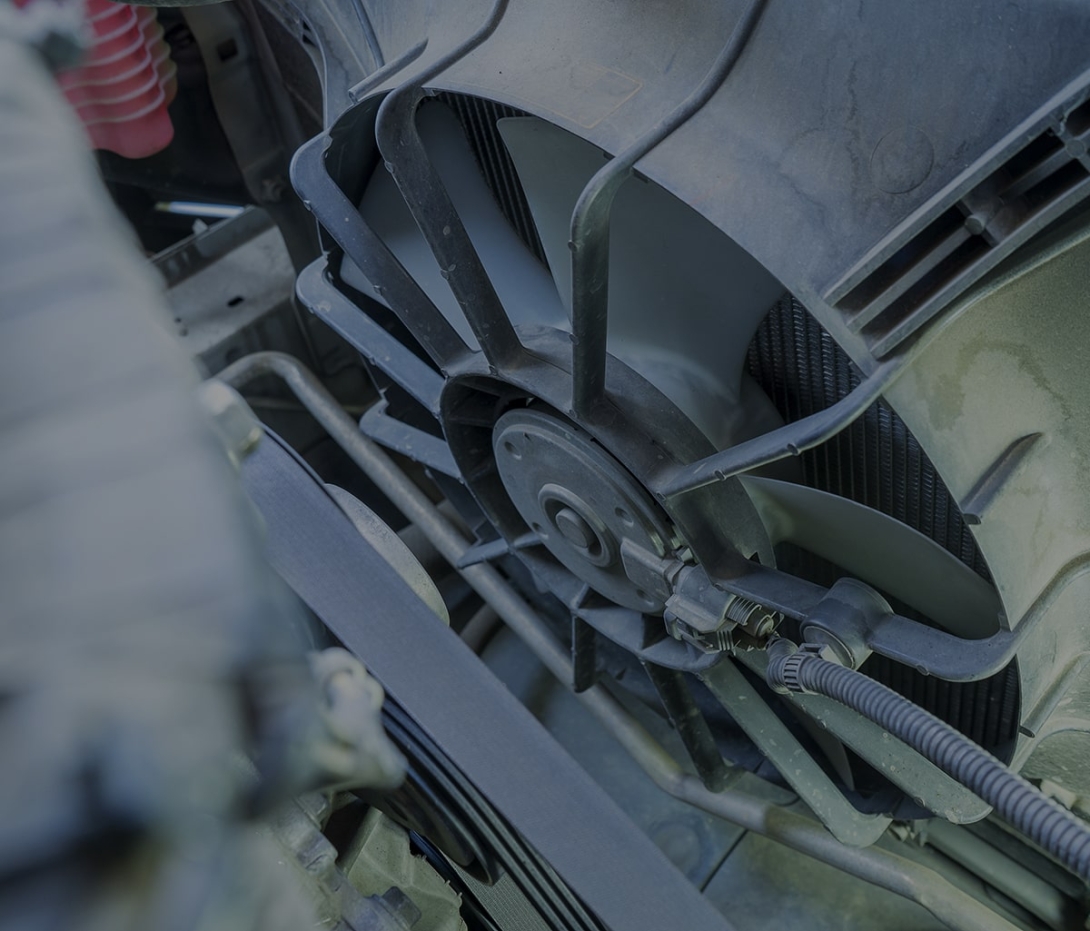
Leaving a continuously running fan unaddressed can lead to serious consequences beyond just noise.
Battery Drains Overnight
An electric fan draws 10 to 20 amps, a heavy load for the battery.
- Risk: If the fan runs after shutdown due to a stuck relay or short, it can drain the battery in 1 to 3 hours.
- Result: Dead battery, no-start condition, potential alternator strain.
Always test for parasitic draws if your battery dies unexpectedly.
Premature Fan Motor Failure
Fan motors are built for intermittent use, not continuous operation.
- Consequence: Constant running overheats the motor windings and wears out bearings faster.
- Outcome: Noisy operation, reduced airflow, or complete motor burnout.
Replacing a motor costs more than fixing a $15 relay.
Masks Serious Cooling Problems
A constantly running fan may be compensating for a deeper issue such as:
– Coolant leak
– Failing water pump
– Clogged radiator
– Head gasket breach
Fixing the fan without addressing the root cause risks catastrophic engine damage from overheating.
Reduces Fuel Efficiency
While minor, an always-on electric fan increases alternator load, which saps engine power.
- Impact: Slight increase in fuel consumption.
- Worse case: A locked mechanical fan creates direct parasitic drag, costing 5 to 10% in fuel economy and horsepower.
How to Test and Fix the Problem

Follow these steps to safely diagnose and resolve a constantly running radiator fan.
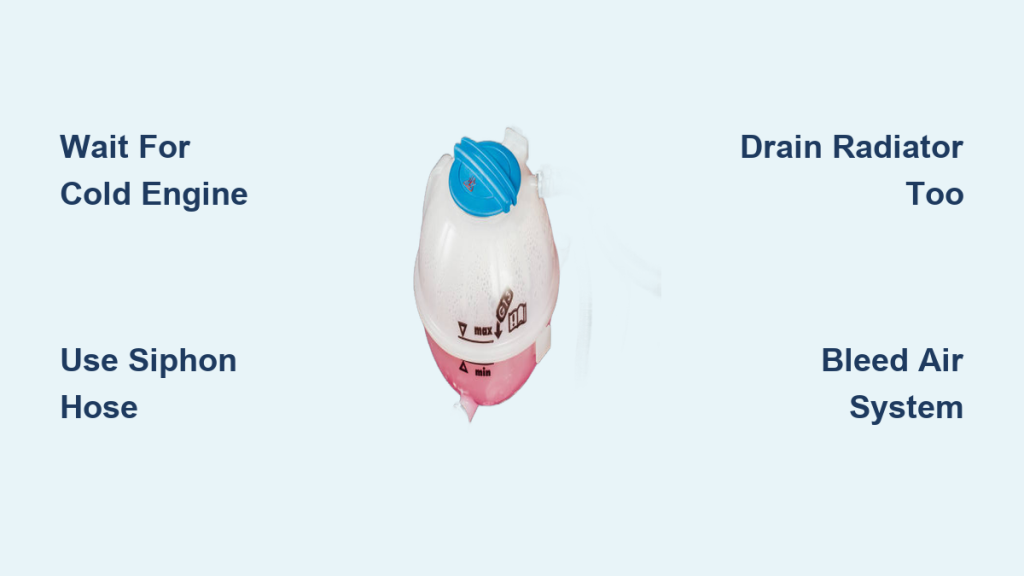
Step 1: Check Coolant Level and Condition
- Wait until the engine is cold.
- Open the coolant reservoir and verify the level is between “min” and “max.”
- Look for rust, oil contamination, or sludge.
- Top off with proper coolant mix if low, and inspect for leaks.
Time estimate: 5 minutes.
Step 2: Inspect the Fan Relay
- Locate the fan relay in the fuse box (refer to the owner’s manual).
- Swap it with a same-type relay, such as the horn or A/C relay.
- Start the engine. If the fan stops, the original relay was faulty.
Pro tip: Tap the relay gently with a screwdriver. If the fan stops or starts, it is failing internally.
Step 3: Test the Coolant Temperature Sensor
- Find the CTS, usually near the thermostat housing.
- Disconnect the connector.
- Use a multimeter to measure resistance.
- Compare readings to manufacturer specs at different temperatures.
If resistance is out of range, replace the sensor.
Step 4: Look for Wiring Damage
- Inspect the wiring harness from the fan to the ECU.
- Check for melted insulation, chafed wires, or corrosion at connectors.
- Pay attention to areas near hot exhaust components.
Use electrical tape or heat shrink tubing to repair minor damage.
Step 5: Perform a Post-Shutdown Observation
- Drive the vehicle until fully warmed up.
- Turn off the engine and time the fan.
- Normal: Runs 1 to 2 minutes, then shuts off.
- Faulty: Runs longer than 5 minutes or restarts later.
If it runs too long, suspect relay, sensor, or wiring.
Step 6: Scan for Error Codes
- Use an OBD2 scanner to read stored or pending codes.
- Common codes include P0115–P0119 (coolant temp sensor) and P0480 (fan control circuit).
- Live data can show if the ECU is seeing false high temperatures.
Professional-grade scanners offer better diagnostics.
Preventive Maintenance Tips
Keep your cooling system in top shape to avoid fan issues.
Clean Radiator and Fan Blades Regularly
- Every 6 months, rinse debris from the radiator face.
- Use a degreaser for bug buildup; avoid high pressure.
- Wipe fan blades with a damp cloth.
Clean fins improve airflow and reduce fan runtime.
Replace Coolant on Schedule
- Most manufacturers recommend replacement every 30,000 to 60,000 miles.
- Old coolant becomes acidic and corrodes sensors, thermostats, and radiators.
- Use the correct type (OAT, HOAT, etc.) for your vehicle.
Flushing removes sludge and restores efficiency.
Inspect Relays and Fuses Annually
- Remove and examine relays for signs of burning or pitting.
- Check fuses for discoloration or broken elements.
- Replace any suspect components proactively.
A $10 relay can save you a tow.
Monitor the Temperature Gauge
- Watch for gradual rises in normal operating temperature.
- If the needle creeps higher than usual, inspect the system early.
Early detection prevents major failures.
Frequently Asked Questions About Radiator Fan Operation
How long should the radiator fan run after turning off the engine?
The fan should run for 1 to 2 minutes after shutdown to dissipate residual heat. If it runs longer than 5 minutes, a stuck relay, faulty sensor, or wiring short is likely the cause.
Is it normal for the radiator fan to run constantly while idling?
Yes, it is normal during extended idling or in hot weather because natural airflow is minimal. However, if the fan runs nonstop while idling with a cold engine, a faulty coolant temperature sensor or stuck relay is the usual culprit.
Can a bad thermostat cause the radiator fan to run all the time?
Yes. A thermostat stuck in the closed position prevents coolant from reaching the radiator, causing the engine to overheat. The fan then runs constantly in an attempt to cool the engine.
Why does my radiator fan run when the engine is cold?
A radiator fan running on a cold engine typically indicates a faulty coolant temperature sensor sending incorrect high-temperature signals to the ECU, or a stuck fan relay that is permanently closed.
Does the radiator fan run when the A/C is on?
In most vehicles, yes. Engaging the A/C increases thermal load on the engine and condenser, so the ECU activates the radiator fan to help dissipate heat, even if coolant temperature is below the normal trigger point.
What happens if I ignore a constantly running radiator fan?
Ignoring the issue can drain the battery, burn out the fan motor, reduce fuel efficiency, and mask serious cooling problems like coolant leaks or a failing water pump, which may lead to engine damage.
Key Takeaways for Radiator Fan Behavior
The radiator fan does not run all the time. It cycles on and off based on engine temperature, A/C use, and driving conditions. If it runs constantly, especially when cold or after shutdown, it signals a fault in the sensor, relay, wiring, or broader cooling system.
Left unchecked, this issue can drain the battery, burn out the motor, or hide serious engine problems. By following the diagnostic steps outlined above, you can identify and fix the cause before it leads to breakdowns or expensive repairs. Start by checking coolant levels and inspecting the fan relay, then work through the sensor and wiring tests to pinpoint the exact failure.