You walk into a chilly room expecting warmth, but the radiator sits cold and silent. A steam radiator not getting hot is one of the most common heating complaints in older homes, especially during the first cold snap of the season. The problem rarely points to the boiler itself. More often, the culprit is a small part on the radiator that costs little to fix.
This guide walks you through the most frequent causes of cold steam radiators and shows you how to solve each one. You will learn to diagnose air vent failures, valve issues, slope problems, and trapped condensation. With basic tools and a little patience, you can restore heat without calling a plumber.
Confirm Your Heating System Type
Before diving into repairs, verify you actually have a steam system. Boilers can run either hot water or steam, and the fix differs for each.
Hot Water vs Steam Boilers
Hot water systems use two pipes at each radiator and include an expansion tank near the boiler. You will also see an electric water pump pushing water through the lines. Steam systems do not need a pump or expansion tank.
One-Pipe vs Two-Pipe Steam
In a one-pipe system, a single pipe delivers steam and carries condensate back to the boiler. You will spot a small round air vent on the opposite end of the radiator. In a two-pipe system, separate pipes handle steam delivery and condensate return.
If your radiator has that hissing vent on one end, you have a one-pipe steam system. This vent is the most common cause of heating failure.
Check the Supply Valve Position
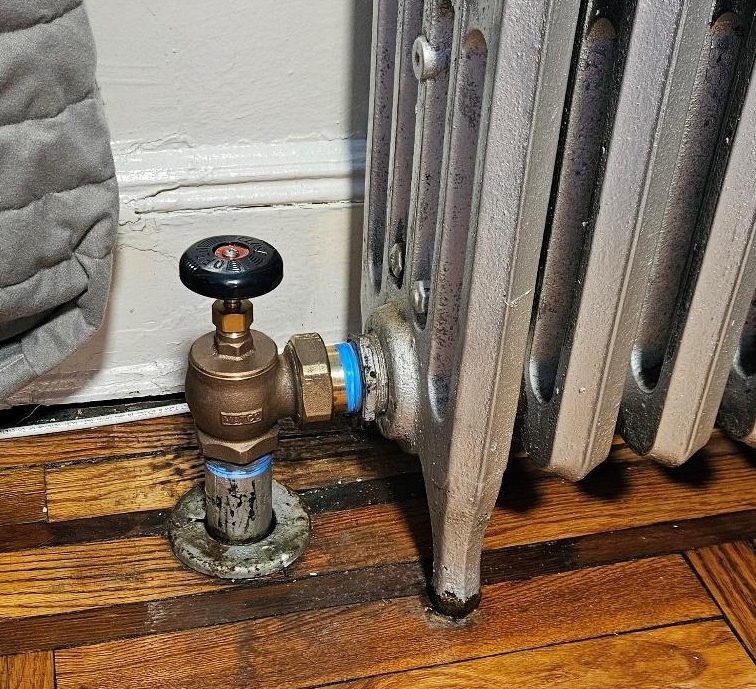
The supply valve controls steam entering the radiator. A closed or partially open valve blocks heat instantly.
Make Sure the Valve Is Fully Open
Turn the valve counterclockwise until it stops turning. Never force a stuck valve. If it resists movement:
• Apply penetrating oil and wait 10 minutes.
• Use a wrench gently to break it loose.
• Replace the valve if it is corroded or stripped.
In one-pipe systems, this same valve must allow condensate to flow back out. A partially closed valve traps water inside and blocks incoming steam.
Spot a Failing Valve
Watch for these warning signs:
• The handle turns but the stem does not move.
• Water leaks around the valve stem.
• The radiator stays cold even when the valve is fully open.
Replace damaged valves with matching threaded models. Most screw in without soldering.
Test and Clean the Air Vent
:max_bytes(150000):strip_icc()/SPR-how-to-clean-a-steam-radiator-4125788-tools-394e98acb2274b78921ea1b8bebfb452.jpg)
A stuck or clogged air vent is the leading reason a steam radiator not getting hot stays cold. The vent releases trapped air so steam can fill the radiator.
Why Air Vents Stop Working
Mineral deposits from steam gradually clog the opening. Paint, rust, and debris can also block airflow. Most vents last 5 to 10 years before they need replacement.
Diagnose Vent Problems
Listen carefully when the heat first kicks on. A working vent hisses for 30 to 60 seconds, then shuts off as steam arrives. If the radiator stays silent and cold, the vent is likely stuck closed. If it hisses continuously, the vent fails to seal and steam escapes before heating the room.
Clean a Clogged Vent
Follow these steps to restore airflow:
1. Turn off the boiler or wait for the system to cool completely.
2. Unscrew the vent by turning it counterclockwise. Use a wrench if needed.
3. Soak the vent in white vinegar for 1 to 2 hours.
4. Blow through it to confirm air passes freely.
5. Reinstall the vent or replace it if still blocked.
Pro Tip: Upgrade to a self-regulating vent such as Vent-Rite or Hoffman for longer service life and quieter operation.
Verify Proper Radiator Slope
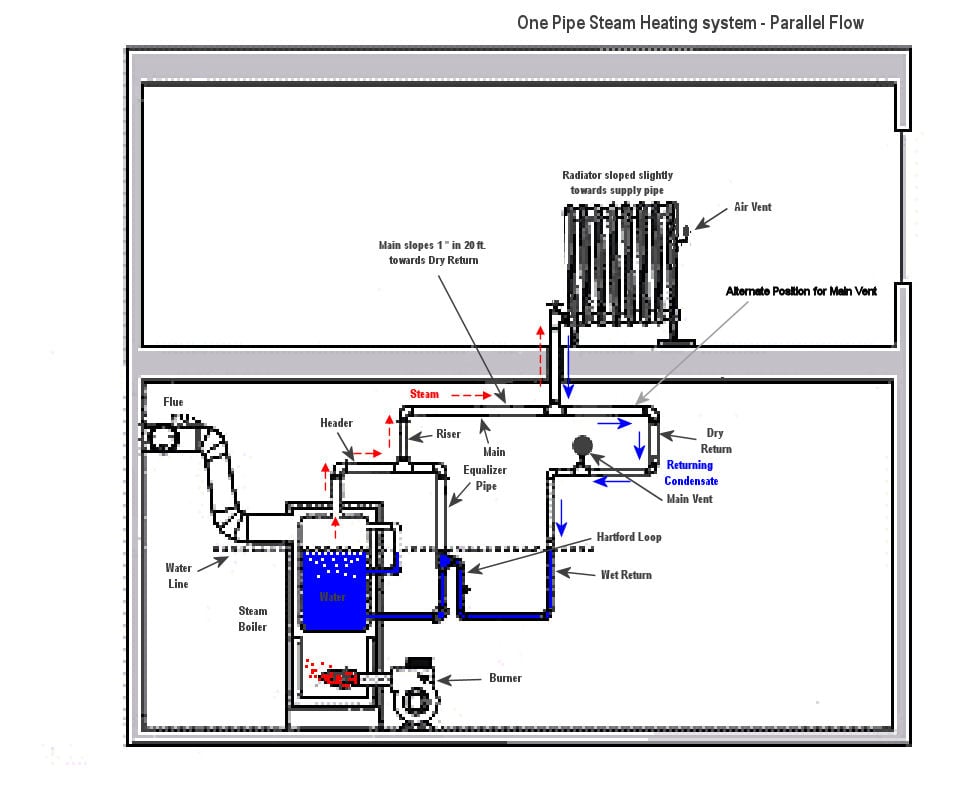
Steam radiators must tilt slightly so condensate drains back to the boiler. A level or backward-sloped radiator traps water and blocks steam.
Correct Slope for One-Pipe Systems
The end with the supply pipe should sit slightly lower than the opposite end. The target pitch is 1 inch of drop for every 10 feet of radiator length. Place wood shims under the radiator feet to adjust the angle.
Correct Slope for Two-Pipe Systems
Two-pipe systems slope the opposite direction, tilting toward the return pipe. This angle keeps condensate flowing smoothly back to the boiler.
Warning: A radiator installed level or pitched the wrong way will gurgle loudly and never reach full temperature.
Address Gurgling and Trapped Water
Gurgling sounds signal that condensate is pooling inside the radiator or piping instead of draining away.
Common Triggers for Gurgling
The most frequent causes include:
• Improper radiator slope
• A partially closed supply valve
• A clogged or stuck air vent
• Radiator installed too high above the steam main
Resolve Gurgling Quickly
Work through this checklist:
1. Confirm the supply valve is fully open.
2. Re-shim the radiator to achieve the correct pitch.
3. Clean or replace the air vent.
4. Check nearby radiators. If all of them gurgle, the main steam line may need professional re-sloping.
Some startup noise is normal. Persistent gurgling means drainage is failing.
Inspect the Thermostat and Boiler
When several radiators stay cold, the problem often sits upstream at the thermostat or boiler.
Test the Room Thermostat
Verify the thermostat is set above current room temperature. Confirm it has power and is calling for heat. Try raising the setting by 5 degrees and listen for the boiler to fire.
Thermostat Tip: Bypass the thermostat temporarily by switching the boiler on manually. If radiators heat up, the thermostat or its wiring is faulty.
Listen to the Boiler
Pay attention to these signals:
• Does the boiler fire when heat is called?
• Can you hear steam moving through the main lines?
• Are other radiators in the home heating normally?
If the boiler runs but no radiators get hot, check the water level in the sight glass. It should sit near the midpoint. Confirm the main shutoff valve near the boiler is fully open. If the low water cutoff switch has tripped, refill the system before restarting.
Clean Mineral Deposits From Vents
Hard water leaves scale inside vents and slowly chokes airflow.
Vinegar Soak for Stubborn Vents
Remove the vent and soak it in white vinegar overnight. Rinse thoroughly and reinstall. This dissolves mineral buildup without damaging the metal.
Flush the Radiator Itself
Only attempt this when all other fixes fail:
1. Shut off the boiler and drain the system.
2. Disconnect the radiator from the supply pipe.
3. Flush the interior with vinegar or a mild descaling solution.
4. Reconnect the pipes and test for heat.
Caution: Radiator flushing is labor intensive. Exhaust simpler repairs before tackling this step.
Replace Faulty Parts When Needed

Sometimes cleaning is not enough. Knowing when to swap out parts saves time and frustration.
Replace the Air Vent
Consider a new vent if it does not hiss at all, hisses nonstop, leaks water, or is more than 7 years old. Adjustable models like Varivalve or Heat-Timer balance heat better across rooms and last longer than basic vents.
Replace the Supply Valve
Install a new valve when the stem does not move with the handle, the packing nut leaks, or corrosion makes cleaning impossible. Choose a thermostatic radiator valve rated for steam if you want room-by-room temperature control.
Prevent Future Heating Problems
A few minutes of seasonal maintenance keeps your steam system running smoothly.
Annual Maintenance Checklist
• Test every air vent during the first heat call of the season.
• Clean or replace any vent that fails to hiss or seal.
• Recheck radiator slope after moving furniture or renovations.
• Inspect valves for stiffness or leaks.
Smart Upgrades Worth Considering
• Install automatic air vents on older radiators.
• Add insulated covers to push more heat into the room.
• Insulate main steam lines to reduce heat loss.
Pro Tip: Painted-over vents stop working fast. Scrape paint away from the opening to restore proper airflow.
Frequently Asked Questions About Steam Radiators Not Getting Hot
Why is only one radiator cold when others work fine?
A single cold radiator usually points to a clogged air vent, improper slope, or a closed valve. Start by checking the vent, since it is the most common failure point.
Why does my steam radiator hiss constantly?
Continuous hissing means the air vent is not sealing properly. Clean it with vinegar or replace it to stop steam from escaping before it heats the room.
Can I replace a steam radiator myself?
Yes, if you know how to disconnect and reseal threaded pipes. Use pipe dope or Teflon tape on the connections and shut off the boiler before starting work.
How long should a steam radiator take to heat up?
Expect 2 to 5 minutes after the boiler fires. Longer delays suggest blocked airflow or trapped condensate inside the radiator.
Is it normal for steam radiators to make noise?
Brief hissing during startup and soft ticking from expanding metal are normal. Loud banging or persistent gurgling signals drainage problems that need attention.
How do I know if my radiator valve is bad?
A valve that does not move when the handle turns, leaks from the stem, or cannot be cleaned of corrosion likely needs replacement. Cold radiators despite an open valve also point to a faulty part.
Key Takeaways for Fixing a Steam Radiator Not Getting Hot
A cold steam radiator almost never means a failed boiler. The three most common culprits are a stuck air vent, an improper slope, and a partially closed supply valve. Start your diagnosis at the vent, since it fails most often. Confirm the radiator pitches correctly toward the supply pipe at 1 inch per 10 feet, then verify the valve opens fully.
With a wrench, some white vinegar, and a few wood shims, you can solve the majority of cold radiator problems in under an hour. Bookmark this guide before the next heating season so you can troubleshoot quickly when a radiator goes cold again.