A puddle of bright green or orange fluid under your car, a rising temperature gauge, or sudden coolant loss can all signal a hole in your radiator. Left unchecked, even a small leak can cause engine overheating, warped components, or complete engine failure. The good news is that not every radiator hole requires a full replacement.
This guide shows you how to fix a hole in a radiator using the right tools and methods. You will learn how to diagnose the leak, choose the best repair approach, and know when replacement is the smarter option. From temporary stop-leak solutions to professional brazing and long-term prevention, we cover every step to keep your engine running cool.
Diagnose the Leak Before You Repair
Before reaching for epoxy or tools, confirm there is a real radiator leak and pinpoint its source. Misdiagnosing coolant loss leads to wasted effort and worsening damage.
Identify Coolant vs. Other Fluids
Check under the car for puddles. Clear water usually means air conditioner condensation, which is normal. Yellow or black fluid indicates oil. Bright green, orange, or pink fluid is coolant. If you see these colors, a leak is likely. Smell near the engine for a sweet, burnt sugar odor, another telltale sign of leaking antifreeze.
Use Visual Clues and Pressure Testing
Dried coolant leaves a crusty white residue. Trace this back to the highest point to find the leak origin. With the engine cool, remove the radiator cap and inspect the filler neck and top tank. Look for cracks, bulges, or seepage.
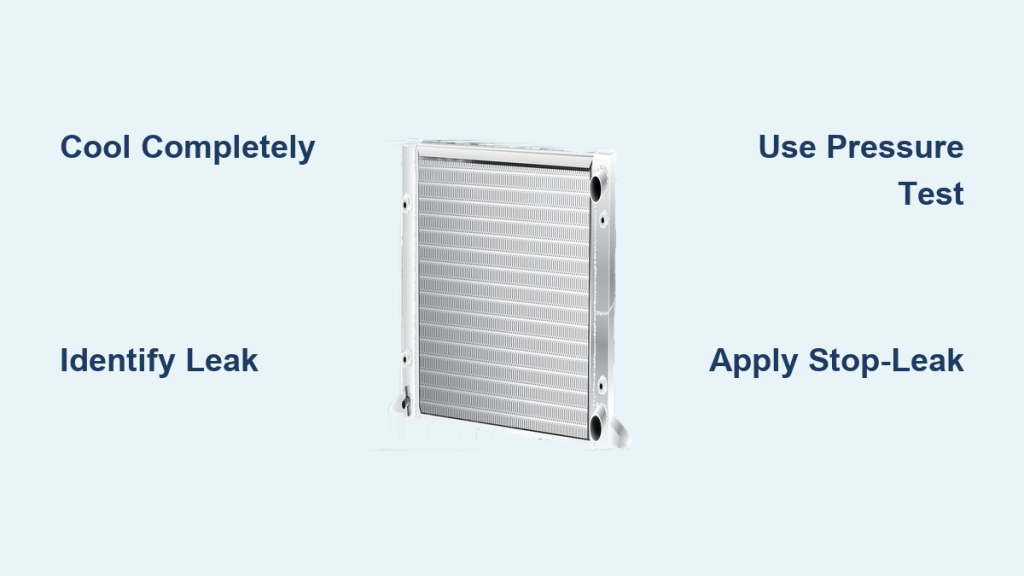
If the leak is not obvious, pressurize the system:
– Use a cooling system pressure tester at 10 to 15 PSI max on the radiator neck
– Watch for pressure drops or visible leaks
– Never exceed 15 PSI, as this can damage the core or create new leaks
For micro-leaks, use a UV dye kit. Add the dye, run the engine, then scan with a UV light. The leak will glow. Alternatively, a smoke machine can reveal tiny holes by pushing smoke through the system.
Follow Critical Safety Steps First

Working on a hot, pressurized radiator is dangerous. Follow these steps to stay safe.
Wait for Complete Cooling
Park the vehicle and turn off the engine. Wait 2 to 3 hours before touching anything. Never open the radiator cap while the engine is warm. Superheated coolant can spray out under pressure and cause severe burns.