Your car is losing coolant, but there is no puddle under it. No drips on the garage floor. No obvious signs of a leak, yet the reservoir keeps dropping. This is a common but serious issue. Car losing coolant but not leaking is more than just a mystery. It is a warning sign of internal problems that can lead to engine failure if ignored. Coolant does not simply vanish. It is being consumed, evaporated, or migrating where it should not be. The real danger lies in delayed diagnosis. By the time overheating or damage appears, the repair bill may have skyrocketed.
This guide cuts through the confusion. You will learn the true causes behind invisible coolant loss, how to diagnose each one, and what warning signs to watch for. From blown head gaskets to faulty radiator caps and internal evaporation, we will walk through every possibility with clear, actionable steps. Whether you are a DIYer or preparing to talk to a mechanic, this is your complete roadmap to stopping coolant loss before it stops your engine.
Head Gasket Failure Signs
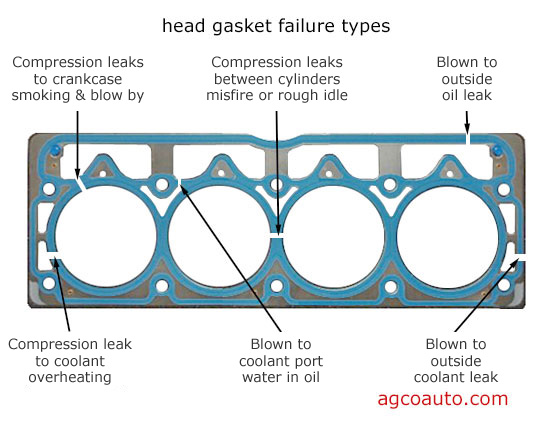
A blown or leaking head gasket is the most common cause of coolant loss without external leaks. When the seal between the engine block and cylinder head fails, combustion gases enter the cooling system or coolant gets burned in the cylinders.
White Smoke From Exhaust
Thick, continuous white smoke, especially at startup or under acceleration, is a hallmark of coolant entering the combustion chamber. Unlike normal condensation, which clears quickly, this smoke is persistent and has a sweet, syrupy smell due to ethylene glycol burning. If you see this, suspect head gasket or cracked block immediately.
Milky Oil on Dipstick
Check your engine oil. If it looks like chocolate milk or coffee with creamer, coolant has leaked into the crankcase. This happens when the head gasket fails between a coolant passage and oil gallery. A milky residue under the oil filler cap is another red flag. Left unchecked, this mixture destroys bearings and leads to engine seizure.
Bubbles in Radiator When Running
With the radiator cap off, only when cold, and the engine running, look for air bubbles surging through the coolant. This indicates combustion pressure pushing into the cooling system. It is direct evidence of head gasket or cylinder head failure. Never remove the cap on a hot engine. This test must be done safely.
Confirm With a Block Test
Use a combustion leak tester, also called a block test, for definitive proof. This tool uses a chemical reagent that changes color in the presence of exhaust gases in the coolant. Blue fluid turns yellow or green if hydrocarbons are present. It is inexpensive, reliable, and available at most auto parts stores.
Pro Tip: Perform the block test after the engine reaches operating temperature. Cold engines may not show clear results.
Faulty Radiator Pressure Cap
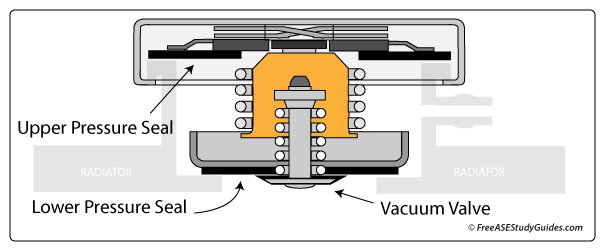
One of the simplest and most overlooked causes of coolant loss is a bad radiator cap. It is cheap, but critical. A failing cap cannot hold system pressure, lowering the coolant boiling point and forcing fluid into the overflow tank where it evaporates.
How Caps Fail Over Time
The cap spring weakens, or the rubber seal degrades from heat and age. This allows coolant to escape at lower pressures. Even a cap that looks fine may not function correctly. A cap rated for 15 psi should hold at least 13.5 psi, which is 90 percent, during testing.
Test With a Pressure Tester
Attach a radiator pressure tester to the filler neck and pressurize to the cap rated pressure, which is marked on top. Monitor for more than 3 psi drop in 15 minutes. If pressure falls, replace the cap. Always use an OEM-specified replacement. Wrong pressure ratings cause overheating or leaks.
Evaporation From Overflow Tank
A weak cap also fails to create vacuum during cooldown, preventing coolant from siphoning back from the overflow tank. The result is coolant stays trapped and evaporates through the vent. Check for crusty deposits around the cap or neck. This is a sign of past seepage.
Fix: Replace the cap every 3 to 5 years, especially after any overheating event. Cost is under $30.
Coolant Evaporating on Hot Surfaces
Small internal or external leaks may not drip. They vaporize instantly on hot engine parts like exhaust manifolds, turbos, or EGR valves. The coolant burns off before pooling, leaving no trace on the ground.
Find Burnt-Sugar Smell Under Hood
After driving, open the hood and sniff near the engine. A sweet, burnt odor, like caramel or syrup, means coolant is hitting hot metal. This differs from exhaust smoke. It is localized under the hood, not from the tailpipe.
Look for Crusty White Residue
Inspect the thermostat housing, water pump, heater hoses, and exhaust manifolds. White, chalky deposits are dried coolant. Shine a flashlight and use a mirror to check hard-to-see areas. These crusts confirm a leak path, even if no liquid is visible now.
Use UV Dye to Track Invisible Leaks
Add fluorescent UV dye to the coolant and drive for 3 to 5 days. Then scan the engine bay with a blacklight. Leaks glow bright green. Focus on the top of engine, firewall area, exhaust components, and spark plug wells. Clean the engine first to avoid false positives from old residue.
Pro Tip: Perform the UV check at night for best visibility. Wear gloves and eye protection.
Leaking Heater Core Symptoms
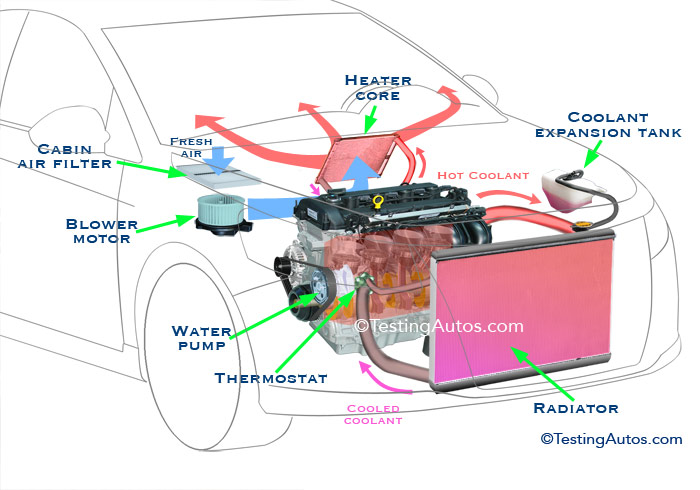
A failed heater core leaks coolant inside the dashboard, making it nearly invisible from outside. Yet the signs are unmistakable once you know what to look for.
Sweet Smell Inside Cabin
The most common clue is a persistent antifreeze odor inside the car. It is noticeable when using the heater or defroster. Unlike external leaks, this smell lingers in the cabin air.
Wet Floor Mats or Foggy Windows
Check the passenger-side floor mat for dampness. Coolant seeps through the HVAC plenum and drips onto the carpet. In cold weather, moisture from the vents causes rapid windshield fogging, even with defrost on.
Test Heater Core Independently
To confirm, disconnect heater hoses at the firewall. Cap one end and attach a pressure tester to the other. Pressurize to 12 to 15 psi. Watch for pressure drop or visible leaks inside the dash. If pressure falls, the heater core is leaking. Repair requires dash disassembly. It is labor-intensive but necessary.
Repair Cost: $500 to $1,200 due to interior removal.
Transmission Cooler Cross-Leak
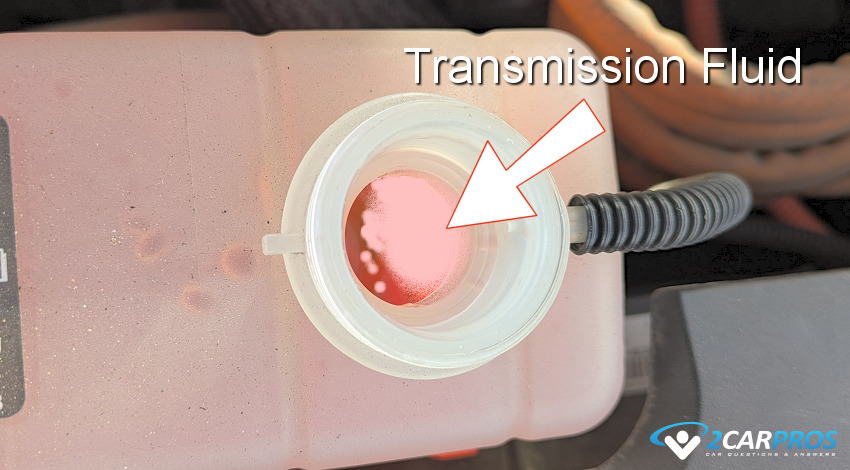
In vehicles with automatic transmissions, the radiator contains a built-in transmission cooler. A breach between coolant and ATF passages causes fluid mixing. This is a dangerous and often misdiagnosed issue.
Pink or Milky Transmission Fluid
Check the transmission dipstick. If fluid looks like strawberry milkshake, coolant has entered the transmission. This mixture destroys friction materials, leading to slipping gears, delayed shifts, or total failure.
Rising ATF Level
Coolant under pressure pushes into the transmission, causing the fluid level to rise above full. This is a key clue. Normal wear does not increase ATF volume.
Replace Radiator Immediately
The cooler section cannot be repaired. It must be replaced. Flush both systems completely, including the coolant system, transmission, and torque converter.
Critical: Do not drive with mixed fluids. Damage escalates rapidly.
Failed Intake Manifold Gasket
Engines with plastic intake manifolds are prone to coolant leaks inside the plenum. Cracks develop near EGR ports or throttle bodies, allowing coolant to drip into intake runners.
Coolant Burned in Cylinders
Instead of leaking externally, coolant is drawn into cylinders and burned off. No puddles. No milky oil. No visible smoke if the leak is slow. But spark plugs may appear abnormally clean or steam-cleaned.
Inspect After Plenum Removal
Remove the upper intake manifold and inspect for cracks in plastic near coolant passages, white crust or wetness around gasket areas, and coolant tracking into intake runners. Clean thoroughly and examine under bright light or magnification.
Step-by-Step Diagnostic Plan
Do not guess. Follow this proven sequence to identify the real cause.
Start With Visual Checks
Inspect oil for milky appearance. Smell exhaust for sweet odor. Check cabin for odor and wet floors. Examine transmission fluid for pink or milky color. Look for crusty deposits under hood.
Perform Cooling System Pressure Test
Attach pressure tester. Pump to 15 psi or cap rating. Watch for more than 3 psi drop in 15 minutes. No external leak means suspect internal.
Run a Block Test
Use combustion leak tester. Color change indicates exhaust gases in coolant. This confirms head gasket or crack.
Check Heater Core Separately
Disconnect hoses. Pressurize independently. Monitor for leaks in cabin.
Inspect Intake Manifold on Plastic Types
Remove plenum. Look for cracks, wetness, and residue. Clean and examine closely.
Prevent Future Coolant Loss
Stay ahead with these proactive steps.
Replace Coolant on Schedule
IAT green coolant needs replacement every 2 years or 30,000 miles. OAT orange coolant needs replacement every 5 years or 150,000 miles. HOAT yellow or blue coolant needs replacement every 5 years or 100,000 miles. Flush to remove sludge and corrosion that damage seals.
Monitor Early Warning Signs
Watch for frequent top-offs, rising temp gauge, reduced heater output, and sweet smells inside or out. Act early. Do not wait for overheating.
Invest in Key Tools
A radiator pressure tester costs $50 to $100. UV dye and blacklight kit, combustion leak tester, and borescope for internal checks are worthwhile investments. These pay for themselves in avoided repairs.
Frequently Asked Questions About Car Losing Coolant But Not Leaking
Why is my car losing coolant without any visible leak?
Coolant can be lost through internal leaks like failed head gaskets, cracked engine blocks, or heater cores. It can also evaporate on hot surfaces like exhaust manifolds before pooling. A faulty radiator cap can also cause coolant to escape through the overflow tank.
How do I know if my head gasket is blown without a mechanic?
Check for white smoke from the exhaust, milky oil on the dipstick, and bubbles in the radiator while the engine runs. A block test kit from any auto parts store can confirm exhaust gases in your coolant. These are strong indicators of head gasket failure.
Can a bad radiator cap cause coolant loss?
Yes. A failing radiator cap cannot maintain system pressure. This lowers the coolant boiling point and forces fluid into the overflow tank, where it evaporates. Replacing the cap costs under $30 and should be done every 3 to 5 years.
Is it safe to drive with a small coolant leak?
No. Even small, invisible coolant loss can lead to overheating and catastrophic engine damage. The underlying cause, whether head gasket failure or a cracked block, will worsen over time. Address any coolant loss immediately.
How much does it cost to fix a head gasket?
Head gasket replacement typically costs $1,000 to $2,500 or more, depending on the engine. Labor is intensive, often requiring cylinder head removal, resurfacing, and precise torquing. Early diagnosis can save thousands in repair costs.
Key Takeaways for Fixing Coolant Loss Without Leaks
Coolant loss without a visible leak is never normal. It is a symptom of internal failure, whether in the head gasket, radiator cap, heater core, or beyond. Ignoring it risks catastrophic engine damage. Start with simple checks. Examine the oil, cap, and smell. Then move to professional tests like pressure testing and block testing. Early diagnosis saves thousands. Fix the real cause, not the symptom. Your engine depends on it.