Your Ford F-150 is overheating, and coolant is pooling under the front bumper. These are classic signs that your radiator needs immediate attention. The radiator is the heart of your truck’s cooling system, and when it fails, you risk warped engine components, blown head gaskets, and transmission contamination. For F-150 owners, Ford F-150 radiator repair isn’t optional maintenance; it’s essential protection for one of your most valuable assets.
This guide walks you through recognizing failure symptoms, performing accurate diagnostics, understanding replacement costs, and avoiding expensive mistakes. You’ll learn what causes radiators to fail, how model year affects pricing, and why temporary fixes often backfire. By the end, you’ll know exactly what to expect during repair and how to keep your cooling system running strong for years.
Spot Early Warning Signs of Radiator Failure

Catching radiator problems early can mean the difference between a $1,700 repair and a $7,000 engine rebuild. F-150s experience high thermal loads, especially during towing or stop-and-go driving, which accelerates wear on cooling components.
Recognize Overheating Patterns
An overheating engine is the most urgent warning sign. If your temperature gauge climbs into the red zone, especially at idle or low speeds, the radiator likely can’t dissipate heat effectively. This happens when internal passages clog, coolant levels drop, or the cooling fan fails. Repeated overheating warps composite intake manifolds and can destroy head gaskets.
Identify Coolant Leaks Under the Hood
Green or pink fluid pooling beneath the front of your truck points directly to radiator trouble. On F-150s, leaks typically originate from cracked plastic end tanks or degraded seals. Modern radiators combine aluminum cores with plastic end caps, and thermal cycling over time makes these joints brittle. Even slow drips eventually lead to low coolant and dangerous overheating.
Watch for Transmission Shifting Problems
Many F-150 automatic transmissions use an integrated cooler built into the radiator. When the internal barrier fails, coolant and transmission fluid mix, causing erratic shifting, delayed engagement, or transmission overheating. If your transmission fluid looks milky or your coolant appears oily, cross-contamination is happening. Immediate repair prevents total transmission failure.
Diagnose Radiator Problems Before Replacing Parts

Throwing parts at a problem wastes money and time. Proper diagnosis confirms the root cause and prevents repeat failures.
Conduct a Thorough Visual Inspection
Start by examining the radiator, hoses, water pump, and cooling fan. Look for:
– Cracks or warping in plastic end tanks
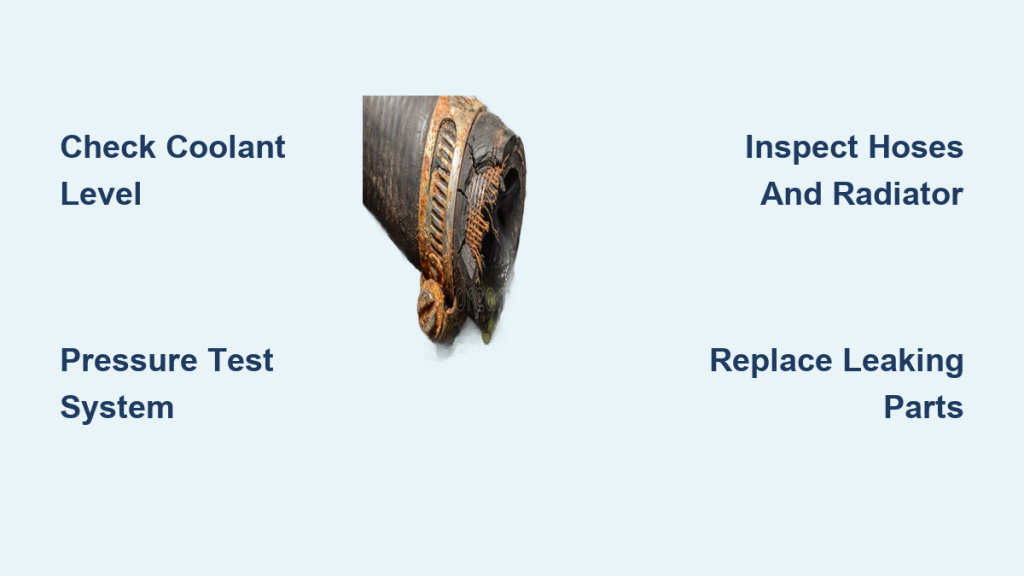
– Soft, swollen, or oil-soaked radiator and heater hoses
– Corrosion on the coolant reservoir or hose connections
– Debris blocking radiator fins (common after off-road use)
Any brittleness or fluid residue signals aging components that should be replaced alongside the radiator.
Pressure Test the Cooling System
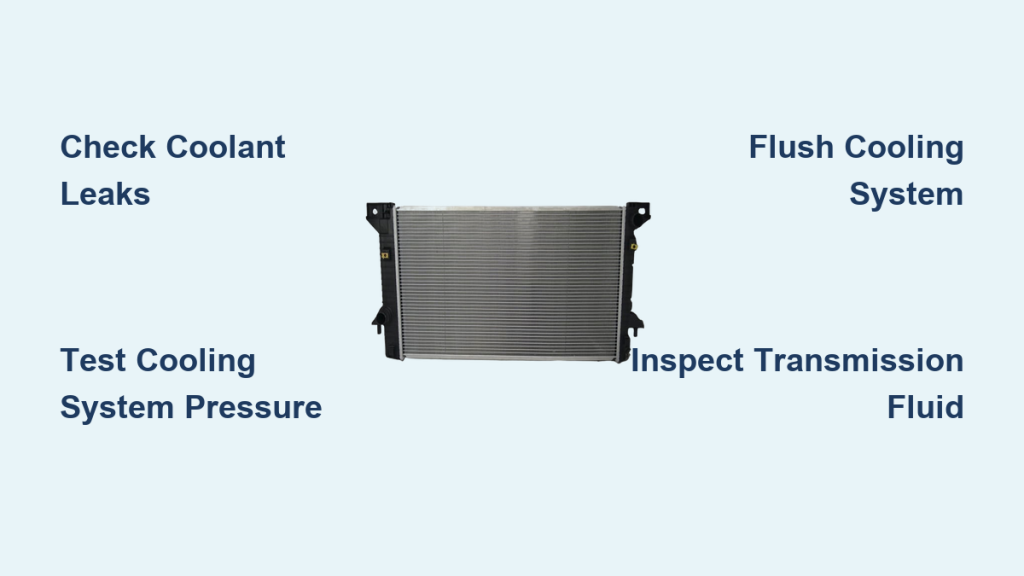
With the engine cold, attach a cooling system pressure tester to the radiator or reservoir. Pump to the specified pressure, usually 15 to 18 psi for F-150s. If pressure drops quickly, a leak exists. Watch for bubbles at the radiator cap, hoses, or water pump. This test reveals hidden leaks that visual checks miss.
Check for Internal Fluid Mixing
Remove the radiator cap only when cold and inspect coolant color and consistency. Milky or foamy coolant suggests transmission fluid contamination. Next, check the transmission dipstick. If fluid appears pinkish or milky, coolant has entered the transmission. Both systems require complete flushing after radiator replacement.
Scan for Diagnostic Trouble Codes
Use an OBD2 scanner to pull engine codes. One key indicator is:
– P00B7 – Engine Coolant Flow Low/Performance: This code points to restricted flow from a clogged radiator, failing water pump, or air pocket in the system. It distinguishes radiator issues from thermostat failures.
Replace the Radiator Step by Step
Replacing an F-150 radiator is manageable with basic tools but demands patience. Rushing leads to air pockets, leaks, and immediate post-repair problems.
Drain Coolant and Disconnect Components
Place a drain pan under the radiator petcock or lower hose. Open the valve or disconnect the lower hose to drain all coolant. Once empty, disconnect the upper and lower radiator hoses, transmission lines (if equipped), and electrical connectors for the cooling fan. Remove the shroud and any mounting brackets.
Pro Tip: Never pour old coolant down drains. It’s toxic and environmentally hazardous. Recycle it at any auto parts store or service center.
Remove the Old Radiator
Unbolt the radiator mounting brackets at the top and bottom. Carefully wiggle the unit free, avoiding damage to the condenser or fan assembly. Inspect the removed radiator for scale buildup inside the core or cracks in the plastic tanks to confirm the failure mode.
Install the New Radiator and Transfer Parts
Position the new radiator and secure it with mounting bolts. Reconnect transmission lines first (if applicable), then attach upper and lower hoses using new clamps. Reinstall the cooling fan and shroud. If your old radiator had a fan switch or temperature sensor, transfer it to the new unit, since many replacements don’t include these components.
Refill and Bleed the Cooling System
Fill the radiator and coolant reservoir with the correct coolant type (usually Motorcraft Orange or equivalent for newer F-150s). Start the engine with the radiator cap off and let it warm up. Squeeze the upper hose repeatedly to release trapped air. Continue until the thermostat opens and coolant flows steadily with no bubbles. Top off as needed and reinstall the cap.
Warning: Skipping the bleed process creates air pockets that cause false overheating and dangerous hot spots in the engine.
Understand Model-Specific Repair Costs
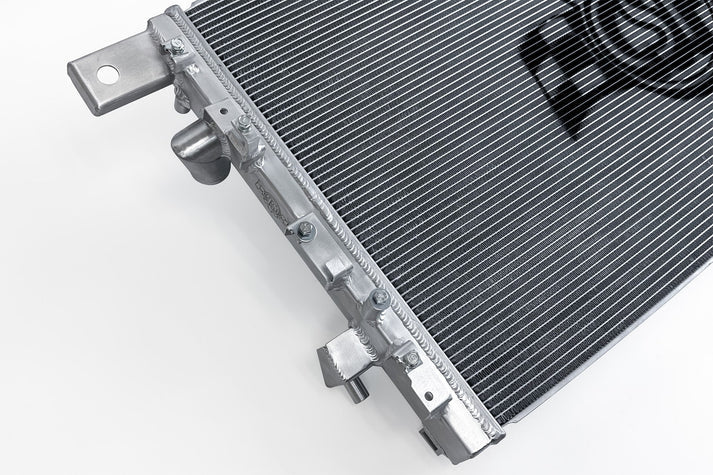
Radiator replacement costs vary widely based on model year, labor rates, and whether additional components fail. Knowing what to expect helps you budget and avoid surprise bills.
Average Replacement Cost by Year
| Model Year | Estimated Total Cost |
|---|---|
| 2025 | $2,190 – $2,430 |
| 2020–2023 | $1,583 – $1,844 |
| 2010–2019 | $1,570 – $2,024 |
| 2005–2009 | $834 – $1,343 |
| 2004 and earlier | $787 – $1,400 |
Newer models cost more due to tighter engine bay designs, integrated cooling modules, and pricier OEM parts. For example, 2025 models may exceed $2,400 because of advanced thermal management systems.
Break Down Parts and Labor Costs
- Parts: $1,150 – $1,300 (OEM or high-quality aftermarket)
- Labor: $400 – $600 (6–8 hours depending on year)
Dealerships charge more for both parts and labor but offer warranty coverage. Independent shops may save you 20–30% with equivalent quality.
Compare F-150 Costs to Other Ford Models
| Vehicle | Cost Range |
|---|---|
| F-250 Super Duty | $2,381 – $2,569 |
| F-150 | $1,553 – $1,745 |
| Explorer | $1,643 – $1,896 |
| Escape | $1,293 – $1,511 |
The F-150 sits in the mid-to-high range, reflecting its popularity and engine bay complexity compared to smaller Fords.
Avoid Expensive Mistakes During Repair

Even with a quality replacement radiator, common oversights cause repeat failures. Prevent these issues with proactive checks and smart upgrades.
Replace Aging Hoses and Clamps
Old radiator and heater hoses become brittle and prone to bursting. If they feel spongy or show cracks, replace them immediately. Oil saturation from nearby leaks accelerates deterioration. Use high-quality silicone hoses and new constant-tension clamps for long-term reliability.
Expert Note: Replacing hoses during radiator work saves labor costs because access is already open.
Flush the Entire Cooling System
Old coolant loses its anti-corrosion and anti-cavitation additives, leading to internal rust and clogging. Always flush the radiator, engine block, and heater core completely before refilling. This prevents debris from contaminating your new radiator.
Address Transmission Cooler Contamination
If coolant and transmission fluid mixed, a simple radiator swap isn’t enough. You must:
– Flush the transmission system completely
– Replace the transmission filter
– Inspect the torque converter for damage
Skipping these steps risks rapid transmission failure, even with a brand-new radiator.
Evaluate Temporary Fixes Carefully
Some owners consider stop-leak products or partial repairs to extend vehicle life. While tempting for low-value trucks, these methods carry serious risks.
Understand the Risks of Stop-Leak Products
Pour-in sealants can temporarily plug small leaks in plastic tanks or seams. However, they often:
– Clog narrow cooling passages in the engine block
– Block the heater core or transmission cooler
– Create hot spots that warp cylinder heads
One F-150 owner reported immediate overheating after using stop-leak, requiring a full engine teardown. These products are not recommended for long-term use.
Consider Tank Replacement vs. Full Unit Swap
Specialty radiator shops can cut off failed plastic tanks and install new ones with epoxy-sealed gaskets. This repair costs $300–$500, less than full replacement, and works if the core is undamaged.
However, if the aluminum core is corroded or clogged, this fix won’t last. For daily drivers or high-mileage trucks, a full OEM or heavy-duty aftermarket radiator is the safer investment.
Prevent Future Radiator Failures

Routine maintenance extends radiator life and prevents sudden breakdowns, especially under heavy load conditions.
Follow Coolant Replacement Intervals
Ford recommends replacing coolant every 100,000 miles for normal driving, or 50,000 miles under severe conditions like towing, off-roading, or frequent idling. Use the correct type:
– Orange (OAT): For 2011+ models
– Yellow (HOAT): For some 2008–2010 variants
– Green (IAT): Older models (pre-2008)
Mixing types causes gel formation and dangerous clogging.
Clean Radiator Fins Regularly
Dirt, bugs, and debris block airflow and reduce cooling efficiency. Use a soft brush and water to clean fins every 6 months, especially if you drive on dusty roads. Avoid high-pressure sprays because they bend fins and reduce surface area.
Monitor Your Temperature Gauge Daily
Make it a habit to check the temperature gauge during warm-up and heavy driving. A needle creeping upward, even slightly, signals early trouble. Address it before full overheating occurs.
Frequently Asked Questions About Ford F-150 Radiator Repair
What are the first signs of a failing radiator in a Ford F-150?
The earliest signs include rising temperature gauges, visible coolant leaks under the front of the truck, and sweet-smelling steam from the engine bay. You may also notice the heater blowing cold air or frequent need to add coolant. Catching these symptoms early prevents engine damage.
How much does Ford F-150 radiator repair cost on average?
The average total cost ranges from $1,553 to $1,745, with parts running $1,150–$1,300 and labor running $400–$600. Newer models (2020+) can exceed $2,400 due to complex cooling systems, while older models (pre-2005) may cost as little as $787.
Can I drive my F-150 with a leaking radiator?
You should avoid driving with a leaking radiator. Even small leaks lead to low coolant levels, which cause rapid overheating and potential engine damage. If you must drive short distances, keep the coolant reservoir full and watch the temperature gauge closely. Towing is safer than driving.
How long does a Ford F-150 radiator last?
A typical F-150 radiator lasts around 80,000 miles, though this varies based on driving conditions and maintenance. Severe use (towing, off-roading, frequent idling) shortens lifespan, while regular coolant flushes and fin cleaning extend it. Plastic end tanks degrade over time regardless of care.
Are stop-leak products safe for F-150 radiators?
Stop-leak products are not recommended for long-term repair. They can clog internal cooling passages, block the transmission cooler, and create hot spots that warp engine components. Use them only as emergency measures on low-value vehicles, and plan for full replacement soon after.
Do I need to replace hoses when replacing the radiator?
Yes, replacing hoses during radiator service is highly recommended. Old hoses become brittle and often fail shortly after a new radiator is installed, forcing you to repeat the labor. Since access is already open, replacing hoses now saves money and prevents future breakdowns.
Key Takeaways for Ford F-150 Radiator Repair Success
A failing radiator threatens your engine, transmission, and wallet. The most important points to remember are these: diagnose accurately before replacing parts, use quality OEM or aftermarket radiators, and always flush the entire cooling system. Address transmission contamination immediately if coolant and fluid have mixed.
Your next step is simple. If your F-150 shows any warning signs, schedule a pressure test and visual inspection today. The cost of early diagnosis is always less than the cost of a damaged engine. With proper repair and routine maintenance, your cooling system can reliably serve you well beyond 200,000 miles.